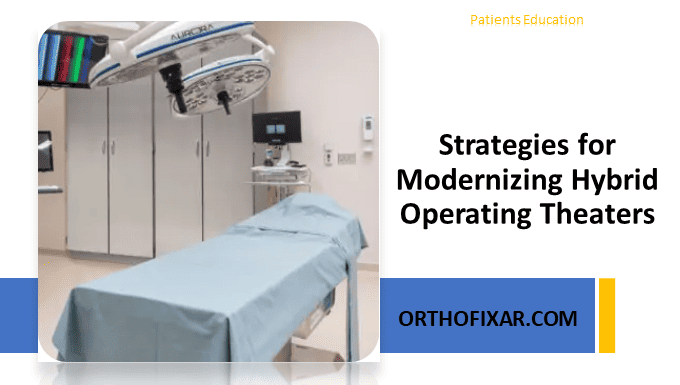
Hybrid operating theaters—fully equipped surgical environments combined with advanced intraoperative imaging—have become major players in modern surgery. One review of 123 studies identified 44 unique procedures across nine clinical disciplines that take place in these theatres Link. Business Research Company’s recent 2026 report forecasts that the global hybrid operating room market will reach $2.1 billion by 2030, representing an 11% CAGR from 2026 to 2030. Hospitals will need to adapt to this development by ensuring the seamless integration of equipment, infrastructure, radiation protection, digital integration, and safe work procedures. Strategies being embraced focus on goals such as ergonomics, access to necessary surgical equipment, unimpeded staff circulation, and adequate lighting and infrastructure for a wide range of surgical procedures.
Imaging Systems Pose a New Challenge for Operating Theater Design
Hybrid operating theaters require a different design from traditional theaters. They often require specific technological systems, including fixed single-plane fluoroscopy, biplane angiography for complex vascular and neurological procedures, ceiling-mounted or mobile C-arms, cone-beam CT for two- and three-dimensional imaging, and intraoperative CT or MRI (in theaters used for neurosurgery). These systems are used in various procedures by specialists in cardiovascular, neurological, orthopedic, trauma, and endovascular fields.
Procedures Undertaken in Hybrid Operating Theaters
Common procedures such as stent placement, cardiac catheterization, and pacemaker implantation now rely on technology such as fixed single-plane fluoroscopy, which uses pulsed X-rays to produce real-time 2D moving images of anatomy and instruments. Brain surgery, meanwhile, is often performed using biplane angiography, which uses two X-ray imaging systems at different angles to produce simultaneous images from two planes. Mobile C-arms, which are vital pieces of equipment in modern operating rooms, are mobile, C-shaped systems. Their X-ray sources are located on one side and their detectors on the other. Their main convenience is the ease with which they can be moved around the operating table to provide real-time imagery during surgery.
Radiolucent Operating Tables
Operating tables are a key consideration when designing efficient, safe operating rooms. In modern theaters, radiolucent tabletops, which allow X-rays and other imaging beams to pass through patients without major obstruction, are typically used. Radiolucent tables offer several advantages, including versatility, as they can be easily adapted to various surgical positions. They also allow surgeons to maintain continuous, clear imaging during surgery and support robotic systems for accurate adjustments and error minimization. Hospitals should opt for tables with features such as 360º rotation, which allows the patient to be positioned at the precise angles surgeons need. Height adjustment, secure supports, and a floating tabletop are also vital to ensure that the table supports open surgery and catheter-based procedures. These tables must also communicate electronically with the imaging system to reduce the risk of collisions.
Operating Room Cabinets, Carts, Infrastructure
Supporting equipment and fixtures, such as operating room cabinets and carts, are vital in modern operating theaters. These items are used to organize sterile instruments, catheters, imaging accessories, and emergency supplies, and they must contain compartments that accommodate both traditional and novel equipment. Modular cabinets and carts must also be easy to clean, maneuver, and access without obstructing imaging movements or staff circulation within the theater. As a whole, the equipment utilized in hybrid theaters depends on the specialties served. A given room may contain equipment such as surgical microscopes, intravascular ultrasound, and cardiopulmonary bypass equipment Link. Infrastructure also matters. For instance, operating theaters must include reliable electrical power, adequate lighting, and radiation monitoring.
Dedicated Lighting Systems and Displays
Lighting must be optimal in surgical environments, which is why hybrid theatres typically have ceiling-mounted surgical lights that can be repositioned around surgical equipment without obstructing the surgical field or limiting staff access to the patient. Large, high-definition displays, meanwhile, should be positioned so the entire clinical team can easily view them. These displays must be able to show different visuals, including fluoroscopy or angiography, endoscopic video, ultrasound, anesthesia and hemodynamic information, and patients’ vital signs. Imaging, monitoring, video, electronic networks, and hospital networks must all be integrated so that pertinent information can be accessed at any time. Screens must be correctly positioned so they do not interfere with the sterile field, block surgical lighting, or interfere with staff circulation.
Booms, Pendants, and Anesthesia Equipment
Modern hybrid operating theaters contain booms and pendants that are mounted to the ceiling. Their purpose is to provide staff with flexible access to everything from data connections to medical gases and suction. They also keep cables and equipment off the floor, boosting safety and allowing for optimal staff circulation. Different ceiling-mounted booms and pendants are set up for different members of the surgical team and different types of equipment. For instance, an anesthesia pendant is positioned near the patient’s head and provides access to gases and suction while housing power outlets and other vital equipment.
The arrival of new technologies has made hybrid operating theaters increasingly important in medicine and surgery. These operating theaters have specific needs to ensure effectiveness and safety. These new technologies include radiolucent operating tables, well-organized cabinets, appropriate infrastructure, dedicated lighting systems and displays, and mounted equipment to support staff circulation and patient safety.