
If you punch something hard and feel sudden pain over your knuckle, you may not think much of it at first. But when that pain lingers, the finger feels weak, and the tendon visibly snaps to the side, you are likely dealing with a sagittal band injury — commonly known as boxer’s knuckle. This article explains what the sagittal band does, why it tears, how to recognize the symptoms, and what your treatment options look like, so you can make informed decisions about your recovery.
What Is the Sagittal Band?
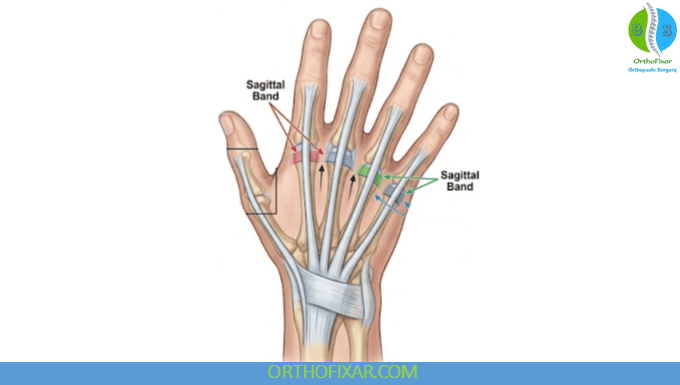
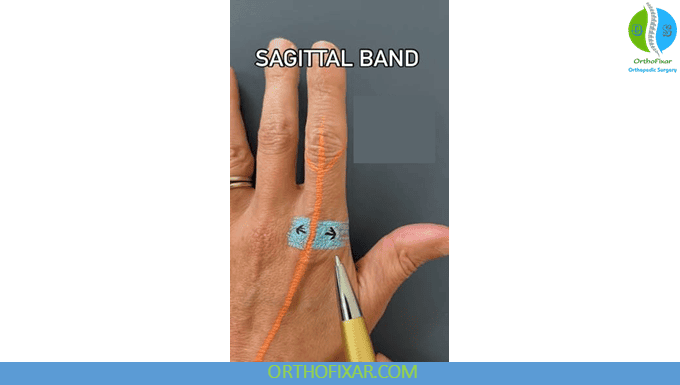
The sagittal band is a thin but strong fibrous structure that sits over the metacarpophalangeal (MCP) joint — the large knuckle at the base of your finger. Its main job is to hold the extensor tendon centered over the joint as you straighten your finger.
When the sagittal band tears or stretches, the tendon slips off to the side. This displacement is the mechanical problem behind what doctors call boxer’s knuckle.
- The sagittal band acts like a pulley or stabilizer for the extensor tendon.
- There is one sagittal band on each side of the tendon at every MCP joint.
- Injuries most often affect the middle or index finger knuckles.
- Even a partial tear can cause painful snapping during finger movement.
What Causes a Sagittal Band Injury?
Sagittal band injuries are typically caused by a direct blow to the knuckle, especially from punching a hard object with an unprotected fist. The force jams the tendon sideways and tears the band.
However, you do not have to be a fighter to develop this problem. The injury can happen in everyday situations, such as catching a heavy falling object on an outstretched hand, or from repetitive stress on the tendon.
- Punching a wall, bag, or another person without hand protection.
- Falling onto an extended hand with the fingers bent.
- Repeated snapping motions of the finger, which can be seen in certain occupations or hobbies.
- Rheumatoid arthritis and other inflammatory conditions can weaken the sagittal band over time.
“Boxer’s knuckle is not just a fighter’s injury. Anyone who jams a finger or falls on an outstretched hand can tear the sagittal band.”
Recognizing the Symptoms of Boxer’s Knuckle
The most recognizable symptom is a visible or palpable snap as you bend and straighten the finger. The extensor tendon slips off the knuckle, then pops back into place when you actively extend the finger.
Pain and tenderness directly over the knuckle are present, and swelling often develops within hours of the injury.
- Pain over the top of the MCP joint, especially when extending the finger against resistance.
- Swelling and bruising around the knuckle.
- A visible “snapping” or “slipping” sensation under the skin during movement.
- Weakness when gripping, pinching, or fully straightening the finger.
- A gap or depression may be felt where the tendon has moved to the side.
“If you feel a snap at the knuckle every time you straighten your finger, do not ignore it. Early treatment can prevent the problem from becoming chronic.”
How Is a Sagittal Band Injury Diagnosed?
A doctor will start by asking how the injury happened and then examine the finger while you actively bend and straighten it. The snapping is often easy to reproduce during the exam.
Imaging helps confirm the diagnosis and rule out fractures, joint damage, or tendon rupture.
- Ultrasound allows the doctor to see the tendon slip in real time as you move the finger.
- MRI provides a detailed view of the sagittal band and can show partial vs. complete tears.
- X-rays are taken to check for fractures of the metacarpal head or avulsion injuries.
Non-Surgical Treatment for Sagittal Band Injuries
Most sagittal band injuries, especially partial tears, respond well to conservative treatment if started early. The goal is to keep the tendon centered on the knuckle while the band heals.
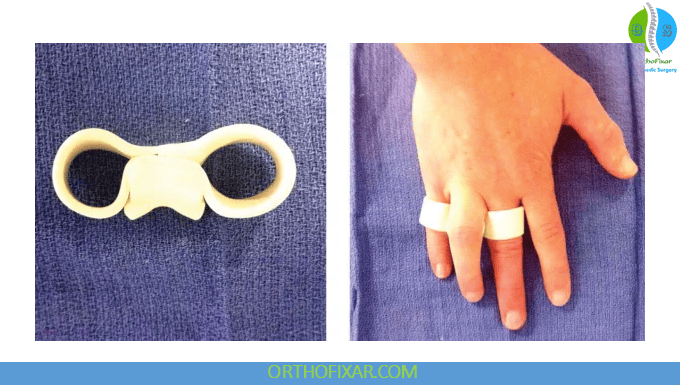
Immobilization is the key first step. A custom thermoplastic splint holds the MCP joint in slight extension, usually for several weeks, and prevents the tendon from slipping.
- A hand therapist can fabricate a splint that keeps the finger straight but allows the other fingers to move freely.
- Over-the-counter pain relievers can reduce swelling and discomfort in the first few days.
- Icing the knuckle for 10–15 minutes several times a day helps control inflammation.
- Once the splint is removed, gentle range-of-motion exercises restore mobility.
| Injury Grade | Description | Typical Treatment |
|---|---|---|
| Grade 1 | Mild strain, tendon stays in place | Splinting for 2–3 weeks, then gradual mobilization |
| Grade 2 | Partial tear, tendon occasionally slips | Splinting for 4–6 weeks, followed by hand therapy |
| Grade 3 | Complete tear, tendon dislocates consistently | May require surgery, or prolonged splinting if detected early |
| Chronic instability | Recurrent slipping due to delayed treatment | Surgical reconstruction often recommended |
Surgical Treatment for Boxer’s Knuckle
Surgery is reserved for complete tears that do not heal with splinting, for chronic instability, or for high-level athletes and manual workers who need reliable finger strength.
The procedure involves repairing the torn sagittal band with sutures, or reconstructing it using a tendon graft if the tissue is too damaged to hold stitches.
- Direct repair works well when the tear is fresh and the tissue quality is good.
- In chronic cases, the surgeon may use a strip of the patient’s own tendon (graft) to rebuild the band.
- After surgery, the finger is placed in a splint to protect the repair while it heals.
- Return to full activity usually takes several months.
Recovery Timeline and Rehabilitation
Recovery depends on the severity of the injury and whether you had surgery. Non-surgical cases generally heal in 6 to 10 weeks, while surgical cases may take longer.
Rehabilitation focuses on restoring the tendon’s glide, rebuilding grip strength, and retraining the finger to move smoothly without snapping.
- Weeks 1–4: Keep the finger splinted and avoid any active bending of the affected joint.
- Weeks 4–6: Begin gentle passive motion, then active extension as comfort allows.
- Weeks 6–8: Start strengthening exercises, including putty grips and light resistance bands.
- Week 8 and beyond: Progress to sport-specific training and full gripping activities.
Preventing Future Sagittal Band Injuries
If you train in combat sports or do manual labor, protecting your hands is essential. A sagittal band injury can become a recurring problem if you return to risky activities too quickly.
Strengthening the muscles around the finger and using proper technique can significantly reduce your risk.
- Wear proper hand wraps or padded gloves when hitting bags or practicing martial arts.
- Avoid hitting hard surfaces with a bare fist, even in moments of frustration.
- Perform extensor strengthening exercises to keep the tendon and its supports balanced.
- Tape the affected finger or use a “boxer’s brace” when returning to high-risk sports.
- Always warm up the hands before gripping-heavy activities.
Conclusion
A sagittal band injury is painful, often alarming, and definitely not something to shrug off. The good news is that most cases — especially those treated early — heal well with splinting and targeted therapy. If surgery is needed, modern techniques provide reliable results for long-term function.
Listen to your hand. If the tendon is snapping over your knuckle, see a hand specialist rather than waiting to see if it resolves on its own. The faster you get an accurate diagnosis, the faster you can return to your normal activities and avoid a chronic problem.
Frequently Asked Questions
Can a sagittal band injury heal on its own?
Some mild partial tears may heal with rest alone, and inflammation can subside. However, if the tendon continues to slip, the band cannot heal in a functional position. Without splinting, the injury is more likely to become chronic.
How long do I need to wear a splint for a sagittal band injury?
For a partial tear, the splint is usually worn for 4 to 6 weeks. Complete tears treated without surgery may require longer immobilization. Your doctor will guide the timeline based on your exact injury.
Is boxer’s knuckle the same as a boxer’s fracture?
No. A boxer’s fracture is a break in the neck of the metacarpal bone, usually of the pinky finger. Boxer’s knuckle involves damage to the sagittal band and the extensor tendon at the knuckle itself.
Can I still move my other fingers while splinting the injured one?
Yes. The splint is typically designed to hold only the injured finger extended while leaving the other fingers free. This prevents stiffness in the rest of the hand.
What happens if a sagittal band injury is left untreated?
Untreated, the tendon may snap repeatedly, causing more damage to the band and the joint. This can lead to chronic pain, instability, weakness, and a condition that becomes harder to treat successfully.
Will I need surgery for a grade 3 sagittal band injury?
Not always. Some complete tears can heal with strict splinting if diagnosed early and the tendon can be held centered. However, surgery is frequently recommended for complete tears to restore normal anatomy and strength, especially in active individuals.
How soon can I return to sports after a sagittal band injury?
Return to light activity is usually possible around 6 to 8 weeks after non-surgical treatment. After surgery, full return to contact sports or heavy gripping can take 3 to 4 months. Your surgeon will give you specific milestones.
Can a sagittal band injury happen without trauma?
Yes. Inflammatory conditions such as rheumatoid arthritis can weaken the sagittal band, making it more likely to tear during ordinary use of the hand. Repetitive snapping motions can also cause gradual damage.
What is the difference between a tendon rupture and a sagittal band injury?
A tendon rupture means the extensor tendon itself is torn or detached. A sagittal band injury means the tendon is intact but displaced from its normal position over the knuckle. Both can cause similar symptoms, but MRI or ultrasound helps tell them apart.
Can I tape my finger instead of wearing a splint?
Taping can provide temporary support and may be helpful during sports after the injury has healed. But for the initial healing phase, tape alone is not enough to keep the tendon centered. A rigid or semi-rigid splint is recommended during recovery.