
Kienböck disease is a rare but serious condition that affects the lunate bone in your wrist, leading to progressive pain, stiffness, and eventually collapse of the joint. Understanding its symptoms, stages, and modern treatment options can help you make informed decisions with your healthcare provider. This article covers everything you need to know about Kienböck disease, from early warning signs to surgical and non-surgical therapies available today.
What Is Kienböck Disease?
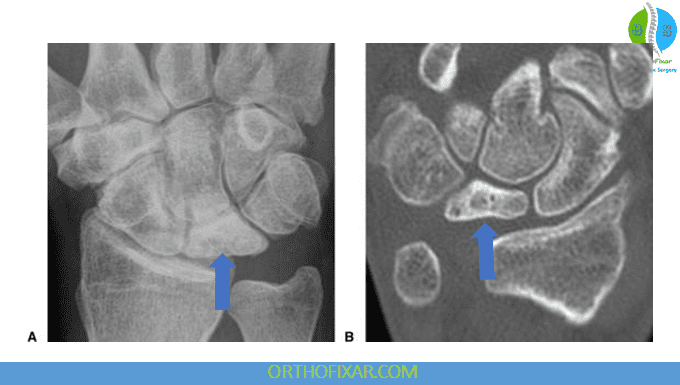
Kienböck disease, also known as lunatomalacia, occurs when the blood supply to the lunate bone (one of the eight small carpal bones in the wrist) is disrupted. Without adequate blood flow, the bone begins to die—a process called avascular necrosis. Over time, the weakened lunate collapses, leading to arthritis and loss of wrist function.
The exact cause remains unclear, but factors such as repetitive trauma, anatomical variations (like a negative ulnar variance where the radius is longer than the ulna), and genetics may contribute. The condition typically affects adults between 20 and 40 years old, and it is more common in men than women.
“Kienböck disease is frequently misdiagnosed as a simple wrist sprain. Early recognition is critical to prevent irreversible joint damage.” — Dr. Anna Torres, hand surgeon
Symptoms of Kienböck Disease
Symptoms often develop gradually and may be mistaken for other wrist problems. The most common complaints include:
- Persistent pain on the top or center of the wrist, especially with gripping or bending
- Swelling and tenderness over the dorsum of the wrist
- Stiffness and reduced range of motion, particularly when extending the wrist
- Weakness when holding objects or performing daily tasks like turning a key
- A grinding sensation (crepitus) when moving the wrist
- Visible deformity or clicking in advanced stages
For example, a patient may first notice dull wrist pain after typing or lifting groceries, then gradually find it hard to open a jar or do push-ups. If you experience any of these symptoms for more than a few weeks, a hand specialist should evaluate you.
Stages of Kienböck Disease
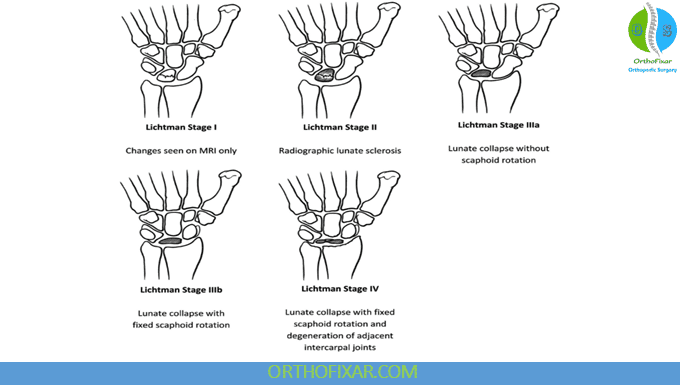
Kienböck disease is classified into stages based on X‑ray and MRI findings. The most widely used system is the Lichtman classification, which helps guide treatment decisions.
| Stage | Description | Typical Findings |
|---|---|---|
| Stage I | Normal X‑ray; MRI shows bone marrow edema or early necrosis | Pain with activity, no collapse |
| Stage II | Sclerosis (increased density) of the lunate on X‑ray; no collapse | Persistent pain, mild stiffness |
| Stage IIIA | Lunate collapse without rotation or instability | Moderate pain, reduced motion |
| Stage IIIB | Lunate collapse with rotational instability (scapholunate dissociation) | Significant pain, weakness, clunk |
| Stage IV | Advanced arthritis with degenerative changes throughout the wrist | Chronic pain, severe stiffness, deformity |
Staging is essential because treatments differ dramatically between early and advanced stages. For instance, a patient in Stage I may be a candidate for simple immobilization, while someone in Stage IV often requires salvage surgery.
Treatment Options for Kienböck Disease
The goal of treatment is to relieve pain, preserve wrist motion, and slow or stop disease progression. Options are divided into non‑surgical and surgical approaches, and the choice depends on the stage, your age, activity level, and the presence of ulnar variance.
Non-Surgical Treatments (Early Stages)
- Immobilization: Wearing a cast or splint for 6–12 weeks to rest the lunate and reduce stress
- Anti-inflammatory medications: NSAIDs like ibuprofen or naproxen to control pain and swelling
- Activity modification: Avoiding heavy lifting, repetitive gripping, and high-impact sports
- Physical therapy: Gentle strengthening and range‑of‑motion exercises after immobilization
- Bone stimulators: Some evidence supports the use of pulsed electromagnetic fields to encourage healing, though results vary
Non‑surgical management is most effective in Stage I and sometimes Stage II. If symptoms do not improve within a few months, surgery is usually considered.
Surgical Treatments (Advanced or Unresponsive Cases)
- Vascularized bone grafting: A small piece of bone with its blood supply (often from the distal radius) is transplanted into the lunate to restore blood flow. This is increasingly popular for Stages II and IIIA.
- Radial shortening or ulnar lengthening osteotomy: Changing the length of the forearm bones to offload pressure from the lunate. Best for patients with a negative ulnar variance.
- Proximal row carpectomy (PRC): Removing the three proximal carpal bones (scaphoid, lunate, triquetrum) to create a new joint. Good for Stage IIIB and early Stage IV.
- Partial or total wrist fusion: Fusing some or all wrist bones together to eliminate pain. Often used in advanced arthritis (Stage IV) when motion is already limited.
- Lunate replacement: A silicone or metallic implant can replace the dead lunate, though results are mixed and this is less common today.
“I had radial shortening surgery for my Stage IIIA Kienböck disease. Three months later I was back to playing guitar, and the pain is nearly gone.” — Mark, patient
Choosing the Right Treatment for You
Your hand surgeon will consider the stage of disease, your age, occupation, and personal goals. For example, a young athlete with Stage II disease may do well with a vascularized bone graft, while a retired person with Stage IV arthritis might prefer a PRC to maintain some motion. It is important to discuss the risks and recovery time for each option.
Recovery periods vary. Non‑surgical treatments may require 6–12 weeks of immobilization. After surgery, you might wear a cast for 4–8 weeks followed by several months of rehabilitation. Most patients regain functional use of the wrist, though some stiffness and occasional discomfort often remain.
Outlook and Long-Term Management
With early diagnosis and appropriate treatment, many people with Kienböck disease can maintain a good quality of life. The condition does not spread to other bones, but untreated advanced stages lead to irreversible arthritis. Ongoing research is exploring new techniques like stem cell therapy and 3D‑printed lunate implants, though these are still experimental as of now.
Regular follow‑up with a hand therapist or surgeon is recommended to monitor for any progression. Simple lifestyle adjustments—such as using ergonomic tools or wearing a supportive brace during heavy activities—can also help protect the wrist over the long term.
In summary, Kienböck disease is a challenging wrist condition, but today’s treatment options are more effective than ever. Whether you are in the early or late stage, a personalized plan can relieve pain and preserve function. If you suspect you have Kienböck disease, see a hand specialist as soon as possible—the sooner you act, the better your outcome.
Frequently Asked Questions About Kienböck Disease
1. What causes Kienböck disease?
The exact cause is unknown, but it is believed to involve a combination of anatomical factors (like a short ulna), repetitive microtrauma, and possible genetic predisposition. Some cases are associated with clotting disorders or vasculitis.
2. How is Kienböck disease diagnosed?
Diagnosis starts with a physical exam and X‑rays. MRI is the most sensitive test for early stages, showing bone edema or necrosis. CT scans may be used to evaluate collapse and joint alignment.
3. Can Kienböck disease heal on its own?
Spontaneous healing is very rare. Without treatment, the disease typically progresses to lunate collapse and wrist arthritis. Early intervention can slow or stop progression.
4. Is Kienböck disease painful?
Yes, pain is the main symptom. It usually starts as a dull ache and worsens with activity. In late stages, pain can be constant and severe, even at rest.
5. Can I still work with Kienböck disease?
Many people can continue working with modifications. Heavy manual labor may be difficult, especially after advanced stages. Ergonomic adjustments and temporary splinting can help.
6. What is ulnar variance, and how does it affect treatment?
Ulnar variance refers to the relative length of the ulna compared to the radius. A negative variance (shorter ulna) increases stress on the lunate. Osteotomies to correct this imbalance are a common surgical option.
7. Are there any non‑surgical treatments that really work?
For Stage I, immobilization and anti‑inflammatories are effective for many patients. Some also try bone stimulators, but strong evidence is lacking. For later stages, surgery is usually needed.
8. What is the success rate of surgery for Kienböck disease?
Success rates vary by procedure. Vascularized bone grafting has reported success rates of 70–90% in Stage II‑IIIA. Proximal row carpectomy provides good pain relief in 80–90% of patients. Total wrist fusion has a high success rate for eliminating pain but sacrifices motion.
9. Will I need to stop playing sports if I have Kienböck disease?
Not necessarily. After treatment, many return to low‑impact activities like swimming or cycling. High‑impact sports (e.g., boxing, gymnastics) may need to be avoided or modified to protect the wrist.
10. Can Kienböck disease come back after treatment?
The disease does not typically recur in the same lunate after successful surgery. However, if the underlying biomechanical issues are not addressed, other wrist problems may develop. Regular check‑ups are important.