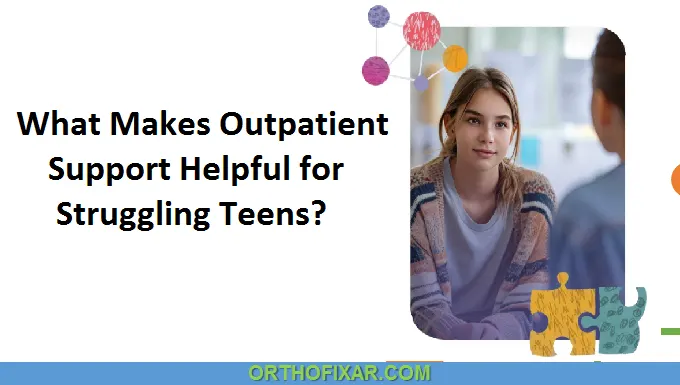
Plenty of teens struggle with mental health issues that fall somewhere between a weekly therapy session and needing 24/7 residential care. That in-between space? It’s where outpatient support actually shines, and it’s worth thinking carefully about if you’re a parent facing these decisions.
Outpatient programs provide structure, flexibility, and steady clinical attention while keeping teens anchored in their everyday lives. Here’s why this approach tends to work.
It Keeps Teens Connected to Their Real World
Outpatient care can be a strong option when a teenager needs consistent clinical support but does not need to be removed from home, school, or familiar routines. Families may look at programs such as Avery’s House, an outpatient support for teens, Newport Academy, Charlie Health, Embark Behavioral Health, or local hospital-based outpatient programs because this type of care allows adolescents to keep attending school, stay connected to friends, and remain part of daily family life while receiving structured support several times a week. This shows how outpatient care has become a practical first step for teens who need professional help without the disruption of residential treatment.
What makes outpatient care different is that teens can practice new coping skills while still facing the real-life stressors that affect them. A teen who has a difficult school day, struggles with family conflict at dinner, and then processes those experiences with a therapist the next afternoon is learning in real time. That bridge between daily challenges and clinical reflection is where outpatient programs can be especially effective.
The Schedule Reduces the Disruption Factor
There’s a practical question most families hit: how do you get your teen genuine help without yanking them out of school, away from their social life, or dismantling the rhythms they depend on? Uprooting a teen introduces its own stress, so a model that works around school hours and family life cuts out one major source of friction. Most outpatient programs run three to five times weekly; sessions land in afternoons or evenings so school stays protected. That repeated rhythm? Many struggling teens actually respond better to consistency than intensity. And it shows. Parents notice their kids engage more willingly when treatment doesn’t feel like an exile, and therapists report stronger therapeutic work because of it.
Family Stays in the Treatment Picture
Outpatient care doesn’t isolate the teen. The family gets pulled into the process directly and continuously, something residential settings rarely manage with the same week-to-week consistency. Family therapy sessions sit right there as a standard piece; they happen while everyone’s living together, so real conflicts get addressed in real time. A therapist coaching a teen on communication can meet with parents that same week to discuss how they’re responding, building a feedback loop that inpatient programs struggle to sustain. And here’s the thing: for most teens dealing with depression, anxiety, trauma, or relational stress, the family system is always involved anyway. Outpatient support acknowledges that upfront. Parents develop their own skills; siblings sometimes join sessions. The household itself starts shifting in ways that actually support what the teen’s working on.
Peer Connection Builds Accountability
Group therapy anchors most outpatient programs. Its value for teenagers can’t really be overstated. Adolescents are deeply social creatures; so much of who they become happens through peer relationships. A structured group of kids working through similar struggles creates accountability, but not the adult-imposed kind. It’s the kind that comes from a peer saying, “Yeah, I had a panic attack too,” or “Here’s what actually helped me.” That lands harder than the same words from a therapist. It normalizes the struggle. It kills shame. It builds real connection at an age when isolation can seriously tank mental health. Many teens themselves report that group therapy was the breakthrough piece of their outpatient experience, purely because of that peer-to-peer element.
Progress Happens Incrementally and Measurably
Outpatient support gives clinicians room to see the long arc. Rather than a short residential stint ending in discharge paperwork, outpatient care stretches over months. That means therapists catch patterns, refine approaches, and catch setbacks before they spiral; a teen who has a rough week shows up for their next appointment and processes it directly with their team. The immediacy wins where inpatient care can’t compete once a kid goes home. Progress gets tracked and revisited. Treatment adapts as the teen develops. And here’s the catch: a therapist who’s known a teen for half a year sees the subtle shifts that short-term programs completely miss. That sustained relationship, paired with regular progress check-ins and family input, builds a real picture of how the teenager’s actually changing.
Conclusion
What makes outpatient support helpful for struggling teens really comes down to five things: continuity; practicing skills in real life; involving the family; building peer accountability; and keeping the same clinical relationship over time. It’s designed for adolescents who need solid help without disappearing from their own lives. If you’re a parent working through options, these five dimensions should clarify why outpatient care clicks for so many families.