Breaking a bone is painful, disruptive, and honestly a little frightening. Knowing what happens during the fracture healing stages can make the recovery process feel less mysterious and more manageable. Your body moves through four overlapping phases — inflammation, soft callus formation, hard callus formation, and remodeling — and each stage has its own purpose, timeline, and set of challenges.
The Four Fracture Healing Stages at a Glance
Fracture healing is not a single event. It is a gradual process that starts almost as soon as the injury happens and continues long after the cast comes off. The stages often overlap, so you may not feel a clear shift from one phase to the next, but understanding them helps you become a more involved partner in your recovery.
- Inflammation begins first and sets the stage for repair.
- Soft callus formation builds a flexible bridge between broken bone ends.
- Hard callus formation turns that bridge into stronger new bone.
- Bone remodeling reshapes the healed area and restores strength over time.
The table below summarizes what happens during each stage and how you might feel.
| Stage | What Happens in the Body | What You May Notice |
|---|---|---|
| Inflammation | A blood clot forms, immune cells clean debris, and new blood vessels begin to grow. | Swelling, pain, redness, and warmth around the fracture. |
| Soft callus formation | Cartilage and fibrous tissue connect the broken ends. | Swelling starts to ease, but the area feels stiff and tender. |
| Hard callus formation | Minerals such as calcium are deposited into the soft callus to create woven bone. | The fracture feels more stable and movement becomes less painful. |
| Bone remodeling | The body removes excess bone and reshapes the injured area to handle normal stress. | Gradual return of strength, function, and a more normal appearance. |
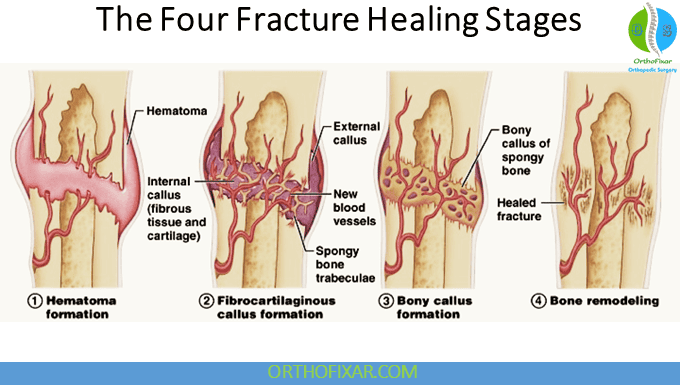
Stage 1: Inflammation — The Body’s Emergency Response
The moment a bone breaks, your body starts responding. Blood vessels inside the bone and surrounding tissues tear, and blood pools around the fracture. This clot is not just a physical plug; it is the framework that future healing cells will use.
- Swelling and pain are normal signs that the immune system is active.
- White blood cells clean away damaged tissue and bacteria.
- New blood vessels begin forming to bring oxygen and nutrients to the area.
During this early phase, your job is to protect the injured area and manage symptoms. Keeping the limb elevated, using ice as directed, and taking prescribed pain relief can help you stay more comfortable while your body prepares for repair.
Swelling and pain are not your enemies in the first few days. They are signals that your body has started the healing process.
Stage 2: Soft Callus Formation — Building a Flexible Bridge
Once the initial inflammation settles, your body begins to connect the broken pieces. Specialized cells create a soft, rubbery tissue called cartilage, along with fibrous strands that hold the fracture ends together. This soft callus acts like a temporary splint made by your own body.
- The gap between bone fragments fills with cartilage and connective tissue.
- The injured area remains fragile, so movement should stay gentle and guided.
- Your doctor or physiotherapist may encourage careful motion to prevent stiffness.
At this stage, you may notice a reduction in sharp pain, but the area still feels weak. For example, someone with a wrist fracture may be able to wiggle their fingers, but twisting or lifting remains difficult. A patient with a leg fracture may still need to avoid putting weight on the limb.
Stage 3: Hard Callus Formation — Creating New Bone
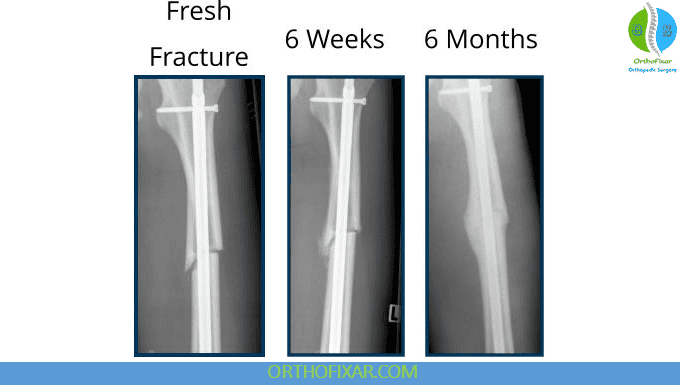
The soft callus gradually becomes harder as minerals such as calcium and phosphate are deposited. This process, called mineralization, transforms the flexible bridge into a structure known as woven bone. It is not yet as strong as normal bone, but it is much more solid than the early callus.
- New bone tissue begins to appear clearly on X-rays.
- The fracture feels firmer and less painful when touched.
- You may be given the green light to start slightly more movement or partial weight-bearing.
This stage can feel encouraging because your bone is finally “sticking together.” Still, the new bone is still maturing. A patient who returns to sports too early may risk re-injury because the hard callus cannot yet handle sudden twists or heavy impact.
Stage 4: Bone Remodeling — Returning to Normal Shape and Strength
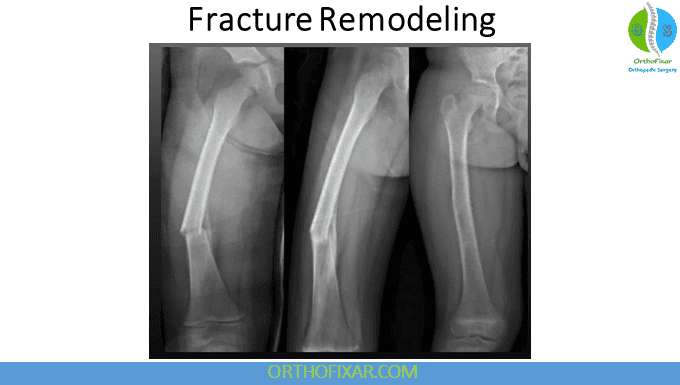
Remodeling is the longest phase of the fracture healing stages. The body slowly removes extra bone from the callus and adds strong bone where it is needed. Over time, the injured area regains its original shape and can tolerate everyday stress.
- Woven bone is replaced by stronger lamellar bone.
- The bone becomes lighter and more efficient in its structure.
- Range of motion, muscle strength, and confidence usually improve during this phase.
This is also the stage where patience really matters. A person may feel fully normal before the bone is truly ready for strenuous activity. For example, a simple ankle fracture may feel stable after a few weeks, but jogging, jumping, or running on uneven ground may need to wait until a healthcare professional clears you.
Healing is not a race. Returning to normal activity too soon can turn a straightforward recovery into a longer one.
What Patients Can Expect Along the Way
Recovery is not perfectly linear. Some days feel better than others, and that is part of the process. Your exact experience depends on the type of fracture, the bone involved, your age, and how well the injury is managed.
- Early weeks: rest, pain control, and protecting the fracture are the main priorities.
- Later weeks: you may start guided exercises to rebuild movement and strength.
- Long-term: the bone continues to remodel, so full results may take months to appear.
Consider two common examples. A well-aligned wrist fracture in a young adult may move through the early stages fairly smoothly, while a fractured tibia in an older adult may require a longer period of protected weight-bearing. Comparing yourself to someone else is rarely helpful; what matters is your own progress under your care team’s guidance.
Practical Tips to Support Every Fracture Healing Stage
Your daily choices influence how well your body can repair bone. You do not need to do anything extreme, but consistency matters. Focus on supporting your body through each stage of the fracture healing stages with simple habits.
- Eat a variety of nutrient-rich foods, including sources of protein, calcium, vitamin D, vitamin C, and zinc.
- Drink enough water to keep your tissues hydrated and your immune system working.
- Prioritize sleep, because bone repair hormones and growth factors are active while you rest.
- Follow your rehabilitation plan, even when exercises feel small or repetitive.
- Avoid smoking and limit alcohol, because both can slow bone healing and reduce bone quality.
- Tell your doctor about any medications or supplements you take, since some can interfere with healing.
Your doctor or dietitian can give more specific advice if you have health conditions such as diabetes, kidney disease, or a history of osteoporosis. Small adjustments can make a meaningful difference over the full recovery period.
When to Contact Your Doctor
Most fractures heal without serious problems, but complications can happen. It is important to recognize warning signs and contact your medical team early instead of waiting to see if things improve.
- Sudden, severe pain that is not controlled by medication
- Numbness, tingling, or a change in color of your fingers or toes
- Fever, chills, or warmth and redness that worsens rather than improves
- A cast that feels too tight, causes burning pain, or becomes wet and stays wet
- A popping, grinding, or shifting feeling in the injured area
- Shortness of breath, chest pain, or unusual dizziness, which could signal a blood clot
Trust your instincts. If something feels wrong, call your doctor or visit an urgent care clinic. Early treatment for complications such as infection, poor alignment, or delayed healing can prevent larger problems later.
The Takeaway
Understanding the fracture healing stages helps you know why your doctor gives certain instructions and why rest is part of the treatment plan. The four stages — inflammation, soft callus, hard callus, and remodeling — work together to restore your bone’s structure and strength. Patience, consistent follow-up, and a willingness to adapt your routine are just as important as the treatment itself.
Your medical team will guide you based on your specific injury, but the best version of your recovery comes from paying attention to your body, asking questions, and honoring the time your bone needs to heal.
Frequently Asked Questions About Fracture Healing Stages
How long does each fracture healing stage last?
There is no single timeline that applies to every patient. In general, the inflammatory phase lasts a few days, soft callus formation continues during