Severe cases of lumbar stenosis often require surgery to offer long-term relief from symptoms. Two of the most traditional surgeries are spinal decompression and spinal fusion; however, there are also modern alternatives that provide significant advantages for some patients. Regardless of the procedure, patients must be informed about the risks, recovery times, and potential side effects.
In this article, we’ll compare outcomes between decompression and fusion for lumbar stenosis, while also detailing how the TOPS System works, a modern spinal implant device that offers an alternative to fusion.

What is Lumbar Stenosis?
Lumbar stenosis is a narrowing of the spinal canal in the lower back (lumbar region) that puts pressure on the spinal cord and nerve roots. This narrowing reduces the space available for neural structures, leading to compression and associated symptoms. The condition primarily affects the lumbar spine, which consists of five vertebrae (L1-L5) in the lower back. When the spinal canal becomes constricted, it can compress the cauda equina (the bundle of nerve roots at the end of the spinal cord) and individual nerve roots as they exit the spine.
Symptoms include leg pain, weakness, or numbness that worsens with walking or standing and improves with sitting or leaning forward. This occurs because walking extends the spine, further narrowing the canal, while flexing forward (like leaning on a shopping cart) opens up more space. Other common symptoms include lower back pain, cramping or fatigue in the legs and buttocks, tingling or numbness in the legs or feet, and weakness in the legs that may affect balance and walking. In severe cases, there may be problems with bowel or bladder control, though this is relatively rare.
Causes of Lumbar Stenosis
The most common cause is age-related degenerative changes to the spine. As people age, ligaments can thicken and buckle inward, bone spurs (osteophytes) may develop, and intervertebral discs can bulge or herniate, all contributing to canal narrowing. Arthritis, particularly osteoarthritis, frequently plays a role by causing joint inflammation and bone spur formation. The facet joints, which connect adjacent vertebrae, can enlarge due to arthritis and encroach on the spinal canal.
Other causes include:
- Congenital spinal stenosis (being born with a naturally narrow canal)
- Spondylolisthesis (when one vertebra slips forward over another)
- Previous spinal surgery that results in scar tissue formation
- Spinal tumors (uncommon)
Before surgery is considered, a doctor will recommend that a patient try several therapies, which may include painkillers (NSAIDs), steroid injections, physiotherapy, gentle exercise, or wearing a back brace. They will also suggest lifestyle changes such as eating a healthier diet, quitting smoking, reducing alcohol consumption, and trying to be more active throughout the day.
Spinal Decompression for Lumbar Stenosis
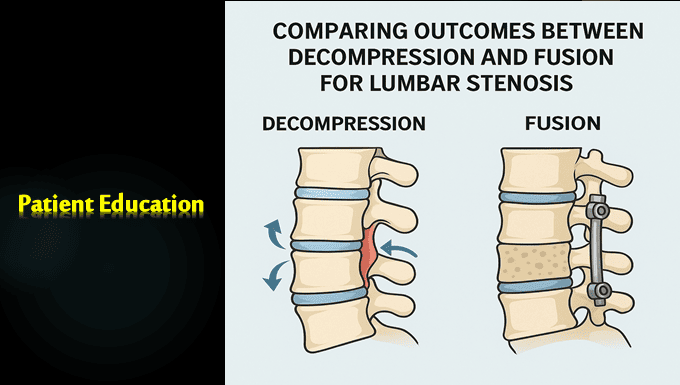
Spinal decompression surgery creates more space around squeezed nerves in the patient’s lower back. The surgeon removes bone, thick ligaments, or bulging disc material that’s pressing on nerves through a small incision. This relieves the crowding in the spinal canal, reducing leg pain, numbness, and weakness when walking or standing.
Spinal decompression surgery for lumbar stenosis generally produces favorable outcomes, particularly for leg pain relief and mobility. Studies show that 85% to 90% of patients experience relief from leg pain after open decompression surgery. Long-term follow-up data also demonstrate that significant improvements in both back and leg pain are sustained for at least one year post-surgery.
Most patients go home the same day and experience gradual improvement in symptoms as nerve pressure is eliminated, and recovery typically takes 3-to-6 months after surgery. However, outcomes can vary based on patient factors. Younger patients under 40 years show greater improvements compared to older patients, with most patients experiencing significant symptom relief and functional improvement long term.

Spinal Fusion for Lumbar Stenosis
Spinal fusion permanently joins two or more vertebrae together using bone grafts, screws, and rods. The surgeon places bone material between vertebrae, which grows together over several months to form one solid bone. This eliminates movement between those vertebrae, providing stability and reducing pain from conditions like lumbar stenosis and spondylolisthesis.
Recovery takes longer than decompression surgery, typically several months, as the bones need time to fully fuse. Research shows mixed outcomes compared to decompression alone, and multiple randomized controlled trials have consistently failed to prove any clinical advantage of adding fusion to decompression procedures. While most people who have spinal fusion surgery report satisfaction with results, it is more likely a result of the decompression surgery than the fusion. Spinal fusion instead stabilizes vertebrae and eliminates pain from diseased discs or joints.
The procedure comes with additional risks and can cause decreased spinal flexibility, which usually limits motion only slightly, but can be permanent. This type of surgery should be reserved for specific cases with documented instability rather than being routinely added to decompression surgery for typical lumbar stenosis cases.
Mechanical Spinal Devices for Lumbar Stenosis
Mechanical spinal devices like the Tops System are a modern alternative to spinal fusion, stabilizing the spine following decompression surgery, without impacting a person’s range of motion. These spinal devices also reduce the possibility of adjacent vertebrae becoming damaged, which is a common risk with spinal fusion. Recovery times are also generally quicker when compared to fusion, allowing people to return to work and physical activities much sooner in most cases.

The main risk following the installation of a mechanical spinal device is infection following surgery, but this is also a concern after most procedures. A significant fall or accident could also damage the device, which could also impact other parts of the spine. Additionally, the device’s components may gradually move over time, resulting in complications.
Thank you for reading. We hope this article has outlined the pros and cons of lumbar stenosis surgeries, so you can go into the procedure with peace of mind.