Neck pain is one of the most common reasons people look for help outside a clinic. Long hours at a screen, poor sleep positions and stress all load the muscles and joints of the cervical spine, and many people want something they can do at home between appointments. Cervical traction, once found mostly in physical therapy offices, is now available in consumer devices.
This guide explains what traction actually does, what the evidence suggests, who should not use it, and how to start carefully if your clinician agrees it is a reasonable option.
What Is Cervical Traction and Who Should Avoid It?
Cervical traction is a gentle pulling or stretching force applied along the length of the neck, intended to create a little space between the vertebrae and ease tension in the surrounding muscles. It should be avoided by people with spinal instability, recent neck fractures or surgery, osteoporosis, rheumatoid arthritis affecting the upper neck, known tumors or infections in the spine, and certain blood vessel problems in the neck.
In a clinic, traction may be delivered by a therapist’s hands, a mechanical unit or an over-the-door system. The force is usually modest and applied for short periods. The idea is not to “pull the neck straight” but to offload compressed structures for a while, encourage the muscles to relax and, for some people, reduce irritation around a nerve root.
Anyone with symptoms that suggest nerve or spinal cord involvement, such as weakness in the arms, changes in balance or coordination, or problems with bladder or bowel control, needs a medical assessment before trying any home device. Pregnancy, dizziness when turning the head and a history of whiplash are also good reasons to speak to a doctor or physiotherapist first.
Do Neck Traction Pillows Really Work?
The honest answer is that they help some people with mechanical neck stiffness, especially when used alongside exercise and posture changes, but the research on traction in general is mixed. Studies on mechanical cervical traction show short-term improvements for some patients, particularly those with radiating arm symptoms, while reviews describe the overall evidence as limited and inconsistent.
Two reviews capture that picture. A Cochrane review of mechanical traction for neck pain with or without radiculopathy (Graham and colleagues, 2008) concluded that the available trials could neither support nor refute its effectiveness, largely because they were small and of low quality. A later systematic review and meta-analysis by Romeo and colleagues, published in Physical Therapy in 2018, found that adding traction to a physical therapy program reduced pain in the short term for people with cervical radiculopathy.
That does not make traction useless. It means results vary, expectations should be realistic, and a traction device is a support tool rather than a stand-alone solution. People who report the most benefit tend to combine short, gentle sessions with strengthening of the deep neck flexors and upper back, regular movement breaks and better workstation habits.
How Home Traction Devices Differ From Clinic Traction
Clinic traction is usually set and supervised by a professional who can adjust the angle, force and duration based on your examination. Home devices trade that precision for convenience. Most consumer products fall into three groups: over-the-door pulley systems, inflatable collars and contoured pillows that lift and stretch the neck while you lie on your back.
Pillow-style devices are often the easiest to use because the body is supported and relaxed, and gravity does part of the work. Some add heat or vibration, which can help the muscles loosen before and during the stretch. If you are comparing options, look for adjustable intensity, a clear auto-shutoff and instructions that encourage short sessions rather than long ones.
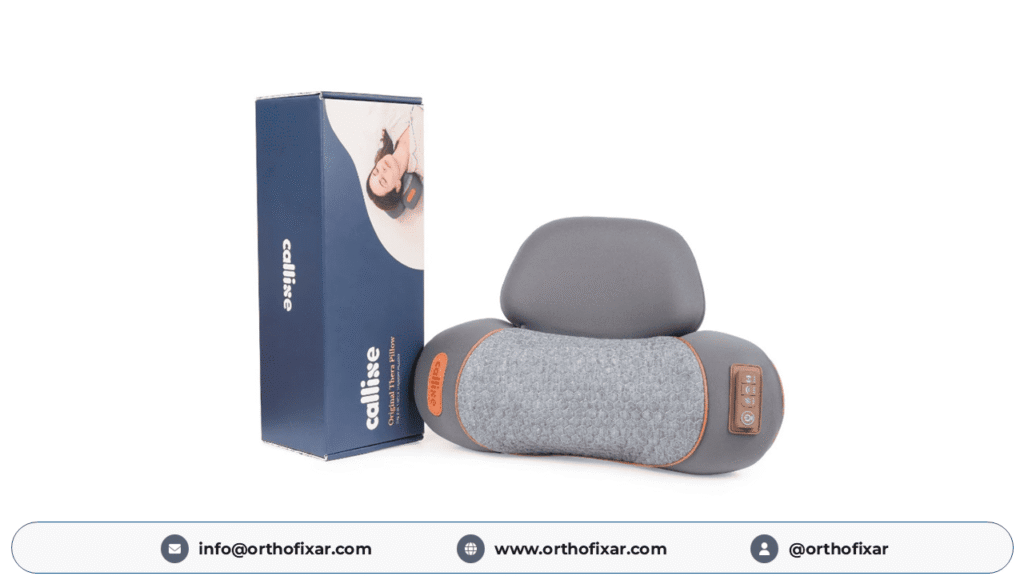
One example is the Callixe Thera Pillow, a neck traction pillow for home use that combines air-powered traction with heat and vibration. According to the brand’s product page, it offers three traction heights, three heat levels and three vibration modes, runs a 15-minute automatic session before switching itself off, and is cordless with a rechargeable battery. Callixe recommends beginning with about 5 minutes and working up to the full 15-minute session. Because the device heats, people with diabetes, circulation problems or reduced skin sensation should check with a clinician first, as they may not feel the skin getting too warm, and the company also asks users with an underlying condition or an implanted device to get medical clearance. Callixe positions it as a comfort and tension relief product, not a treatment for any condition.
How to Start Home Traction Safely
Begin with the lowest setting and the shortest session. Lie on a firm surface, let your shoulders relax and breathe slowly. The stretch should feel mild. If you notice sharp pain, tingling, numbness, dizziness or a headache that builds during the session, stop and seek advice.
Keep early sessions to a few minutes and use the device once a day at first. Notice how your neck feels for the rest of that day and the following morning. If stiffness eases and nothing flares up, increase the time gradually. More force and longer sessions do not automatically mean better results.
Traction works best as part of a plan. Deep neck flexor work, such as slow chin retractions, together with exercises that draw the shoulder blades down and back and keep the upper back mobile, helps the muscles hold a better position once the session ends. Lifting the monitor so you are not looking down, holding your phone higher and getting out of any one position after 30 to 45 minutes at most reduce the load that caused the stiffness in the first place.
When Neck Pain Needs Medical Attention
Most neck pain settles with time, movement and sensible self-care. Some signs, however, need prompt assessment. See a doctor if pain follows a fall or car accident, if it is severe and constant at night, if you have fever or unexplained weight loss, or if you notice arm weakness, numbness, clumsiness of the hands or changes in walking. Pain that keeps getting worse after several weeks of self-care also deserves a professional review.
A physiotherapist can help you decide whether traction suits your situation, show you the right position and intensity and build an exercise program around it.
Conclusion
Cervical traction is a reasonable tool for some people with mechanical neck stiffness, but it is not a cure and it is not for everyone. Check the contraindications, start low and short, pay attention to how your body responds and combine traction with exercise and better daily habits. When in doubt, ask your clinician before you begin.
Frequently Asked Questions
How long should a home traction session last?
Start with a few minutes and build up slowly. Many home devices recommend sessions of around 10 to 15 minutes once a day. Follow the manufacturer’s guidance and your clinician’s advice.
Can I use neck traction if I have a herniated disc?
Some people with disc-related arm pain are offered traction in a clinic, but home use should only happen after a clinician has assessed you and agreed it is appropriate.
Should traction ever hurt?
No. You should feel a mild, comfortable stretch. Stop if you feel sharp pain, tingling, numbness or dizziness.