
Adductor Pollicis Muscle Anatomy
The adductor pollicis muscle is a unique muscle, in that it is triangular shaped with a 2-headed structure:…
Read Full Entry →
The adductor pollicis muscle is a unique muscle, in that it is triangular shaped with a 2-headed structure:…
Read Full Entry →
The flexor pollicis brevis (FPB), the short flexor of the thumb, is located medial to the abductor pollicis…
Read Full Entry →
The abductor pollicis brevis origin is from the front of transverse carpal ligament, extending into the tubercles of…
Read Full Entry →
The thenar eminence of the hand is made up of four muscles: These muscles make up what is…
Read Full Entry →
The extensor indicis proprius muscle origins from from the posterior surface of Ulna and interosseous membrane, and inserts…
Read Full Entry →
The extensor pollicis longus originates on the middle third of the posterior ulnar diaphysis, traverses laterally along the…
Read Full Entry →
The extensor pollicis brevis muscle originates from the lower third of the posterior surface of the radius and…
Read Full Entry →
The abductor pollicis longus origin is from the posterior surfaces of ulna, radius and interosseous membrane. It consists…
Read Full Entry →
The wide supinator muscle consists of superficial and deep layers. These layers differ in the type of origin,…
Read Full Entry →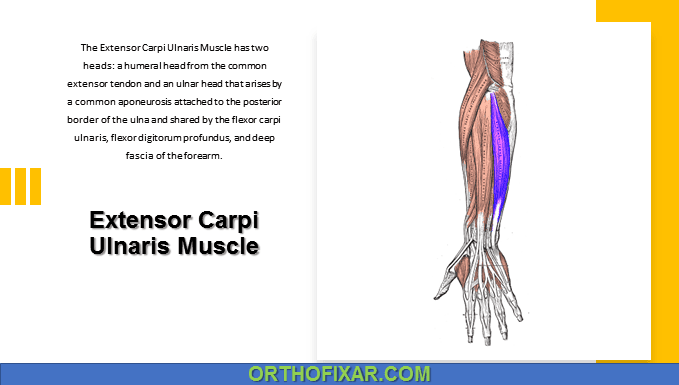
The Extensor Carpi Ulnaris Muscle has two heads: a humeral head from the common extensor tendon and an…
Read Full Entry →
Extensor Digiti Minimi attached proximally by a common extensor tendon to the lateral epicondyle, the tendon of this…
Read Full Entry →
The extensor digitorum muscle arises from the lateral epicondyle of the humerus, by the common extensor tendon; from…
Read Full Entry →