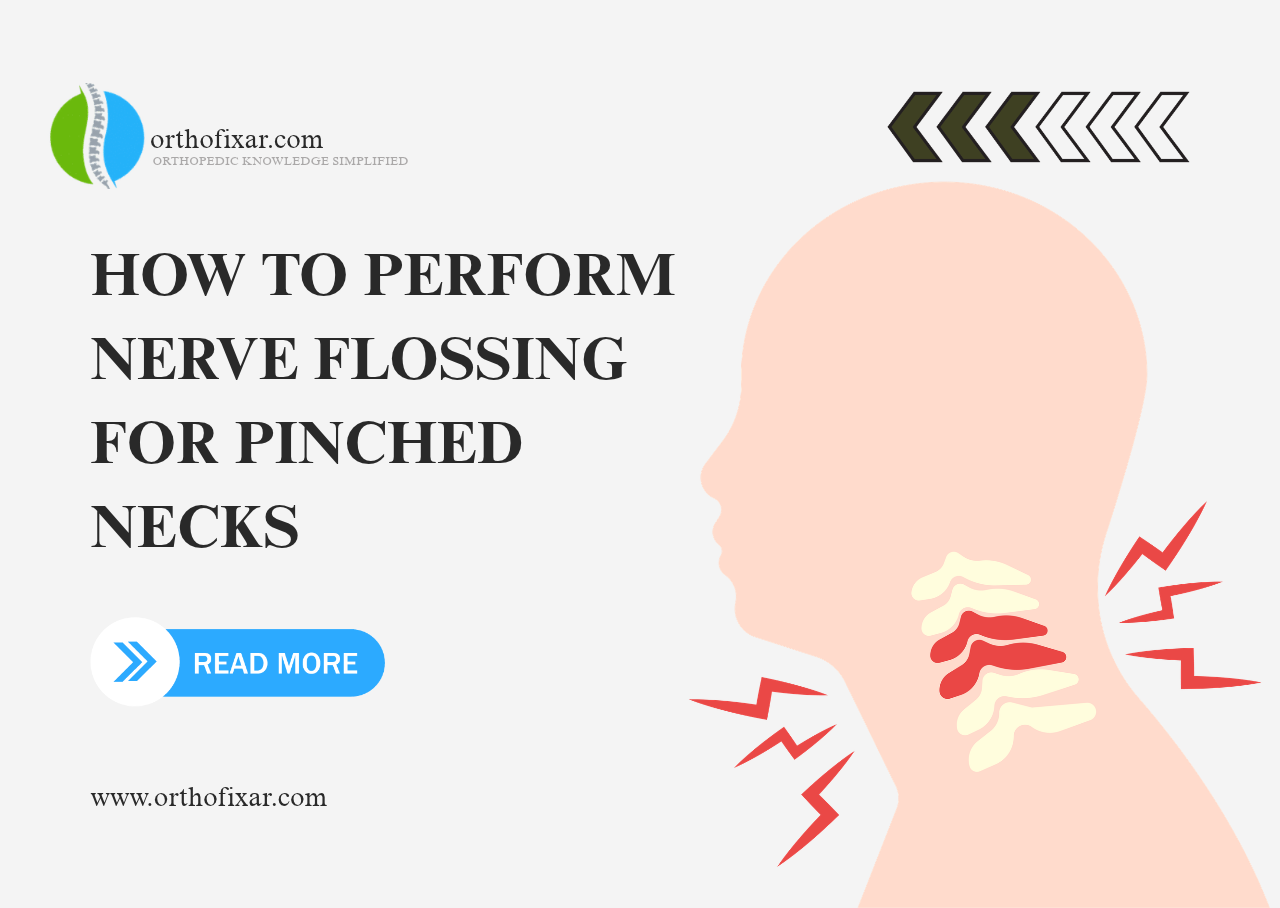
A pinched nerve in the neck does not always require complete rest. In many cases, gentle, controlled nerve gliding—often called nerve flossing—can help restore mobility and reduce irritation. Nerve flossing involves moving the neck and arm in coordinated patterns so the nerve slides and glides through surrounding tissues rather than remaining stuck or stretched. This guide explains what flossing does, how to perform it safely for a pinched neck, which techniques target which nerves, the mistakes that most often cause flare-ups, and when professional guidance is essential.
What Nerve Flossing Actually Does
Nerves are not passive cables. They need to slide, glide, and tolerate a small amount of stretch as you move your neck and arm. When a nerve is compressed or irritated—often from a disc bulge, narrowed space in the neck, or tight surrounding muscles—that sliding mechanism can become restricted.
Flossing is not the same as stretching. A stretch holds tension on the nerve; flossing alternates tension between two ends of the nerve so it slides through its bed without staying elongated. That distinction matters, because aggressive stretching of an irritated nerve often makes symptoms worse.
In clinical practice, flossing works best as one part of a broader plan that includes posture and load management, gentle range-of-motion work, and strengthening once irritation settles. It is a tool, not a stand-alone cure.
Before You Start: Safety Checkpoints
Nerve flossing is generally gentle, but it is not appropriate for everyone without medical clearance. Screen yourself honestly before your first session.
- Get cleared first if you have red flags: severe or worsening weakness, loss of coordination in the hands, unexplained muscle wasting, or symptoms in both arms and legs.
- Seek urgent care for serious signs: difficulty walking, bowel or bladder changes, or numbness around the groin or saddle area can indicate a spinal cord issue and require immediate medical assessment.
- Delay flossing after acute severe pain: if pain is sharp, constant, or easily triggered, calm it down first with relative rest and positions that reduce symptoms.
- Check with your clinician if you have had recent neck surgery, a fracture, or a known unstable spine condition.
- Stop if symptoms shoot down the arm or worsen during the movement. A mild stretch sensation is acceptable; sharp, electric, or radiating pain is not.
If you are unsure whether your symptoms come from a nerve, a joint, or a muscle, a physical therapist can assess which structure is involved. Professional organizations such as the American Physical Therapy Association provide guidance on finding a licensed therapist, and in many countries you can search a national physiotherapy association directory.
The Golden Rule: Gentle Range, No Sharp Symptoms
The most common mistake people make is treating nerve flossing like a hard stretch. The effective dose is usually small: slow movements, a comfortable range, and a symptom response that settles quickly.
A practical guideline is to work only to the point where you feel a mild stretch or pull, never to the point of sharp pain or tingling that lingers. If symptoms increase and stay increased for more than a few minutes afterward, you went too far.
- Move slowly—roughly three to five seconds per repetition.
- Keep the neck movement small at first; a few degrees can be enough.
- Start with 5 to 10 repetitions, once or twice daily.
- Increase gradually only if symptoms remain stable or improve.
- Never push through numbness, tingling that spreads, or weakness.
How to Perform Median Nerve Flossing for a Pinched Neck
The median nerve runs from the neck through the front of the shoulder, elbow, and wrist into the hand. It is commonly involved when symptoms travel into the thumb, index, and middle fingers. This sequence is one of the most useful starting points for a pinched neck with arm symptoms.
- Start seated or standing tall with the shoulder relaxed.
- Bring the arm out to the side at about shoulder height, elbow bent to 90 degrees, palm facing up.
- Gently tilt your head away from that arm while you extend the elbow and bend the wrist back.
- Then reverse: tilt your head toward the arm while you bend the elbow and relax the wrist.
- Repeat slowly, alternating between the two positions.
Think of it as a coordinated dance: as the arm lengthens, the neck moves away; as the arm shortens, the neck moves toward. That alternation is what creates the glide.
How to Perform Ulnar Nerve Flossing
The ulnar nerve travels down the inner arm to the ring and little fingers. Symptoms often include tingling in those fingers or a feeling of weakness in grip. This version is useful when symptoms follow that pattern.
- Sit tall and bring the arm out to the side, elbow bent, palm facing your ear.
- Gently tilt your head toward the working arm while you straighten the elbow and flex the wrist.
- Reverse by tilting your head away while bending the elbow and relaxing the wrist.
- Keep the shoulder down—avoid shrugging as you move.
- Perform 5 to 10 slow repetitions, stopping before tingling increases.
How to Perform Radial Nerve Flossing
The radial nerve runs along the back of the arm and can cause symptoms on the back of the hand or thumb side. It is often irritated by sustained positions such as sleeping with the arm overhead or prolonged wrist extension.
- Begin with the arm at your side, elbow straight, palm facing your body.
- Gently tilt your head toward the working side while you turn the palm away and bend the wrist downward.
- Reverse by tilting the head away while relaxing the wrist and bending the elbow slightly.
- Keep the movement smooth and avoid forcing the wrist into a hard stretch.
Quick Comparison of the Three Main Flossing Techniques
Use this table to match the technique to your symptom pattern. It is a guide, not a diagnosis—if you are unsure which nerve is involved, a clinician can assess you.
| Technique | Nerve Involved | Typical Symptom Area | Key Arm Position | Typical Dose |
|---|---|---|---|---|
| Median nerve floss | Median nerve | Thumb, index, middle fingers; front of forearm | Arm out to side, elbow bent, palm up | 5–10 slow reps, 1–2 times daily |
| Ulnar nerve floss | Ulnar nerve | Ring and little fingers; inner forearm | Arm out to side, palm toward ear | 5–10 slow reps, 1–2 times daily |
| Radial nerve floss | Radial nerve | Back of hand, thumb side; back of forearm | Arm at side, palm facing body | 5–10 slow reps, 1–2 times daily |
Common Mistakes That Make Symptoms Worse
Most flare-ups from flossing come down to a handful of avoidable errors. Correcting them often turns an irritating exercise into a helpful one.
- Holding the end position: flossing is a movement, not a stretch—keep it moving.
- Moving too fast: speed reduces control and increases nerve tension.
- Shrugging the shoulder: this takes tension off the nerve and defeats the purpose.
- Doing too many repetitions: more is not better; quality and symptom response matter.
- Ignoring the neck: the neck tilt is essential to the glide, not optional.
- Flossing during an acute flare: calm the irritation first, then floss.
How Flossing Fits Into a Full Neck Rehab Plan
Nerve flossing works best alongside other strategies, not in isolation. A pinched neck usually needs load management, posture changes, and strengthening of the deep neck and shoulder blade muscles.
- Activity modification: reduce positions that provoke symptoms, such as prolonged forward head posture or sleeping with the neck bent.
- Gentle range of motion: slow neck turns and chin tucks within a comfortable range.
- Strengthening: scapular and deep neck flexor exercises once irritation settles.
- Ergonomic adjustments: raise screens to eye level and take regular movement breaks.
- Gradual return to load: build tolerance rather than avoiding movement entirely.
For readers in the United States, the National Institute of Neurological Disorders and Stroke offers plain-language information on nerve and spine conditions that can help you understand your diagnosis. In the United Kingdom, the NHS website provides guidance on neck pain and when to seek help.
Signs You Should Stop and Seek Help
Nerve flossing should feel controlled and tolerable. Certain responses mean you should pause and get assessed.
- New or worsening weakness in the arm or hand.
- Numbness that spreads or becomes constant.
- Pain that shoots down the arm and does not settle.
- Loss of fine motor control, such as dropping objects or difficulty buttoning clothes.
- Symptoms in both arms and legs, or changes in walking or balance.
These signs can indicate more significant nerve compression and warrant prompt medical evaluation. Do not self-manage them with exercise alone.
Building a Daily Flossing Routine
Consistency matters more than intensity. A short, daily routine is usually more effective than occasional longer sessions.
- Choose one technique that matches your symptoms.
- Do 5 to 10 slow repetitions in the morning.
- Repeat once in the evening if symptoms are stable.
- Track your response for a few days before increasing.
- Pair flossing with a brief posture or mobility routine.
If symptoms are not improving after a couple of weeks of consistent, gentle practice, or if they are worsening, a physical therapist can reassess the diagnosis and adjust your plan.
Conclusion
Nerve flossing for a pinched neck is a gentle, movement-based technique that helps an irritated nerve slide and glide rather than stay compressed or stretched. Match the technique to your symptom pattern, keep the range comfortable, and stop if symptoms sharpen or spread. Used alongside load management, posture changes, and strengthening, flossing can be a practical part of recovery—but it should never replace a proper assessment when warning signs are present.
Frequently Asked Questions
How often should I do nerve flossing for a pinched neck?
Most people do well with 5 to 10 slow repetitions once or twice daily. Start with one session per day and increase only if symptoms remain stable or improve. Consistency over intensity is the key principle.
Can nerve flossing make a pinched nerve worse?
Yes, if it is done too aggressively or during an acute flare. Sharp pain, spreading tingling, or symptoms that linger after the exercise suggest you went too far. Reduce the range, slow down, or pause and seek advice.
What is the difference between nerve flossing and nerve stretching?
Stretching holds tension on a nerve at one end. Flossing alternates tension between two ends so the nerve slides through surrounding tissue without staying elongated. Flossing is generally gentler and better tolerated for an irritated nerve.
Which nerve floss should I use for tingling in my thumb and index finger?
Tingling in the thumb, index, and middle fingers often follows the median nerve, so a median nerve floss is a reasonable starting point. However, symptom location alone is not a diagnosis; a clinician can confirm which nerve is involved.
Can I do nerve flossing if I have a disc bulge in my neck?
Many people with a disc-related pinched nerve can do gentle flossing once acute pain settles, but it should be part of a plan guided by a clinician. If symptoms are severe, worsening, or include weakness, get assessed before starting.
Should nerve flossing hurt?
It should not cause sharp or radiating pain. A mild stretch or pull is acceptable, but symptoms should settle quickly after the movement. Pain that increases and stays increased means you should stop.
How long does it take for nerve flossing to help?
Responses vary. Some people notice less irritation within a week or two of consistent, gentle practice, while others need a broader rehab plan. If there is no improvement after a couple of weeks, or symptoms worsen, seek professional assessment.
Can I do nerve flossing while sitting at my desk?
Yes, most flossing techniques can be done seated, which makes them convenient during work breaks. Keep the movements slow and small, and avoid shrugging the shoulder or forcing the end range.
Is it safe to do nerve flossing every day?
For most people with stable, mild symptoms, daily gentle flossing is reasonable. If you notice increasing irritation, reduce frequency or range and reassess. Stop and seek advice if warning signs appear.
When should I see a physical therapist instead of flossing on my own?
See a physical therapist if you have weakness, spreading numbness, symptoms that do not improve after a couple of weeks, or uncertainty about which nerve is involved. A therapist can assess the cause and build a tailored plan. You can find licensed professionals through the American Physical Therapy Association or your national physiotherapy association.