Back pain that worsens after a long day of sitting is a common and frustrating experience. Prolonged sitting loads the spine in ways it is not built to tolerate for hours at a time. When you sit, the discs in your lower back carry more compressive force than when you stand or lie down, your hip flexors stay in a shortened position, and your deep postural muscles gradually reduce their activity. The result is stiffness, aching, and often a sharp pain when you finally stand up. This article explains what happens to your back during a long sitting day, why pain often peaks hours later, and the practical steps clinicians recommend to break the cycle.
What Happens to Your Back When You Sit
Sitting is not inherently damaging. The problem is the duration and the posture you hold without moving. Spinal discs rely on movement to exchange fluid and nutrients, so when you sit still for hours, they lose some of that exchange and become less resilient.
At the same time, your hamstrings and hip flexors adapt to a shortened position. When you stand, those tissues resist lengthening, which pulls on the pelvis and increases load through the lower back. That is why the first few steps after a long meeting often feel stiff or painful.
- Disc compression rises: the lower back discs bear more load in sitting than in standing.
- Hip flexors shorten: the psoas and iliacus stay in a shortened position, altering pelvic tilt.
- Glutes quiet down: reduced activation shifts load to the lumbar spine.
- Deep core muscles disengage: the multifidus and transversus abdominis provide less support.
- Circulation slows: reduced blood flow to muscles contributes to stiffness and ache.
Why Pain Peaks Later, Not During Sitting
Many people feel fine while working and then their back “seizes” when they stand up or later that evening. This delay is normal and explainable. Tissue creep—the gradual deformation of soft tissue under sustained load—builds silently while you sit.
By the time you stand, the tissues have adapted to a compressed, flexed position and need time to reorganize. The sudden change in load is what your nervous system registers as pain. Pain that arrives hours after sitting is often a sign of cumulative load rather than a single moment of injury.
In the clinic, the pattern seen most often is not a dramatic injury but a slow accumulation: hours of sitting, a stiff drive home, then pain when bending to pick something up.
The Most Common Sitting Postures That Cause Back Pain
Not all sitting positions are equally stressful. Some place far more strain on the lumbar spine than others. Here is how the common ones compare.
| Posture | What It Does to the Spine | Typical Effect |
|---|---|---|
| Slumped sitting (posterior pelvic tilt) | Flattens the lumbar curve, loads discs and posterior ligaments | Aching, stiffness, pain on standing |
| Perched on the edge of the chair | Overactivates hip flexors and back extensors | Fatigue and tightness in the lower back |
| Cross-legged or twisted sitting | Creates asymmetric load and rotation | One-sided pain, sacroiliac irritation |
| Supported upright sitting | Maintains a neutral lumbar curve with less passive strain | Best tolerated for longer periods |
Why Some People Feel It More Than Others
Two people can sit the same number of hours and have very different outcomes. Several factors influence how much your back complains.
- Baseline strength: people with stronger hip and trunk musculature tolerate sitting better.
- Previous episodes: a history of low back pain increases sensitivity to sustained loading.
- Chair and desk setup: poor ergonomics amplify spinal load.
- Sleep and stress: both affect pain sensitivity and tissue recovery.
- Activity outside work: regular movement offsets some of the sitting load.
How to Tell If Your Pain Is From Sitting or Something Else
Most sitting-related back pain improves with movement and changes in position. That pattern is reassuring. But some symptoms warrant a proper assessment.
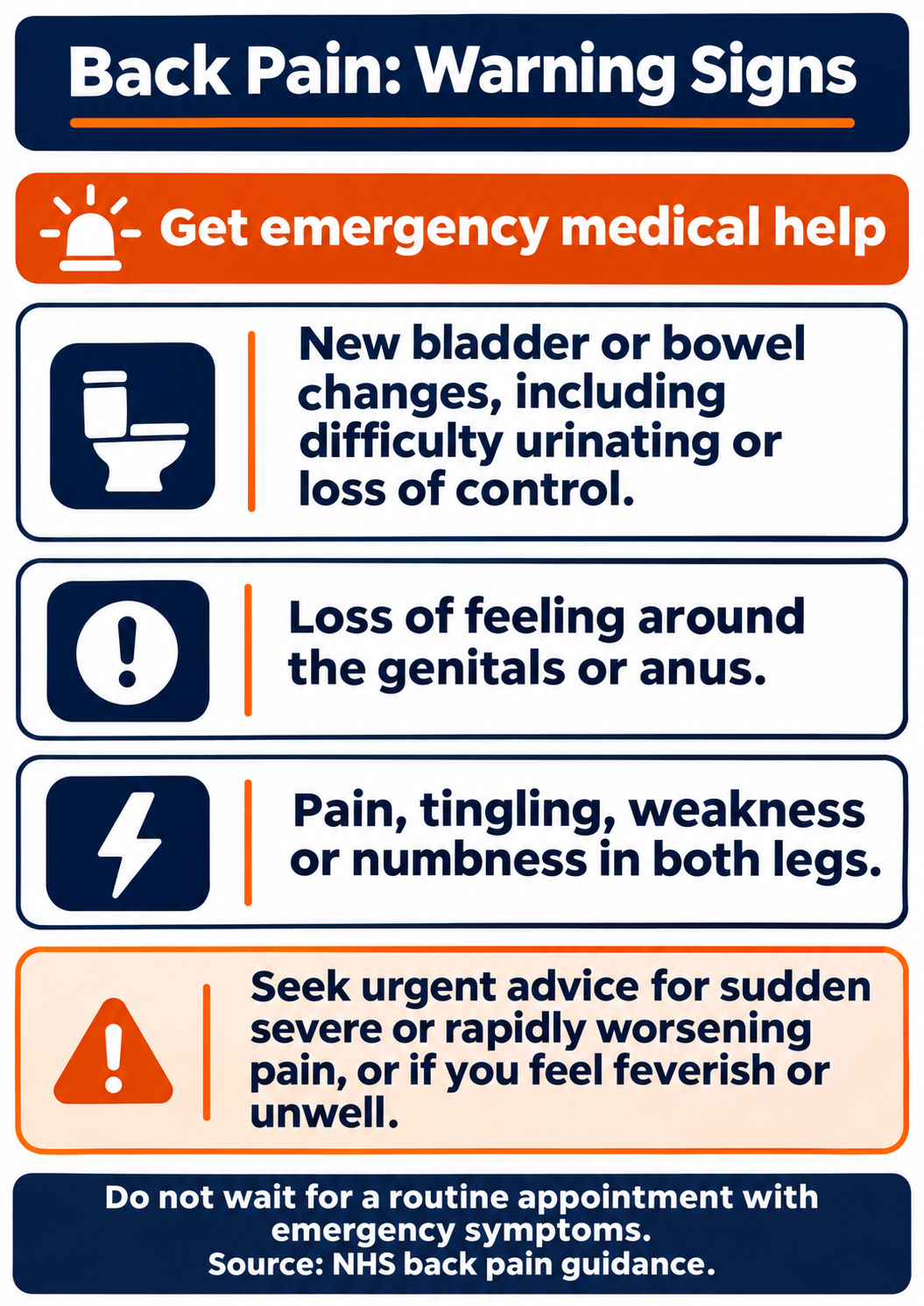
Seek evaluation from a licensed physical therapist or physician if you notice pain radiating below the knee, numbness, weakness, or changes in bladder or bowel function. These are not typical sitting-related complaints and should be checked promptly.
- Pain that eases within minutes of standing or walking usually points to postural load.
- Pain that worsens steadily through the day may reflect cumulative tissue strain.
- Pain with specific movements (bending, twisting) suggests a mechanical component.
- Constant, unrelenting pain or night pain deserves medical review.
Practical Fixes You Can Apply Today
You do not need a standing desk or a complete ergonomic overhaul to make a difference. Small, consistent changes have the biggest impact. The core principle is simple: change position often and load your spine in varied ways.
Movement Breaks That Actually Help
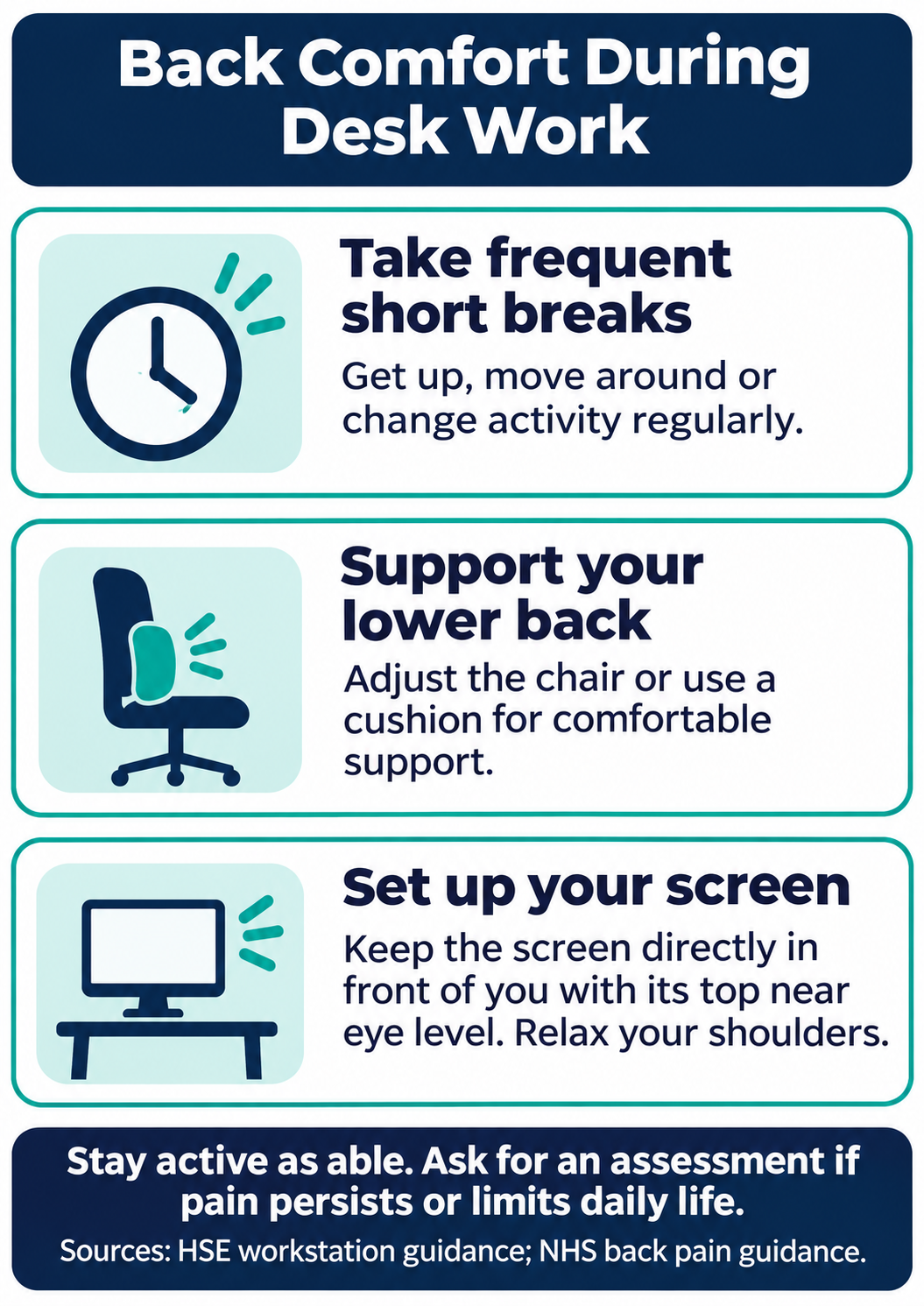
Standing up every 30 to 45 minutes is more effective than holding a “perfect” posture for hours. Your spine tolerates variety far better than stillness.
- Stand and walk for two minutes every half hour.
- Do a gentle standing back extension (hands on hips, lean back slightly) ten times.
- Perform a seated pelvic tilt to restore lumbar movement.
- Roll your shoulders and turn your head side to side to reset the upper back.
- Take phone calls standing or walking.
Set Up Your Chair and Desk Properly
Good ergonomics reduce the load your back must manage passively. The goal is a supported, neutral spine rather than a rigidly straight one. The OSHA computer workstation ergonomics guidance provides clear, practical setup standards you can follow at home or in the office.
- Feet flat on the floor or a footrest.
- Hips slightly higher than knees.
- Lumbar support filling the small curve of your lower back.
- Screen at eye level to prevent forward head posture.
- Elbows at roughly 90 degrees with shoulders relaxed.
Strengthen the Muscles That Protect Your Back
Movement breaks manage symptoms, but strength and endurance build resilience over time. A physical therapist can tailor a program, and organizations such as the American Physical Therapy Association offer resources on finding a qualified clinician and understanding evidence-based care.
- Hip hinge and deadlift patterns to strengthen the posterior chain.
- Glute bridges to counteract glute inhibition from sitting.
- Dead bug or bird dog for trunk control.
- Hip flexor and hamstring mobility work.
- Regular walking to build endurance in postural muscles.
When to See a Physical Therapist
If pain persists beyond a few weeks, keeps recurring after long sitting days, or limits your daily activities, a physical therapist can identify the specific drivers. A thorough assessment looks at movement quality, strength, and how your symptoms behave through the day.
Early intervention tends to shorten recovery. You can search for a licensed clinician through the APTA Find a PT directory if you are unsure where to start.
Building a Sitting Routine That Supports Your Back
Think of your workday as a series of movement opportunities rather than one long block of sitting. This shift in mindset is often the most powerful change people make.
- Alternate between sitting and standing tasks where possible.
- Keep water nearby so you naturally get up to refill it.
- Schedule movement reminders on your phone or calendar.
- Use a small lumbar roll if your chair lacks support.
- Finish the day with a short walk to decompress the spine.
Conclusion
Back pain after a long sitting day comes down to sustained load, shortened tissues, and reduced muscle activity. The fix is not a single perfect posture—it is frequent movement, sensible ergonomics, and building strength over time. Start with movement breaks today, address your setup, and seek a professional assessment if symptoms persist or worsen.
Frequently Asked Questions
Why does my back hurt more after sitting than during sitting?
Sustained sitting causes gradual tissue deformation and reduced circulation. When you stand, the sudden change in load and position triggers pain that built quietly while you were still. This delayed pattern is common and usually reflects cumulative strain rather than a new injury.
Is a standing desk better for my back?
A standing desk can help, but only if you change position regularly. Standing still for hours carries its own risks, including fatigue and leg discomfort. The best approach is alternating between sitting and standing throughout the day.
How often should I get up from my chair?
A practical guideline is every 30 to 45 minutes. Even a two-minute walk or a few standing back extensions can reduce stiffness. The key is consistency rather than long breaks once or twice a day.
Can poor posture alone cause back pain?
Posture is one factor among many. Research suggests there is no single “correct” posture that prevents all pain. Duration, movement variety, strength, and overall health matter more than holding a rigid position.
Should I use a lumbar support cushion?
A lumbar roll can help maintain the natural curve of your lower back, especially in chairs with poor support. It is most useful if your chair lacks built-in lumbar support. It will not replace the need to move regularly.
What exercises help back pain from sitting?
Exercises that strengthen the glutes, hips, and trunk—such as glute bridges, hip hinges, and dead bugs—are commonly helpful. Mobility work for the hip flexors and hamstrings also supports recovery. A physical therapist can tailor a program to your specific needs.
Why does my back hurt when I stand up after sitting?
Standing up after prolonged sitting loads tissues that have adapted to a flexed, compressed position. The sudden lengthening of hip flexors and reloading of spinal structures can produce a sharp or aching sensation. Moving slowly and doing a few gentle extensions before standing can ease this.
Can stress make sitting-related back pain worse?
Yes. Stress affects pain sensitivity and muscle tension, and it can influence how you sit and move. Managing stress alongside physical strategies often improves outcomes.
When is back pain a red flag?
Seek prompt medical evaluation for pain radiating below the knee, numbness, leg weakness, unexplained weight loss, night pain, or changes in bladder or bowel control. These symptoms fall outside typical sitting-related pain and need professional review.
How long does it take for back pain from sitting to improve?
Many people notice improvement within days to a few weeks once they add regular movement and improve their setup. Persistent or worsening symptoms should be assessed by a physical therapist or physician.