Sharp heel pain with your first steps in the morning or after sitting is the hallmark of plantar fasciitis. A short, deliberate routine performed before you stand can reduce the jolt that catches you off guard by gently warming and loading the plantar fascia and calf. This article explains why the pain spikes on standing, how to perform the pre-step routine correctly, and which other strategies reliably help.
Why Heel Pain Is Sharpest on the First Steps
The plantar fascia is a thick band of tissue running from the heel bone to the ball of the foot. It acts like a bowstring, storing and releasing energy with every step. When the tissue becomes irritated, usually near its attachment at the heel, it tightens during sleep or prolonged rest.
Standing suddenly stretches that tightened band, and the pull on the irritated tissue produces sharp pain. This is why the first few steps after sleep or a long period of sitting hurt most, and why the pain often eases as you continue walking. The pattern is consistent enough that clinicians use it as a quick clue during assessment.
Understanding this mechanism matters because it shapes the solution. The goal is not to avoid using the foot but to prepare the tissue for load before that load arrives abruptly.
The Simple Trick: Prepare Before You Stand
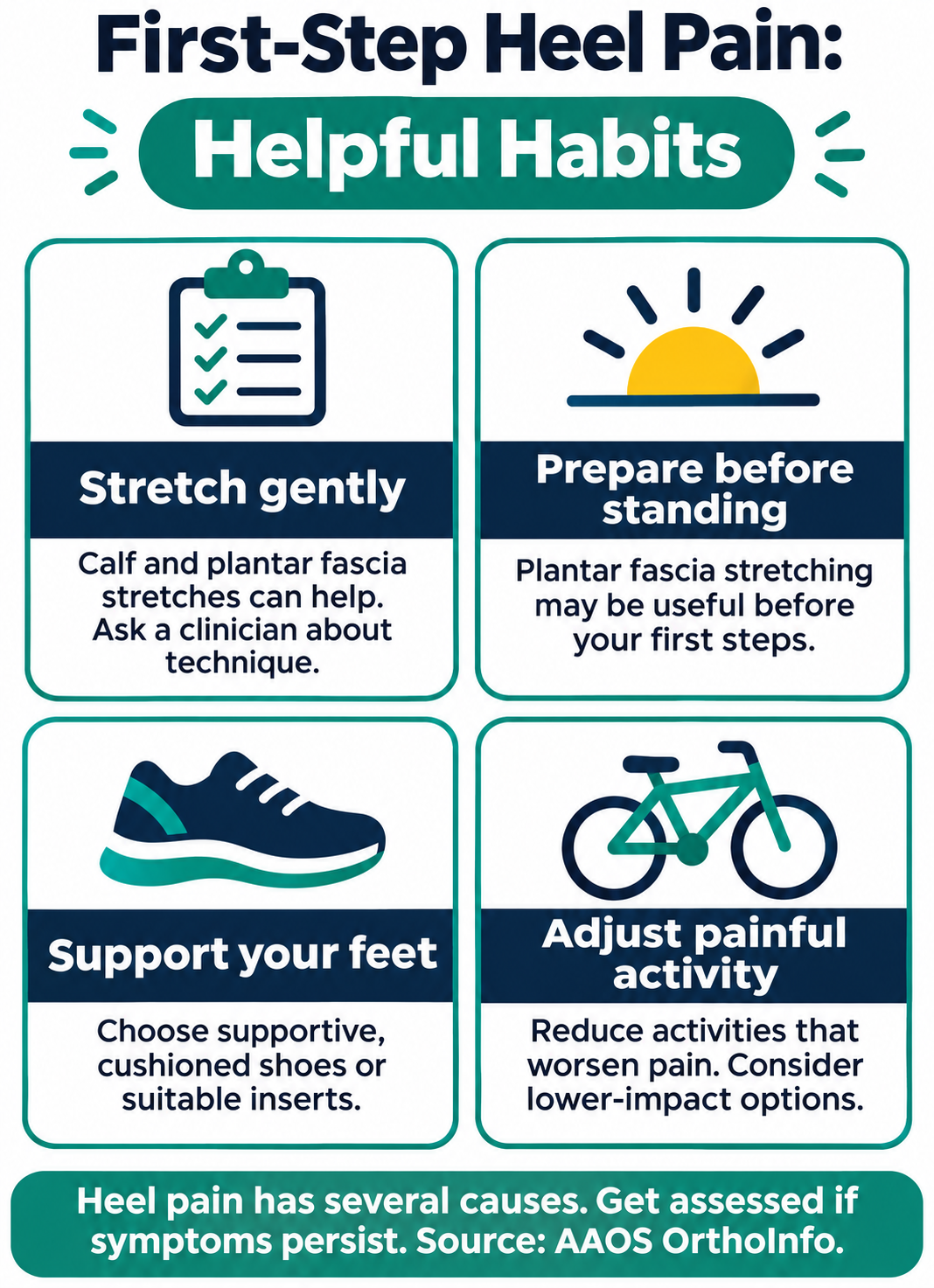
Before your feet hit the floor, spend 30 to 60 seconds warming and gently loading the tissue. The aim is not aggressive stretching. It is coaxing the fascia and calf out of their rested, tightened state so the first step is less of a sudden pull.
Try this sequence while still sitting on the edge of the bed or in your chair:
- Write the alphabet in the air with your foot, moving mainly at the ankle, for about 20 seconds.
- Point and flex your foot slowly 10 times, pausing briefly at each end range.
- Gently pull your toes toward you with a towel or your hand until you feel a mild stretch under the arch, hold for 15 seconds, and repeat twice.
- Press your thumb gently along the arch from heel to ball for 20 seconds.
- Stand up slowly, shift weight gradually onto both feet, and take your first few steps on a soft surface if possible.
Many people notice a meaningful difference in first-step pain within a week of doing this consistently. It is not a cure, but it is a practical way to take the edge off the worst moment of the day.
How to Do the Calf and Fascia Warm-Up Correctly
Technique matters more than effort. Rough stretching on a cold, irritated fascia can increase pain, so keep the pressure comfortable and build gradually.
Seated Toe Pull
Sit with the affected leg crossed over the other knee. Pull your toes back toward your shin until you feel a gentle pull under the arch, not a sharp pain. Hold for 15 seconds, relax, and repeat two or three times before standing.
Ankle Pumps and Circles
Move the ankle through its full range slowly. Ten pumps and ten circles in each direction improve circulation and reduce the stiffness that builds during rest. This is especially useful if you sit for long periods at a desk.
Gentle Arch Massage
Use your thumb or a frozen water bottle rolled under the arch for 20 to 30 seconds. Keep the pressure mild. Massaging before standing tends to reduce that sudden jab more effectively than stretching alone.
What Else Reliably Helps Heel Pain
The pre-step routine works best as part of a broader plan. Plantar fasciitis usually improves with consistent, progressive loading rather than complete rest. Rest alone tends to let the tissue tighten further, which makes the next load more painful.
- Wear supportive shoes with a firm heel counter and cushioning, even indoors.
- Avoid walking barefoot on hard floors, especially first thing in the morning.
- Use a heel cup or arch support insert if your shoes are thin or worn.
- Stretch the calf and plantar fascia daily, holding each stretch 15 to 30 seconds.
- Add progressive strengthening such as heel raises once acute pain settles.
- Reduce prolonged standing or high-impact activity temporarily, then rebuild gradually.
For general information on this condition, the American Academy of Orthopaedic Surgeons overview of plantar fasciitis is a reliable starting point.
Comparing Common Home Strategies
The table below summarizes how different approaches fit into a practical routine. It is general guidance, not a substitute for an individual assessment.
| Strategy | Best Timing | What It Does | Practical Note |
|---|---|---|---|
| Pre-step warm-up | Before first standing | Reduces sudden pull on the fascia | 30–60 seconds, every morning |
| Calf stretching | Morning and evening | Improves ankle flexibility | Hold 15–30 seconds, mild pull only |
| Arch massage | Before standing or after activity | Eases tissue tightness | Gentle pressure, 20–30 seconds |
| Supportive footwear | All day | Reduces strain on the arch | Include indoor shoes too |
| Progressive strengthening | Once pain is manageable | Builds tissue tolerance | Start with heel raises |
When to See a Physical Therapist or Doctor
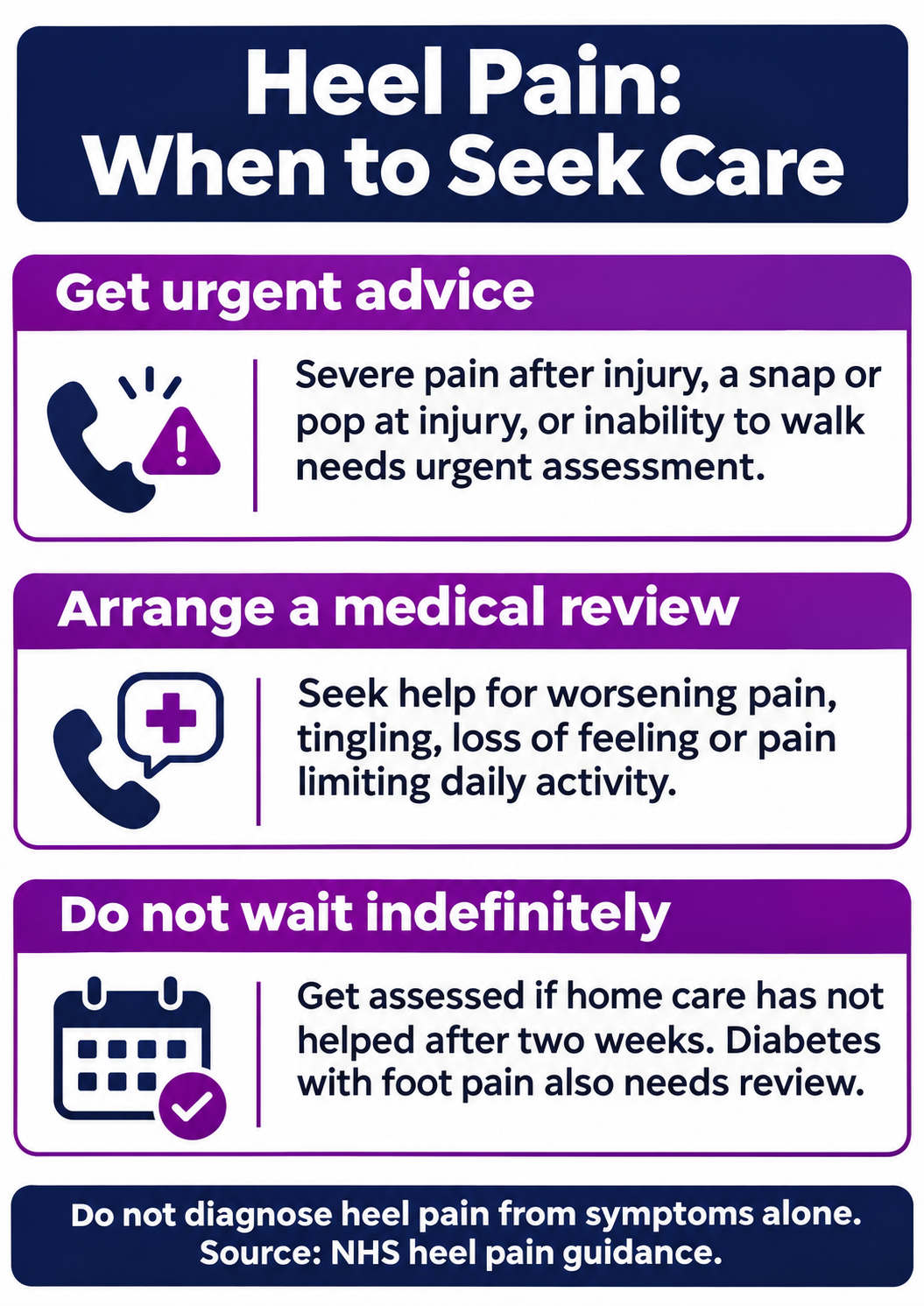
Most heel pain improves with self-care over weeks to months. Some situations need professional assessment, so do not ignore these signs.
- Pain that continues to worsen despite consistent home care for several weeks.
- Numbness, tingling, or burning in the heel or sole, which may point to nerve involvement.
- Severe pain after an injury, a fall, or a sudden pop.
- Redness, swelling, or warmth around the heel.
- Pain in both feet with morning stiffness lasting more than an hour, which can suggest an inflammatory condition.
A physical therapist can assess your foot mechanics, footwear, and calf flexibility, then build a targeted loading program. You can find a licensed clinician through the American Physical Therapy Association find a PT tool.
Common Mistakes That Keep Heel Pain Going
Small habits can undo good intentions. These are the errors clinicians correct most often.
- Stretching aggressively on a cold fascia instead of warming up first.
- Skipping the routine on busy mornings, which is exactly when it helps most.
- Walking barefoot at home on tile or hardwood.
- Wearing worn-out shoes with a collapsed heel.
- Resting completely and avoiding all loading, which lets the tissue stiffen.
- Expecting overnight results instead of consistent daily practice.
Building the Trick Into Your Day
Consistency beats intensity. Tie the routine to habits you already have so it becomes automatic.
- Do it before your feet touch the floor each morning.
- Repeat the ankle pumps after any long period of sitting.
- Keep a frozen water bottle near your chair for quick arch massage.
- Set a reminder for the first week until it feels routine.
If you sit at a desk for hours, the same principle applies to that first stand after lunch. A few ankle circles before you push back from the desk can prevent the same sharp pull.
Final Thoughts
Sharp heel pain on standing comes from a tightened, irritated plantar fascia being stretched abruptly. A brief pre-step warm-up, paired with supportive footwear and consistent loading, is a practical way to soften that first step. It is simple, low risk, and easy to repeat. If pain persists or worsens, get assessed so the plan can be tailored to your foot.
Frequently Asked Questions
Does the trick work for everyone with heel pain?
No. It helps most people whose pain fits the plantar fasciitis pattern, meaning sharp first-step pain that eases with walking. Heel pain from nerve irritation, stress fractures, or inflammatory conditions may need different care, so persistent or unusual symptoms should be assessed.
How long before I notice a difference?
Many people feel some relief in first-step pain within about a week of doing the routine daily. Full improvement usually takes longer and depends on how long the problem has been present, your footwear, and your activity level.
Should I stretch hard to get rid of the pain faster?
No. Aggressive stretching on a cold, irritated fascia can make it worse. Use gentle, sustained stretches with a mild pull, and warm up the tissue with ankle movement before you stretch.
Can I do this trick if my pain is in both heels?
Yes, the routine is safe to do on both feet. Pain in both heels with prolonged morning stiffness is worth discussing with a clinician, because it can sometimes point to an inflammatory condition rather than simple plantar fasciitis.
Is it better to rest completely until the pain goes away?
Complete rest is rarely the best approach. The tissue tends to stiffen without gentle loading, so a balance of reduced high-impact activity, supportive footwear, and progressive strengthening usually works better.
What shoes should I wear around the house?
Choose supportive shoes or slippers with a firm sole and some arch support rather than walking barefoot on hard floors. This reduces strain on the fascia during the many small steps you take at home.
Can heel pain on standing be something other than plantar fasciitis?
Yes. Other causes include heel pad problems, nerve compression, stress fractures, and inflammatory arthritis. Clues like numbness, swelling, or pain after injury should prompt a professional assessment.
Do I need imaging before starting this routine?
Usually not for typical plantar fasciitis symptoms. Imaging is generally reserved for cases that do not improve, involve injury, or have atypical features. A clinician can advise whether it is appropriate for you.
Can I exercise or run with heel pain?
Many people can continue lower-impact activity if pain stays manageable and settles within a day. High-impact activity may need temporary reduction. Build back gradually and let pain response guide you.
When should I see a professional?
Seek assessment if pain worsens despite consistent home care for several weeks, if you have numbness or tingling, or if pain follows an injury. Early guidance can prevent the problem from becoming long-standing.