If you are taking steroid medication for asthma, rheumatoid arthritis, or another chronic condition, you probably focus on relief from symptoms. But there is a hidden risk you should understand: the same medicine that helps you feel better can gradually weaken your bones. Steroid-induced osteoporosis is a well-known complication of long-term glucocorticoid therapy, yet many patients only hear about it after a fracture happens. The good news is that this condition is largely preventable. With the right screening, lifestyle habits, and safe medication strategies, you can keep your skeleton strong without sacrificing the benefits of your steroid treatment.
What is Steroid-Induced Osteoporosis?
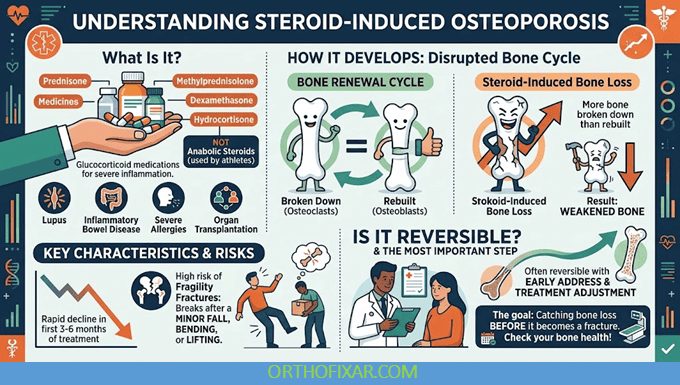
Steroid-induced osteoporosis is bone loss caused by glucocorticoid medications such as prednisone, methylprednisolone, dexamethasone, and hydrocortisone. These drugs are not the same as anabolic steroids used by athletes; they are powerful anti-inflammatory medicines prescribed for conditions like lupus, inflammatory bowel disease, severe allergies, and organ transplantation.
- It develops when steroids disrupt the normal cycle of bone renewal, causing more bone to be broken down than rebuilt.
- Bone mass falls especially fast during the first three to six months of treatment.
- It can lead to fragility fractures, which are breaks that happen after a minor fall or even during everyday movements like bending or lifting.
- Unlike some other forms of osteoporosis, steroid-induced bone loss is often reversible if you address it early and adjust treatment carefully.
No one plans to break a hip from a simple stumble. The most important step is catching bone loss before it becomes a fracture.
How Steroid Medicines Weaken Bone
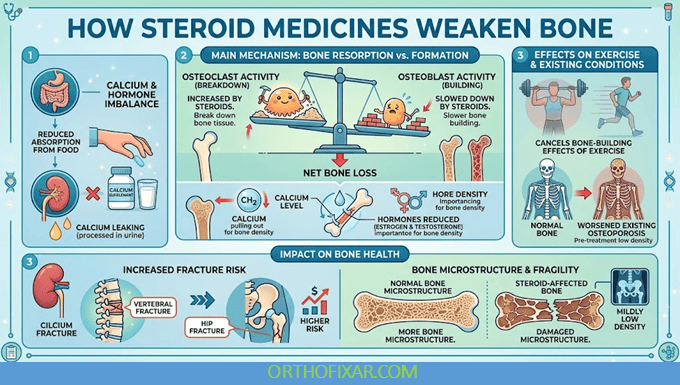
Steroids have a direct effect on bone tissue. They slow down the activity of osteoblasts, cells that build new bone, and they also promote the activity of osteoclasts, cells that break down old bone. This imbalance means your skeleton loses more bone than it can replace.
Steroids also interfere with how your body absorbs calcium from food and how your kidneys process calcium in urine. Over time, this can lower calcium levels and pull stored calcium out of your bones, making them more brittle. In addition, steroids can reduce natural sex hormone production, and estrogen and testosterone are important for maintaining bone density in both men and women.
- Cancels the bone-building effects of regular exercise and physical activity.
- Increases the risk of both vertebral (spinal) and hip fractures.
- Worsens existing osteoporosis if you already have low bone mass before starting treatment.
- Affects bone microstructure, not just overall density, making bones more fragile even when a density scan looks only mildly low.
Who Should Be Screened for Bone Loss?
Not everybody on steroids needs the same level of worry, but several groups should ask their doctor for bone density testing soon after starting treatment. Screening is especially important for people who have used a steroid for more than three months at a daily dose equivalent to 5 mg of prednisone or higher. Even if you are just started, a baseline scan can give you and your doctor a clear picture to compare against later.
Key Risk Groups That Should Not Skip a Scan
- Women who are postmenopausal and men over age 50.
- Anyone with a previous low-impact fracture.
- People with a family history of osteoporosis, particularly a parent with a hip fracture.
- Individuals who have already lost more than 1.5 inches in height or developed a curved spine, which can indicate undiagnosed vertebral collapses.
- Those also taking other medications that weaken bone, such as certain anti-seizure drugs, proton pump inhibitors, or aromatase inhibitors.
| Patient Situation | Recommended Bone Density Screening |
|---|---|
| Starting long-term steroid therapy (planned 3+ months) | Baseline DXA scan before or within 3 months of starting |
| Already on a steroid for 3–6 months | Get a DXA scan right away if you have not had one |
| Postmenopausal woman or man over 50 on steroids | DXA and a fracture risk assessment using current guidelines |
| Anyone who breaks a small bone while taking steroids | DXA scan and close follow-up, regardless of age |
We do not wait for a fracture to start treating high cholesterol. Similarly, we should not wait for a broken bone to begin protecting your skeleton on steroids.
Key Prevention Steps You Can Start Now
You have more control than you think. Prevention of steroid-induced osteoporosis starts with small daily decisions, but it also may include medication if your risk is high. Always talk to your doctor before adding any prescription bone drug.
Nutrition and Calcium Intake
- Eat calcium-rich foods such as yogurt, sardines with bones, leafy greens, and fortified plant milks.
- Aim for a total calcium intake of about 1,000 to 1,200 mg per day, including food and supplement sources combined.
- Take vitamin D supplements if you are not getting enough sunlight. Many doctors recommend 800–1,000 IU daily, especially if a blood test shows low levels.
- Limit salt and caffeine, both of which increase the amount of calcium lost in urine.
Weight-Bearing and Muscle Strengthening Exercise
When you have steroid-induced osteoporosis, exercise seems scary, but it is actually a key protection. Weight-bearing activities like brisk walking, stair climbing, and tennis force your bones to adapt by adding density. Resistance training with light weights or resistance bands strengthens your muscles and improves balance, lowering your risk of falls.
- Try to get 30 minutes of weight-bearing exercise most days, as your comfort and doctor allow.
- Include balance exercises such as standing on one foot or simple tai chi to prevent stumbles.
- Avoid high-impact activities like heavy jogging or jumping if you already have low bone density.
Medication Options to Preserve Bone
Some patients need more than lifestyle changes. Your doctor may recommend a bone-protecting medication, especially if your bone scan shows osteoporosis or you are on a high steroid dose. The most common first-line options are bisphosphonates, such as alendronate or risedronate, which slow bone breakdown.
- Denosumab is another option that is given as an injection every six months.
- Teriparatide or romosozumab may be used for people at very high risk, as they stimulate new bone formation.
- These medicines do not interfere with your steroid treatment; they work in parallel to protect your skeleton.
Understanding Your Bone Density Test Results
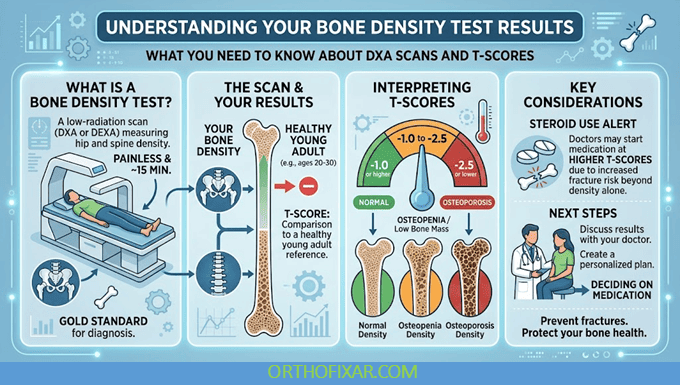
A bone density test, also called a DXA or DEXA scan, is a low-radiation scan that measures bone mineral density in your hip and spine. It is the gold standard for diagnosing osteoporosis and deciding who needs medication.
The scan takes about 15 minutes and is completely painless. You will lie on a padded table while a scanning arm passes over your body. Your results come as a T-score, which compares your bone density to that of a healthy young adult.
- A T-score of -1.0 or higher is considered normal.
- A T-score between -1.0 and -2.5 means you have osteopenia, or low bone mass.
- A T-score of -2.5 or lower means you have osteoporosis.
- In people on steroids, doctors sometimes start medication at higher T-scores because steroid use increases fracture risk beyond what density alone shows.
If you have baseline scan before starting steroids, repeat testing is usually recommended every one to two years while you remain on treatment. This allows you to see if bone loss is slowing down or if your preventive plan needs a change.
Working With Your Doctor Without Stopping Steroids Abruptly
The most important rule is: never stop steroid medication on your own, particularly if you have taken it for more than a few weeks. Abrupt stopping can cause serious withdrawal symptoms like fatigue, joint pain, low blood pressure, or an adrenal crisis. Instead, work with your doctor to reduce your dose slowly and safely if needed.
- Ask if your steroid dose is truly the lowest effective amount for your condition.
- Explore whether another type of steroid, like budesonide or beclomethasone, has lower bone risk for certain illnesses.
- Do not combine oral and topical steroids without medical guidance, because the total dose can quietly add up.
- Review all your other medications, such as anti-inflammatories or antacids, because some can also affect bone health.
Practical habits also matter. If you currently smoke, quitting improves your bone density and your body have time to recover. Also be careful about heavy alcohol use, because it blocks calcium absorption and increases fall risk. Simple home safety measures, like removing loose rugs and improving lighting, can dramatically reduce your chances of a fracture.
Steroid-induced osteoporosis is a real and serious concern, but it is not a reason to fear your medicine or stop treatment without medical advice. By understanding your personal risk, getting a bone density scan when appropriate, and embracing a few targeted prevention steps, you can take meaningful control over your bone health. Talk to your doctor now to review your steroid dose, your calcium and vitamin D intake, and whether you need a prescription bone protectant. Protecting your bones today keeps you on your feet and active for many tomorrows.
Frequently Asked Questions
1. How quickly does bone loss happen while taking steroids?
Bone loss can be rapid during the very first three to six months of treatment. After that, the rate of loss often slows but may continue, especially if you stay on a high daily dose. This is why early screening and prevention before or soon after starting steroids are so critical.
2. Is steroid-induced osteoporosis reversible?
With proper treatment and lifestyle changes, bone density can often improve after you reduce or stop steroid therapy. The younger you are and the less time you have spent on a high dose, the better your chance of recovery. Even while still on steroids, bone-protecting medications can stabilize or increase bone mass.
3. Can I take my normal calcium supplement while on prednisone?
Yes. Adequate calcium and vitamin D are recommended for all people taking long-term steroids. However, if you have kidney disease or a history of kidney stones, your doctor may adjust the amount. It is best to tell your physician exactly how much calcium and vitamin D you take from food and supplements.
4. Do inhaled steroids for asthma cause the same bone problems?
Inhaled steroids like fluticasone or budesonide are less risky than oral steroids because the dose reaching your bones is much smaller. But very high inhaled doses taken for years can still slightly increase bone loss, especially if you are also using steroid pills or nasal drops. If you use an inhaler every day, ask your doctor whether your bone density should be checked.
5. What is a typical steroid dose that triggers osteoporosis?
The risk is highest at a prednisone-equivalent dose of 5 mg per day or more for more than three months. Lower doses can also matter, though, particularly in older adults or people with other risk factors. Everyone on long-term steroids should discuss bone health with their prescriber, regardless of the exact dose.
6. My bone density test was normal when I started prednisone. Do I need another one?
Yes. A normal baseline scan is good news, but it does not mean you can skip follow-up testing. Because steroids can cause fast bone loss, repeating the scan after one year is usually wise. Your doctor may order another DXA scan at a regular interval to catch any downward trend.
7. Can exercise actually help when I have already lost bone?
Yes, but the type of exercise matters. Low-impact weight-bearing exercises like walking and gentle strengthening can slow further loss. High-impact or twisting activities might actually increase the risk of a vertebral fracture if you have advanced osteoporosis, so work with a physical therapist or knowledgeable trainer to create a safe plan.
8. What is the safest way to stop steroids if I am worried about my bones?
Do not stop suddenly. The safest approach is to ask your doctor about a taper schedule that reduces your dose gradually over weeks or months. Along the