
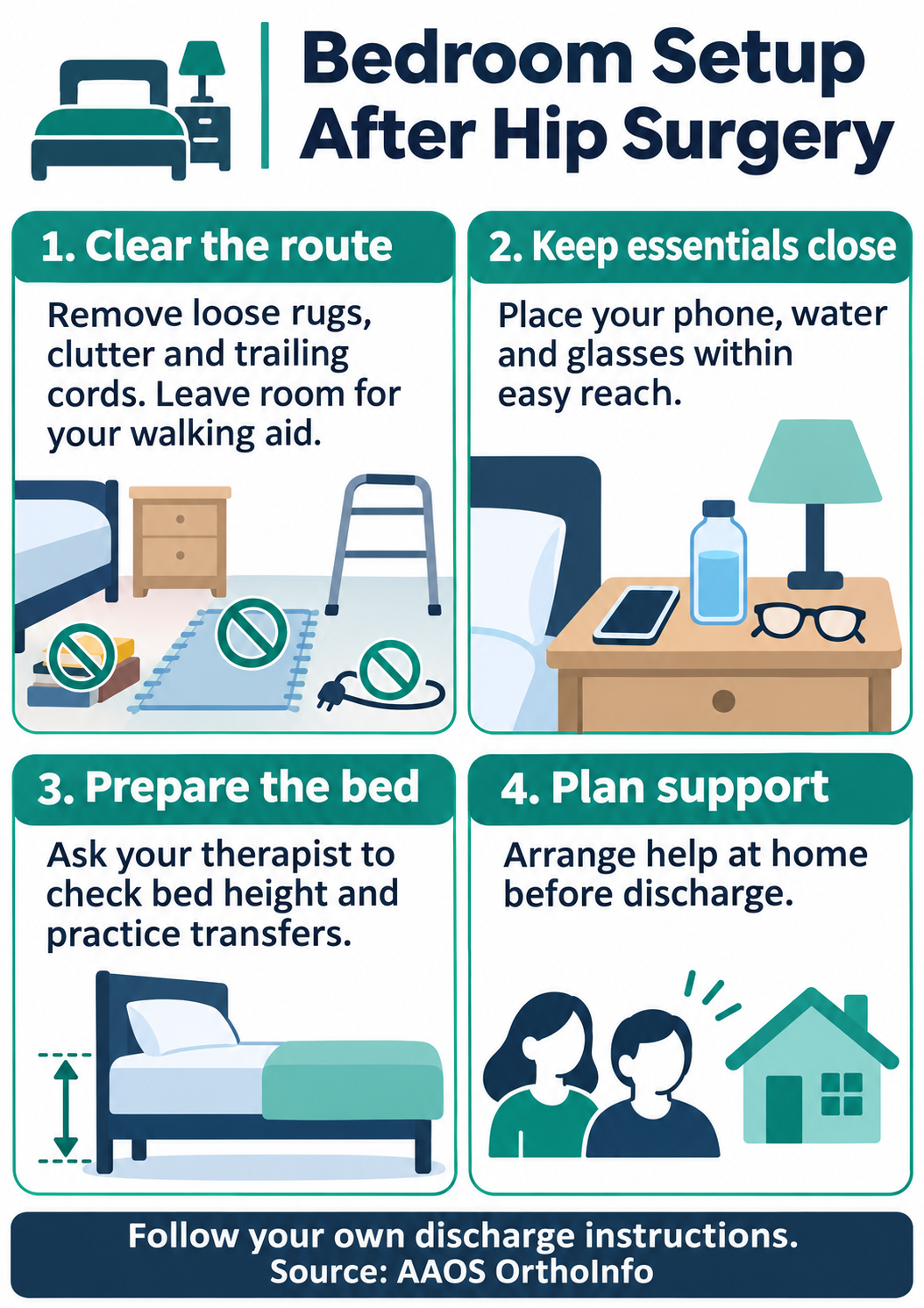
A hip replacement or fracture repair changes how you move for weeks, and your bedroom is where most of those changes show up first. The bed you once dropped into without a second thought becomes a height problem, a reach problem, and a balance problem all at once. Bed-proofing the room means adjusting bed height, setting up a sleep position that respects your surgical precautions, clearing trip hazards, and arranging the items you use every night so you never have to twist or stretch for them.
Most of the work happens before you come home, and most of it takes an afternoon. The payoff is fewer painful movements, less fear of falling, and a sleep setup that supports whatever hip precautions or movement restrictions your surgeon and physical therapist have given you.
Why Your Bedroom Needs Attention Before You Get Home
Hospitals teach you how to get in and out of bed with a walker or crutches, but they cannot rearrange your furniture. That gap is where problems begin. A bed that sits too low forces you into a deep squat, which is exactly the movement many hip surgery patients are told to avoid. A bed that sits too high leaves your feet dangling and makes the transfer feel unstable.
The bedroom is also where people tend to take the most risks, because fatigue and nighttime bathroom trips erode caution. The hazards are predictable:
- Low beds make standing up harder and increase strain through the surgical hip.
- Cluttered floors turn a routine bathroom trip into a fall risk.
- Items stored in low drawers or on high shelves force bending and reaching.
- Poor lighting at night makes obstacles harder to see.
- Loose bedding and rugs catch walkers and crutches.
Check Your Hip Precautions Before You Rearrange Anything
Not every hip surgery comes with the same rules. Some surgeons prescribe posterior hip precautions after a posterior-approach replacement, which typically restrict bending the hip past 90 degrees, crossing the legs, and turning the operated leg inward. Anterior-approach replacements often carry different or fewer restrictions, and hip fracture repairs vary as well.
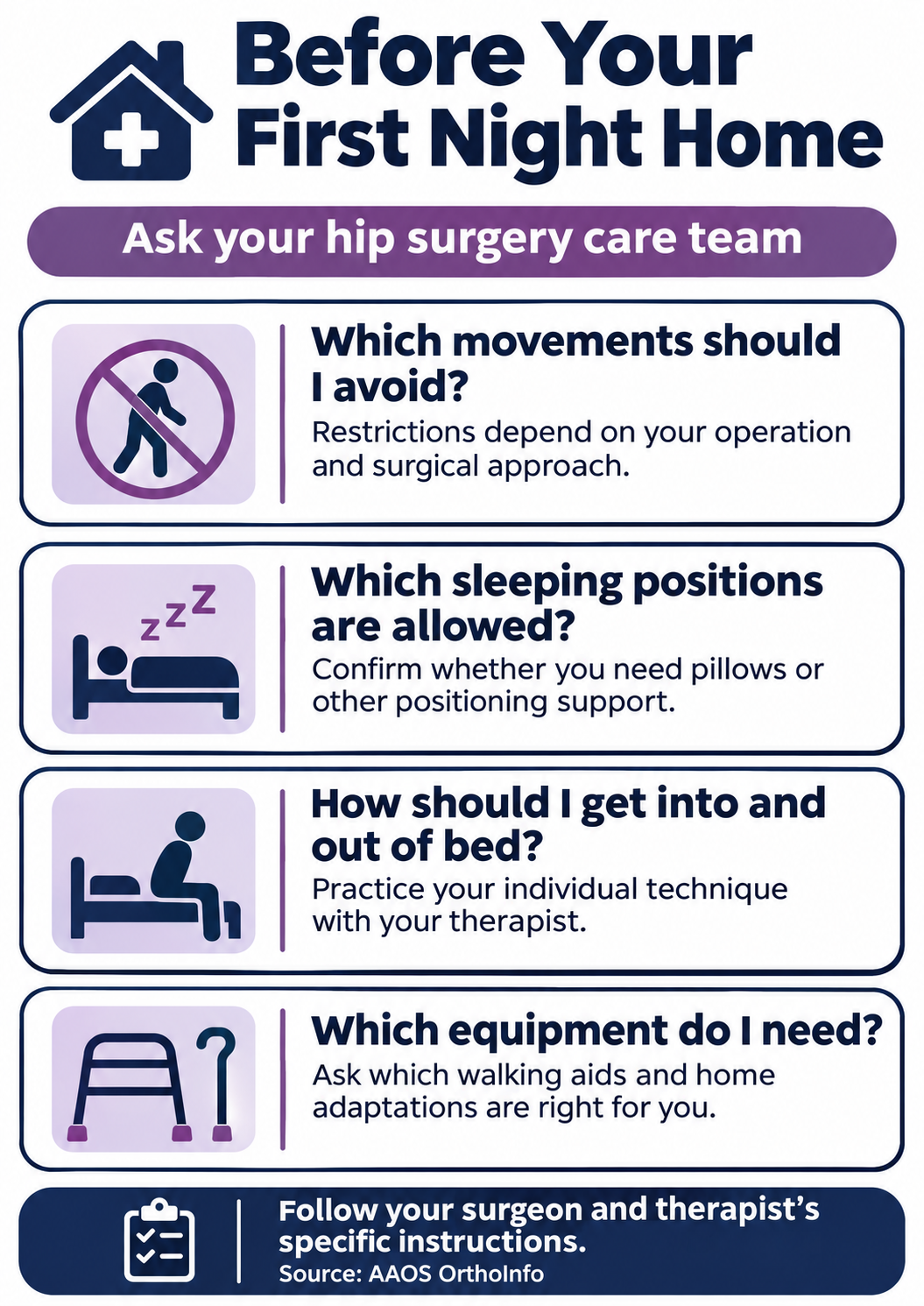
Your discharge paperwork and your physical therapist are the authority here, not a general article. Ask specifically which movements to avoid, whether you need a raised toilet seat or abduction pillow, and how long the restrictions apply.
- Ask whether you have bending, crossing, or rotation restrictions.
- Confirm whether a pillow between the knees is required while sleeping.
- Check if you are cleared for side sleeping and on which side.
- Ask how long precautions last and who clears you to stop them.
- Request written instructions if you did not receive them.
Get the Bed Height Right
The target is simple: when you sit on the edge of the bed with your feet flat on the floor, your knees should be roughly level with your hips, or slightly lower. That position lets you stand with your legs rather than hauling yourself up with your arms.
If your bed is too low, a firm mattress topper or a bed riser under each leg can raise it. If it is too high, a lower-profile box spring can help; a step stool with a handle is another option, but it adds its own trip risk and should only be used with your therapist’s approval.
- Measure from the floor to the top of the mattress, not the frame.
- Test the height by sitting and standing with your walker in front of you.
- Use risers rated for the combined weight of your bed and mattress.
- Make sure risers sit squarely under the frame legs, not the mattress.
- Recheck the height once swelling settles and your mobility improves.
Set Up Your Sleeping Position
Sleeping comfortably after hip surgery usually means lying on your back with a pillow under or between your legs, depending on your surgeon’s instructions. The pillow keeps the operated leg from rolling inward or crossing the midline, which matters if you have rotation precautions.
If you are allowed to sleep on your side, the non-operated side is typically the safer choice, with a pillow between your knees. A pillow wedge behind your back can stop you from rolling onto the operated side during the night.
- Place a pillow between your knees if side sleeping is permitted.
- Use a wedge or rolled towel behind your back to prevent rolling.
- Keep the head of the bed slightly raised if lying flat is uncomfortable.
- Avoid stacking pillows under the knees in a way that bends the hip deeply.
- Keep a light blanket within reach so you are not stretching for it.
Make Getting In and Out of Bed Easier
The safest technique is to back up to the bed until you feel the mattress behind your knees, then reach back for support and lower yourself slowly, keeping the operated leg slightly forward. Reverse the process to stand, pushing up through your arms and your good leg.
This is where a bed rail or a firm handle helps, especially in the first couple of weeks. A rail gives you something solid to push against without twisting your torso.
- Back up to the bed rather than turning and sitting sideways.
- Keep the operated leg slightly forward as you lower yourself.
- Push up with your arms and your non-operated leg to stand.
- Keep your walker or crutches within arm’s reach before you sit.
- Move slowly and pause before standing to let dizziness pass.
Clear the Floor and the Path to the Bathroom
Falls are a leading reason hip surgery patients end up back in hospital, and many of those falls happen on the way to the bathroom at night. Clear a wide, direct path and remove anything that could catch a walker wheel or a crutch tip.
- Remove loose rugs or secure them with double-sided tape.
- Keep phone chargers, shoes, and bags off the floor.
- Move furniture so you have a clear route to the door.
- Coil cables along the wall rather than across the floor.
- Keep pets out of the bedroom at night.
Sort Your Lighting and Nighttime Visibility
You will be getting up in the dark more than usual, often while drowsy and on pain medication. A plug-in night light along the route to the bathroom, plus a lamp within reach of the bed, reduces the chance of stumbling.
Touch lamps or smart bulbs you can control from bed are useful if reaching for a switch means twisting. Keep a flashlight or your phone on the nightstand as a backup.
Arrange Your Nightstand and Daily Items
Everything you use daily should be reachable without bending, twisting, or stretching overhead. Keep medications, water, glasses, phone, remote, and tissues at roughly waist-to-shoulder height beside the bed.
- Keep medications in a labeled organizer within easy reach.
- Use a spill-proof water bottle with a straw.
- Store chargers and remotes on the nightstand, not the floor.
- Place a small basket for essentials so nothing rolls away.
- Keep a notebook for medication times and questions for your therapist.
Reorganize Your Wardrobe and Storage
Bending to a low drawer or reaching to a high shelf both stress the hip. Move the clothes you wear most often to a middle-height drawer or shelf, and keep a grabber tool nearby for anything that falls.
- Move daily clothing to waist-to-chest height.
- Use a long-handled reacher for items on the floor.
- Keep a laundry basket at hip height rather than on the floor.
- Store shoes where you can reach them while seated.
- Keep a chair or sturdy stool nearby for dressing.
Choose Bedding and Clothing That Work With You
Loose, slippery bedding is harder to manage when your movement is limited. Fitted sheets that stay put and a lightweight duvet you can kick off with one leg make a real difference.
For clothing, loose shorts or nightgowns are easier to manage than tight pajama bottoms, and slip-on shoes or slippers with a back are safer than flip-flops around the house.
Quick Reference: Bedroom Setup Checklist
| Area | What to Check | Why It Matters |
|---|---|---|
| Bed height | Knees level with hips when seated, feet flat on floor | Easier standing without deep hip bending |
| Sleeping position | Pillow between knees or wedge behind back | Prevents crossing or rolling the operated leg |
| Floor | Clear path to bathroom, no loose rugs or cables | Reduces fall risk during nighttime trips |
| Lighting | Night light plus lamp within reach | Improves visibility and reduces stumbling |
| Nightstand | Medications, water, phone at waist-to-shoulder height | Avoids bending and twisting |
| Storage | Daily items at middle height, grabber tool nearby | Limits reaching and stooping |
When to Get Help With Your Setup
If you live alone or have significant balance problems, ask your physical therapist or an occupational therapist about a home safety assessment. Many home health agencies offer this after joint replacement, and it can catch issues you might miss.
Your hospital discharge team or surgeon’s office can advise on equipment such as raised toilet seats, shower chairs, and bed rails. If you are unsure what your insurance covers, check with your provider directly rather than assuming.
For general information on hip replacement recovery and precautions, the American Academy of Orthopaedic Surgeons patient resource on total hip replacement is a reliable starting point.
Conclusion
Bed-proofing your room after hip surgery comes down to a few practical moves: get the bed height right, set up your sleeping position according to your surgeon’s precautions, clear the floor, and keep daily items within easy reach. Do the rearranging before you come home so your first nights back are calmer and safer. When in doubt about any restriction, ask your physical therapist or surgeon rather than guessing.
Frequently Asked Questions
How high should my bed be after hip surgery?
Aim for a height where your knees are roughly level with your hips when you sit on the edge with feet flat on the floor. That lets you stand with your legs instead of hauling yourself up. Bed risers or a firm topper can raise a low bed.
Can I sleep on my side after hip replacement?
It depends on your surgeon’s approach and precautions. Many patients are allowed to sleep on the non-operated side with a pillow between the knees, but some are restricted to back sleeping for a period. Follow your discharge instructions and ask your therapist if you are unsure.
Do I need a bed rail after hip surgery?
A bed rail can help if you need something solid to push against when standing, especially in the first weeks. It is not mandatory for everyone. Ask your physical or occupational therapist whether a rail suits your setup and mobility level.
How do I get out of bed safely after hip surgery?
Roll onto your side if permitted, use your arms to push up to sitting while keeping the operated leg slightly forward, then stand using your arms and non-operated leg. Keep your walker within reach before you sit. Your therapist should practice this with you before discharge.
Should I remove rugs from my bedroom?
Loose rugs are a common trip hazard for walkers and crutches. Remove them or secure them firmly with double-sided tape. A clear, wide path to the bathroom matters most at night.
What should I keep on my nightstand after hip surgery?
Keep medications, water, glasses, phone, remote, and tissues at waist-to-shoulder height. Avoid storing anything that requires bending or reaching overhead. A small basket can keep items from rolling away.
Is a firm or soft mattress better after hip surgery?
A mattress that is too soft makes standing up harder because you sink into it. A firmer mattress or a firm topper usually makes transfers easier. Test the height and firmness by sitting and standing before you rely on it.
How long do I need to follow hip precautions in bed?
The duration varies by surgeon and procedure, and some approaches require no formal precautions at all. Your surgeon or physical therapist will tell you when restrictions can be lifted. Do not stop precautions on your own.
Can I use a grabber tool to pick things up from the floor?
Yes, a long-handled reacher is a practical way to avoid bending past your restrictions. Keep one in the bedroom and one in the living area. It is especially useful for items that fall beside the bed.
What should I do if I live alone after hip surgery?
Arrange help in advance for the first days home, and ask your therapist about a home safety assessment. Set up your bedroom and bathroom before surgery and keep a phone within reach at all times. Your discharge team can advise on local support options.