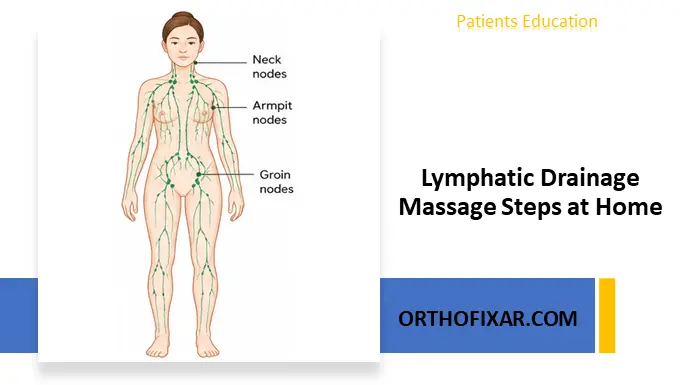
Lymphatic drainage massage, also known as manual lymphatic drainage (MLD), is a gentle massage technique designed to stimulate the movement of lymph fluid through the lymphatic system. It is commonly used to help manage lymphedema, reduce swelling, improve comfort, and support recovery after certain medical procedures.
As a physiotherapist, it is important to emphasize that lymphatic drainage massage should not replace medical treatment. Research suggests that MLD may provide benefits for some individuals, particularly those with mild lymphedema, when combined with compression therapy, exercise, skin care, and patient education. However, evidence shows mixed results regarding its effectiveness as a standalone treatment.
This guide explains how patients can safely perform basic lymphatic drainage massage techniques at home.
What is the Lymphatic System?
The lymphatic system is a network of vessels, lymph nodes, and organs that helps:
- Remove excess fluid from tissues
- Transport immune cells throughout the body
- Filter waste products and toxins
- Absorb dietary fats from the digestive system
When lymph fluid cannot move properly, it may accumulate and cause swelling known as lymphedema.
Benefits of Lymphatic Drainage Massage
Potential benefits of lymphatic drainage massage include:
- Reduced swelling in affected limbs
- Improved comfort and mobility
- Reduced feelings of heaviness or tightness
- Enhanced quality of life for some patients with lymphedema
- Support for overall lymphedema management programs
Current research indicates that lymphatic drainage massage may be most beneficial in early-stage or mild lymphedema and is often used as part of Complete Decongestive Therapy (CDT).
Who Can Benefit From Lymphatic Drainage Massage?
Patients who may benefit include:
- Individuals diagnosed with lymphedema
- Breast cancer survivors with arm swelling
- Patients recovering from lymph node removal surgery
- Individuals with chronic swelling recommended for MLD by their healthcare provider
Always consult a healthcare professional before starting self-lymphatic drainage.
When You Should NOT Perform Lymphatic Drainage Massage
Lymphatic drainage massage may not be appropriate for everyone.
Contraindications
Do not perform lymphatic drainage massage if you have:
- Acute infection or cellulitis
- Uncontrolled heart failure
- Severe kidney disease
- Deep vein thrombosis (DVT)
- Active cancer unless approved by your oncology team
- Unexplained swelling
- Severe circulatory disorders
Seek medical clearance before beginning treatment.
Preparing for Lymphatic Drainage Massage at Home
Before You Start
Follow these recommendations:
- Wash your hands thoroughly.
- Sit or lie in a comfortable position.
- Wear loose-fitting clothing.
- Ensure the room is warm and relaxing.
- Drink adequate water throughout the day.
- Use very light pressure.
Important Technique Principle
Unlike traditional massage, lymphatic drainage uses gentle skin-stretching movements rather than deep pressure.
The pressure should be light enough to move the skin without causing pain or redness.
Lymphatic Drainage Massage Steps at Home
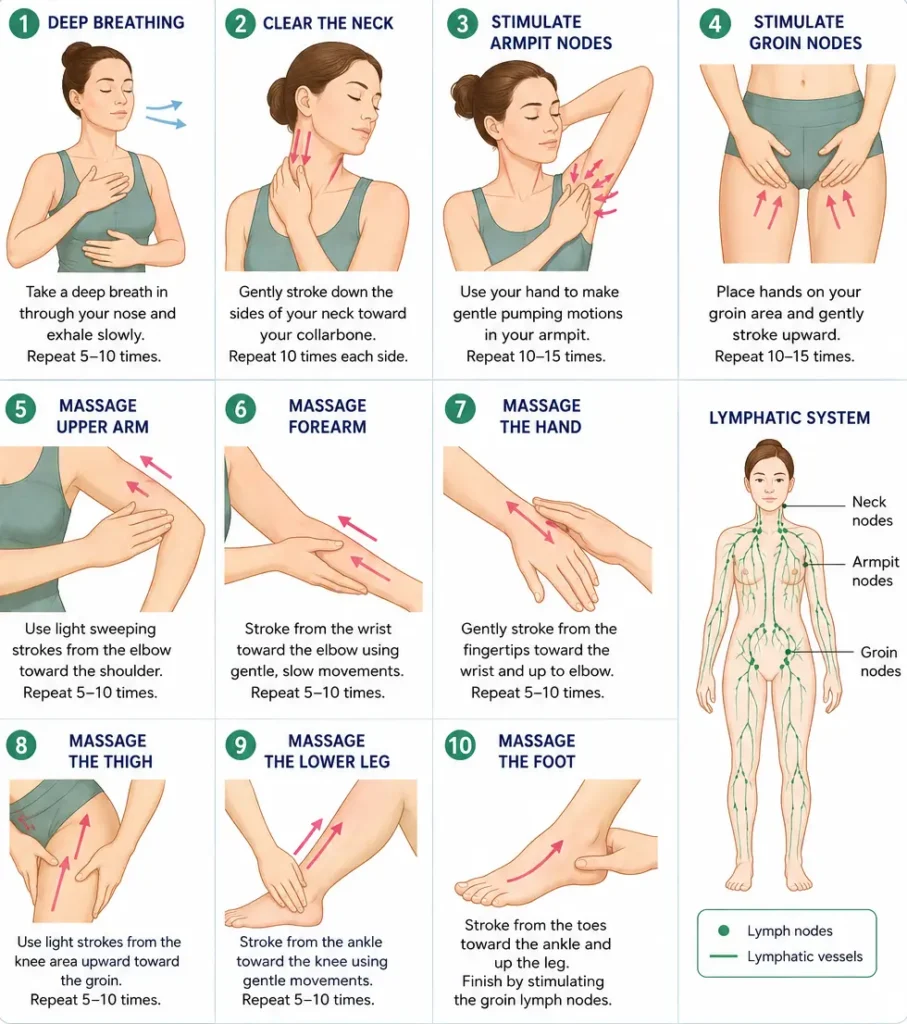
Step 1: Practice Deep Diaphragmatic Breathing
Deep breathing helps stimulate lymph flow naturally.
How to Perform
- Place one hand on your chest and one on your abdomen.
- Slowly inhale through your nose.
- Allow your abdomen to rise.
- Exhale slowly through your mouth.
- Repeat 5–10 breaths.
Step 2: Clear the Neck Area
The lymphatic system drains toward major lymphatic ducts located near the neck.
Technique
- Place fingertips just above the collarbone.
- Gently stretch the skin downward and release.
- Repeat 10 times on each side.
- Avoid excessive pressure.
Step 3: Stimulate the Armpit Lymph Nodes
This step is especially important for arm swelling.
Technique
- Place your hand in the opposite armpit.
- Apply gentle pumping motions.
- Perform 10–15 repetitions.
- Repeat on the other side if needed.
Step 4: Stimulate the Groin Lymph Nodes
For leg swelling, the groin area acts as a major drainage pathway.
Technique
- Place both hands over the groin crease.
- Stretch the skin gently upward and inward.
- Release slowly.
- Repeat 10–15 times.
Step 5: Massage the Upper Arm
Technique
- Begin near the shoulder.
- Use gentle sweeping strokes toward the shoulder and armpit.
- Move gradually down the arm.
- Repeat each area 5–10 times.
Step 6: Massage the Forearm
Technique
- Start near the elbow.
- Use light strokes directing fluid upward toward the shoulder.
- Continue from wrist to elbow.
- Keep movements slow and rhythmic.
Step 7: Massage the Hand
Technique
- Gently stroke from fingertips toward the wrist.
- Continue from the wrist toward the elbow.
- Finish by directing fluid toward the armpit.
Step 8: Massage the Thigh
For lower-extremity swelling:
Technique
- Start near the upper thigh.
- Use gentle strokes toward the groin.
- Work progressively downward.
- Repeat each section several times.
Step 9: Massage the Lower Leg
Technique
- Begin below the knee.
- Move fluid upward toward the knee.
- Continue from ankle toward knee.
- Finish with strokes from knee toward groin.
Step 10: Massage the Foot
Technique
- Stroke gently from the toes toward the ankle.
- Continue upward through the leg.
- Finish by stimulating the groin lymph nodes.
How Long Should Lymphatic Drainage Massage Take?
A typical home session lasts:
- 10–20 minutes for one limb
- 20–30 minutes for larger treatment areas
Consistency is usually more important than duration.
Common Mistakes to Avoid
Using Too Much Pressure
Deep pressure can compress lymphatic vessels and reduce effectiveness.
Moving Too Quickly
Lymphatic drainage should be slow and rhythmic.
Skipping Central Areas
Always begin by stimulating the neck, armpits, or groin before massaging swollen regions.
Ignoring Medical Advice
Persistent swelling requires professional evaluation.
Additional Ways to Improve Lymphatic Flow
Exercise Regularly
Muscle contractions naturally help move lymph fluid.
Helpful activities include:
- Walking
- Swimming
- Cycling
- Gentle stretching
Wear Compression Garments
For patients with lymphedema, compression garments are often considered a cornerstone of treatment.
Maintain Good Skin Care
Healthy skin reduces infection risk and complications.
Stay Hydrated
Adequate hydration supports normal body fluid regulation.
When to Contact a Healthcare Professional
Seek medical attention if you experience:
- Sudden swelling
- Redness or warmth
- Fever
- Painful swelling
- Shortness of breath
- Signs of infection
These symptoms may indicate a serious condition requiring immediate medical care.
Frequently Asked Questions
Can I Perform Lymphatic Drainage Massage Every Day?
Many patients can safely perform gentle self-massage daily if recommended by their healthcare provider.
Does Lymphatic Drainage Massage Help Weight Loss?
No. Lymphatic drainage massage is not a weight-loss treatment. Any reduction in body size is typically related to temporary fluid movement rather than fat loss.
Is Lymphatic Drainage Massage Painful?
No. Proper lymphatic drainage massage should be gentle and comfortable.
Does Lymphatic Drainage Massage Cure Lymphedema?
No. Lymphedema is generally a chronic condition. Lymphatic drainage massage may help manage symptoms but is not considered a cure.
Key Takeaway
Lymphatic drainage massage is a gentle technique that may help reduce swelling and improve comfort in certain patients, particularly those with lymphedema. For best results, it should be combined with compression therapy, exercise, skin care, and professional medical guidance. Using light pressure, slow movements, and proper technique is essential for safe and effective self-treatment at home.
References
- Thompson B, et al. Manual lymphatic drainage treatment for lymphedema: A systematic review of the literature. Journal of Cancer Survivorship. 2021. Link
- Liang M, et al. Manual lymphatic drainage for lymphedema in patients after breast cancer surgery: A systematic review and meta-analysis of randomized controlled trials. Medicine (Baltimore). 2020. Link
- Müller M, et al. Manual lymphatic drainage and quality of life in patients with lymphoedema and mixed oedema: A systematic review of randomized controlled trials. Quality of Life Research. 2018. Link
- Williams A. Manual lymphatic drainage: Exploring the history and evidence base. British Journal of Community Nursing. 2010. Link