Walking into a doctor’s appointment feeling prepared can change the entire experience. Instead of leaving with unanswered questions or forgotten details, you can walk away with a clear plan. This guide gives you a practical checklist and a list of smart questions to ask so you get the most out of every visit.
Why Preparing for a Doctor’s Appointment Matters
Most appointments last less than twenty minutes. Without preparation, it is easy to forget key symptoms or important concerns. A few minutes of planning before you go helps you communicate clearly, saves time, and ensures you receive the care you need.
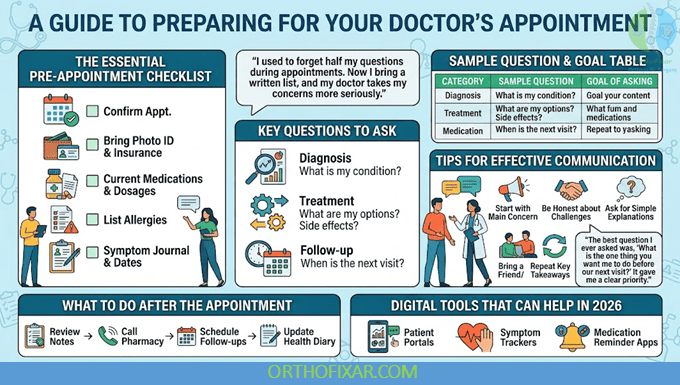
The Essential Pre‑Appointment Checklist
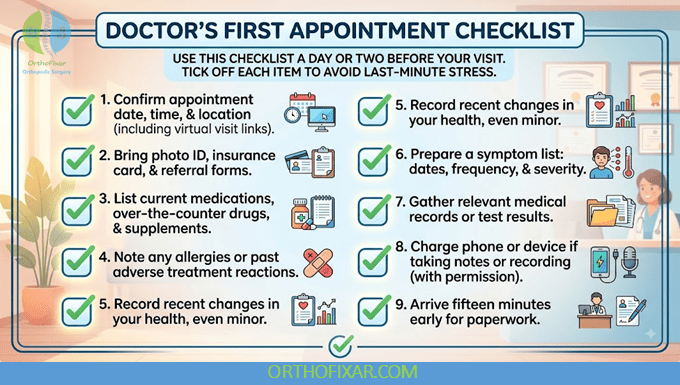
Use this checklist a day or two before your visit. Tick off each item to avoid last‑minute stress.
- Confirm the appointment date, time, and location (including virtual visit links if applicable).
- Bring your photo ID, insurance card, and any required referral forms.
- Write down your current medications, including over‑the‑counter drugs, supplements, and dosages.
- List any allergies or past adverse reactions to treatments.
- Note recent changes in your health, even if they seem minor.
- Prepare a list of symptoms with dates, frequency, and severity.
- Gather relevant medical records or test results from other providers.
- Charge your phone or device if you plan to take notes or record the visit (with permission).
- Arrive fifteen minutes early to complete any paperwork.
“I used to forget half my questions during appointments. Now I bring a written list, and my doctor takes my concerns more seriously.” — a patient who started using a checklist
Key Questions to Ask During Your Visit
Asking the right questions helps you understand your condition and treatment options. Tailor these to your situation.
Questions About Your Diagnosis
- What is the exact name of my condition, and what does it mean?
- What caused this condition, and could it be related to other health issues?
- What tests (if any) do I still need, and when will I get results?
- How will this condition likely progress without treatment?
Questions About Treatment Options
- What are my treatment options, including no treatment?
- What are the benefits and risks of each option?
- How soon can I expect to see improvement, and what are the possible side effects?
- Are there lifestyle changes that can support my treatment?
Questions About Medications and Follow‑up
- How do I take this medication correctly (dose, timing, with or without food)?
- What should I do if I miss a dose or experience side effects?
- Do I need any follow‑up appointments or lab work?
- What symptoms should prompt me to call your office or go to the emergency room?
How to Organize Your Personal Health Information
Keeping a simple health diary or a digital note makes sharing accurate history easy. Include the following details.
- Date and time of each symptom or episode.
- Pain level on a scale of 0–10.
- What you were doing when symptoms started.
- Anything that made symptoms better or worse.
- Any medication or remedy you tried.
Sample Question and Goal Table
Use this table to match your questions with specific goals during the appointment.
| Category | Sample Question | Goal of Asking |
|---|---|---|
| Diagnosis | What is the medical name, and how is it diagnosed? | Understand the condition clearly. |
| Treatment | What are the success rates of each option? | Make an informed decision. |
| Medication | How does this drug interact with my other meds? | Avoid dangerous interactions. |
| Lifestyle | What specific diet or exercise changes help? | Apply practical daily steps. |
| Follow‑up | When should I schedule the next appointment? | Stay on track with care. |
Tips for Effective Communication with Your Doctor
Even with a good list, how you talk matters. Use these strategies to foster a productive conversation.
- Start by saying what you most want to address today. For example: “I’m worried about my headaches and want to know if they could be serious.”
- Speak honestly about any difficulties following past treatment plans. Doctors can adjust recommendations.
- If you do not understand a term or instruction, ask for a simpler explanation.
- Bring a family member or friend to help take notes and ask questions you might miss.
- Repeat key take‑aways back to the provider: “So I need to take this pill twice a day with food, and call you if I get a rash.”
“The best question I ever asked was, ‘What is the one thing you want me to do before our next visit?’ It gave me a clear priority.” — a former patient who now trains healthcare advocates
What to Do After the Appointment
The work does not end when you leave the exam room. Follow these steps to maintain momentum.
- Review your notes or any printed summary the doctor gave you.
- Call the pharmacy to confirm prescriptions and ask about costs or generic alternatives.
- Schedule any recommended tests or follow‑up visits right away.
- Update your health diary with the doctor’s instructions and next steps.
- If you have lingering concerns, contact the office within 48 hours while details are fresh.
Digital Tools That Can Help in 2026
Many patients now use secure patient portals, symptom trackers, and medication reminder apps. Look for tools that let you export your history for your doctor. Always choose HIPAA‑compliant or region‑appropriate platforms. Check with your provider which apps they recommend.
Conclusion
Preparing for a doctor’s appointment does not need to be complicated. A simple checklist, a set of thoughtful questions, and a willingness to communicate openly transform a rushed visit into a productive conversation. You become an active partner in your care, not just a passive listener. Next time you book an appointment, spend fifteen minutes getting ready. Your health deserves that attention.
Frequently Asked Questions
1. What should I bring to a doctor’s appointment?
Bring your photo ID, insurance card, a list of current medications and allergies, any relevant test results, and a notepad or device to take notes. Some appointments also require a referral form or prior authorization.
2. How early should I arrive for a doctor’s appointment?
Plan to arrive at least fifteen minutes early. This allows time to check in, update paperwork, and settle down before the visit. For a first visit or a specialist, twenty minutes is safer.
3. What if I forget to ask an important question?
Do not worry. Many doctors have patient portals where you can send a message after the visit. You can also call the office and ask to speak with a nurse or the doctor’s assistant. Some providers encourage follow‑up emails for non‑urgent questions.
4. How can I remember what the doctor said after the visit?
Take notes during the appointment or record the conversation if your doctor permits. You can also ask for a written summary. Using a voice memo app on your phone works well, but always ask first.
5. What is the best way to describe my symptoms to a doctor?
Be specific: when did it start, how often does it happen, how bad is it, what makes it better or worse? Use simple words instead of medical jargon. Example: “I have a sharp pain in my lower right belly that started three days ago and gets worse after eating.”
6. Should I bring a family member or friend to the appointment?
Yes, especially if you feel nervous, have a complex condition, or expect to receive difficult news. Another person can listen, take notes, and help you remember instructions. Make sure you bring someone you trust who respects your privacy.
7. How do I prepare for a virtual doctor’s visit?
Test your internet connection, camera, and microphone before the call. Find a quiet, well‑lit room. Have your list of questions and health information handy. Keep your phone number visible in case the connection drops. Treat it like an in‑person appointment.
8. What if I don’t agree with the doctor’s recommendation?
You have the right to ask for more information or a second opinion. Say: “I would like to understand the reasoning better,” or “Could you explain the evidence behind that approach?” A good provider will respect your request and help you explore alternatives.
9. Is it okay to ask about costs and insurance coverage during the appointment?
Absolutely. You can ask: “How much will this treatment or test cost, and is it covered by my insurance?” The doctor may not know exact prices, but the billing department can often follow up. Some clinics discuss costs before scheduling procedures.
10. How often should I update my medication list?
Update your medication list every time a dose changes, a new drug is started, or a drug is stopped. Bring an up‑to‑date list to every appointment. This reduces the risk of dangerous drug interactions and helps your doctor make informed choices.