
An ankle sprain happens when the ligaments that support your ankle stretch too far or tear. It is one of the most common injuries seen in emergency rooms and sports clinics, affecting everyone from elite athletes to casual walkers. This guide explains the three grades of ankle sprains, the safest treatment options, the best exercises for recovery, and how long you can expect to heal at each stage.
What Is an Ankle Sprain?
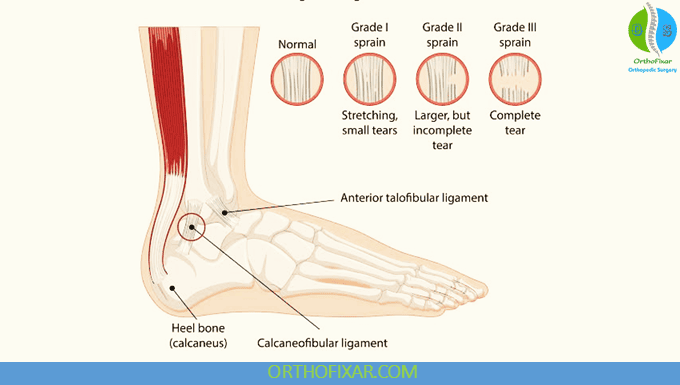
A sprain is an injury to a ligament, the strong band of tissue that connects bone to bone and keeps your joint stable. In the ankle, the most commonly injured ligaments are on the outer side, known as the lateral ligament complex. Most ankle sprains happen when the foot rolls inward, stretching these ligaments beyond their normal range.
- Ligaments can be stretched, partially torn, or completely torn.
- The severity depends on how much force was applied and how much tissue damage occurred.
- A sprain is different from a strain, which affects muscles or tendons, not ligaments.
Ankle Sprain Grades Explained
Doctors classify ankle sprains into three grades based on the amount of ligament damage. Knowing your grade helps predict how long healing will take and what treatment approach you need.
- Grade 1: Mild stretching of the ligament with tiny microscopic tears. You will have mild pain, slight swelling, and no joint instability.
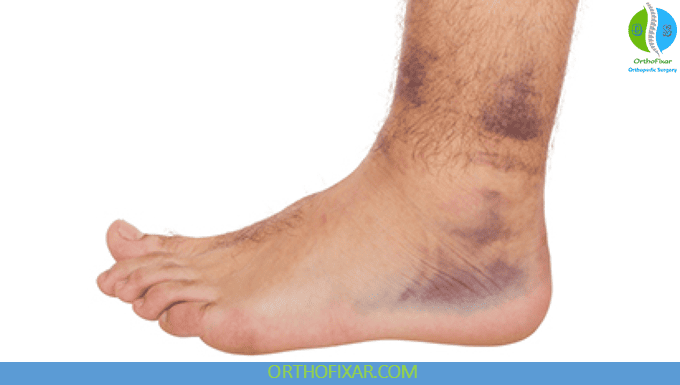
- Grade 2: A partial tear of the ligament. Expect moderate pain, noticeable swelling, bruising, and some difficulty bearing weight.
- Grade 3: A complete tear or rupture of the ligament. The ankle is very swollen, painful, bruised, and unstable, and you usually cannot put weight on it.
| Grade | Ligament Damage | Typical Symptoms | Recovery Time |
|---|---|---|---|
| Grade 1 | Stretched with microscopic tears | Mild pain, slight swelling, stable joint | 1 to 3 weeks |
| Grade 2 | Partial tear | Moderate pain, swelling, bruising, some instability | 3 to 6 weeks |
| Grade 3 | Complete tear | Severe pain, significant swelling, bruising, joint instability | 8 to 12 weeks or longer |
Immediate Treatment: What to Do Right After Injury
The first 48 to 72 hours after an ankle sprain are critical for controlling swelling and protecting the ligament. The modern approach uses the PEACE & LOVE protocol, which replaces the older RICE method with a more complete framework.
- Protection: Avoid activities that increase pain for the first few days. Use crutches if needed.
- Elevation: Keep the ankle raised above heart level to reduce swelling.
- Avoid anti-inflammatories: Ibuprofen and similar drugs may slow ligament healing, so use them only if your doctor recommends them for severe pain.
- Compression: An elastic bandage can help control swelling, but do not wrap it too tightly.
- Education: Understand that mild discomfort during recovery is normal, and you do not need complete rest.
After the first few days, you move into the LOVE phase: Load, Optimism, Vascularisation, and Exercise. Gentle movement and progressive loading actually help the ligament heal stronger.
Most ankle sprains do not require surgery. With proper protection and progressive loading, the ligament heals on its own in most people.
Ankle Sprain Recovery Time: What to Expect
Recovery time depends on your grade, your age, and how consistent you are with rehabilitation. Here is a realistic timeline for each type of sprain.
- Grade 1: Most people return to normal daily activities within a few days and to sports within 1 to 3 weeks.
- Grade 2: Expect to use crutches for the first several days. Daily activities may take 2 to 4 weeks, and full sports activity may take 4 to 8 weeks.
- Grade 3: This is the slowest recovery. Crutches and a walking boot are often needed for 2 to 4 weeks. Full recovery can take 8 to 12 weeks or longer, and some people never regain the same level of stability without surgery or extensive physiotherapy.
The first week after a sprain is not the time to push through pain. Pain is your guide, and respecting it early prevents a longer recovery later.
Best Ankle Sprain Exercises for Recovery
Exercise is the single most important part of ankle sprain treatment. A structured program that starts with gentle motion and progresses to strength and balance gives you the best chance of a full recovery. Work with a physiotherapist if you have a grade 2 or 3 sprain.
Phase 1: Range of Motion Exercises
- Ankle alphabet: Trace the letters of the alphabet in the air with your big toe, moving only the ankle.
- Ankle pumps: Flex your foot up and down while sitting or lying down.
- Ankle circles: Slowly rotate your foot in one direction, then the other.
Phase 2: Strengthening Exercises
- Towel curls: Place a towel on the floor and scrunch it toward you using only your toes.
- Resistance band work: Attach a band to a fixed point and move your foot inward, outward, and forward against resistance.
- Calf raises: Stand on both feet and rise onto your toes, then lower slowly. Progress to single-leg calf raises as pain allows.
Phase 3: Balance and Proprioception
- Single-leg stance: Stand on the injured leg for 30 seconds, then gradually increase the time.
- Eyes closed balance: Once you are comfortable on one leg, try closing your eyes.
- Wobble board or BOSU: Use an unstable surface to train your ankle to react to changes in terrain.
Stop any exercise that causes sharp pain or a feeling of giving way. Mild discomfort is expected, but sharp pain means the tissue is not ready for that movement yet.
When to See a Doctor
Not every ankle sprain needs a hospital visit, but some warning signs require professional evaluation. A doctor can assess whether you have a fracture, a complete ligament tear, or damage to other structures in the foot and ankle.
- You cannot put any weight on the injured ankle after 24 hours.
- Swelling and bruising are severe or keep getting worse.
- You felt or heard a popping sound at the moment of injury.
- The ankle looks deformed or out of place.
- You have no improvement in pain or mobility after several days of home care.
- You have repeated ankle sprains or a feeling that the ankle is unstable.
How to Prevent Future Ankle Sprains
Once you have sprained your ankle, the risk of doing it again increases. This is often due to weakened ligaments and reduced balance. A simple prevention plan can lower your risk significantly.
- Keep up with strength training: Strong calf and foot muscles protect the ankle joint.
- Practice balance exercises: Even 5 minutes per day of single-leg balancing makes a difference.
- Wear supportive shoes: Choose shoes that fit well and provide adequate lateral support, especially during sports.
- Consider a brace or tape: Ankle braces can offer extra support during high-risk activities, especially in the first few months after an injury.
- Warm up properly: Dynamic movements that prepare the ankle for sudden direction changes reduce injury risk.
Conclusion
An ankle sprain is painful and inconvenient, but the outlook is generally very good when you treat it correctly. The key is to protect the ligament in the first few days, start gentle movement early, and progress through strength and balance exercises in a step-by-step way. If you respect your recovery time and follow a structured rehabilitation plan, you give your ankle the best chance to heal fully and stay strong.
Frequently Asked Questions
How long does a mild ankle sprain take to heal?
A grade 1 ankle sprain usually takes about 1 to 3 weeks to heal. You may return to walking within a day or two, but complete healing of the ligament takes a bit longer. Athletes can often return to sports within the first week if they have no pain during activity.
Can I walk on a sprained ankle?
If you have a mild sprain, walking with a slight limp is usually acceptable. You should not push through pain. For a grade 2 or 3 sprain, walking without support is not recommended, and crutches may be necessary until you can bear weight comfortably.
Is heat or ice better for an ankle sprain?
Ice is most helpful in the first 48 to 72 hours to reduce swelling and numb pain. After that, gentle heat can help improve blood flow and loosen stiff tissues, but avoid heat if the ankle is still very swollen. The most important part of recovery is movement, not prolonged icing.
When can I return to sports after an ankle sprain?
You can return to sports when you have no pain during walking, no swelling, and you can balance on the injured leg for at least 30 seconds without difficulty. This usually happens at 1 to 3 weeks for grade 1, 4 to 8 weeks for grade 2, and 8 to 12 weeks or longer for grade 3 sprains.
Should I wear a brace for an ankle sprain?
A brace can be helpful during the early recovery phase and when you return to high-risk activities. It provides stability and may prevent a repeat sprain. However, you should not rely on a brace forever, because your own strength and balance are more important for long-term joint stability.
What is the fastest way to recover from an ankle sprain?
The fastest recovery comes from a structured rehabilitation program that begins early and progresses gradually. Gentle movement in the first few days, followed by strengthening and balance exercises, gives you the best results. Resting too much and returning to activity too quickly both slow down the healing process.
Can a sprained ankle get worse if I ignore it?
Yes, ignoring an ankle sprain can lead to chronic instability, repeated sprains, joint stiffness, and long-term pain. A poorly healed ligament leaves the ankle loose and vulnerable. Even a mild sprain deserves proper care, and a moderate or severe sprain should be evaluated by a healthcare professional.
What is the difference between a sprain and a strain?
A sprain is an injury to a ligament, which connects bones. A strain is an injury to a muscle or tendon, which connects muscle to bone. Ankle injuries are almost always sprains, while back and hamstring injuries are often strains. The symptoms and healing times can be similar.
Do I need an X-ray for an ankle sprain?
Not always. Doctors use a set of rules called the Ottawa Ankle Rules to decide whether an X-ray is needed. If you have tenderness over the bones, cannot bear weight, or have pain in specific areas, an X-ray is usually recommended to rule out a fracture. Otherwise, most sprains do not need imaging.
How do I know if my ankle sprain is severe?
A severe sprain usually involves significant swelling, bruising that spreads down toward the foot, an inability to bear weight, and a feeling that the ankle is unstable or giving way. If you have these signs, you may have a grade 3 sprain, and you should seek medical care for a proper diagnosis.