Calcific tendonitis of the shoulder happens when calcium deposits build up in the rotator cuff tendons, often causing sharp pain and stiffness that can disrupt daily activities and sleep. This condition affects many people between 30 and 60 years old, and while the exact cause remains unclear, effective treatments from rest to advanced procedures can help you recover without surgery.
What Is Calcific Tendonitis of the Shoulder?
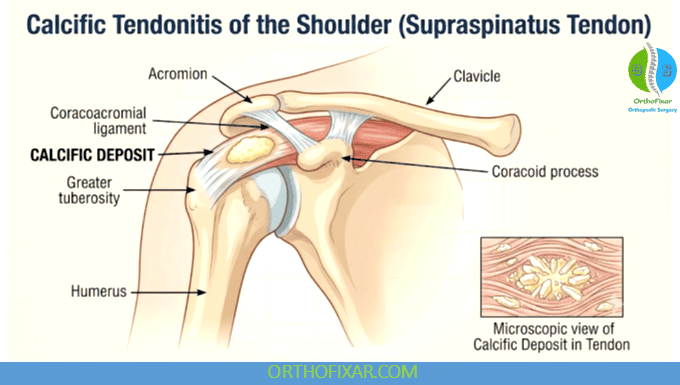
Calcific tendonitis is a condition where calcium crystals form inside the tendons of the rotator cuff, most commonly in the supraspinatus tendon. These deposits can range from small, chalky grains to larger, solid masses that irritate the surrounding tissue.
Unlike general shoulder tendonitis caused by overuse or inflammation, calcific tendonitis involves a distinct cycle of formation, resorption, and potential resolution. The body sometimes reabsorbs the calcium naturally, but during the resorption phase, pain can become intense as the deposits break down and cause inflammation.
“The pain from calcific tendonitis can be so sudden and severe that many patients mistake it for a heart attack or a broken bone. It is one of the most painful shoulder conditions I treat.” — Dr. Miguel Ramirez, orthopedic specialist
Common Symptoms of Calcific Tendonitis
Symptoms vary based on the stage of the calcium deposit. In the formative stage, you may feel little to no pain. Once the deposit enters the resorptive phase, the pain can become excruciating.
- Sharp, stabbing shoulder pain that comes on suddenly, especially at night
- Difficulty raising the arm above shoulder height or reaching behind the back
- Pain that radiates down the upper arm toward the elbow
- Stiffness and reduced range of motion in the shoulder joint
- Tenderness when pressing on the front or side of the shoulder
- Weakness in the arm when lifting objects or pushing doors open
For example, you might find it impossible to sleep on the affected side because the pressure triggers intense pain. Simple tasks like brushing your hair or putting on a seatbelt become challenging.
What Causes Calcium Deposits in the Shoulder?
Medical researchers do not know exactly why calcium builds up in shoulder tendons, but several theories exist. Some believe it results from repetitive microtrauma or reduced blood flow to the tendon tissue. Others point to genetic factors or metabolic conditions like thyroid disorders.
Certain groups face higher risk: people with diabetes, those who perform overhead work (painters, electricians), and athletes who throw or swim regularly. Women also develop calcific tendonitis more often than men.
How Is Calcific Tendonitis Diagnosed?
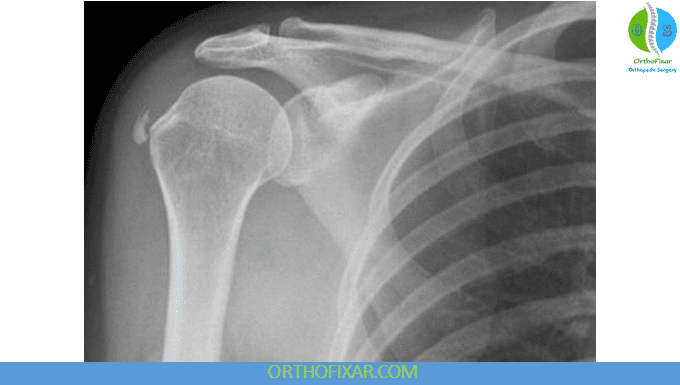
A doctor will start with a physical exam, checking for painful arcs of motion and tenderness over the rotator cuff. However, X-rays are the primary tool for confirming the diagnosis because calcium deposits appear as white spots on the image.
If the X-ray is unclear or the doctor needs more detail, an ultrasound or MRI can show the exact size and location of the deposit, as well as any associated inflammation or tears in the tendon.
| Imaging Test | What It Shows | Best For |
|---|---|---|
| X-ray | White calcium deposits in tendon | Initial diagnosis, deposit size and shape |
| Ultrasound | Real-time images, blood flow, and inflammation | Guiding injections and needle aspiration |
| MRI | Soft tissue detail, tendon tears, and surrounding structures | Complex cases or when surgery is considered |
“Most patients are surprised when I show them their X-ray and point out the bright calcium deposit. They often thought the pain was just a muscle strain.” — Sarah Kim, physiotherapist
Nonsurgical Treatment Options for Calcific Tendonitis
About 70 to 80 percent of cases improve without surgery. The goal of nonsurgical treatment is to reduce pain, decrease inflammation, and help the body reabsorb the calcium deposit naturally.
Rest and Activity Modification
Avoiding overhead lifting, heavy pushing, or repetitive shoulder movements for a few weeks can calm the initial flare-up. You do not need complete rest, but listen to your pain signals.
Physical Therapy
A physical therapist will teach you gentle stretching exercises to maintain range of motion and strengthening exercises for the rotator cuff and scapular muscles. Eccentric exercises, where you lower the arm slowly against resistance, are particularly helpful in some cases.
Anti-Inflammatory Medications
Over-the-counter NSAIDs like ibuprofen or naproxen can reduce pain and swelling during the acute phase. Use them for short periods only, as long-term use can cause stomach or kidney issues.
Corticosteroid Injections
An ultrasound-guided injection of cortisone into the shoulder joint can provide rapid pain relief that lasts for weeks or months. While the injection does not remove the calcium, it reduces inflammation and allows you to participate in physical therapy.
Needle Aspiration (Barbotage)
This minimally invasive procedure uses a needle to puncture the calcium deposit and flush it out with saline. Performed under ultrasound guidance, barbotage has a high success rate and often provides immediate relief. Most patients return to normal activities within a few days.
Extracorporeal Shock Wave Therapy (ESWT)
ESWT delivers high-energy sound waves to the shoulder to break up the calcium deposit and stimulate blood flow for healing. Research shows it works well for chronic cases, with success rates around 60 to 80 percent. Sessions are done weekly for three to four weeks.
When Is Surgery Needed for Calcific Tendonitis?
Surgery becomes an option when conservative treatments fail after six to twelve months, or when the calcium deposit is very large and causing tendon damage. Arthroscopic surgery is the standard approach.
During the procedure, the surgeon makes small incisions around the shoulder, inserts a camera, and uses specialized tools to remove the calcium deposit. If the tendon is torn, it can be repaired at the same time. Recovery typically involves wearing a sling for a few weeks, followed by physical therapy for several months.
Arthroscopic Removal Pros and Cons
- Pros: High success rate, minimal scarring, short hospital stay
- Cons: Requires anesthesia, recovery time, risk of stiffness or infection
Recovery Timeline and Expectations
Recovery depends heavily on the treatment method. Rest and anti-inflammatories may take weeks to show improvement, while needle aspiration can provide relief in days. After arthroscopic surgery, most people return to desk work within one to two weeks and heavy lifting after three to four months.
Physical therapy is essential after any intervention. A typical program includes passive stretching early on, then active range of motion, and finally strengthening. Consistency with your home exercises determines how quickly you regain full function.
Can Calcific Tendonitis Come Back?
Yes, recurrence is possible, though not common. Studies suggest that about 10 to 20 percent of people develop new deposits in the same or opposite shoulder within a few years. Maintaining good shoulder mechanics, avoiding sudden increases in overhead activity, and addressing metabolic conditions may reduce the risk.
Practical Tips for Managing Pain at Home
While waiting for treatment or during recovery, these strategies can help you cope with shoulder pain:
- Apply ice packs for 15 to 20 minutes several times a day to reduce inflammation
- Use a wedge pillow to keep your shoulder in a neutral position while sleeping
- Avoid sleeping on the affected side entirely
- Use your opposite arm for lifting and carrying objects
- Try gentle pendulum swings (forward, backward, circles) to maintain mobility without straining
For example, if you wake up with intense pain, spend five minutes doing slow arm circles while leaning forward with your hand resting on a table. This can reduce stiffness and make the morning more bearable.
Conclusion
Calcific tendonitis of the shoulder is a painful but treatable condition. Most people recover fully with nonsurgical methods like physical therapy, injections, or needle aspiration. Surgery is rarely needed but highly effective for stubborn cases. If you experience sudden shoulder pain that limits your movement or wakes you at night, see a doctor for an X-ray to confirm or rule out calcium deposits. Early diagnosis leads to faster relief and a smoother recovery.
Frequently Asked Questions
Does calcific tendonitis go away on its own?
Yes, in many cases the body reabsorbs the calcium deposit over time, and symptoms resolve without treatment. However, the resorption phase can be very painful, and you may need pain management during that period.
How long does calcific tendonitis last?
The duration varies widely. Some people experience symptoms for a few weeks, while others have pain for several months. With treatment, most improve within six to twelve weeks.
Can exercise make calcific tendonitis worse?
Aggressive overhead lifting or heavy resistance training can aggravate the condition. Gentle stretching and controlled strengthening under the guidance of a physical therapist are safe and beneficial.
Is calcific tendonitis the same as frozen shoulder?
No, they are different conditions. Frozen shoulder involves the joint capsule tightening, while calcific tendonitis involves calcium deposits in the tendon. However, both cause stiffness and pain, and they can occur together.
What foods should I avoid with calcific tendonitis?
There is no specific diet proven to treat calcium deposits, but reducing processed foods, sugar, and excessive dairy may help lower overall inflammation in the body. A balanced diet rich in vegetables and omega-3 fatty acids supports tendon health.
Can massage help calcific tendonitis?
Gentle massage around the shoulder muscles can relieve tension and improve blood flow, but deep massage directly over the calcium deposit may increase pain. Always inform your massage therapist about your condition.
Is surgery painful for calcific tendonitis?
You will receive anesthesia during the procedure, so you feel no pain during surgery. Afterward, you will have some soreness and stiffness, but pain is usually controlled with medication and ice within a few days.
How do I know if my shoulder pain is calcific tendonitis?
The hallmark signs are sudden, intense shoulder pain that often strikes at night, along with difficulty raising your arm. An X-ray is the only way to confirm calcium deposits definitively.
Can calcific tendonitis affect both shoulders?
Yes, it can occur in both shoulders, though it usually starts in one side. Bilateral cases are more common in people with metabolic conditions or a family history of the condition.
What is the best treatment for calcific tendonitis in 2026?
Ultrasound-guided needle aspiration combined with physical therapy is currently considered the most effective nonsurgical option for suitable candidates. For chronic or large deposits, ESWT or arthroscopic removal offers excellent outcomes.