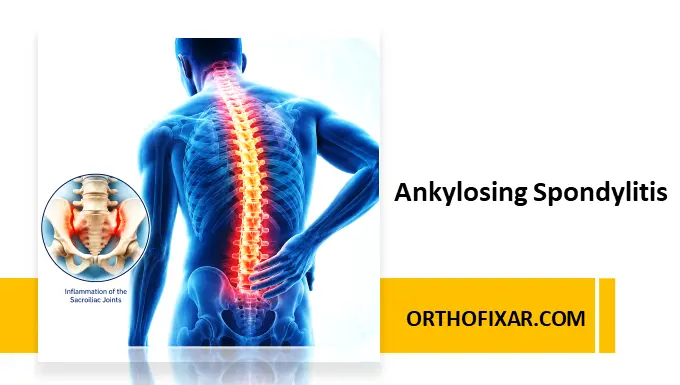
Ankylosing spondylitis (AS) is a chronic inflammatory disease that primarily affects the spine and sacroiliac joints. It belongs to a group of disorders known as axial spondyloarthritis and can lead to pain, stiffness, and progressive fusion of the vertebrae. Early recognition of ankylosing spondylitis symptoms and timely treatment are essential to prevent long-term disability and maintain quality of life.
This article reviews the causes, symptoms, diagnosis, disease stages, treatment options, rehabilitation strategies, and practical tips for living with ankylosing spondylitis.
What is Ankylosing Spondylitis?
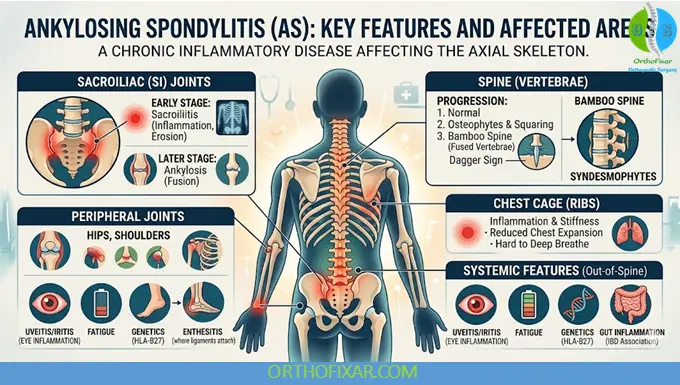
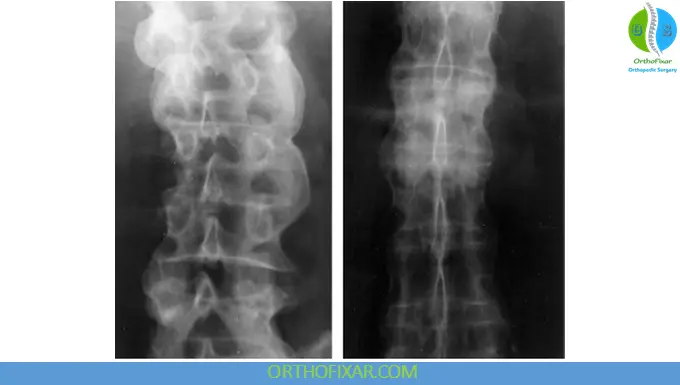
Ankylosing spondylitis is an autoimmune-mediated inflammatory arthritis that mainly affects the axial skeleton, particularly the sacroiliac joints and spine. Chronic inflammation can stimulate abnormal new bone formation, eventually causing vertebral fusion, commonly known as a “bamboo spine.”
The disease typically begins in late adolescence or early adulthood and affects males more frequently than females.
Epidemiology
- Usually develops between ages 15 and 40 years.
- More common in men than women.
- Strongly associated with the HLA-B27 genetic marker.
- Prevalence varies among populations and ethnic groups.
Causes and Risk Factors
Although the exact cause remains unknown, several factors contribute to disease development.
Genetic Factors
The strongest genetic association is with the HLA-B27 gene.
Individuals carrying HLA-B27 have a significantly increased risk of developing ankylosing spondylitis, although not all carriers develop the disease.
Immune System Dysfunction
Abnormal immune responses trigger inflammation at sites where tendons and ligaments attach to bone (entheses).
Environmental Factors
Potential environmental triggers include:
- Gastrointestinal infections
- Alterations in gut microbiota
- Other unknown inflammatory stimuli
See Also: Juvenile Rheumatoid Arthritis: Symptoms, Treatment & Prognosis
Pathophysiology
The hallmark of ankylosing spondylitis is chronic inflammation of:
- Sacroiliac joints
- Vertebral joints
- Entheses
Persistent inflammation causes:
- Bone erosion
- Repair mechanisms
- Excessive new bone formation
- Joint fusion (ankylosis)
This process gradually reduces spinal flexibility and mobility.
Ankylosing Spondylitis Symptoms
Recognizing early ankylosing spondylitis symptoms is critical for prompt diagnosis.
Early Symptoms
Common early symptoms include:
- Chronic lower back pain
- Morning stiffness lasting more than 30 minutes
- Pain improving with exercise
- Pain worsening during rest
- Buttock pain alternating from side to side
- Fatigue
Advanced Symptoms
As disease progresses, patients may develop:
- Reduced spinal mobility
- Stooped posture
- Chest wall stiffness
- Difficulty taking deep breaths
- Neck pain
- Hip pain
Signs of Ankylosing Spondylitis
Important signs of ankylosing spondylitis include:
- Limited lumbar spine movement
- Reduced chest expansion
- Positive sacroiliac joint tenderness
- Loss of normal spinal curvature
- Fixed kyphotic posture in severe disease
Extra-Articular Manifestations
Ankylosing spondylitis can affect organs outside the spine.
Eye Involvement
Acute anterior uveitis is the most common extra-articular manifestation.
Symptoms include:
- Eye redness
- Pain
- Blurred vision
- Photophobia
Cardiovascular Manifestations
Possible complications include:
- Aortic root inflammation
- Aortic regurgitation
- Conduction abnormalities
Pulmonary Manifestations
Patients may experience:
- Restrictive lung disease
- Reduced chest expansion
- Upper lung fibrosis (rare)
Gastrointestinal Involvement
Some patients develop inflammatory bowel disease such as:
- Crohn disease
- Ulcerative colitis
Ankylosing Spondylitis Diagnosis
Early ankylosing spondylitis diagnosis helps prevent irreversible structural damage.
Medical History
Physicians evaluate:
- Chronic inflammatory back pain
- Family history
- Age of symptom onset
- Extra-articular symptoms
Physical Examination
Assessment includes:
- Spinal mobility tests
- Chest expansion measurements
- Sacroiliac joint tenderness
- Postural evaluation
Laboratory Tests
Useful laboratory investigations include:
- HLA-B27 testing
- C-reactive protein (CRP)
- Erythrocyte sedimentation rate (ESR)
Inflammatory markers may be elevated but are not diagnostic.
Imaging Studies
X-Rays
Radiographs may reveal:
- Sacroiliitis
- Syndesmophytes
- Vertebral fusion
Magnetic Resonance Imaging (MRI)
MRI can detect:
- Early inflammatory changes
- Bone marrow edema
- Active sacroiliitis before radiographic changes appear
MRI is particularly valuable for early diagnosis.
Ankylosing Spondylitis Stages
Understanding ankylosing spondylitis stages helps assess disease progression.
Stage 1: Early Inflammatory Disease
Characteristics include:
- Intermittent inflammatory back pain
- Mild sacroiliac inflammation
- Minimal radiographic changes
Stage 2: Established Disease
Features include:
- Persistent symptoms
- Reduced flexibility
- Visible sacroiliitis on imaging
Stage 3: Structural Damage
Patients may develop:
- Syndesmophyte formation
- Progressive spinal stiffness
- Postural abnormalities
Stage 4: Advanced Ankylosis
The most severe stage includes:
- Bamboo spine appearance
- Marked spinal fusion
- Significant disability
- Reduced chest expansion
Ankylosing Spondylitis Treatment
Modern ankylosing spondylitis treatment aims to control inflammation, reduce pain, preserve mobility, and prevent complications.
Nonsteroidal Anti-Inflammatory Drugs (NSAIDs)
NSAIDs remain first-line therapy.
Examples include:
- Naproxen
- Indomethacin
- Diclofenac
- Celecoxib
Many patients achieve substantial symptom relief with NSAIDs.
Biologic Therapies
Patients with active disease may require biologic medications.
TNF Inhibitors
Examples include:
- Adalimumab
- Etanercept
- Infliximab
- Golimumab
- Certolizumab
IL-17 Inhibitors
Examples include:
- Secukinumab
- Ixekizumab
These agents effectively reduce inflammation and improve function.
Janus Kinase (JAK) Inhibitors
Newer targeted therapies include:
- Upadacitinib
These medications may be considered in selected patients.
Corticosteroids
Local corticosteroid injections can be useful for:
- Peripheral joint inflammation
- Enthesitis
Long-term systemic corticosteroids are generally not recommended.
Surgical Treatment
Surgery may be necessary for:
- Severe hip destruction
- Significant spinal deformity
- Neurological complications
Procedures may include:
- Total hip replacement
- Corrective spinal osteotomy
Ankylosing Spondylitis Physical Therapy
Ankylosing spondylitis physical therapy is one of the most important components of long-term management.
Benefits of Physical Therapy
Regular therapy can:
- Improve posture
- Maintain spinal mobility
- Reduce pain
- Increase flexibility
- Enhance breathing capacity
Recommended Exercises
Stretching Exercises
Focus on:
- Hamstrings
- Hip flexors
- Chest muscles
- Lumbar spine
Postural Training
Postural exercises help prevent progressive kyphosis.
Strengthening Exercises
Target:
- Core muscles
- Back extensors
- Gluteal muscles
Aerobic Conditioning
Recommended activities include:
- Walking
- Swimming
- Cycling
Swimming is particularly beneficial because it promotes spinal extension without excessive joint stress.
Living With Ankylosing Spondylitis
Successfully living with ankylosing spondylitis requires a combination of medical treatment and lifestyle modifications.
Daily Management Tips
- Stay physically active.
- Follow prescribed exercise programs.
- Avoid smoking.
- Maintain healthy body weight.
- Practice good posture.
- Sleep on a firm mattress when appropriate.
- Attend regular medical follow-ups.
Mental Health Considerations
Chronic pain may contribute to:
- Anxiety
- Depression
- Fatigue
Psychological support and patient education can significantly improve overall well-being.
Complications
Potential complications include:
- Vertebral fractures
- Severe spinal deformity
- Osteoporosis
- Chronic pain
- Reduced lung capacity
- Cardiovascular disease
- Eye inflammation
Early treatment substantially reduces these risks.
Prognosis
The prognosis varies among individuals.
Factors associated with worse outcomes include:
- Early disease onset
- Hip involvement
- Persistent inflammation
- Delayed diagnosis
- Extensive spinal damage
Advances in biologic therapy have dramatically improved long-term outcomes for many patients.
Prevention
There is currently no known method to prevent ankylosing spondylitis.
However, early detection and treatment can:
- Slow disease progression
- Preserve spinal mobility
- Improve quality of life
- Reduce disability
Frequently Asked Questions
Is ankylosing spondylitis an autoimmune disease?
It is considered an immune-mediated inflammatory disease with strong genetic and immunologic components.
Can ankylosing spondylitis be cured?
There is currently no cure, but modern treatments can effectively control symptoms and slow progression.
Does exercise help ankylosing spondylitis?
Yes. Regular exercise and ankylosing spondylitis physical therapy are essential parts of treatment.
What is the most common early symptom?
Chronic inflammatory low back pain and morning stiffness are usually the earliest manifestations.
Can ankylosing spondylitis affect organs outside the spine?
Yes. The eyes, heart, lungs, and gastrointestinal tract may be affected.
Conclusion
Ankylosing spondylitis is a chronic inflammatory disease that primarily affects the spine and sacroiliac joints. Recognizing early ankylosing spondylitis symptoms, obtaining timely ankylosing spondylitis diagnosis, and initiating appropriate ankylosing spondylitis treatment are crucial for preventing disability. Understanding ankylosing spondylitis stages, participating in ankylosing spondylitis physical therapy, and adopting healthy lifestyle habits can greatly improve outcomes and support patients in successfully living with ankylosing spondylitis.
References & More
- Wenker KJ, Quint JM. Ankylosing Spondylitis. [Updated 2023 Jun 20]. In: StatPearls [Internet]. Treasure Island (FL): StatPearls Publishing; 2026 Jan-. Available from: https://www.ncbi.nlm.nih.gov/books/NBK470173/
- Zhu W, He X, Cheng K, Zhang L, Chen D, Wang X, Qiu G, Cao X, Weng X. Ankylosing spondylitis: etiology, pathogenesis, and treatments. Bone Res. 2019 Aug 5;7:22. doi: 10.1038/s41413-019-0057-8. PMID: 31666997; PMCID: PMC6804882. Link
- Agrawal P, Tote S, Sapkale B. Diagnosis and Treatment of Ankylosing Spondylitis. Cureus. 2024 Jan 19;16(1):e52559. doi: 10.7759/cureus.52559. PMID: 38371049; PMCID: PMC10874590. Link