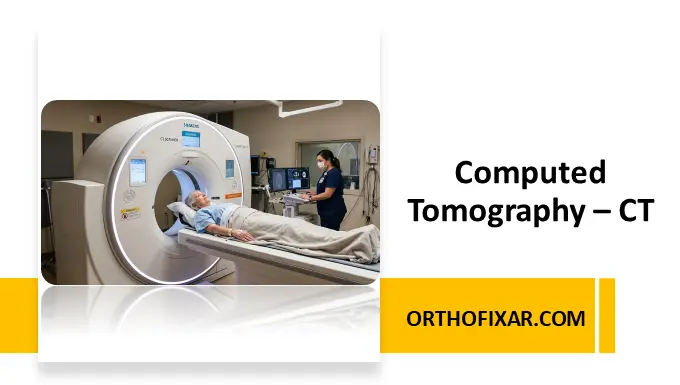
Computed Tomography (CT Scan) is one of the most important imaging modalities in modern medicine. It produces detailed cross-sectional images of the body, allowing clinicians to visualize bones, soft tissues, blood vessels, and internal organs with remarkable accuracy. Since its introduction, CT has revolutionized diagnostic imaging and has become indispensable in trauma assessment, oncology, orthopedics, neurology, and surgical planning.
Compared with conventional radiography and plain tomography, CT provides significantly higher image resolution and superior anatomical localization, making it a cornerstone of contemporary diagnostic practice.
What is Computed Tomography?
Computed Tomography (CT) is an advanced imaging technique that generates cross-sectional images of the body using X-rays and computer processing. Like conventional tomography, CT produces images focused on selected tissue planes. However, CT offers much greater image quality, contrast resolution, and spatial detail.
The images produced are typically trans-axial (axial) sections, similar to transverse anatomical slices. This allows clinicians to visualize anatomical structures from perspectives that cannot be obtained with standard radiographs.
During a CT examination:
- A preliminary localization image (scout or topogram) is obtained.
- The area of interest is selected.
- Multiple cross-sectional images are acquired.
- The images are digitally reconstructed and stored for analysis.
Slice thickness varies according to the anatomical region being examined. Larger joints and tissue masses may be scanned with slices 3–5 mm apart, whereas smaller joints, spinal structures, and intervertebral discs require much thinner sections to capture fine anatomical detail.
See Also: Plain Tomography: Principles & Clinical Applications
How CT Scanners Work
CT scanners consist of an X-ray tube and multiple detectors that rotate around the patient. As the X-ray beam passes through the body, tissues absorb varying amounts of radiation.
The detector system measures the transmitted radiation, and sophisticated computer algorithms reconstruct the data into detailed cross-sectional images.
Modern CT systems employ:
- Helical (spiral) scanning technology
- Multidetector or multislice scanners
- Advanced image reconstruction algorithms
- Three-dimensional imaging capabilities
These technological advances have dramatically improved image quality while reducing scanning time.
Multislice Computed Tomography
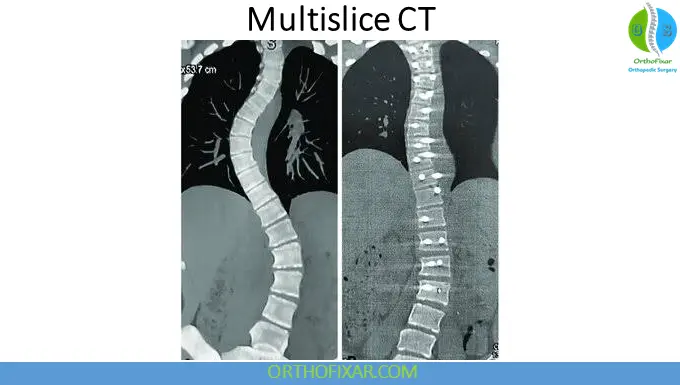
Modern multislice CT (MSCT) scanners can acquire multiple slices simultaneously, allowing rapid imaging of large anatomical regions.
Benefits of multislice CT include:
- Faster image acquisition
- Higher spatial resolution
- Improved image quality
- Reduced motion artifacts
- Enhanced visualization of complex anatomy
The data obtained can be reconstructed in multiple anatomical planes, including:
- Axial plane
- Coronal plane
- Sagittal plane
This process is known as multiplanar reconstruction (MPR).
Three-Dimensional CT Reconstruction
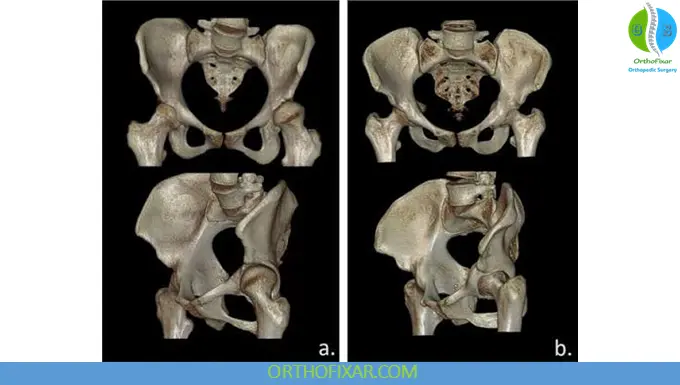
One of the major advantages of modern CT technology is the ability to generate three-dimensional images.
Common reconstruction techniques include:
Surface Rendering
Surface-rendered images display the external contours of anatomical structures and are particularly useful for demonstrating skeletal anatomy.
Volume Rendering
Volume-rendered reconstructions use the entire imaging dataset to create realistic three-dimensional representations of anatomy.
Three-dimensional reconstructions are particularly helpful for:
- Complex fracture assessment
- Preoperative planning
- Surgical navigation
- Patient education
- Anatomical visualization
However, some fine anatomical details may be lost during the rendering process compared with original axial images.
See Also: Myelography: Indications, Procedure, Interpretation & Complications
Advantages of Computed Tomography
CT offers several important advantages over conventional radiography and other imaging modalities.
Excellent Spatial Resolution
CT provides exceptional visualization of anatomical structures and can accurately define:
- Size
- Shape
- Location
- Extent of lesions
Rapid Image Acquisition
Modern CT scanners can image large portions of the body within seconds, making CT especially valuable in emergency situations.
Superior Bone Imaging
CT is highly effective for evaluating:
- Cortical bone
- Fracture patterns
- Bone alignment
- Bone healing
It is generally superior to MRI for visualizing fine bony detail.
Detection of Calcification and Ossification
CT is particularly sensitive for identifying:
- Soft-tissue calcifications
- Ossification
- Mineralized lesions
- Calcified tumors
Multiplanar Imaging
Images can be reconstructed in multiple planes without requiring additional scanning.
Clinical Applications of Computed Tomography
CT in Trauma Imaging
One of the most important applications of CT is the evaluation of acute trauma.
Because image acquisition is rapid and highly detailed, CT is considered the imaging modality of choice for many traumatic injuries.
Common trauma indications include:
- Head injuries
- Spinal trauma
- Chest trauma
- Abdominal trauma
- Pelvic trauma
CT can rapidly identify:
- Fractures
- Hemorrhage
- Organ injuries
- Dislocations
- Soft-tissue damage
CT in Orthopedic Practice
Computed tomography plays a crucial role in orthopedic surgery and fracture management.
It is routinely used for evaluating:
Vertebral Fractures
CT accurately demonstrates:
- Fracture morphology
- Canal compromise
- Fragment displacement
Acetabular Fractures
Complex acetabular injuries often require CT for accurate classification and surgical planning.
Tibial Plateau Fractures
CT provides detailed assessment of:
- Articular depression
- Fragment displacement
- Joint involvement
Ankle and Foot Injuries
Complex fractures and fracture-dislocations of the foot and ankle are often better visualized with CT than with plain radiographs.
Preoperative Planning
CT is an invaluable tool for surgical planning because it enables surgeons to evaluate:
- Fracture geometry
- Bone stock
- Articular involvement
- Implant positioning
Three-dimensional reconstructions further enhance preoperative assessment.
CT in Oncology
CT is widely used in the evaluation of musculoskeletal tumors and other malignancies.
It assists in determining:
- Tumor size
- Tumor location
- Local extension
- Cortical destruction
- Calcification patterns
Although CT can demonstrate tumor extent, it is often less effective than MRI in characterizing soft-tissue tumor composition.
CT-Guided Biopsy
Computed tomography can be used to guide biopsy procedures with high precision.
CT-guided biopsies are commonly performed for:
- Bone lesions
- Soft-tissue masses
- Deep tumors
- Suspected metastatic lesions
This approach increases diagnostic accuracy while minimizing complications.
CT Versus MRI
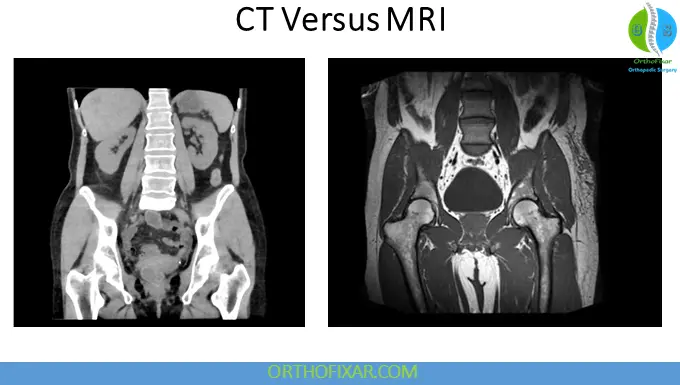
Both CT and MRI are valuable imaging techniques, but each has distinct strengths.
| Feature | CT | MRI |
|---|---|---|
| Bone detail | Excellent | Good |
| Soft-tissue contrast | Moderate | Excellent |
| Scan speed | Very fast | Slower |
| Radiation exposure | Yes | No |
| Calcification detection | Excellent | Limited |
| Trauma imaging | Excellent | Limited in acute emergencies |
| Ligament evaluation | Moderate | Excellent |
In general:
- CT is preferred for acute trauma and detailed bone assessment.
- MRI is preferred for soft-tissue evaluation, spinal cord pathology, ligaments, tendons, and marrow abnormalities.
Limitations of Computed Tomography
Despite its numerous advantages, CT has several important limitations.
Inferior Soft-Tissue Contrast
Compared with MRI, CT provides relatively poor soft-tissue contrast.
Structures that may be better evaluated by MRI include:
- Ligaments
- Tendons
- Articular cartilage
- Intervertebral discs
- Spinal cord
- Brain tissue
Radiation Exposure
A major disadvantage of CT is exposure to ionizing radiation.
Radiation doses from CT are substantially higher than those from standard radiography.
Therefore:
- CT should only be performed when clinically justified.
- Alternative imaging modalities should be considered when appropriate.
- Special caution is required in pediatric patients and pregnant individuals.
Metal Artifacts
Orthopedic implants and metallic hardware can create image artifacts that degrade image quality and may obscure adjacent anatomy.
Limited Functional Information
CT primarily provides anatomical information and generally offers less functional assessment than nuclear medicine or advanced MRI techniques.
Safety Considerations
To optimize patient safety:
- Follow radiation protection principles.
- Use the lowest radiation dose necessary.
- Avoid unnecessary repeat examinations.
- Ensure appropriate clinical indications.
- Consider MRI or ultrasound when suitable alternatives exist.
Modern CT systems employ dose-reduction technologies that help minimize radiation exposure while maintaining diagnostic image quality.
Future Developments in CT Imaging
Advances in CT technology continue to improve diagnostic performance.
Emerging innovations include:
- Dual-energy CT
- Spectral CT
- Photon-counting CT
- Artificial intelligence-assisted image reconstruction
- Ultra-low-dose CT protocols
These developments may further enhance image quality, reduce radiation exposure, and expand clinical applications.
Key Points
- Computed Tomography (CT) produces detailed cross-sectional images using X-rays and computer reconstruction.
- CT provides superior spatial resolution and excellent visualization of bone anatomy.
- Modern multislice CT scanners enable rapid image acquisition and multiplanar reconstruction.
- CT is essential in trauma assessment, fracture evaluation, surgical planning, oncology, and image-guided biopsy.
- It is superior to MRI for demonstrating fine bone detail and calcification.
- MRI provides better soft-tissue contrast than CT.
- The major limitation of CT is exposure to ionizing radiation.
- Appropriate patient selection and radiation safety measures are essential.
References & More
- Patel PR, De Jesus O. CT Scan. [Updated 2023 Jan 2]. In: StatPearls [Internet]. Treasure Island (FL): StatPearls Publishing; 2026 Jan-. Available from: https://www.ncbi.nlm.nih.gov/books/NBK567796/
- Mazonakis M, Damilakis J. Computed tomography: What and how does it measure? Eur J Radiol. 2016 Aug;85(8):1499-504. doi: 10.1016/j.ejrad.2016.03.002. Epub 2016 Mar 10. PMID: 26995675. Pubmed
- Patel PR, De Jesus O. CT Scan. 2023 Jan 2. In: StatPearls [Internet]. Treasure Island (FL): StatPearls Publishing; 2026 Jan–. PMID: 33620865. Pubmed
- Blom, A., Warwick, D., & Whitehouse, M. R. (2018). Apley & Solomon’s system of orthopaedics and trauma (10th ed.). CRC Press