Ehlers-Danlos syndrome (EDS) is a rare, inherited connective tissue disorder that affects the skin, joints, and blood vessels. Understanding EDS is crucial for both medical professionals and patients, as early recognition and management can significantly improve quality of life.
What is Ehlers-Danlos Syndrome (EDS)?
EDS encompasses a group of genetic disorders characterized by defects in collagen, the protein responsible for the strength and elasticity of connective tissue. These defects can lead to hypermobile joints, fragile skin, and a variety of systemic complications.
Common signs of EDS include:
- Hypermobile joints that may dislocate easily
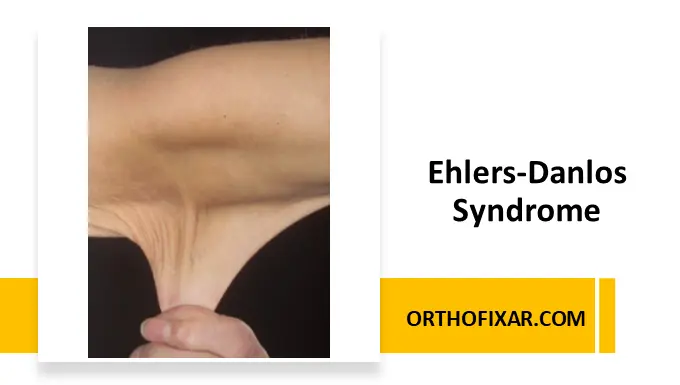
- Skin hyperextensibility (stretchy skin)
- EDS hands may show thin, delicate skin and joint hypermobility
- Easy bruising and slow wound healing
See Also: Generalized Hypermobility of Joints
EDS Types
Ehlers-Danlos Syndromes (EDS) are a group of 13 inherited disorders that affect connective tissues, primarily causing joint hypermobility, skin hyperextensibility, and tissue fragility. Healthcare providers classify them into 13 distinct types, ranging from the relatively common to ultra-rare forms.
- Hypermobile EDS (hEDS): Most common type; characterized primarily by joint hypermobility.
- Classical EDS (cEDS): Notable for skin hyperextensibility and fragile skin.
- Vascular EDS (vEDS): High risk of arterial rupture and organ complications; requires careful monitoring.
- Kyphoscoliotic EDS (kEDS): Features include severe muscle hypotonia and spinal curvature.
- Arthrochalasia EDS (aEDS): Marked by congenital hip dislocation and severe joint laxity.
- Dermatosparaxis EDS (dEDS): Rare; causes extreme skin fragility.
- Brittle Cornea Syndrome (BCS): Leads to thin, rupture-prone corneas and early-onset progressive eye issues, along with joint and skin involvement.
- Cardiac-Valvular EDS (cvEDS): Causes severe, progressive problems with the heart valves.
- Classical-like EDS (clEDS): Presents similarly to classical EDS but without the same skin scarring and genetic causes.
- Musculocontractural EDS (mcEDS): Causes distinct facial features, congenital joint contractures (where joints are fixed in a bent or straight position), and fragile skin.
- Myopathic EDS (mEDS): Results in severe muscle weakness and muscle shrinking (atrophy) that improves slightly with age, alongside joint hypermobility.
- Periodontal EDS (pEDS): Causes severe and early-onset inflammation of the gums, leading to premature loss of teeth.
- Spondylodysplastic EDS (spEDS): Primarily features short stature, skeletal abnormalities (particularly in the spine and limbs), and bowing of the legs.
EDS Hands: What to Look For
EDS often affects the hands, leading to hypermobile fingers, thin skin, and abnormal scarring. Recognizing EDS hands is critical for early diagnosis. Patients may experience difficulty with fine motor tasks and are prone to joint dislocations.
Diagnosis
Diagnosis is primarily based on a thorough physical examination, a detailed review of personal and family medical history, and specific diagnostic criteria for the different subtypes. Genetic testing is available and highly recommended to confirm most types of EDS, except for the hypermobile type.
EDS Treatment Options
Currently, there is no cure for EDS, but treatment focuses on symptom management and preventing complications:
- Physical therapy: Strengthens muscles and stabilizes joints
- Pain management: Using medications, braces, or splints
- Surgical interventions: Only when necessary, due to increased tissue fragility
- Lifestyle adjustments: Avoiding high-risk activities and maintaining joint health
Early intervention improves outcomes and helps patients maintain independence.
Living with Ehlers-Danlos Syndrome
EDS can be challenging, but awareness and proper medical care are key. Patients should have regular check-ups with a multidisciplinary team, including geneticists, rheumatologists, and physical therapists.
References
- Ravi U, Sieg VC. Ehlers-Danlos Syndrome. [Updated 2023 May 29]. In: StatPearls [Internet]. Treasure Island (FL): StatPearls Publishing; 2026 Jan-. Available from: https://www.ncbi.nlm.nih.gov/books/NBK549814/
- Ravi U, Sieg VC. Ehlers-Danlos Syndrome. 2023 May 29. In: StatPearls [Internet]. Treasure Island (FL): StatPearls Publishing; 2026 Jan–. PMID: 31747221. Pubmed