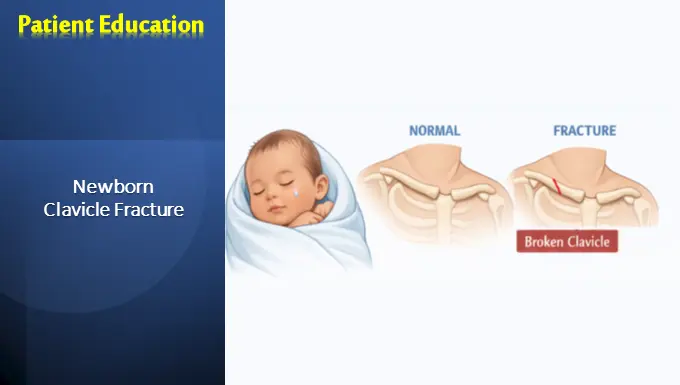
A newborn clavicle fracture, also called a newborn broken clavicle, broken clavicle in infants, or newborn broken collarbone, is a common birth-related injury. While it can be concerning for parents, it usually heals quickly and completely with minimal intervention.
What is a Newborn Clavicle Fracture?
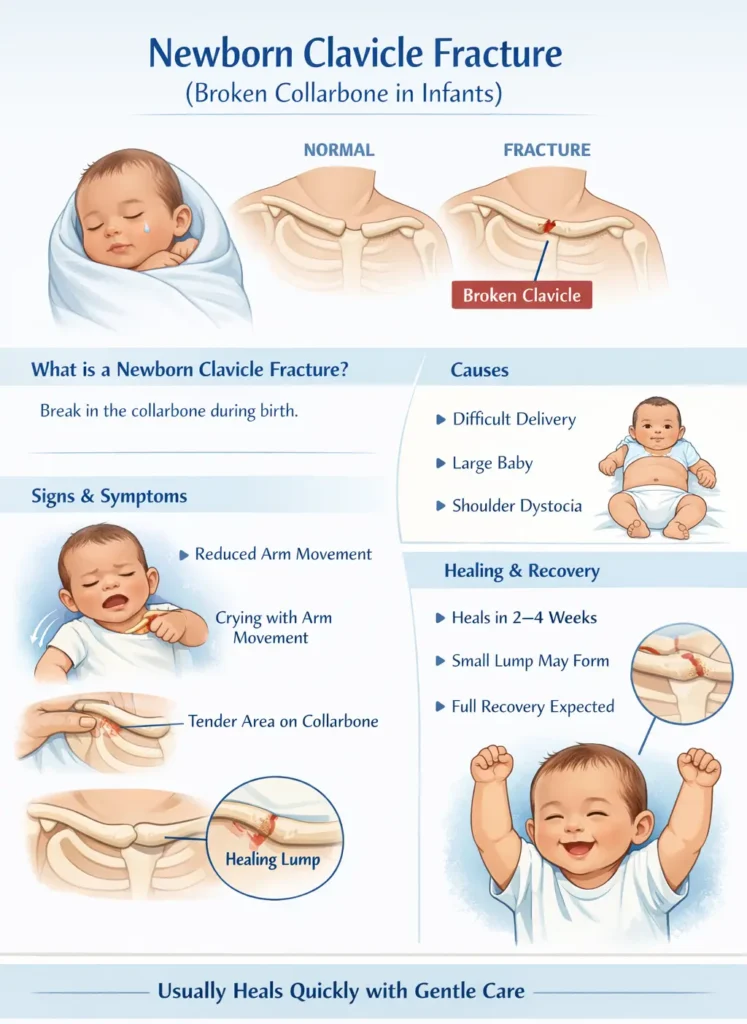
The clavicle (collarbone) connects the shoulder to the chest. A fracture means this bone is broken. In newborns, this injury most often occurs during delivery, especially if the birth is difficult.
It is actually the most common bone injury during birth.
Causes of a Newborn Broken Clavicle
A broken clavicle in infants usually happens due to pressure during childbirth. Common risk factors include:
- Difficult vaginal delivery
- Large baby (high birth weight)
- Shoulder getting stuck during delivery (shoulder dystocia)
- Use of delivery tools (forceps or vacuum)
- Narrow birth canal
Signs and Symptoms
A newborn broken collarbone may not always be obvious immediately after birth. Parents may notice:
- Reduced movement of one arm
- Baby keeps the arm still (pseudo-paralysis)
- Crying or discomfort when the arm is moved
- Pain when lifting the baby under the arms
- One shoulder appearing lower than the other
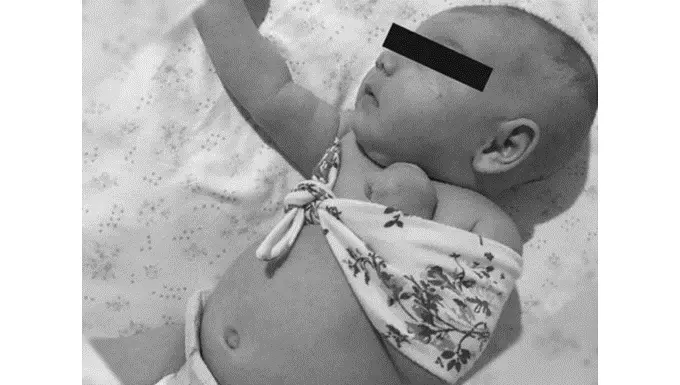
- A small lump over the collarbone after a few weeks (healing bone)
Diagnosis
Doctors usually diagnose a newborn clavicle fracture through:
- Physical examination
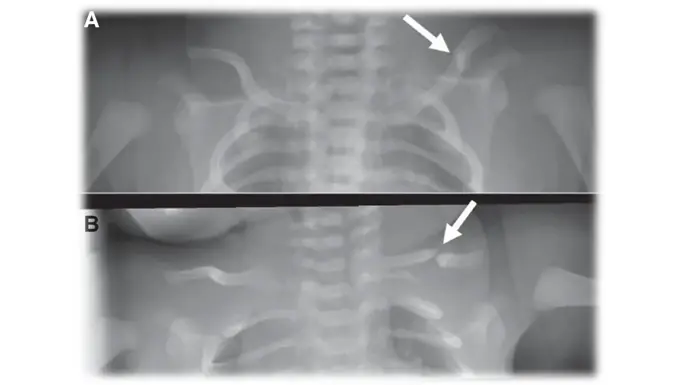
- Imaging if needed (X-ray or ultrasound)
Sometimes, the fracture is only noticed later when a healing lump appears.
Treatment
The good news: most newborn broken clavicles heal on their own without treatment.
Typical care includes:
- Gentle handling of the baby
- Avoid lifting under the arms
- Keeping the affected arm still (e.g., pinning sleeve to clothing)
No surgery or casting is usually required to treat newborn broken clavicle.
Healing and Recovery
- Healing occurs quickly, often within 2–4 weeks
- A small lump (callus) may form during healing and later disappear
- Most infants recover fully with no long-term problems
Possible Complications (Rare)
Complications are uncommon but may include:
- Injury to nearby nerves (brachial plexus), causing arm weakness
- Temporary or rarely persistent reduced arm movement
When to Seek Medical Advice
Contact your healthcare provider if:
- Your baby does not move one arm
- Crying increases when the arm is touched or moved
- You notice swelling or deformity
- Symptoms do not improve over time
Key Takeaways for Parents
- A newborn clavicle fracture is common and usually not serious
- Most cases require only gentle care—not medical treatment
- Healing is rapid, and long-term outcomes are excellent
References & More
- Mumtaz Hashmi H, Shamim N, Kumar V, Anjum N, Ahmad K. Clavicular Fractures in Newborns: What Happens to One of the Commonly Injured Bones at Birth?. Cureus. 2021;13(9):e18372. Published 2021 Sep 29. doi:10.7759/cureus.18372. Pubmed
- Clavicular fractures in pediatric traumatology. Seif El Nasr M, von Essen H, Teichmann K. Unfallchirurg. 2011;114:300–310. doi: 10.1007/s00113-011-1960-7. [PubMed]
- Clavicle fracture and brachial plexus palsy in the newborn: risk factors and outcome. Narchi H, Kulaylat NA, Ekuma-Nkama E. Ann Saudi Med. 1996;16:707–710. doi: 10.5144/0256-4947.1996.707.
[PubMed] - Neonatal clavicular fracture: clinical analysis of incidence, predisposing factors, diagnosis, and outcome. Hsu TY, Hung FC, Lu YJ, et al. Am J Perinatol. 2002;19:17–21. doi: 10.1055/s-2002-20169. [PubMed]