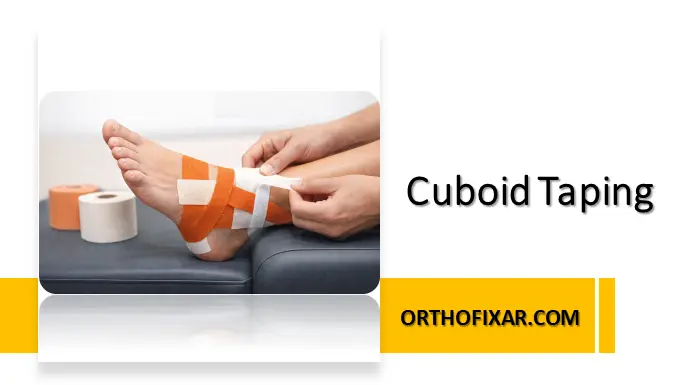
Cuboid taping is a commonly used supportive technique in physiotherapy for managing cuboid syndrome, a condition associated with lateral midfoot pain due to subtle disruption or subluxation of the calcaneocuboid joint.
This condition is often linked to inversion ankle injuries and may be misdiagnosed due to its similarity to lateral ankle sprains. Conservative management—including manipulation, padding, and taping—is widely recommended to support recovery and prevent recurrence.
Indications
Cuboid taping is indicated in:
- Minor subluxation of the cuboid
- Inversion ankle sprains (especially in athletes and dancers)
- Hypermobility of the calcaneocuboid joint on the plantar surface
See Also: Cuboid Syndrome
Function of Cuboid Taping
The primary goals of cuboid taping are:
- Maintain the cuboid in a stable anatomical position
- Support the lateral column of the foot
- Stabilize the midfoot and medial longitudinal arch
Taping is often used as an adjunct after cuboid manipulation or alongside orthotic support to prevent recurrence.
Materials Required
- 5 cm elastic (stretch) tape
- 7.5 cm elastic (stretch) tape
- 3.8 cm rigid tape
- Felt adhesive pad
Patient Position
- Patient seated
- Foot positioned over the edge of the couch
This allows easy access to the plantar surface and proper tape application.
Step-by-Step Application
1. Pad Placement
- Apply a felt adhesive pad directly under the cuboid on the plantar surface
- Bevel the outer edges to avoid pressure points
2. First Tape Strip (Medial Start)
- Using 5 cm stretch tape
- Start from the medial side of the foot
- Wrap around the heel
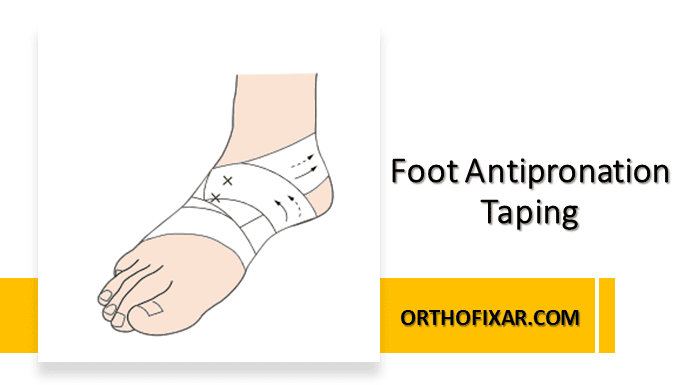
3. Arch Support Wrap
- Angle the tape down the lateral side
- Pass under the arch
- Pull upward and encircle the foot
- Finish under the arch
4. Second Reinforcement Strip
- Start from the lateral side
- Pass around the heel
- Continue under the arch from medial to lateral
- Finish under the arch
5. Midfoot Stabilization
- Apply one or two strips of 7.5 cm stretch tape around the midfoot
6. Final Fixation
- Secure edges with 3.8 cm rigid tape
Check Function
- Ask the patient to stand
- Assess comfort and support
- Ensure no excessive pressure or pain
Contraindications & Precautions
- Avoid excessive activity for a few days post-application
- Monitor for skin irritation or circulatory compromise
- Reassess if pain persists or worsens
Patients should temporarily reduce load to prevent recurrent subluxation.
Clinical Notes for Physiotherapists
- Cuboid taping is not a standalone treatment—it is best used after manual correction (e.g., cuboid manipulation).
- Padding under the cuboid is essential to prevent plantar displacement and maintain alignment.
- Combine with:
- Foot strengthening exercises
- Proprioceptive training
- Orthotic support if needed
Conclusion
Cuboid taping is a simple yet effective technique for stabilizing the midfoot and preventing recurrence of cuboid syndrome. When applied correctly, it enhances patient comfort, supports function, and complements broader physiotherapy management strategies.