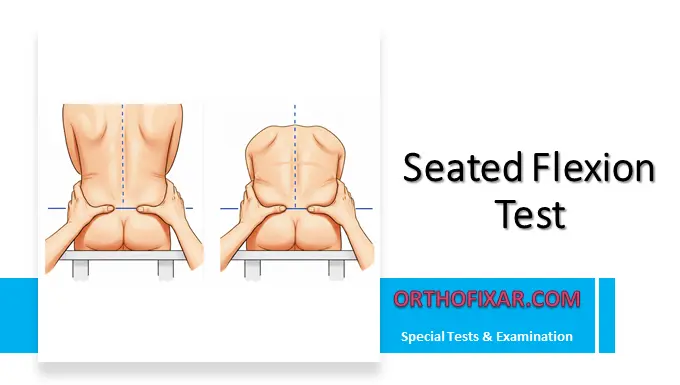
The Seated Flexion Test is a clinical palpation maneuver used primarily in osteopathic and manual medicine to evaluate dysfunction of the sacroiliac joint (SIJ). It is often compared with the standing flexion test to help differentiate between:
- Sacroiliac lesions (SI joint restriction)
- Iliosacral lesions (innominate dysfunction)
Because sitting places the pelvis near the end range of innominate extension, motion at the ilium is minimized. This theoretically isolates movement at the sacroiliac joint, making asymmetry easier to detect.
Purpose of the Test
The seated flexion test is designed to assess:
- Sacroiliac joint mobility
- Pelvic asymmetry
- Functional restriction of the posterior pelvic ligaments
- Contribution of the SI joint to low back pain
It is frequently used in osteopathic structural exams, physiotherapy screening, and manual therapy evaluation.
How the Test is Performed
Patient Position
- The patient sits on a firm examination table.
- Legs hang over the edge with the feet supported.
- The examiner stands behind the patient.
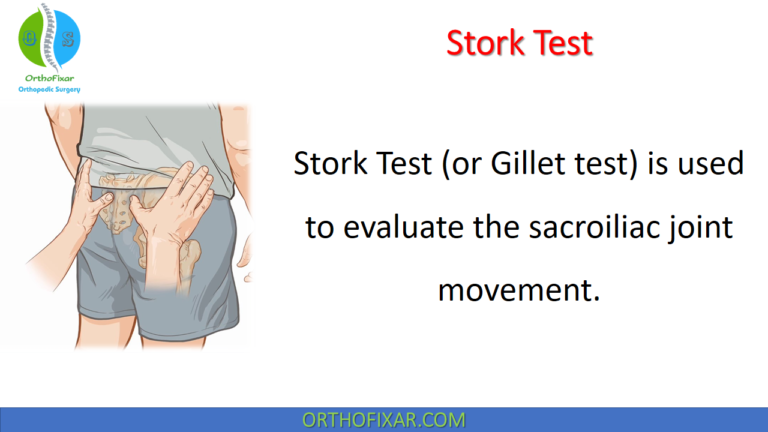
- Each posterior superior iliac spine (PSIS) is palpated with the thumbs placed inferiorly (caudally).
This position reduces innominate motion and is believed to isolate SI joint movement. Then the examiner applies the test technique:
- Examiner palpates both PSIS landmarks simultaneously.
- The patient bends forward at the waist.
- The examiner observes and compares PSIS motion.
See Also: Standing Flexion Test
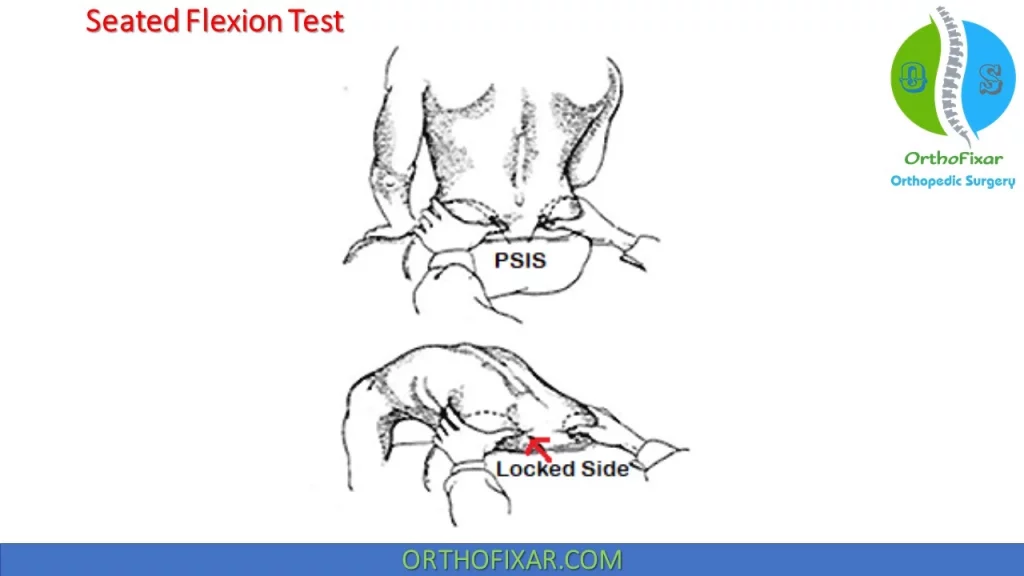
What does a positive Seated Flexion Test mean?
Normal Finding
- Both PSIS move superiorly and symmetrically as the patient flexes forward.
Positive Test
- One PSIS moves more superiorly than the other.
- The side that moves first or furthest is considered the restricted side.
This asymmetry suggests possible SI joint dysfunction or pelvic fixation.
Variant of the Test
A similar maneuver is sometimes called:
- Sitting bend-over test
- Sitting forward flexion test
The procedure is identical, but the patient sits on a soft surface rather than a firm table.Diagnostic Accuracy and Reliability
Research has shown the seated flexion test to have limited diagnostic value when used alone.
A well-known study by Levangie reported:
- Sensitivity: 9%
- Specificity: 93%
This means the test is better at ruling out SI dysfunction than confirming it. Multiple studies indexed in PubMed and osteopathic literature suggest:
- Poor inter-examiner reliability
- Low sensitivity
- Limited predictive validity
Because of this, the test should never be used in isolation.
Clinical Value in Practice
Despite limited reliability, the seated flexion test may still be useful when:
- Combined with SI provocation tests
- Used within a full biomechanical exam
- Interpreted alongside patient symptoms
- Integrated with imaging or functional assessment
Modern evidence-based practice emphasizes clusters of tests rather than single palpatory findings.
Key Takeaways
- The seated flexion test evaluates sacroiliac mobility in a position that minimizes innominate movement.
- Asymmetrical PSIS elevation suggests possible SI joint restriction.
- The test has high specificity but very low sensitivity.
- It should be used only as part of a comprehensive pelvic examination.
References & More
- Ribeiro RP, Guerrero FG, Camargo EN, Pivotto LR, Aimi MA, Loss JF, Candotti CT. Construct validity and reliability of tests for sacroiliac dysfunction: standing flexion test (STFT) and sitting flexion test (SIFT). J Osteopath Med. 2021 Sep 22;121(11):849-856. doi: 10.1515/jom-2021-0025. PMID: 34551460. Pubmed
- McParland B, Sina RE, DeLuca A. Osteopathic Manipulative Treatment: Muscle Energy Procedure – Sacral Dysfunctions. [Updated 2024 Mar 1]. In: StatPearls [Internet]. Treasure Island (FL): StatPearls Publishing; 2025 Jan-. Pubmed
- Clinical Tests for the Musculoskeletal System 3rd Edition.
- Dutton’s Orthopaedic Examination, Evaluation, And Intervention 3rd Edition.