Schober Test is used to diagnose the restriction of lumbar spine flexion in patients with inflammatory arthropathy, particularly ankylosing spondylitis. The test serves as a measure of lumbar flexion range of motion and is also a useful tool for assessing the effectiveness of interventions designed to improve this range, such as exercise, physical therapy, and spinal manipulation.
How to perform the Schober test?
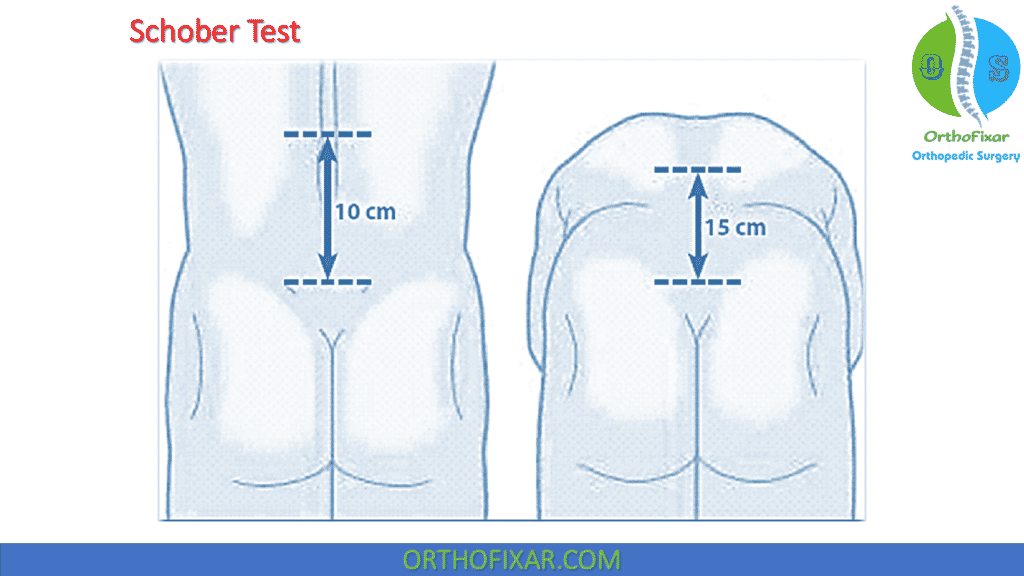
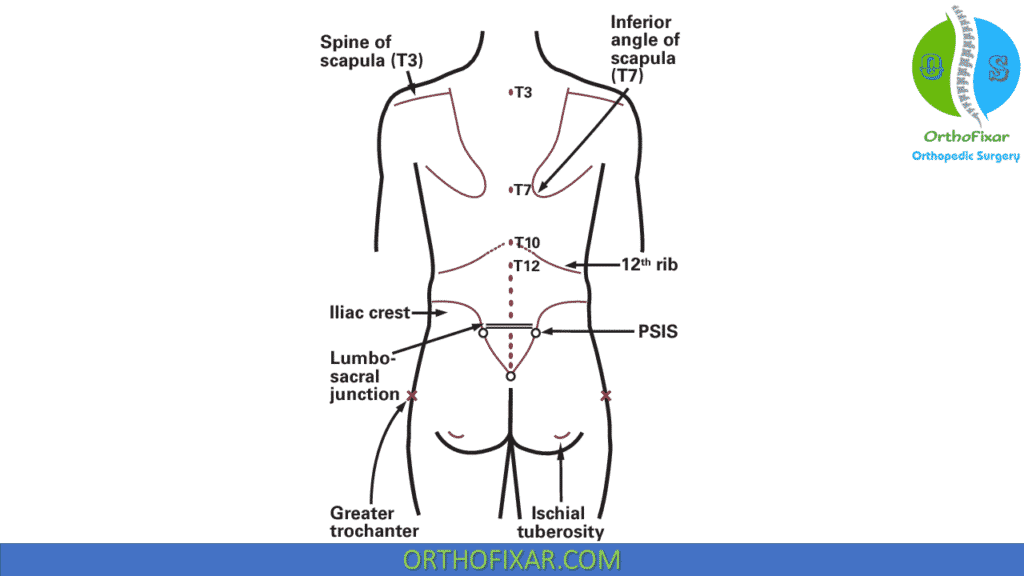
The examiner asks the patient to stand erect. From the posterior aspect, a line is drawn connecting the two posterior superior iliac spines, which is the level of S2. From the midpoint of this line, a point is marked 10 cm straight up in the midline. Now the examiner asks the patient to bend forward keeping the knees straight. The distance between the two points is measured again in this position.
See Also: Spine Movements
What is the positive Schober Test?
In a normal person the measured distance should increase from 10 cm to at least 15 cm.
In a patient with Ankylosing spondylitis, forward flexion is limited, and the measured distance does not increase by 5 cm (positive Schober Test).
Accuracy
A study on 449 randomly selected patients with low back pain, the sensitivity and specificity of Schober’s test was:
- Sensitivity: 30%
- Specificity: 86%
A systematic review and meta-analysis study was published in the Journal of Orthopaedic & Sports Physical Therapy in 2022 found that the Schober test is a reliable and valid measure of lumbar flexion range of motion. The study also found that the Schober test is a useful tool for assessing the effectiveness of interventions for improving lumbar flexion range of motion.
Notes
Schober test is a useful tool for assessing the effectiveness of interventions for improving lumbar flexion range of motion. A number of studies have shown that interventions such as exercise, physical therapy, and spinal manipulation can improve lumbar flexion range of motion, as measured by the Schober test.
Modified Schober Test
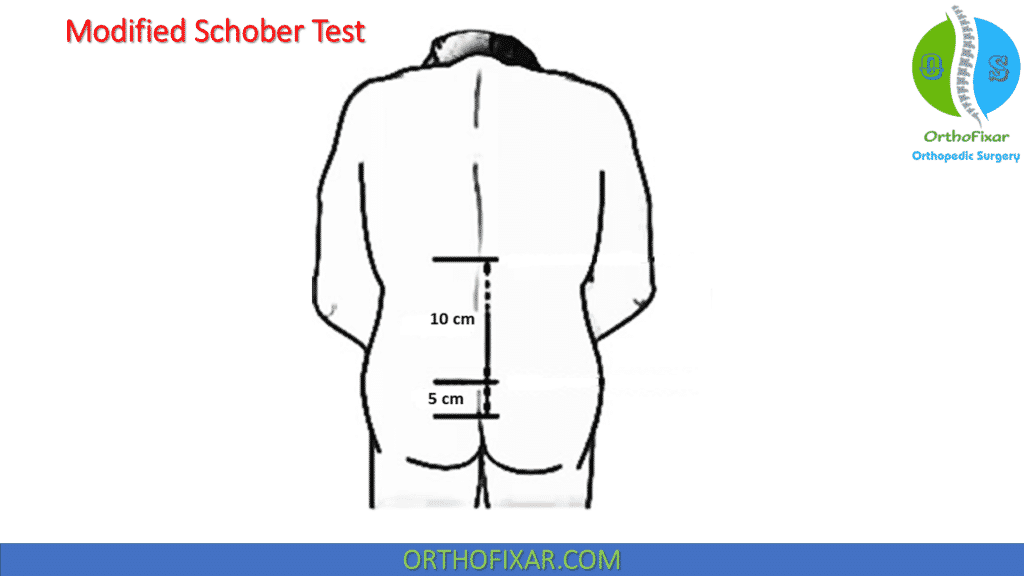
With the patient standing, the examiner marks the level of the lumbosacral junction. Then mark two points, one 10 cm above (a) and the other 5 cm below (b) the level of the lumbosacral junction (distance between the two points (a and b) being 15 cm). The patient is asked to bend forwards and attempt to touch their toes with the knees kept straight.
Measure the distance between the two points, a and b.
Normally, the length of the dorsal aspect of the spine should appear to increase about 6 cm (the distance between the two points, a and b). Excursion of much less than this amount suggests the presence of ankylosing spondylitis, particularly if a kyphotic deformity is present.
The modified version of the test is included in the BASMI (Bath Ankylosing Spondylitis Metrology Index), which is a tool used to define clinically significant changes in spinal movement for patients with ankylosing spondylitis.
Bath Ankylosing Spondylitis Metrology Index (BASMI) Interpretation Criteria (based on the difference in measurements):
- Mild limitation: The difference lies above 4 cm.
- Moderate limitation: The difference lies between 2 to 4 cm.
- Severe limitation: The difference is less than 2 cm
Ankylosing Spondylitis
Pain starts before the age of 40 especially in male of upper back pain with more than 3 months history, insidious onset, and worse in early morning with associated sacroiliitis features alleviated by exercise.
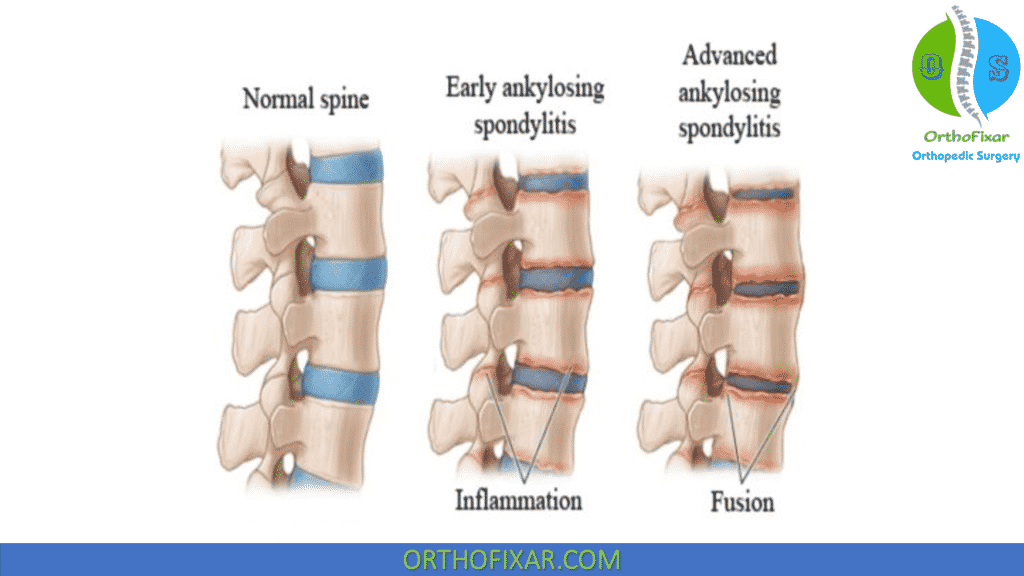
Increasing dorsal kyphosis with stiffness with restrictive lung disease limiting chest expansion and severe disease can cause hip arthritis and hip fusion. This results in hunch back deformity, chin to chest deformity, flexion deformity of the hip with fusion of spine obvious in X-ray as bamboo spine.
MCQ Questions
References
- Macrae IF, Wright V. Measurement of back movement. Ann Rheum Dis. 1969 Nov;28(6):584-9. doi: 10.1136/ard.28.6.584. PMID: 5363241; PMCID: PMC1031291.
- The Schober test: A systematic review and meta-analysis. Journal of Orthopaedic & Sports Physical Therapy, 2022.
- Schober P. Lendenwirbelsaule und Kreuzschmerzen. Munch Med Wschr 1937;84:336.
- Gran JT. An epidemiological survey of the signs and symptoms of ankylosing spondylitis. Clin Rheumatol. 1985;4:161-169.
- Dutton’s Orthopaedic Examination, Evaluation, And Intervention 3rd Edition.
- Sarvdeep S. Dhatt, Sharad Prabhakar – Handbook of Clinical Examination in Orthopedics.
- Netter’s Orthopaedic Clinical Examination An Evidence-Based Approach 3rd Edition Book.