The Puranen–Orava Test is a commonly used physical examination maneuver to assess proximal hamstring tightness, hamstring syndrome, and potential sciatic nerve irritation. It is especially useful in athletes who present with posterior thigh pain, symptoms during sprinting, or discomfort at the ischial tuberosity.
The test stresses the hamstring in a lengthened, functional position, similar to the late swing phase of running. It can differentiate between muscular tightness and neural tension based on the quality and location of symptoms.
See Also: Hamstring Muscles Anatomy
How to Perform the Puranen–Orava Test?
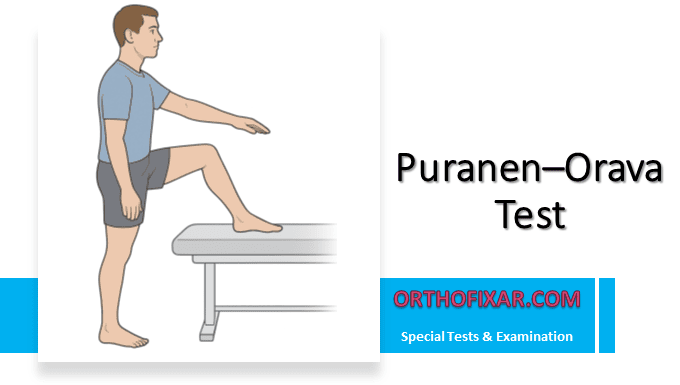
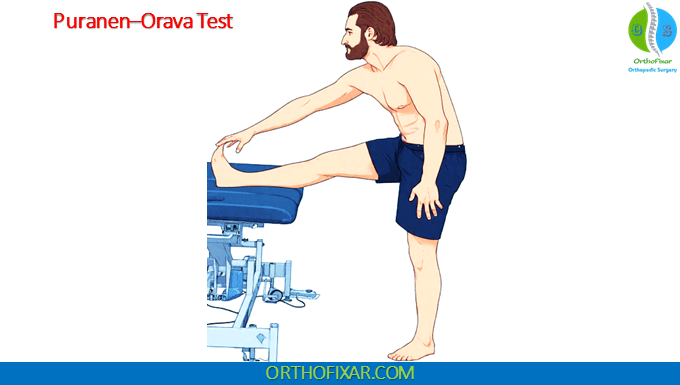
- The patient stands about 2 to 3 feet (0.6–0.9 m) away from an examination table. A table with height adjustment is preferred.
- The patient flexes the hip to 90°, placing the foot of the test limb on the table.
- The patient then attempts to fully extend the knee of the elevated leg.
- To stabilize the pelvis and avoid compensatory rotation, the patient reaches one arm toward the toes.
- The clinician observes the angle at the knee and compares it with the contralateral side.
What does a Positive Puranen–Orava Test Mean?
Positive Test
- Pain at the proximal hamstring origin (ischial tuberosity)
- Tightness or discomfort in the posterior thigh
- Reproduction of neurological symptoms (tingling, radiating pain) suggesting sciatic nerve involvement
Negative Test
- Symmetric knee extension angles
- No significant pain or discomfort.
Tips for Clinicians
- Observe for compensatory pelvic rotation, which may falsely increase apparent flexibility.
- Ask the patient to describe whether the discomfort feels muscular (stretching) or neurological (burning, tingling).
- Combine with other tests, such as the Straight Leg Raise (SLR) or Bent-Knee Stretch Test, for a comprehensive assessment.
References & More
- Cacchio A, Borra F, Severini G, et al. Reliability and validity of three pain provocation tests used for the diagnosis of chronic proximal hamstring tendinopathy. Br J Sports Med. 2012;46(12):883–887. PubMed
- Matsuda DK. Editorial commentary: proximal hamstring syndrome: another pain in the buttock. Arthroscopy. 2018;34(1):122–125. PubMed
- Puranen J, Orava S. The hamstring syndrome. A new diagnosis of gluteal sciatic pain. Am J Sports Med. 1988;16(5):517–521. PubMed
- Orthopedic Physical Assessment by David J. Magee, 7th Edition.