The METS score (Metabolic Equivalents of Task) is a standardized way to express functional capacity and exercise tolerance. One MET is defined as the amount of oxygen your body uses at rest — approximately 3.5 mL of oxygen per kilogram per minute. Activities are then expressed as multiples of this resting energy expenditure.
In clinical practice, the METs score helps healthcare providers estimate how well a patient’s heart and lungs can supply oxygen during physical activity, a key determinant of cardiovascular fitness and surgical risk.
See Also: Physical Fitness Tests
How is METs Score Measured?
METS Score can be estimated in two ways:
- Exercise Testing (Stress Tests): During a cardiopulmonary or treadmill stress test, the highest level of activity a patient sustains before stopping (due to symptoms, fatigue, or reaching their limit) is quantified in METs.
- Clinical History & Questionnaires: Functional questionnaires like the Duke Activity Status Index (DASI) can estimate METs based on daily activity capabilities (e.g., walking uphill, climbing stairs).
Interpreting METs Score: What Do the Numbers Mean?
| MET Level | Functional Capacity | Clinical Meaning |
|---|---|---|
| < 4 METs | Poor | High perioperative and cardiovascular risk |
| 4-6 METs | Moderate | Acceptable functional capacity |
| 7-10 METs | Good | Lower risk for major procedures |
| > 10 METs | Excellent | Strong functional capacity |
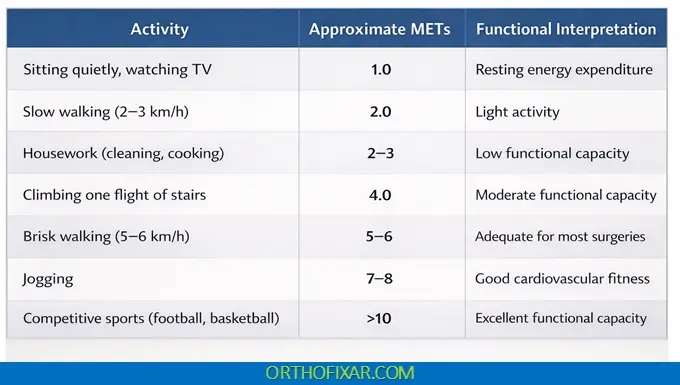
Examples of activities and their METs score values:
- Walking slowly around the house: ~1–2 METs
- Climbing one flight of stairs: ~4 METs
- Brisk cycle or swimming: ~6–10 METs
- Intense sports or competitive running: >10 METs
Why METs Are Clinically Important
1. Preoperative Risk Stratification
One of the most common uses of METs score is in preoperative evaluation. Patients with higher functional capacity (≥ 4 METs) generally tolerate surgery and anesthesia better and have lower cardiac risk in noncardiac surgery.
Lower METs scores (< 4) often trigger further cardiac evaluation before proceeding with major surgery.
2. Predictor of Cardiovascular Outcomes
Numerous studies show that higher achieved METs score levels correlate with improved survival and reduced mortality risk, regardless of the stress test protocol used.
3. Beyond Risk: Functional Fitness and Daily Life
METS score also helps clinicians translate patient fitness into everyday activities — for example, how well someone can perform daily tasks like climbing stairs, walking uphill, or carrying groceries.
Limitations and Considerations
- Protocol Differences: MET values can vary depending on which stress test protocol is used, so results should be interpreted in context.
- Estimates vs. Direct Measurement: METs estimated from history may sometimes underestimate real capacity compared with formal exercise tests.
- Not a Sole Risk Tool: METs should be integrated with clinical judgment and other risk scores for optimal decision-making.
Summary
The METS score is a simple, objective metric that quantifies exercise capacity and functional health. It informs perioperative risk, guides cardiovascular assessment, and helps translate clinical fitness into everyday life. Clinicians should integrate METs with broader clinical evaluation — but when used properly, it’s a powerful tool in patient assessment.
METs Score Calculator
METs Functional Capacity Calculator
References & More
- Jette M, Sidney K, Blümchen G. Metabolic equivalents (METs) in exercise testing and clinical interpretation. (PubMed)
- Duke Activity Status Index (DASI) for clinical METs estimation. (Lippincott Journals)
- Functional capacity and METs interpretation. (Wikipedia)