The Flick Maneuver Test is a provocative test designed to assess median nerve compression within the carpal tunnel. It’s based on a simple observation: patients with carpal tunnel syndrome instinctively shake or “flick” their hands when experiencing symptoms, much like shaking down a thermometer.
How to Perform the Flick Maneuver Test?
Patient Position: The patient can be either seated or standing, whichever is more comfortable.
Technique:
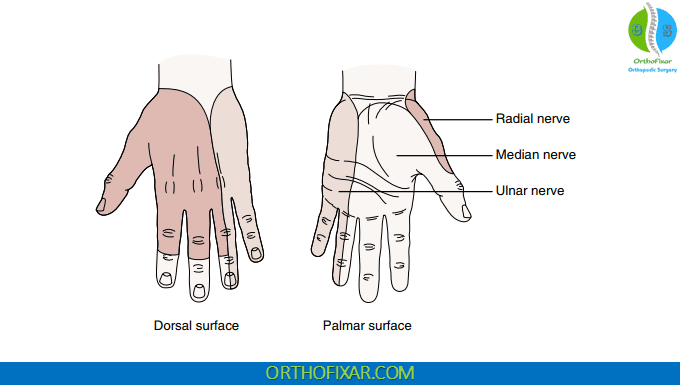
- Ensure the patient is experiencing paresthesias in the median nerve distribution (thumb, index finger, middle finger, and radial half of the ring finger)
- Ask the patient to vigorously shake their hands or “flick” their wrists
- The motion should be similar to shaking water off the hands or flicking down a thermometer
- Observe for symptom resolution

Interpreting the Results
Positive Test: Resolution or significant improvement of paresthesia after flicking/shaking the hands indicates likely median nerve pathology, primarily carpal tunnel syndrome.
Negative Test: Persistence of symptoms or no change suggests the paresthesia may have a different etiology.
See Also: Carpal Tunnel Syndrome
Flick Maneuver Reliability
While the Flick Maneuver appears logical and is widely taught, recent evidence from Hansen et al. provides important perspective on its diagnostic accuracy. In their study of 142 patients referred for possible carpal tunnel syndrome, the flick maneuver demonstrated a sensitivity of only 37%, meaning it missed nearly two-thirds of patients with electrodiagnostically confirmed CTS. The specificity was 74%, with a false-positive rate of 26%. When the test was positive, there was a 74% chance the patient actually had CTS, but when negative, there was only a 37% chance the patient didn’t have the condition.
These findings suggest that while the flick maneuver may provide some clinical value when positive, it has significant limitations as a diagnostic tool. The test’s poor sensitivity means that many patients with carpal tunnel syndrome will not experience symptom relief with flicking, and a negative test certainly doesn’t rule out the diagnosis.
Clinical Significance
The Flick Maneuver is particularly valuable because:
- High Specificity: It’s quite specific for carpal tunnel syndrome
- Patient-Initiated: Many patients naturally perform this motion when symptomatic
- No Equipment Needed: Can be performed anywhere in the clinical setting
- Quick Assessment: Takes only seconds to perform
Teaching Points for Students
- Anatomical Correlation: Help students understand that the flicking motion temporarily relieves pressure on the median nerve within the carpal tunnel
- Symptom Pattern Recognition: Emphasize the importance of confirming median nerve distribution symptoms before performing the test
- Clinical Context: This test should be used alongside other clinical findings and diagnostic tests, not in isolation
- Patient Education: Explain to patients why this simple motion provides relief, which can be reassuring.
See Also: Median Nerve Anatomy
Limitations to Consider
While useful, the Flick Maneuver should be interpreted within the broader clinical context. False positives can occur with other causes of hand paresthesias, and the test’s effectiveness may vary with symptom severity.
The Flick Maneuver exemplifies how careful clinical observation can lead to simple yet effective diagnostic tools. Teaching our students to recognize and utilize such tests helps build their confidence in clinical assessment while providing patients with immediate, practical relief strategies.
References & More
- Hansen PA, Micklesen P, Robinson LR. Clinical utility of the flick maneuver in diagnosing carpal tunnel syndrome. Am J Phys Med Rehabil. 2004 May;83(5):363-7. doi: 10.1097/01.phm.0000124439.14757.99. PMID: 15100625. PubMed
- Massy-Westropp N, Grimmer K, Bain G. A systematic review of the clinical diagnostic tests for carpal tunnel syndrome. J Hand Surg Am. 2000;25(1):120–127. PubMed
- Pryse-Phillips WE. Validation of a diagnostic sign in carpal tunnel syndrome. J Neurol Neurosurg Psychiatry. 1984;47(8):870–872. PubMed
- Orthopedic Physical Assessment by David J. Magee, 7th Edition.