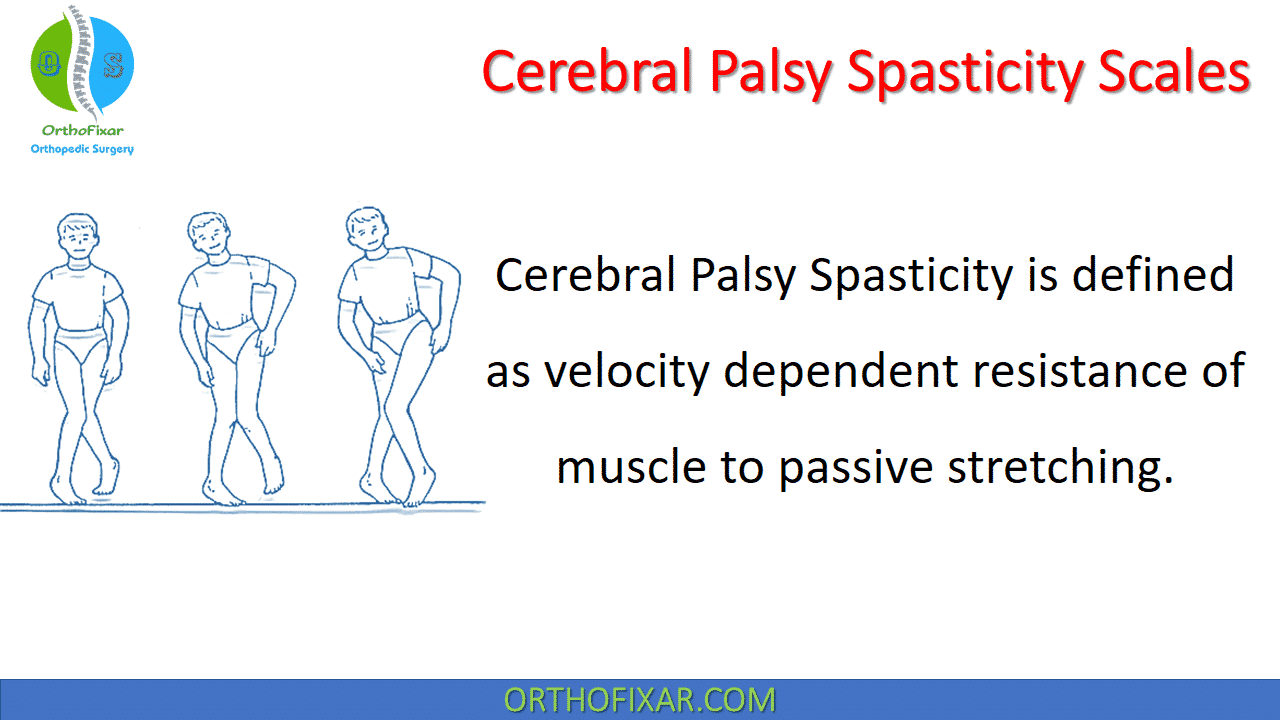
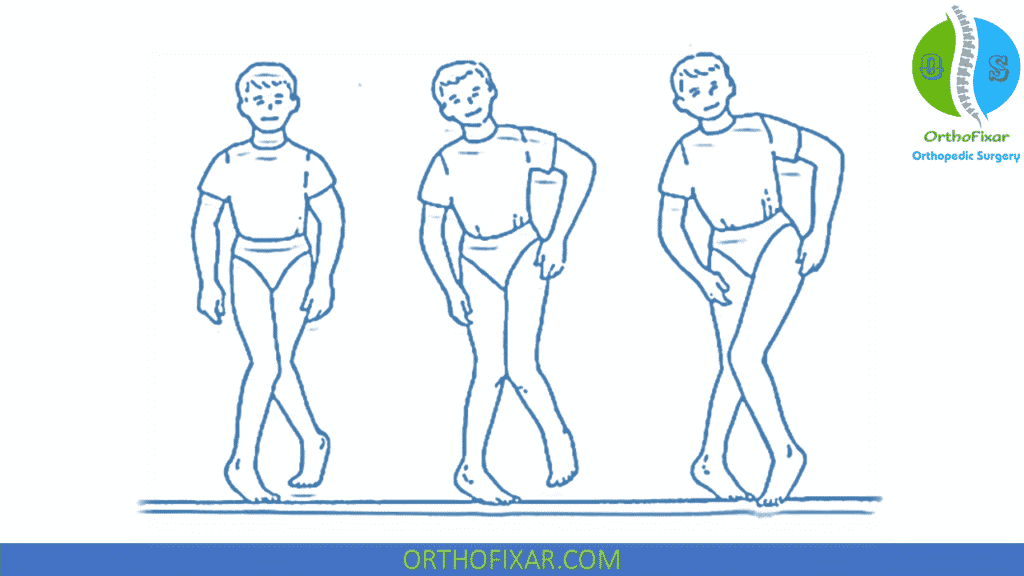
Cerebral Palsy Spasticity is defined as velocity dependent resistance of muscle to passive stretching.
Cerebral Palsy Spasticity increases with speed, and resistance is felt as a catch. It is assessed by passively moving the extremity through the range of motion to stretch the individual muscle groups, and Ashworth has described a five-point ordinal scale to grade the resistance felt. This Ashworth scale was modified by Richard W. Bohannon and Melissa B. Smith.
See Also: Brachial Plexus Palsy
Cerebral Palsy Spasticity Scales
There are many scales to assess the Cerebral Palsy Spasticity as the following:
Tardieu scale
The Tardieu Scale is a standardized clinical tool used to assess spasticity, especially in patients with cerebral palsy and other upper motor neuron disorders. Unlike many tone scales, it evaluates the velocity-dependent muscle response, allowing clinicians to distinguish true neural spasticity from mechanical stiffness or fixed contracture.
Assessment is performed by stretching a relaxed muscle at controlled speeds:
- V1 (slow stretch): measures passive range of motion
- V3 (fast stretch): elicits the stretch reflex to assess spasticity
- V2 (gravity-assisted): used selectively for specific muscle groups
Spasticity is quantified using:
- Spasticity Grade (Y): rates resistance and presence of catch or clonus (0–4 scale)
- Spasticity Angle (X): difference between joint angles measured at slow and fast speeds; a larger difference indicates greater spasticity
The Modified Tardieu Scale (MTS) simplifies scoring by measuring:
- R1: angle of catch during fast stretch
- R2: full passive range during slow stretch
- R2–R1 difference: represents the dynamic component of spasticity
See Also: Tardieu Scale
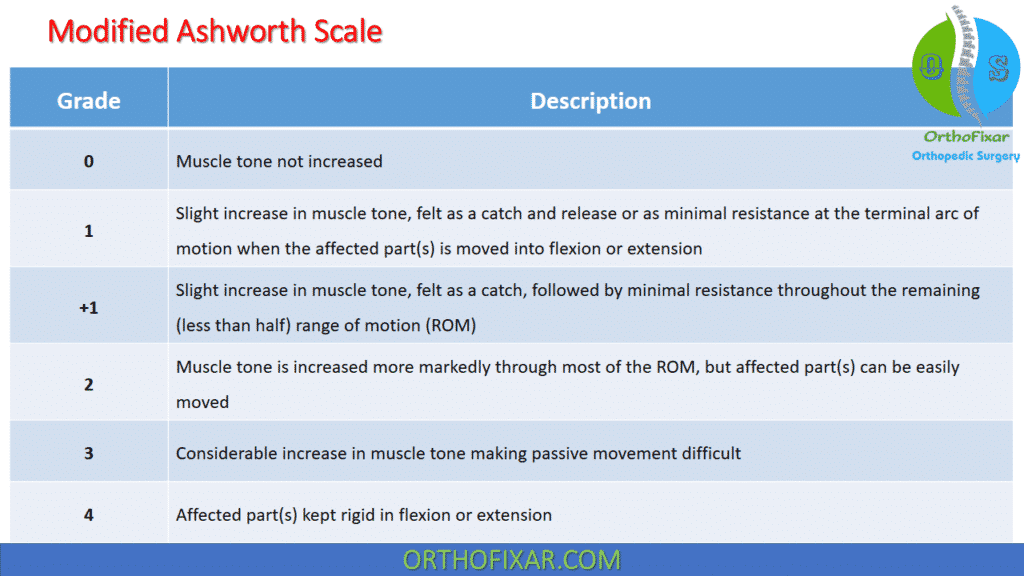
Modified Ashworth Scale
| Grade | Description |
|---|---|
| 0 | Muscle tone not increased |
| 1 | Slight increase in muscle tone, felt as a catch and release or as minimal resistance at the terminal arc of motion when the affected part(s) is moved into flexion or extension |
| +1 | Slight increase in muscle tone, felt as a catch, followed by minimal resistance throughout the remaining (less than half) range of motion (ROM) |
| 2 | Muscle tone is increased more markedly through most of the ROM, but affected part(s) can be easily moved |
| 3 | Considerable increase in muscle tone making passive movement difficult |
| 4 | Affected part(s) kept rigid in flexion or extension |
See Also: Modified Ashworth Scale
References
- Bohannon RW, Smith MB. Interrater reliability of a modified Ashworth scale of muscle spasticity. Phys Ther. 1987 Feb;67(2):206-7. doi: 10.1093/ptj/67.2.206. PMID: 3809245. Pubmed
- Gracies J-M, Burke K, Clegg NJ, Browne R, Rushing C, Fehlings D, et al. Reliability of the Tardieu scale for assessing spasticity in children with cerebral palsy. Arch Phys Med Rehabil. 2010;91:421–428. Pubmed
- Boyd R, Graham H. Objective measurement of clinical findings in the use of botulinum toxin type A for the management of children with cerebral palsy. Eur J Neurol. 1999;6:S23–35.
- Pandyan AD, Johnson GR, Price CI, et al. A review of the properties and limitations of the Ashworth and modified Ashworth Scales as measures of spasticity. Clin Rehabil 1999;13:373–383.