Body Mass Index (BMI) is one of the most widely used clinical tools to assess whether an adult’s weight is appropriate for their height. It provides a quick, standardized estimate of body fat that is far more meaningful than body weight alone. In everyday clinical practice, BMI helps identify individuals at increased risk for cardiovascular disease, diabetes, and other weight-related conditions.
Despite its simplicity, BMI remains a medically validated screening tool, endorsed by major authorities such as the National Institutes of Health (NIH) and the World Health Organization (WHO).
What Is Body Mass Index?
Body mass index (BMI) is a numerical value calculated from a person’s height and weight. Because body fat is difficult to measure directly—being stored in subcutaneous, intra-abdominal, and intramuscular fat deposits—BMI serves as an indirect but reliable estimate of total body fat.
Unlike weight alone, BMI accounts for height and therefore offers a more accurate representation of health risk related to excess or insufficient body fat.
Why BMI Matters in Clinical Practice
BMI is not a cosmetic metric—it is a medical screening tool. Numerous studies confirm that abnormal BMI values correlate strongly with increased morbidity and mortality.
That said, the NIH clearly cautions that BMI must be interpreted clinically:
- Highly muscular individuals may have a high BMI but low body fat
- Older adults or individuals with low muscle mass may have a “normal” BMI that masks excess fat
Strong clinical opinion: BMI should never be ignored, but it should also never be used in isolation. Context matters.
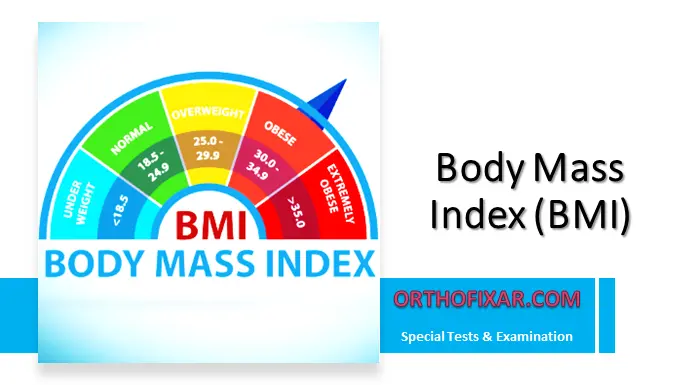
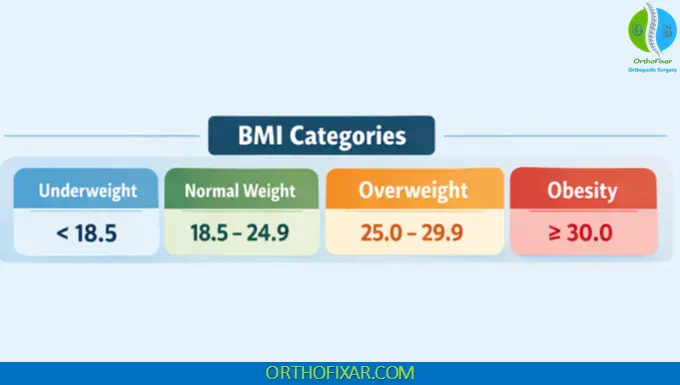
BMI Classification (Adults)
| BMI Value | Weight Category |
|---|---|
| Below 18.5 | Underweight |
| 18.5 – 24.9 | Normal weight |
| 25.0 – 29.9 | Overweight |
| 30.0 and above | Obesity |
These classifications are based on NIH and WHO standards and are intended for adults aged 18 years and older.
Calculating the BMI
There are several medically accepted methods for calculating the BMI. Clinicians should choose the approach best suited to their practice setting.
Methods to Calculate Body Mass Index (BMI)
| Unit of Measure | Method of Calculation |
|---|---|
| Weight in pounds, height in inches | (1) Standard BMI chart (2) Weight (lb) × 700 ÷ Height (inches)² |
| Weight in kilograms, height in meters | (3) Weight (kg) ÷ Height (m)² |
Note: Some organizations use 704.5 instead of 700. The difference in BMI is clinically negligible.
Conversion formulas:
- 2.2 lb = 1 kg
- 1 inch = 2.54 cm
- 100 cm = 1 meter
Using a BMI Calculator
For convenience and accuracy, clinicians and patients can use an online BMI calculator, such as the one provided by the National Heart, Lung, and Blood Institute (NHLBI). Many electronic medical record (EMR) systems now calculate BMI automatically once height and weight are entered.
A BMI calculator is especially useful in:
- Busy outpatient clinics
- Preventive health visits
- Patient education and counseling
Limitations of BMI (Important)
BMI is a screening tool, not a diagnosis. It does not distinguish between:
- Fat mass and lean muscle
- Fat distribution (visceral vs subcutaneous)
- Ethnic variations in body composition
Clinical judgment is essential. Waist circumference, body composition analysis, and metabolic risk factors should be considered when BMI results are borderline or inconsistent with the patient’s appearance or health status.
Bottom Line
BMI remains a powerful, evidence-based tool for assessing weight-related health risk when used correctly. It is fast, inexpensive, and clinically validated—but it must be interpreted thoughtfully.
Strong stance: Dismissing BMI entirely is a mistake. Using it blindly is also a mistake. Proper medical use lies in balanced interpretation.
References & More
- National Institutes of Health–National Heart, Lung, and Blood Institute: Calculate YourBody Mass Index. Available at: http://www.nhlbi.nih.gov/health/educational/lose_wt/BMI/bmicalc.htm
- Zierle-Ghosh A, Jan A. Physiology, Body Mass Index. [Updated 2023 Nov 5]. In: StatPearls [Internet]. Treasure Island (FL): StatPearls Publishing; 2025 Jan-. Available from: Pubmed
- Bickley, L. S., Szilagyi, P. G., Hoffman, R. M., & Soriano, R. P. (2021). Bates’ guide to physical examination and history taking, 12e.