Turf toe is a sprain of the ligaments and joint capsule surrounding the first metatarsophalangeal (MTP) joint—the large joint at the base of the big toe. It typically occurs when the toe is forced into excessive extension, often when an athlete’s shoe grips the ground while the body continues moving forward. The plantar plate and supporting ligaments take the strain, which is why the injury is common in football, soccer, basketball, and other sports played on artificial turf or firm surfaces.
Taping the great toe is one of the most practical ways to manage turf toe and return to activity with more confidence. A well-applied taping technique limits how far the toe can extend and provides a sense of support that improves proprioception during push-off. Neither effect replaces rehabilitation, but both can make early return to activity safer and more comfortable. This guide covers the taping methods used in clinical practice, which technique suits which grade of injury, and the limits of taping so you know when to rely on it and when to seek further care.
Understanding Turf Toe and Why Taping Helps
Turf toe is classified by severity, and the grade of injury determines whether taping is appropriate and how aggressive the strapping should be.
- Grade 1: A mild stretch of the ligaments, with tenderness but no instability.
- Grade 2: A partial tear, with more swelling, pain on push-off, and some loss of strength.
- Grade 3: A complete tear or significant instability, often requiring immobilization and medical review.
If you cannot bear weight, have severe swelling, or the toe looks deformed, taping is not the first step. Seek assessment from a physician or physical therapist before strapping the joint. The American Academy of Orthopaedic Surgeons provides a useful overview of turf toe injuries and treatment that can help you judge severity.
When Taping Is Appropriate and When It Is Not
Taping is most useful for Grade 1 injuries and for Grade 2 injuries once acute swelling has settled. It is also a sensible preventive measure for athletes with a history of turf toe or unusually flexible big toes.
Do not tape over open wounds, blistered skin, or areas with reduced sensation. If you have diabetes, peripheral neuropathy, or poor circulation, check with your clinician before using rigid strapping around the toe.
- Use taping during sport and high-demand activity, not continuously for days.
- Remove tape after training to let the skin breathe and to check for irritation.
- Stop using any technique that increases pain or numbness.
- Pair taping with strengthening and load management for lasting relief.
The Materials You Need Before You Start
Good taping starts with the right supplies. You do not need a large kit, but using proper materials protects the skin and improves adherence.
- Rigid athletic tape, usually 1.5 inches (about 3.8 cm) wide for the toe and forefoot.
- Underwrap or a thin hypoallergenic tape for skin protection.
- Tape adhesive spray or tincture benzoin if you need extra grip, used sparingly.
- Sharp scissors or tape cutters.
- Optional: a small strip of felt or foam for padding over tender spots.
Trim hair around the forefoot before taping, and make sure the skin is clean and dry. Moisturizers and sweat reduce adhesion, so wipe the area with an alcohol swab and let it dry fully.
Step-by-Step: The Standard Turf Toe Taping Technique
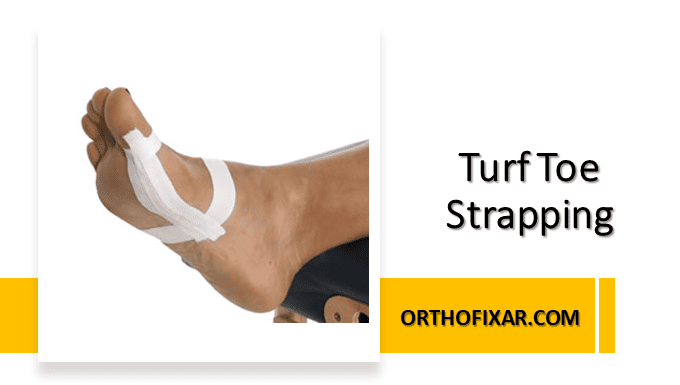
This is the technique taught most often in clinical settings. It limits extension of the big toe while still allowing some comfortable movement.
- Position the foot in neutral, with the big toe resting straight and slightly flexed.
- Apply a thin layer of underwrap around the forefoot and base of the big toe if the skin is sensitive.
- Anchor a strip of rigid tape around the midfoot, just behind the ball of the foot.
- Place a strip from the base of the big toe, running back and slightly across the top of the foot toward the inside of the arch.
- Add a second strip crossing the first, forming a light X over the first MTP joint.
- Wrap one or two strips around the forefoot to secure the ends without squeezing the toes.
- Check that the tape does not restrict the smaller toes and that circulation is intact.
Ask the athlete to stand and push off gently. The tape should feel supportive but not tight. If the toes turn pale, tingle, or feel cold, remove and reapply with less tension.
Alternative Techniques for Different Needs
Not every athlete responds to the same strapping pattern. The right choice depends on the injury grade, the sport, and the shape of the foot.
The Figure-of-Eight Method
This pattern crosses over the top of the first MTP joint and around the base of the toe, creating a figure-of-eight. It is useful when you want firmer control of extension without a bulky forefoot wrap. Keep the crossing strips slightly overlapping so the tape does not bunch.
The Buddy Taping Approach
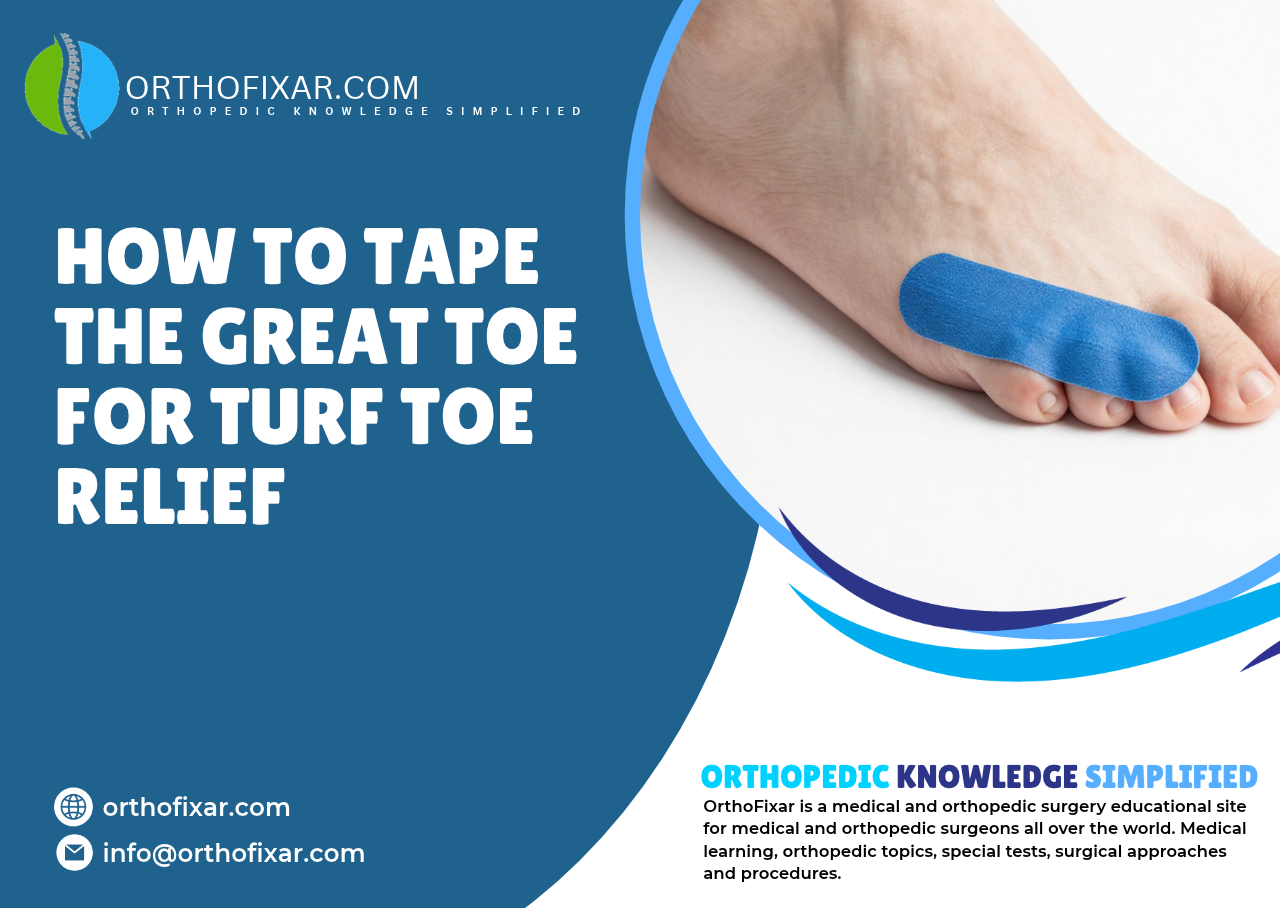
Buddy taping pairs the big toe with the second toe using a soft tape loop. It is gentle and easy to apply, making it a reasonable option for mild irritation or for athletes who find rigid tape uncomfortable. The trade-off is less control of extension, so it suits lower-demand activity rather than full contact sport.
The Low-Dye Style Forefoot Support
Some clinicians combine turf toe strapping with a low-Dye style forefoot wrap to reduce strain through the ball of the foot. This is helpful when the injury is accompanied by general forefoot soreness. Apply the low-Dye strips first, then add the toe-specific strips on top.
Comparing Taping Methods at a Glance
| Method | Best For | Control Level | Skin Sensitivity Risk |
|---|---|---|---|
| Standard turf toe strapping | Grade 1 and early Grade 2 injuries, most sports | Moderate to high | Moderate |
| Figure-of-eight | Firmer extension control, higher-demand activity | High | Moderate to high |
| Buddy taping | Mild symptoms, low-demand activity | Low | Low |
| Low-Dye plus toe strips | Forefoot soreness alongside turf toe | Moderate | Moderate |
How Tight Should the Tape Be?
Tight enough to limit unwanted extension, loose enough to keep normal circulation. A useful check is to press the tip of the big toe and watch the color return within a couple of seconds. Ask the athlete to wiggle all toes and report any numbness or tingling straight away.
- If the toe throbs at rest, the tape is too tight.
- If the toe extends fully without resistance, the tape is too loose.
- If the tape rolls or peels during warm-up, reapply with cleaner skin and firmer anchors.
Common Mistakes That Reduce Taping Effectiveness
Most taping failures come down to preparation and application errors rather than the technique itself. A few simple corrections make a noticeable difference.
- Taping over moisturizer, sweat, or sunscreen, which weakens adhesion.
- Leaving wrinkles and creases that cause blisters and pressure points.
- Wrapping too tightly around the forefoot and compressing the toes.
- Skipping the anchor strips, so the tape peels after a few minutes of play.
- Reusing tape that has already stretched or lost adhesion.
- Relying on tape alone without addressing strength and load.
If you are taping yourself, practice the technique when you are not rushed. A mirror or a phone camera helps you check the pattern before training. Many sports medicine clinics and certified athletic trainers can teach the technique in person, and the National Athletic Trainers’ Association is a useful starting point for finding qualified professionals.
What to Do Alongside Taping
Taping buys time and reduces symptoms, but it does not heal the ligament. The evidence-based approach combines taping with progressive loading, strength work, and sensible return-to-sport decisions.
- Reduce high-extension activities such as sprinting and jumping while symptoms are sharp.
- Strengthen the toe flexors with resisted toe curls and towel scrunches.
- Use calf raises and single-leg balance work to improve push-off mechanics.
- Wear stiffer shoes with a firmer forefoot plate during early return to sport.
- Progress running, cutting, and jumping gradually rather than all at once.
Pain that persists beyond a few weeks, or that worsens despite taping and rest, deserves a proper assessment. A physical therapist can assess joint stability and design a loading program. The American Physical Therapy Association offers resources for finding a licensed physical therapist in your area.
Taping is a bridge, not a cure. Use it to support the joint while you rebuild the strength and control the toe needs to tolerate load.
Return-to-Sport Guidance
Return to sport is a decision based on function, not on a calendar. The athlete should be able to walk without pain, hop on the affected foot without sharp discomfort, and push off with reasonable force before returning to full training.
- Pain-free walking and light jogging are reasonable early milestones.
- Progress to sprinting and cutting once push-off is comfortable.
- Use taping during the first few weeks of full training as a precaution.
- Reassess the need for tape over time as strength and confidence improve.
Coaches and athletes should agree on clear criteria for progression. If pain returns with each increase in load, step back rather than push through. The American College of Sports Medicine publishes guidance on safe return to activity that can support these conversations.
Conclusion
Taping the great toe is a practical, low-cost way to reduce extension strain and improve comfort during activity after turf toe. The standard strapping and figure-of-eight methods offer the most control, while buddy taping suits milder cases. Apply the tape to clean, dry skin, check circulation, and combine it with strengthening and gradual load progression for the best results. If symptoms are severe or not improving, get a proper assessment before relying on tape alone.
Frequently Asked Questions
Can I tape my own big toe for turf toe?
Yes, self-taping is possible with practice and the right materials. Use a mirror or phone camera to check the pattern, keep the tape firm but not tight, and stop if you notice numbness or tingling.
How long should I leave turf toe tape on?
Leave the tape on during training or sport, then remove it afterward. Keeping rigid tape on for extended periods can irritate the skin and does not provide additional benefit once activity ends.
Does taping cure turf toe?
No. Taping supports the joint and limits extension, but healing depends on rest, progressive loading, and strength work. Taping is a helpful addition to rehabilitation, not a replacement for it.
Which taping method is best for a Grade 2 turf toe injury?
The standard strapping or figure-of-eight method usually provides the best control for a Grade 2 injury. Buddy taping may be too mild once swelling has settled and activity increases.
Can I tape my toe if I have sensitive skin?
Use underwrap or a hypoallergenic tape to protect the skin, and test a small strip first. If irritation develops, remove the tape and consider a different product or consult a clinician.
Should I use tape for prevention if I have never had turf toe?
Preventive taping can help athletes with very flexible toes or a history of forefoot problems. For most people, appropriate footwear and strength training are more important preventive measures.
Can taping make turf toe worse?
If applied too tightly, tape can restrict circulation and increase pain. Always check for color, warmth, and sensation after application, and remove and reapply if anything feels wrong.
What shoes should I wear while taped?
Choose shoes with a firmer forefoot and less flexibility during early return to sport. Very soft or flexible shoes allow more toe extension and can increase strain on the injured joint.
When should I see a physical therapist for turf toe?
See a physical therapist if pain persists beyond a few weeks, if you cannot push off comfortably, or if you have significant swelling or instability. Early assessment can guide a safe loading program.
Can I play sport with turf toe if it is taped?
Mild cases may allow taped participation once pain is controlled and push-off is tolerable. Severe injuries, significant swelling, or instability should be assessed before returning to sport.