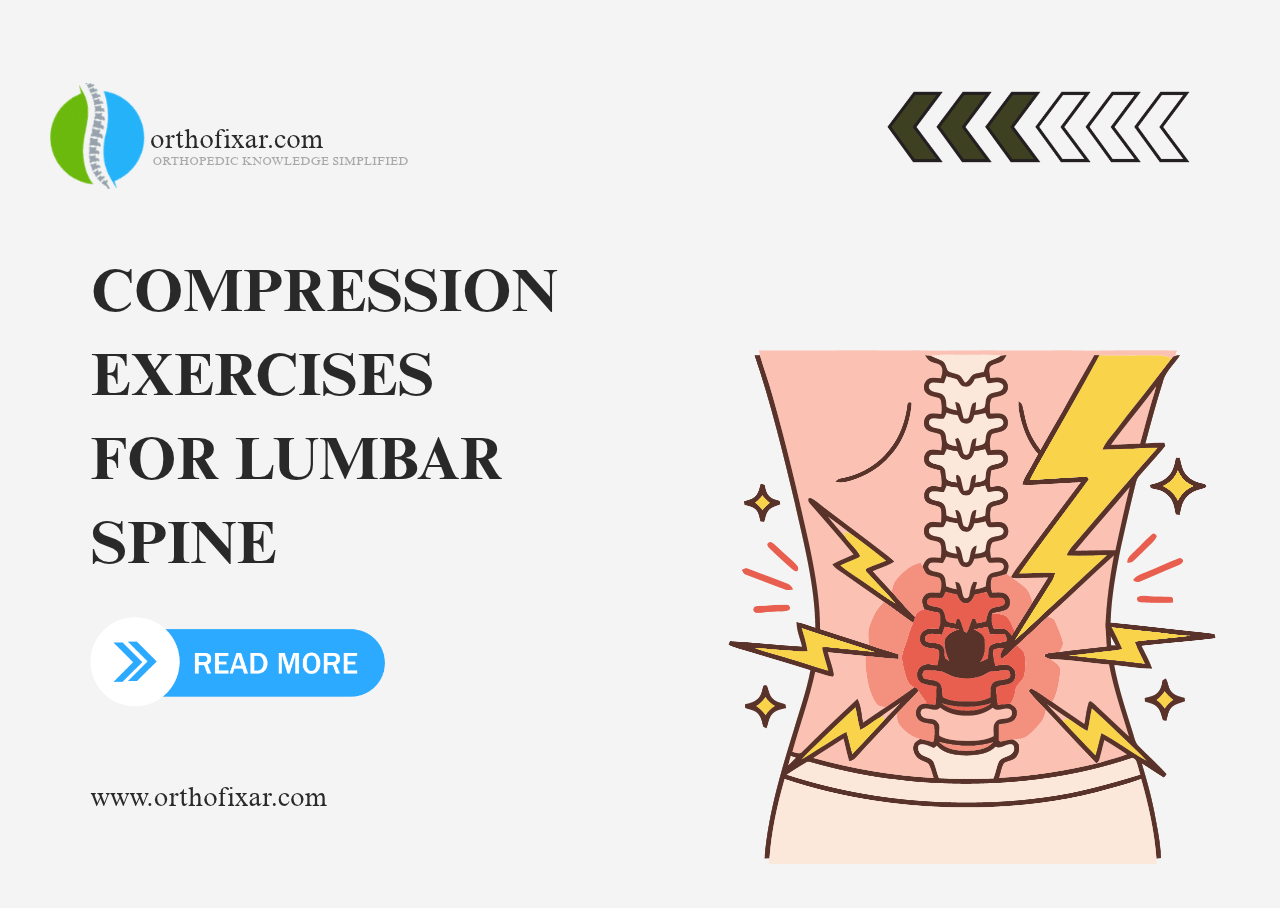
You can create meaningful traction in the lumbar spine at home, but the goal is controlled unloading rather than hanging from a bar and hoping for the best. Decompression exercises for the lumbar spine combine gentle traction, positional relief, and core control to reduce compressive and shear loads on the discs and joints while the surrounding muscles stay active. This guide covers five practical options, how to perform them safely, who should avoid them, and how to build them into a weekly routine.
What Lumbar Decompression Actually Means
Decompression is a mechanical concept: create space and reduce load. In the lumbar spine, that means decreasing the downward and rotational forces that press the vertebrae, discs, and facet joints together, then letting the tissues settle into a less irritated position.
Two categories of people tend to benefit most. The first is the person with a disc-related flare who feels better in extension or lying prone. The second is the desk worker with a stiff, heavy low back at the end of the day. Both respond to unloading, but they need different positions.
Decompression is not the same as stretching. A hamstring stretch pulls on tissue; decompression changes the load environment. That distinction matters when you choose exercises, because a stretch that feels productive can still aggravate a sensitized nerve if the position adds compression or tension in the wrong direction.
What Decompression Can and Cannot Do
These exercises can reduce symptoms, improve tolerance for movement, and restore a sense of control. They do not “put a disc back in place” or cure structural changes seen on an MRI.
- Can help: reduce nerve-related leg symptoms in some people with disc irritation
- Can help: ease morning stiffness and end-of-day heaviness
- Can help: prepare the spine for strengthening work
- Cannot do: reverse degenerative disc changes
- Cannot do: replace medical assessment for red-flag symptoms
- Cannot do: work without consistent positioning and load management
Think of decompression as one lever among several. It works best alongside attention to how long you sit, how you lift, and how much you move across the day. Used alone, it rarely solves a problem that is being recreated every afternoon at a desk.
Before You Start: Safety Screening
Most people can try gentle decompression positions safely. Some should not, and a short screen catches them before a flare.
If you have any of the following, speak with a physician or a licensed physical therapist first, and use the APTA Find a PT directory to locate a clinician near you.
- Progressive weakness, foot drop, or difficulty lifting the leg
- Numbness in the saddle area or new bladder or bowel changes
- Unexplained weight loss, fever, or night pain that wakes you
- Recent spinal surgery without clearance
- Severe osteoporosis or known spinal fracture
- Pregnancy, unless cleared by your obstetric provider
These are screening prompts, not diagnoses. A clinician confirms what applies to you. If nothing on the list applies, you can begin with the gentlest option and progress from there.
1. Prone Lumbar Unloading (Sphinx-Supported Lying)
This is often the first exercise taught to disc-related backs because it is low effort and easy to modify. Lying prone with a small pillow under the chest creates a gentle extension moment that frequently reduces posterior disc pressure.
How to do it:
- Lie face down on a firm surface, forearms under the chest
- Prop on elbows so the low back is comfortable, not pinched
- Hold 2–5 minutes, breathing slowly
- Stop if leg symptoms travel further down the leg
- Repeat 2–3 times daily, especially after long sitting
If the elbows-up position irritates you, start flat with a folded towel under the chest and build up over a week. The sphinx position is a good example of a decompression exercise for the lumbar spine that doubles as a postural reset after hours of sitting.
2. Supine Knee-to-Chest Unloading
Lying on your back and drawing the knees toward the chest opens the posterior elements and gives the low back a break from gravity. This works well for people who feel worse in extension and better in flexion.
How to do it:
- Lie on your back, knees bent, feet flat
- Bring one knee toward the chest, hold 20–30 seconds
- Switch sides, then bring both knees in gently
- Keep the neck relaxed and breathe out on the draw-in
- Perform 5–10 slow repetitions per side
This one is also useful as a pre-sleep routine. If both knees cause pinching in the front of the hip, reduce the range and add a small pillow under the head.
3. Supported Bridge with Slow Descent
The bridge is often taught as a strengthening exercise, but the descent phase is where decompression happens. Lowering the pelvis slowly under control lets the lumbar spine unload while the glutes and deep abdominals stay engaged.
How to do it:
- Lie on your back, knees bent, feet hip-width apart
- Press through the feet and lift the hips a few inches
- Hold 3–5 seconds, then lower over 4–6 seconds
- Complete 8–12 slow repetitions
- Keep the ribs down so the low back does not arch
People often report the low back “feels lighter” after this set. That is the combination of glute activation and controlled unloading, not a passive hang. If your hamstrings cramp, move your feet slightly closer to your body and reduce the height of the lift.
4. Seated or Standing Bar Hang Variation
Full-body hanging from a bar is popular, but it is not the best starting point for most lumbar patients. A supported hang, where the feet stay lightly on the floor, gives you traction without the shoulder and grip demands.
How to do it:
- Stand under a pull-up bar and grip it shoulder-width
- Keep the heels on the floor and bend the knees slightly
- Let the hips sink and the low back lengthen
- Hold 15–30 seconds, rest 30 seconds, repeat 3–5 times
- Keep breathing; do not hold your breath
If you have shoulder pain or grip weakness, skip this one. The supine and prone positions above deliver similar unloading with less upper-body demand.
5. Cat-Camel with Segmental Control
This is not a stretch in the traditional sense. Moving the spine segment by segment through flexion and extension mobilizes the joints and helps restore normal fluid movement around the discs.
How to do it:
- Start on hands and knees, hands under shoulders
- Round the back slowly, tucking the pelvis
- Then arch gently, lifting the chest and tailbone
- Move through 8–10 slow cycles
- Pause at the end ranges for 2–3 seconds
Pairing this with the sphinx position works well for people who are stiff in the morning. The combination covers both directions of motion without loading the spine heavily.
Comparing the Five Exercises
Use this table to match the exercise to your symptom pattern. These are general clinical patterns, not rigid rules.
| Exercise | Best For | Position | Typical Hold/Reps | Caution |
|---|---|---|---|---|
| Prone sphinx | Disc-related leg symptoms, post-sitting stiffness | Face down, elbows propped | 2–5 min, 2–3x/day | Stop if leg symptoms worsen |
| Supine knee-to-chest | Extension-sensitive backs, post-sleep stiffness | On back | 20–30 sec, 5–10 reps | Avoid if hip pinching |
| Supported bridge descent | Glute weakness, general unloading | On back | 8–12 slow reps | Keep ribs down |
| Supported bar hang | General traction, tall patients | Standing, heels down | 15–30 sec, 3–5 sets | Avoid with shoulder pain |
| Cat-camel | Morning stiffness, segmental mobility | Hands and knees | 8–10 cycles | Slow, controlled range |
How to Build a Weekly Decompression Routine
Consistency beats intensity. A short daily session is usually more effective than one long session per week.
- Morning: cat-camel for 2 minutes, then sphinx for 3 minutes
- Midday (after sitting): supine knee-to-chest, 5 reps per side
- Evening: supported bridge descent, 2 sets of 8
- Post-workout (if you lift or run): supported bar hang, 3 sets
- Flare days: reduce to sphinx and knee-to-chest only
Track how your leg symptoms respond, not just your back pain. If leg symptoms move closer to the spine (centralization), that is usually a good sign. If they travel further down, back off and reassess.
Give the routine two weeks before judging it. If nothing changes, or if you find yourself needing longer and longer sessions to get the same relief, that is useful information: the positions may be helping you cope without addressing the load that keeps provoking the symptoms.
Common Mistakes That Blunt the Benefit
Most failed decompression routines fail for simple reasons. Watch for these.
- Holding the position too long and creating new stiffness
- Pushing into pain rather than easing into a comfortable range
- Skipping the breathing and bracing component
- Using a soft mattress that lets the spine sag
- Doing decompression but ignoring prolonged sitting or lifting mechanics
- Expecting immediate relief when the disc needs days to settle
If you are unsure whether a position is right for you, a short assessment with a physical therapist is faster than trial and error. The APTA clinician directory is a practical starting point.
When to See a Professional
Decompression exercises are a self-management tool, not a substitute for evaluation. Book an assessment if symptoms persist beyond a few weeks, worsen despite your routine, or include weakness or numbness.
For accurate, evidence-based information on low back pain, the NIAMS back pain resource is a reliable patient-facing source. For clinicians, the APTA evidence-based practice resources provide current guidance.
Conclusion
Five decompression exercises for the lumbar spine cover the most common clinical patterns: prone extension, supine flexion, controlled bridge descent, supported traction, and segmental mobility. Match the exercise to your symptoms, keep sessions short and consistent, and screen for red flags before you start. If progress stalls, a licensed physical therapist can refine the plan faster than guessing.
Frequently Asked Questions
How often should I do decompression exercises for the lumbar spine?
Most people do well with a short session once or twice daily, often 5–10 minutes total. Frequency matters more than duration, and you should adjust based on how your symptoms respond over the following 24 hours.
Can decompression exercises fix a herniated disc?
They do not repair the disc structurally, but they can reduce compressive load and improve symptoms in many cases. Symptom relief and functional improvement are realistic goals; structural reversal is not a reliable expectation.
Is hanging from a bar safe for low back pain?
A supported hang with the feet lightly touching the floor is generally safer than a full passive hang for lumbar patients. Full hanging adds shoulder and grip demands and is not necessary for lumbar unloading.
Should I do decompression exercises if I have sciatica?
Many people with sciatica benefit, especially from prone extension positions, but the response varies. If leg symptoms travel further down the leg or weakness develops, stop and get assessed.
Can I do these exercises on a soft mattress?
A firm surface is preferable because a soft mattress lets the spine sag and reduces the unloading effect. A yoga mat on the floor or a firm bed works well.
How long does it take to feel a difference?
Some people notice relief within the first session; others need one to two weeks of consistent practice. Persistent or worsening symptoms warrant a clinical assessment.
Are decompression exercises safe during pregnancy?
Some positions, such as hands-and-knees cat-camel, are often comfortable during pregnancy, but clearance from your obstetric provider is the right first step. Avoid positions that compress the abdomen or cause dizziness.
Should I combine decompression with strengthening?
Yes. Decompression reduces load, but strength and endurance keep the spine resilient between sessions. A clinician can help you sequence them appropriately.
What if the exercises make my pain worse?
Stop the specific exercise and reassess. Worsening leg symptoms, new numbness, or increased pain that does not settle within a day are signals to seek professional guidance.
Do I need equipment for lumbar decompression at home?
Most of these exercises need only a firm floor surface and a small pillow. A pull-up bar is optional and only useful for the supported hang variation.