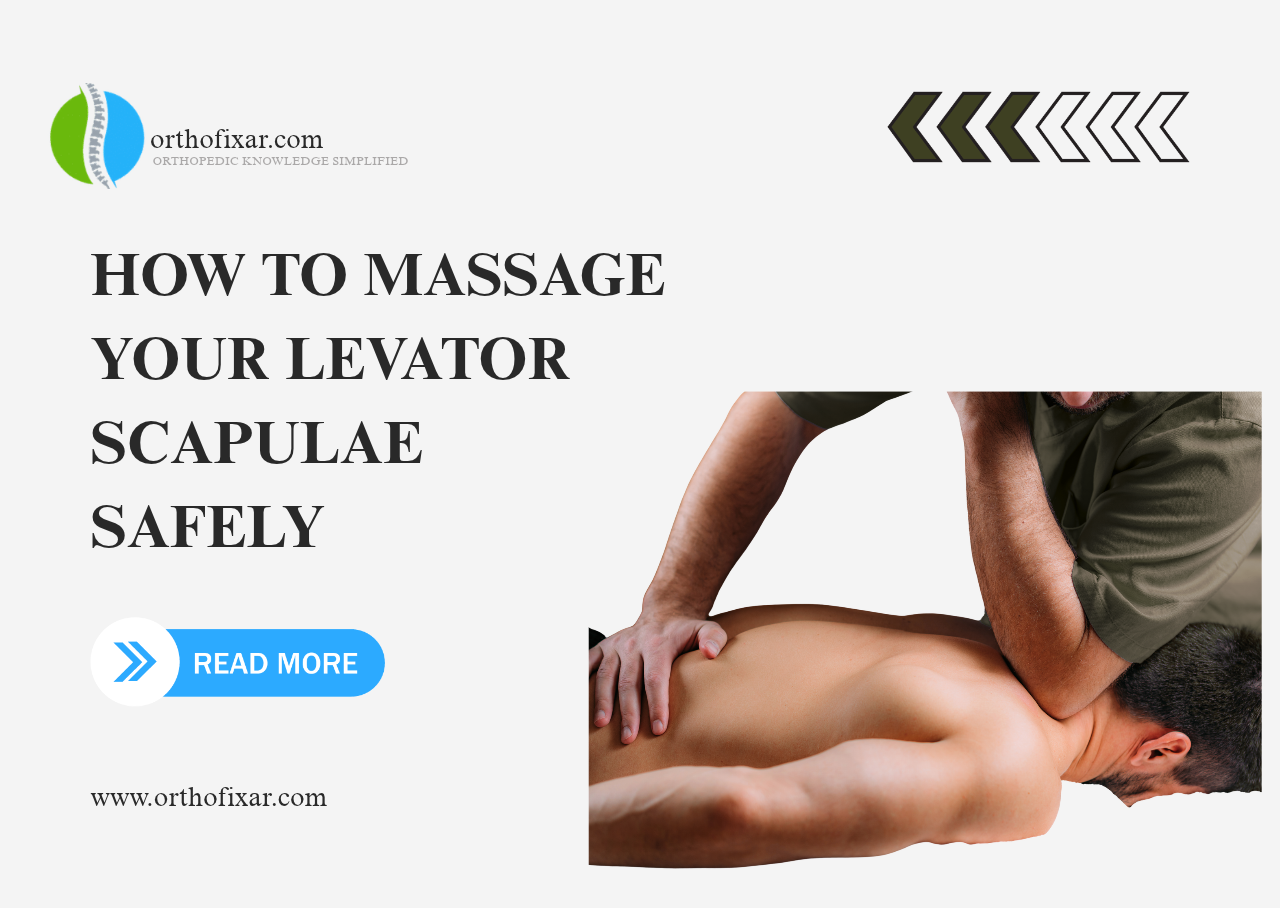
You can safely massage your levator scapulae by working through the muscle slowly with your opposite hand, keeping pressure at a mild to moderate level, and staying away from the front of your neck, where sensitive structures sit close to the surface. The levator scapulae runs from the top of your shoulder blade up into the side of your neck, and it is one of the most common sources of stiffness in people who sit at a desk, carry heavy bags, or hold their shoulders up when stressed. This guide explains where the muscle sits, how to release it with your fingers or a massage ball, what to avoid, and when neck pain needs a clinician rather than self-massage.
Where the Levator Scapulae Sits and Why It Gets Tight
The levator scapulae attaches to the upper corner of the shoulder blade and travels up to the transverse processes of the upper cervical spine. Its main job is to lift the shoulder blade, and it also helps rotate and side-bend the neck. Because it crosses both the neck and the shoulder, it takes load from two directions at once, which makes it vulnerable to sustained positions and repetitive strain.
Tightness in this muscle usually develops from predictable patterns of posture and load rather than a single dramatic event. The most common triggers include:
- Long hours at a laptop with the head pushed forward and shoulders rounded.
- Holding a phone between the ear and shoulder.
- Carrying a heavy bag on one shoulder repeatedly.
- Sleeping with the neck side-bent or on a stack of pillows.
- Stress that keeps the shoulders elevated without the person noticing.
- Overhead work such as painting or shelf stacking.
When the muscle stays shortened for long periods, it can develop taut bands and trigger points that refer pain toward the neck and the inner border of the shoulder blade. That referred pattern explains why many people feel a deep ache near the shoulder blade rather than at the muscle itself. The muscle also works harder when the shoulder blade is allowed to drift upward or forward, so prolonged sitting without support often compounds the problem.
Check Your Safety Before You Start
Self-massage is appropriate for muscular stiffness in an otherwise healthy neck. It is not appropriate for every kind of neck pain, and a short screening step prevents most problems.
- Do not massage if you have had recent neck trauma, a whiplash injury, or a suspected fracture.
- Avoid the area if you have fever, unexplained swelling, or signs of infection.
- Skip massage over bruised, burned, or broken skin.
- Use caution if you take blood thinners or have a bleeding disorder.
- Get medical clearance first if you have osteoporosis, a cancer history, or a known cervical spine condition.
Stop and seek urgent care if you have a severe headache with neck stiffness, numbness or weakness in an arm, loss of coordination, or pain that follows a fall or collision. These are red flags that need assessment, not a massage ball. Anyone with a history of cervical spine surgery or a diagnosed disc problem should also confirm with their clinician that self-massage is appropriate before starting.
Find the Muscle With Your Own Hand
Locating the levator scapulae is the step most people rush, and it is the step that decides whether the massage works. Use the opposite hand to reach across to the top of the shoulder blade on the side you want to treat.
- Sit tall and let the target arm hang relaxed by your side.
- Slide your fingers to the top inner corner of the shoulder blade, near the base of the neck.
- Turn your head slightly toward the target side and tip your chin down; you should feel a firm cord rise under your fingers.
- Confirm you are on muscle, not on the bony ridge of the shoulder blade or the side of the throat.
That firm cord between the shoulder blade corner and the side of the neck is the muscle belly you want. If your fingers slide toward the front of the neck, you have gone too far forward. Taking a moment to map the muscle before applying pressure makes the rest of the routine safer and more effective.
How to Massage Your Levator Scapulae Safely: Step by Step
Work slowly and keep the pressure at a level you would describe as a firm but comfortable stretch. Mild discomfort is acceptable; sharp pain, tingling, or dizziness is not.
- Warm the area first with a warm shower or a minute of gentle shoulder rolls.
- Use two or three fingertips to press into the muscle belly near the shoulder blade corner.
- Hold each spot for 20 to 30 seconds while breathing slowly.
- Make small circular or back-and-forth strokes along the muscle, not across the throat.
- Keep your head supported and avoid cranking the neck into end-range positions.
- Work from the shoulder blade end upward, staying behind the side of the neck.
- Spend two to three minutes per side, then reassess how the neck feels.
A useful technique is to add gentle movement while you hold pressure. Slowly turn your head away from the side you are massaging, then return to neutral. This combines soft tissue pressure with active movement, which many people find more effective than pressure alone. Keeping your breath slow and steady throughout helps the muscle release rather than guard.
Using a Massage Ball or Tool
If your fingers tire or the muscle is deep, a massage ball gives steadier pressure. Place the ball against a wall or lie on the floor and position it over the muscle near the top of the shoulder blade.
- Lean into the ball gradually rather than dropping your full body weight onto it.
- Roll slowly to find a tender spot, then pause and breathe there.
- Keep the ball on the muscle, away from the bony spine and the front of the neck.
- Limit each session to a few minutes and avoid pressing directly on the shoulder blade bone.
Tools can help, but they are not a substitute for addressing the posture and load that made the muscle tight in the first place. Massage relieves symptoms; changing how you sit, sleep, and carry things reduces the chance of recurrence. A firmer ball delivers deeper pressure, while a softer ball or tennis ball is a gentler starting point for sensitive areas.
Posture and Load Changes That Make Massage Last
Massage buys you a window of relaxation, and that window closes quickly if the muscle keeps getting loaded the same way. Use the time after self-massage to build better habits.
- Raise your screen so the top of the monitor sits near eye level.
- Keep the mouse close to your body to reduce shoulder reaching.
- Switch bag sides or use a backpack with two straps.
- Take a short movement break every 30 to 45 minutes.
- Use a headset for long calls instead of cradling the phone.
These changes are simple, but they are what separates a temporary fix from lasting relief. Pairing massage with load management tends to hold gains far better than massage alone. Strengthening the muscles that support the shoulder blade and upper back, along with gentle mobility work for the neck, also helps the levator scapulae tolerate daily demands without tightening.
How Much Pressure Is Safe
Pressure should feel like a satisfying stretch, not like you are trying to crush the muscle. Deep pressure that causes you to hold your breath or tense your shoulders defeats the purpose because the muscle guards against it.
- Start light and build over several sessions.
- Never press hard enough to cause tingling down the arm.
- Avoid pressing on the front or side of the throat, where blood vessels and nerves sit close to the surface.
- Avoid pressing directly over the spine or on the shoulder blade’s bony edges.
- If the spot feels worse the next day, reduce pressure and duration.
Soreness that fades within a day is usually acceptable. Pain that worsens, spreads, or brings new symptoms means you have done too much or are pressing in the wrong place.
Comparing Self-Massage Options
Different methods suit different bodies and situations. The table below compares the main options so you can choose what fits your needs.
| Method | Best For | Pressure Control | Key Safety Point |
|---|---|---|---|
| Fingertips | Precise work near the shoulder blade corner | High | Keep fingers behind the side of the neck |
| Massage ball against a wall | Steady pressure without hand fatigue | Moderate | Lean in gradually; avoid the spine |
| Massage ball on the floor | Deep, controlled release | Moderate | Do not drop full body weight onto the ball |
| Foam roller or cane | Broad pressure over larger areas | Lower | Hard to target the muscle; use lightly |
| Professional massage or physical therapy | Persistent pain or complex cases | Expert-guided | Best choice if symptoms do not settle |
When to See a Physical Therapist
Self-massage is a reasonable first step for simple muscular tightness. It is not the right tool if symptoms persist, worsen, or come with neurological signs.
- Neck pain lasting more than a few weeks despite self-care.
- Pain radiating into the arm with numbness or weakness.
- Headaches that are new, severe, or worsening.
- Limited neck movement that does not improve.
- Pain after a fall, car accident, or sports collision.
A physical therapist can assess posture, muscle length, joint mobility, and nerve function, then build a plan that fits your specific problem. For readers who want to understand how physical therapists are trained and credentialed, the American Physical Therapy Association provides information on the profession and how to find a licensed therapist.
Common Mistakes to Avoid
Most problems with self-massage come from a handful of avoidable errors. Knowing them in advance saves you discomfort.
- Pressing too hard too fast, which makes the muscle guard and tighten further.
- Massaging the front of the neck, where sensitive structures are close to the skin.
- Holding your breath during pressure instead of breathing slowly.
- Working only on the muscle and ignoring posture and load.
- Massaging a painful area that has not been assessed by a clinician.
Good technique is patient and deliberate. A slow, moderate approach usually produces better results than aggressive pressure, and consistency matters more than intensity.
Frequently Asked Questions
How often can I massage my levator scapulae?
For most people, once or twice a day for a few minutes per side is reasonable when symptoms are mild. If soreness lingers beyond a day, space sessions further apart or reduce pressure. Persistent pain should be assessed by a clinician rather than managed with more frequent massage.
Is it safe to massage the levator scapulae every day?
Daily gentle massage is generally safe for healthy people with muscular tightness. The key is keeping pressure moderate and stopping if symptoms worsen. If you find yourself needing daily massage just to function, that is a sign to look at posture, load, and an underlying cause.
Can self-massage make neck pain worse?
Yes, if pressure is too deep, if you work on the front of the neck, or if the pain is not muscular in origin. Sharp pain, tingling, dizziness, or new arm symptoms mean you should stop. Pain that worsens after massage should be checked by a clinician.
Where exactly should I press to find the levator scapulae?
Place your fingers at the top inner corner of the shoulder blade, near the base of the neck. Turn your head slightly toward that side and tip your chin down; a firm cord should rise under your fingers. Stay behind the side of the neck and away from the throat.
Should I massage the levator scapulae if I have a pinched nerve?
Not without assessment. A pinched nerve can produce pain, numbness, or weakness in the arm, and massage may aggravate it. A physical therapist or physician should evaluate these symptoms before you apply pressure to the neck or shoulder area.
Can I use a massage ball on the levator scapulae?
A massage ball works well for this muscle when placed against a wall or used on the floor. Lean in gradually, keep the ball on the muscle near the shoulder blade, and avoid the spine and the front of the neck. Limit each session to a few minutes.
How long should I hold pressure on a tight spot?
Hold each tender spot for roughly 20 to 30 seconds while breathing slowly. Longer holds are not necessarily better, and very deep holds can cause guarding. If the spot does not ease, move on and try again another day.
What should I do after massaging my levator scapulae?
Follow up with gentle neck and shoulder movement, such as slow shoulder rolls or turning your head side to side within a comfortable range. Then check your workstation and carrying habits. Movement and load management help the relaxation last longer.
Can massage cure levator scapulae pain?
Massage can relieve muscular tightness and discomfort, but it does not fix the underlying cause on its own. Posture, load, sleep position, and stress contribute to tightness. Combining massage with these changes gives better and longer-lasting results.
When should I stop massaging and see a doctor?
Stop if you develop a severe headache with neck stiffness, numbness or weakness in an arm, loss of coordination, or pain after trauma. These are red flags that need prompt medical assessment. Also seek help if pain persists for weeks despite self-care.
Key Takeaways
Massaging your levator scapulae safely comes down to finding the muscle accurately, using moderate pressure, avoiding the front of the neck, and pairing massage with posture and load changes. Most people with simple muscular tightness can do this at home in a few minutes. If pain persists, spreads, or comes with numbness or weakness, a physical therapist assessment is the right next step.