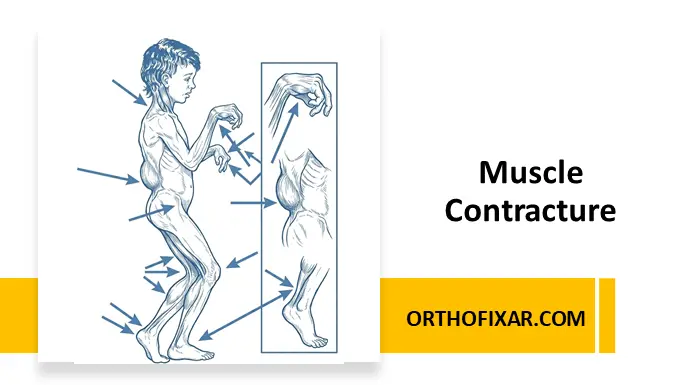
Muscle contracture is a condition characterized by the permanent shortening and tightening of muscle fibers, leading to stiffness, pain, reduced flexibility, and limited joint movement. It commonly develops after prolonged immobilization, neurological disorders, trauma, burns, or musculoskeletal diseases.
Muscle contractures can significantly affect mobility and quality of life. Early diagnosis and appropriate treatment are essential to prevent irreversible disability and chronic complications. According to medical literature, contractures are especially common in patients with stroke, cerebral palsy, spinal cord injury, and prolonged bed rest.
What is a Muscle Contracture?
A muscle contracture occurs when muscle tissue becomes abnormally shortened and loses its normal elasticity. This causes restricted movement of the associated joint and may eventually lead to fixed deformities.
Unlike temporary muscle spasms or cramps, contractures are often long-lasting or permanent if not treated promptly. The condition may involve:
- Muscle fibers
- Tendons
- Joint capsules
- Connective tissue
Medical sources define contracture as a permanent contraction caused by spasm, paralysis, fibrosis, or structural muscle changes.
Types of Muscle Contracture
1. Neurologic Contracture
Develops due to disorders affecting the nervous system, including:
- Stroke
- Cerebral palsy
- Multiple sclerosis
- Spinal cord injury
- Traumatic brain injury
Neurological damage increases muscle tone and stiffness, eventually causing shortening of muscles and connective tissues.
2. Immobilization Contracture
Occurs after prolonged inactivity or immobilization, such as:
- Extended bed rest
- Casting after fractures
- Joint splinting
- Intensive care hospitalization
Lack of movement leads to muscle atrophy, fibrosis, and reduced joint mobility.
3. Ischemic Contracture
Results from impaired blood supply to muscles.
A classic example is:
- Volkmann ischemic contracture
This condition commonly affects the forearm after untreated compartment syndrome and can cause permanent hand deformity.
4. Congenital Contracture
Present at birth and associated with genetic or developmental disorders.
Examples include:
- Arthrogryposis
- Congenital muscular dystrophies
Causes of Muscle Contracture
Several medical conditions and risk factors can contribute to muscle contracture development.
Common Causes
Neurological Disorders
Damage to upper motor neurons can increase muscle tone and stiffness.
Prolonged Immobilization
Lack of movement promotes muscle fibrosis and shortening.
Trauma and Burns
Scar formation may limit normal tissue flexibility and movement.
Muscular Diseases
Conditions such as muscular dystrophy can alter muscle structure and function.
Aging
Reduced mobility and chronic illness increase contracture risk in older adults.
Inflammation and Fibrosis
Chronic inflammation can stimulate collagen deposition and connective tissue thickening.
Pathophysiology of Muscle Contracture
Muscle contracture develops through several pathological mechanisms:
Muscle Atrophy
Disuse reduces muscle mass and elasticity.
Fibrosis
Excess collagen accumulates within muscle tissue, causing stiffness.
Sarcomere Changes
Muscle fibers adapt to shortened positions by losing sarcomeres, limiting extensibility.
Increased Passive Stiffness
Connective tissue remodeling increases resistance to stretching.
Neural Dysfunction
Spasticity and altered reflexes contribute to chronic muscle shortening.
Symptoms of Muscle Contracture
Symptoms vary depending on severity and underlying cause.
Common Symptoms
- Muscle stiffness
- Restricted joint movement
- Pain during movement
- Joint deformity
- Difficulty walking or performing daily activities
- Muscle weakness
- Abnormal posture
- Reduced flexibility
In severe cases, contractures can interfere with hygiene, mobility, and self-care.
Common Areas Affected
Muscle contractures frequently affect flexor muscles and joints such as:
- Elbows
- Wrists
- Fingers
- Knees
- Ankles
- Hips
- Shoulders
Neurological contractures commonly involve upper limbs and lower extremities.
Diagnosis of Muscle Contracture
Diagnosis is primarily clinical and includes a detailed medical history and physical examination.
Diagnostic Methods
Physical Examination
Healthcare providers assess:
- Range of motion
- Muscle tone
- Joint stiffness
- Functional limitations
Imaging Studies
May include:
- Ultrasound
- MRI
- X-rays
Functional Assessment
Evaluates mobility and activities of daily living.
Neurological Evaluation
Important in patients with spasticity or central nervous system disorders.
Sonoelastography has also been investigated as a diagnostic tool for evaluating muscle stiffness.
Treatment of Muscle Contracture
Treatment depends on severity, duration, and underlying cause.
Conservative Treatment
Physical Therapy
Physical therapy is the cornerstone of management and may include:
- Stretching exercises
- Range-of-motion exercises
- Strengthening programs
- Functional rehabilitation
Regular stretching may improve joint mobility, although evidence for large long-term effects remains limited.
Occupational Therapy
Helps patients maintain independence in daily activities.
Splinting and Bracing
Static or dynamic splints help maintain muscle length and joint alignment.
Heat Therapy
Heat may improve tissue elasticity before stretching exercises.
Electrical Stimulation
Sometimes used to preserve muscle function and reduce stiffness. Current evidence remains mixed.
Medications
Drugs used for associated spasticity include:
- Baclofen
- Tizanidine
- Diazepam
- Botulinum toxin injections
Botulinum toxin may temporarily reduce muscle overactivity in selected patients.
Surgical Treatment
Surgery may be required in severe or fixed contractures.
Surgical Options
- Tendon lengthening
- Fasciotomy
- Muscle release procedures
- Joint reconstruction
Surgical intervention is generally reserved for patients who fail conservative therapy.
Rehabilitation After Treatment
Post-treatment rehabilitation is critical to maintain mobility and prevent recurrence.
Rehabilitation Strategies
- Daily stretching
- Progressive strengthening
- Functional movement training
- Orthotic support
- Long-term physiotherapy follow-up
Prevention of Muscle Contracture
Prevention is especially important in high-risk patients.
Prevention Tips
- Early mobilization after injury or surgery
- Frequent position changes
- Daily stretching exercises
- Proper splinting
- Physical therapy during hospitalization
- Management of neurological disorders
Immobilization-induced contractures are often preventable with regular movement and rehabilitation.
Complications of Untreated Muscle Contracture
Without treatment, contractures may cause:
- Permanent deformity
- Chronic pain
- Severe disability
- Pressure ulcers
- Muscle wasting
- Joint degeneration
- Reduced independence
Long-standing contractures can become irreversible due to extensive fibrosis and structural tissue remodeling.
Prognosis
The prognosis depends on:
- Duration of contracture
- Severity
- Underlying disease
- Age of the patient
- Timing of intervention
Early-stage contractures often respond better to conservative therapy, while chronic severe contractures may require surgery.
Frequently Asked Questions (FAQs)
Is muscle contracture permanent?
Some contractures can be reversed with early treatment, but chronic contractures may become permanent.
Can exercise help muscle contracture?
Yes. Stretching and rehabilitation exercises are essential components of treatment.
What is the difference between muscle spasm and contracture?
Muscle spasms are temporary involuntary contractions, while contractures involve permanent shortening and stiffness.
Can neurological diseases cause contractures?
Yes. Stroke, cerebral palsy, spinal cord injury, and multiple sclerosis are common causes.
Conclusion
Muscle contracture is a serious musculoskeletal condition that can lead to pain, stiffness, and long-term disability. It commonly occurs in neurological disorders, prolonged immobilization, trauma, and chronic musculoskeletal diseases. Early recognition and multidisciplinary treatment involving physical therapy, rehabilitation, medications, and occasionally surgery are essential for improving outcomes.
Preventive strategies such as early mobilization and regular stretching remain crucial, particularly in high-risk patients.
References & More
- Svane C, Nielsen JB, Lorentzen J. Nonsurgical Treatment Options for Muscle Contractures in Individuals With Neurologic Disorders: A Systematic Review With Meta-Analysis. Arch Rehabil Res Clin Transl. 2021 Jan 13;3(1):100104. doi: 10.1016/j.arrct.2021.100104. PMID: 33778477; PMCID: PMC7984980. Pubmed
- Dijkstra JN, Boon E, Kruijt N, Brusse E, Ramdas S, Jungbluth H, van Engelen BGM, Walters J, Voermans NC. Muscle cramps and contractures: causes and treatment. Pract Neurol. 2023 Feb;23(1):23-34. doi: 10.1136/pn-2022-003574. Epub 2022 Dec 15. PMID: 36522175. Pubmed
- Wang F, Zhang QB, Zhou Y, Chen S, Huang PP, Liu Y, Xu YH. The mechanisms and treatments of muscular pathological changes in immobilization-induced joint contracture: A literature review. Chin J Traumatol. 2019 Apr;22(2):93-98. doi: 10.1016/j.cjtee.2019.02.001. Epub 2019 Mar 11. PMID: 30928194; PMCID: PMC6488749. Pubmed