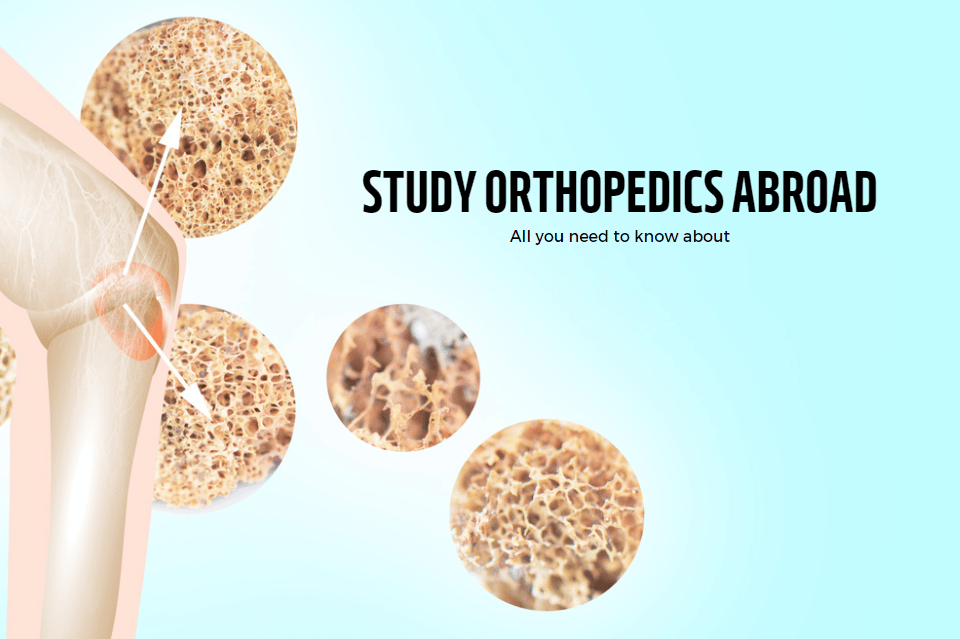
Studying orthopedics abroad is a well-established route for physical therapy students and practicing clinicians who want to deepen their musculoskeletal expertise, train in a different healthcare system, or specialize in an area that is not available locally. It is also a decision that involves more than choosing a university. The outcome depends on how each country regulates orthopedic and physiotherapy practice, what your home regulator will recognize on your return, and what the whole plan will realistically cost in time and money. This guide explains the program types, recognition and licensing issues, admission and language requirements, costs, visa rules, and application steps so you can compare options with clear eyes.
What “Studying Orthopedics Abroad” Actually Means
The phrase covers several very different paths, and mixing them up is the most common source of wasted money and time. Decide which one you need before you start searching for programs.
- Full entry-level physiotherapy degree with an orthopedic focus, usually a Bachelor of Physiotherapy or a professional doctorate, for students who are not yet licensed.
- Post-professional master’s or postgraduate diploma in orthopedic manual therapy or musculoskeletal physiotherapy, for clinicians who already hold a license.
- Clinical electives and observerships in orthopedic hospitals or university clinics, often lasting weeks rather than years.
- Continuing education courses in manual therapy, dry needling, or sports rehabilitation, frequently delivered by private education providers rather than universities.
- Fellowship-style clinical training in orthopedic rehabilitation, which is the least standardized category and varies heavily by institution.
Each path has a different recognition profile. A full degree may qualify you for licensure in some countries; a short course almost never does. Read the program’s official description carefully and check whether it leads to a recognized qualification or simply a certificate of attendance.
Why Physical Therapy Students Consider Studying Abroad
From a teaching perspective, the strongest reason is exposure to different clinical reasoning models. Orthopedic practice in some countries emphasizes evidence-based screening and early differential diagnosis, while many programs elsewhere lean more heavily on manual techniques. Seeing both broadens how you assess a shoulder or a knee.
Other practical motivations tend to include:
- Access to well-equipped orthopedic clinics and supervised clinical placements.
- Postgraduate specialization that may not be available locally.
- International networking with clinicians, researchers, and educators.
- A pathway toward practicing in another country, if licensing rules allow it.
- Exposure to different healthcare systems and referral pathways.
Be honest about your goal. If your aim is to practice in a specific country, the program choice is driven by that country’s regulator, not by the university’s marketing.
Types of Orthopedic Programs and What They Suit
Entry-Level Physiotherapy Degrees
These are designed for school leavers or career changers. They typically run three to four years and include substantial supervised clinical practice. Orthopedics appears as a core module rather than the whole degree, so check the curriculum for musculoskeletal content and placement hours.
Post-Professional Master’s Programs
A master’s in orthopedic or musculoskeletal physiotherapy usually suits licensed clinicians who want advanced assessment and treatment skills. Entry requirements commonly include a recognized professional degree and, in many cases, some clinical experience. Verify these on the university’s official program page rather than relying on third-party summaries.
Short Courses and Clinical Electives
These are the fastest and cheapest options. They suit clinicians who want targeted skills, such as advanced knee assessment or post-operative shoulder rehabilitation. They rarely lead to licensure, and some countries restrict what you can do clinically during a short visit, so confirm the legal scope of any elective before you travel.
Country and Program Comparison
Use this table as a starting point for comparison only. Requirements, fees, and recognition rules change, so always confirm details on official government and university pages before applying.
| Consideration | What to Check | Why It Matters |
|---|---|---|
| Program type | Entry-level degree, master’s, elective, or short course | Determines whether you can pursue licensure or only gain skills |
| Recognition | Whether the qualification is accepted by your home regulator | Affects your ability to practice after returning |
| Language | Language of instruction and required proficiency test | Affects admission and clinical placement eligibility |
| Clinical hours | Supervised placement hours and orthopedic content | Affects both learning depth and licensing eligibility |
| Cost | Tuition, living costs, insurance, and visa fees | Determines total financial commitment |
| Visa rules | Student visa conditions and work rights | Affects study and part-time work options |
| Licensing pathway | Registration or exam requirements in the destination country | Determines whether you can work there after graduation |
Recognition and Licensing: The Part Most Students Underestimate
Studying abroad does not automatically give you the right to practice anywhere. Recognition is handled by regulators and professional bodies, and the rules differ sharply between countries.
In the United States, physical therapists are licensed by state boards, and foreign-educated applicants often need credential evaluation and may need to meet additional requirements. The Foreign Credentialing Commission on Physical Therapy is the recognized body for evaluating foreign physical therapy credentials, and the American Physical Therapy Association provides professional context. In the United Kingdom, the Health and Care Professions Council regulates physiotherapists, and the Chartered Society of Physiotherapy offers professional guidance. In Australia, the Australian Health Practitioner Regulation Agency handles registration.
Before you apply to any program, contact your home regulator and ask two questions in writing: is this specific qualification recognized, and what additional steps will I need? Keep the reply. It is your best protection against an expensive mistake.
Admission Requirements You Should Expect
Admission standards vary by institution and country, but the core requirements tend to be consistent across most reputable programs.
- A completed secondary qualification or a recognized bachelor’s degree, depending on the program level.
- Proof of English or local language proficiency, usually through a recognized test.
- Academic transcripts, often requiring official translation and certification.
- Letters of recommendation from academic or clinical referees.
- A personal statement explaining your interest in orthopedics.
- Evidence of clinical experience for postgraduate programs.
- Professional registration documents if you are already licensed.
- Passport and, in some cases, financial documentation for the visa stage.
Requirements are program-specific, so read the university’s official admissions page rather than a summary. If a requirement is unclear, email the admissions office directly and keep the response.
Language Requirements and Clinical Communication
Orthopedic practice depends on precise communication. You need to understand a patient describing radiating leg pain, and you need to explain a rehabilitation plan clearly. Language proficiency is not a formality here.
Most programs require a standardized test score, and some clinical placements require a higher level than the academic admission threshold. Plan for this early. If you are considering a non-English-speaking country, check whether the program is taught in the local language and whether clinical placements require a specific proficiency level.
Costs, Funding, and Scholarships
Costs vary enormously by country, institution, and program length. Rather than relying on general figures, build your own budget from official sources.
- Tuition fees listed on the university’s official program page.
- Living costs, which vary significantly between cities.
- Health insurance, often mandatory for international students.
- Visa application fees and any required biometric or medical checks.
- Language test fees and credential evaluation costs.
- Travel, relocation, and settling-in expenses.
- Professional registration or exam fees after graduation.
For funding, check official scholarship providers and university scholarship pages directly. Government scholarship programs and university-specific awards exist, but eligibility rules are specific and change. The Study in Germany official portal and the Study Australia official portal are useful starting points for country-level information, including funding and visa guidance.
Visa and Legal Considerations
Student visa rules differ by country and are updated regularly. Always check the official immigration portal of the country you plan to study in before applying. Key points to verify include:
- Whether the program qualifies for a student visa.
- Work rights during study and any restrictions on clinical or paid work.
- Financial evidence requirements and acceptable proof formats.
- Post-study work options and their conditions.
- Whether family members can accompany you.
Do not rely on forums or social media for visa advice. Use the official government immigration portal, and if something is unclear, contact the relevant embassy or consulate.
A Practical Application Timeline
Most students underestimate how long the process takes. A realistic sequence looks like this:
- Define your goal: licensure, specialization, or short-term skills.
- Check recognition with your home regulator before shortlisting programs.
- Shortlist programs using official university pages and confirm entry requirements.
- Prepare language tests and academic documents well in advance.
- Apply through the official application portal for each institution.
- Arrange funding and financial documentation.
- Apply for the student visa once you have an offer.
- Plan accommodation, insurance, and travel.
Starting a year ahead is common for degree programs. Short courses and electives can sometimes be arranged faster, but clinical placements and insurance still need lead time.
How to Evaluate a Program Before You Commit
Marketing pages tend to look similar. These questions separate strong programs from weaker ones.
- How many supervised clinical hours are included, and where?
- Who teaches the orthopedic modules, and what is their clinical background?
- What proportion of the curriculum is musculoskeletal and orthopedic content?
- What do graduates do after the program, and does the institution publish this?
- Is the qualification listed by the relevant regulator or professional body?
- What support exists for international students during placements?
- What are the total costs, including hidden fees?
Ask for the answers in writing. A program that cannot answer clearly is a warning sign.
Common Mistakes to Avoid
Many avoidable problems come from skipping the recognition check or trusting an agent over an official source.
- Assuming any foreign degree grants automatic practice rights.
- Choosing a program based on cost alone without checking clinical hours.
- Ignoring language proficiency requirements for clinical placements.
- Relying on agents who are not transparent about their commission.
- Underestimating living costs and visa processing time.
- Failing to keep written confirmation of recognition from your regulator.
Conclusion
Studying orthopedics abroad can be a genuinely valuable step, whether you are building a career or deepening clinical skills. The deciding factor is rarely the university’s reputation alone; it is whether the program fits your licensing goal, your budget, and your language ability. Check recognition first, verify every requirement on official pages, and keep written confirmation of what you are told. That approach protects your investment and keeps your focus where it belongs: becoming a better clinician.
Frequently Asked Questions
Can I study orthopedics abroad if I am not yet a licensed physiotherapist?
Yes, through an entry-level physiotherapy degree that includes orthopedic modules. You will not be licensed by studying alone; you must meet the registration requirements of the country where you intend to practice. Confirm those requirements with the relevant regulator before you enroll.
Is a foreign orthopedic qualification automatically recognized in my home country?
No. Recognition is decided by the regulator or professional body in your home country, and rules differ. Some qualifications require additional exams, supervised practice, or credential evaluation. Always confirm in writing before committing to a program.
How long does it take to study orthopedics abroad?
It depends on the path. A full entry-level degree typically takes three to four years, a master’s usually one to two years, and short courses or electives can last from a few days to several months. Clinical placements and language preparation can add time.
What language requirements apply to orthopedic programs abroad?
Most programs require a recognized language proficiency test, and some clinical placements require a higher level than academic admission. Check the university’s official admissions page and the placement requirements, since these can differ within the same program.
Are scholarships available for international physiotherapy students?
Some universities and government programs offer scholarships to international students, but eligibility rules are specific and vary. Check official university scholarship pages and national study portals directly rather than relying on third-party lists.
Can I work while studying orthopedics abroad?
Work rights depend on your student visa conditions in that country. Some visas allow limited part-time work, while others restrict it. Verify the rules on the official government immigration portal before you rely on employment income.
Do short orthopedic courses lead to licensure?
Generally no. Short courses and clinical electives are intended for skill development and usually provide a certificate of attendance or completion. They do not replace a recognized professional qualification for registration purposes.
How do I verify that a program is legitimate?
Check the university’s official website, confirm whether the qualification is listed by the relevant regulator or professional body, and ask for written confirmation of clinical hours and curriculum content. Avoid relying on agent claims or unofficial directories.
What documents do I usually need to apply?
Common documents include academic transcripts, proof of language proficiency, letters of recommendation, a personal statement, and passport details. Postgraduate programs often require professional registration documents and evidence of clinical experience. Confirm the exact list on the university’s official admissions page.
Is it better to study orthopedics abroad or in my home country?
There is no universal answer. Studying abroad can offer strong clinical exposure and specialization, but it involves higher costs, licensing uncertainty, and relocation. Compare the total cost, recognition pathway, and clinical hours against local options before deciding.