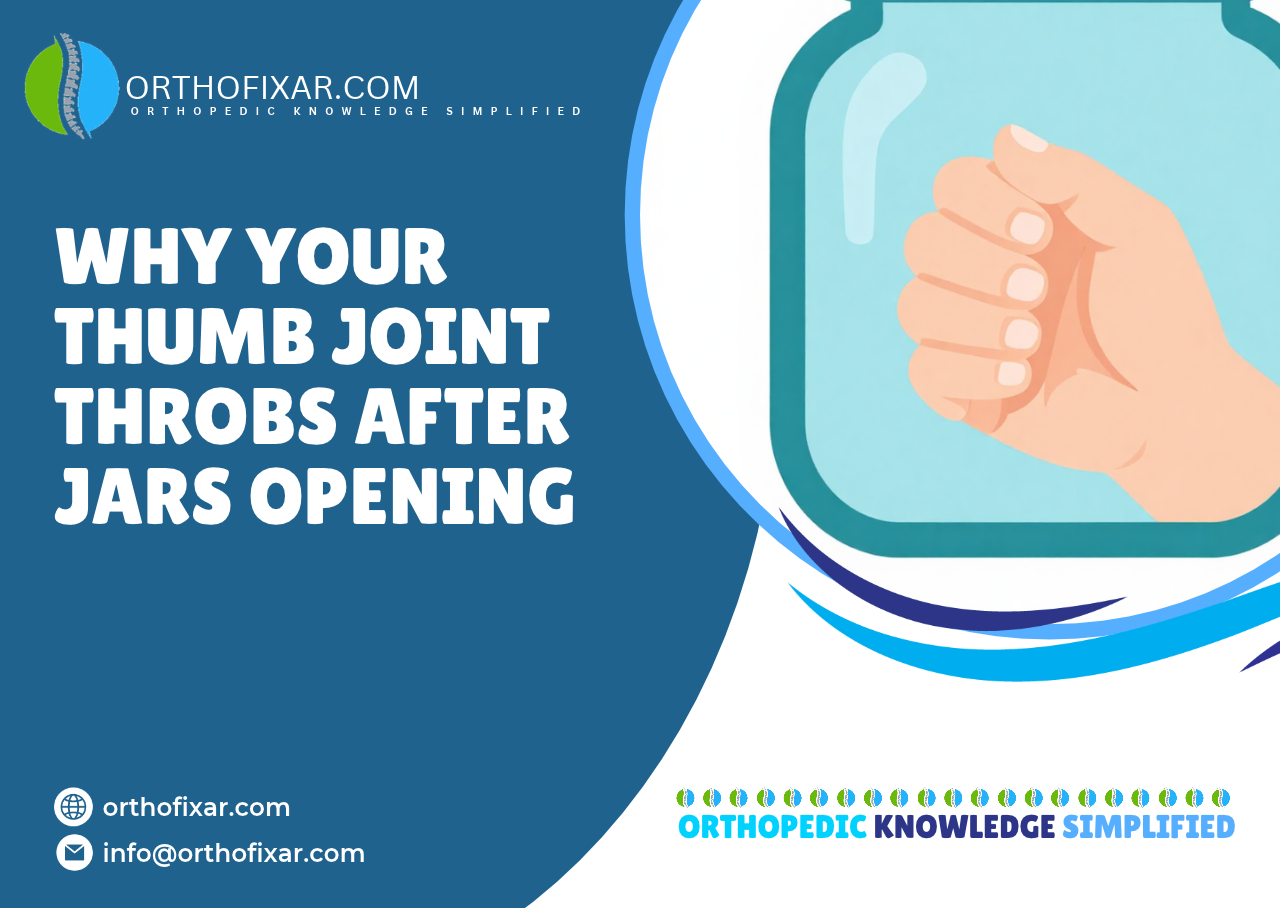
A throbbing thumb after opening a jar is usually a sign that the joint and surrounding tissues were strained by a combination of gripping force, twisting motion, and pressure. For most people this is a short-lived mechanical ache, but recurring throbbing can point to tendon irritation, osteoarthritis at the base of the thumb, or — less commonly — bone softening linked to vitamin D and calcium problems, sometimes described as osteomalacia. Understanding what is happening inside the thumb helps you tell ordinary strain from something worth investigating, and it guides sensible choices about home care and when to seek clinical advice.
What Is Actually Happening in Your Thumb When You Open a Jar
Opening a tight lid is a surprisingly demanding task for a small joint. You wrap your thumb and fingers around the lid, press hard to create friction, and then rotate while the thumb stays relatively fixed. That combination loads the thumb’s base joint and the tendons that stabilize it, concentrating force through a small area of tissue.
The throbbing you feel afterward is often a vascular response. Sustained pressure and muscle contraction reduce local blood flow briefly, and when you release the jar, blood returns quickly and can produce a pulsing sensation. Add mild inflammation in a tendon sheath or joint lining, and the throb becomes more noticeable and lasts longer.
Three structures commonly take the strain:
- The carpometacarpal (CMC) joint at the base of the thumb, which allows pinch and rotation.
- The flexor and extensor tendons that bend and straighten the thumb tip.
- The small ligaments that hold the thumb joints stable during a hard grip.
If your thumb throbs mainly after gripping and twisting, and settles within minutes to hours, mechanical strain is the most likely explanation. If it throbs at rest, wakes you at night, or follows minimal effort, that pattern deserves more attention.
Common Causes of a Throbbing Thumb After Gripping
Most cases fall into a few recognizable patterns. Matching your symptoms to one of them helps you decide whether self-care is enough or whether a professional assessment makes sense.
Muscle and Tendon Strain
Forceful gripping recruits the thenar muscles at the base of the thumb and the forearm tendons that control the thumb. Overuse — a marathon of jar opening, gardening, or heavy lifting — can leave these tissues sore and pulsing for a day or two. The discomfort is usually proportional to the effort and eases steadily with relative rest.
De Quervain’s tenosynovitis is a specific, common tendon problem on the thumb side of the wrist. It causes pain near the base of the thumb that worsens with gripping, twisting, or lifting, and it can throb after jar-opening sessions. A clinician can often identify it with a simple bedside maneuver that stretches the affected tendon sheath.
Thumb Base Osteoarthritis
Wear at the CMC joint is one of the most frequent sources of thumb pain in midlife and later life. Gripping a lid concentrates force exactly at this joint. Symptoms typically include:
- A deep ache or throb at the base of the thumb after pinching or gripping.
- Stiffness in the morning that eases with movement.
- Reduced pinch strength or a grinding sensation.
- Swelling or a bony bump near the wrist-thumb junction.
Because the CMC joint is central to pinch and grip, even modest wear can make everyday tasks such as opening containers, turning keys, or holding a pan feel uncomfortable.
Nerve Irritation
Prolonged pressure on the small nerves of the hand, or compression higher up at the wrist, can produce burning or throbbing that feels out of proportion to the effort. Numbness, tingling, or pins and needles in the thumb and index finger point toward a nerve component rather than a pure joint problem. Nerve-related symptoms often follow a different pattern from joint pain, appearing after sustained positions or at night.
Bone Softening (Osteomalacia)
Osteomalacia means defective bone mineralization, usually because of prolonged vitamin D deficiency, low calcium intake, or problems absorbing these nutrients. Unlike osteoporosis, which thins bone, osteomalacia leaves bone soft and prone to aching.
The hallmark is diffuse bone pain and muscle weakness, often in the hips, thighs, and lower back, and sometimes in the hands. Thumb pain alone is not a typical presentation, so a single throbbing thumb after opening a jar should not be attributed to osteomalacia without other signs. If you also have widespread bone tenderness, muscle weakness, or fatigue, it is reasonable to raise the question with your doctor.
How to Tell Ordinary Strain From Something That Needs Attention
Timing and pattern matter more than the intensity of a single episode. Use these observations to describe your symptoms clearly, whether to yourself or to a clinician.
- Strain usually peaks within minutes of the activity and improves with rest.
- Osteoarthritis tends to produce stiffness after inactivity and pain with pinching tasks.
- Tendon problems often flare with repeated gripping and improve with relative rest.
- Nerve-related symptoms come with numbness, tingling, or a burning quality.
- Systemic bone problems usually come with pain in multiple areas and muscle weakness.
Red flags that warrant prompt medical review include swelling that does not settle, a thumb that locks or clicks painfully, visible deformity after an injury, fever with joint pain, or pain that steadily worsens over weeks.
At-Home Relief for a Throbbing Thumb
Most mechanical thumb throbs respond well to simple measures in the first 24 to 48 hours. The goal is to reduce load on the irritated tissue while keeping the hand gently mobile.
- Rest the thumb from gripping tasks for a day or two; use both hands or a jar opener instead.
- Apply a cold pack wrapped in cloth for about 10 to 15 minutes, a few times a day, during the first day or two.
- Switch to gentle warmth after the acute soreness fades to ease stiffness.
- Take over-the-counter pain relief only as directed on the label and after checking with a pharmacist if you take other medicines.
- Use a soft thumb splint during demanding tasks if a clinician has advised one.
- Avoid repetitive twisting motions such as wringing cloths or opening multiple tight lids in one go.
If the throb persists beyond a couple of weeks despite rest, or if it keeps returning with normal daily tasks, arrange an assessment rather than pushing through.
Practical Changes That Reduce Thumb Load
Small adjustments to how you use your hands can prevent repeated flare-ups. These are practical habits rather than medical treatments, and they work best alongside any advice from your clinician.
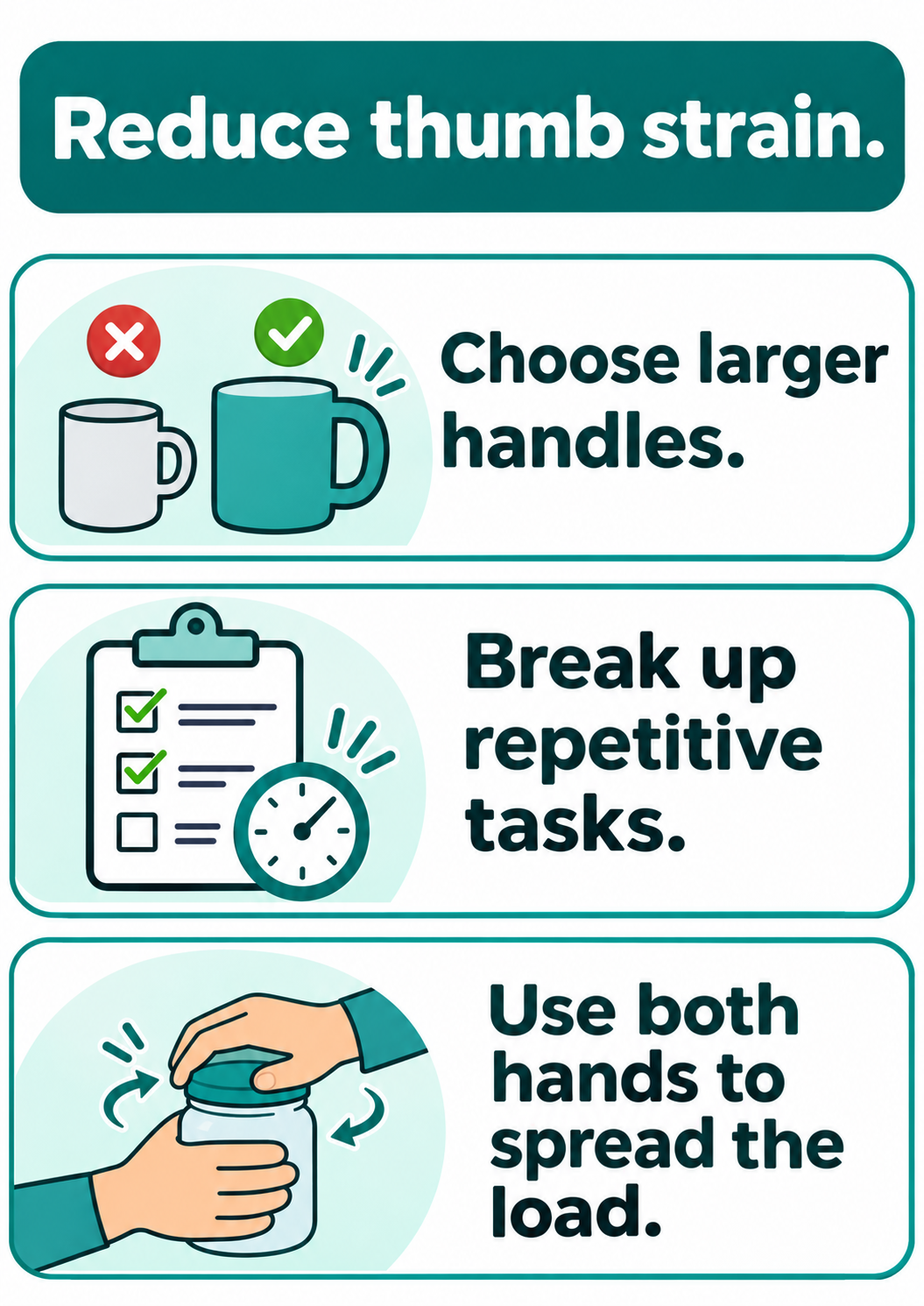
- Choose jars with wide lids, which require less pinch force than narrow ones.
- Tap the lid edge on a counter or run it under warm water to loosen a vacuum seal.
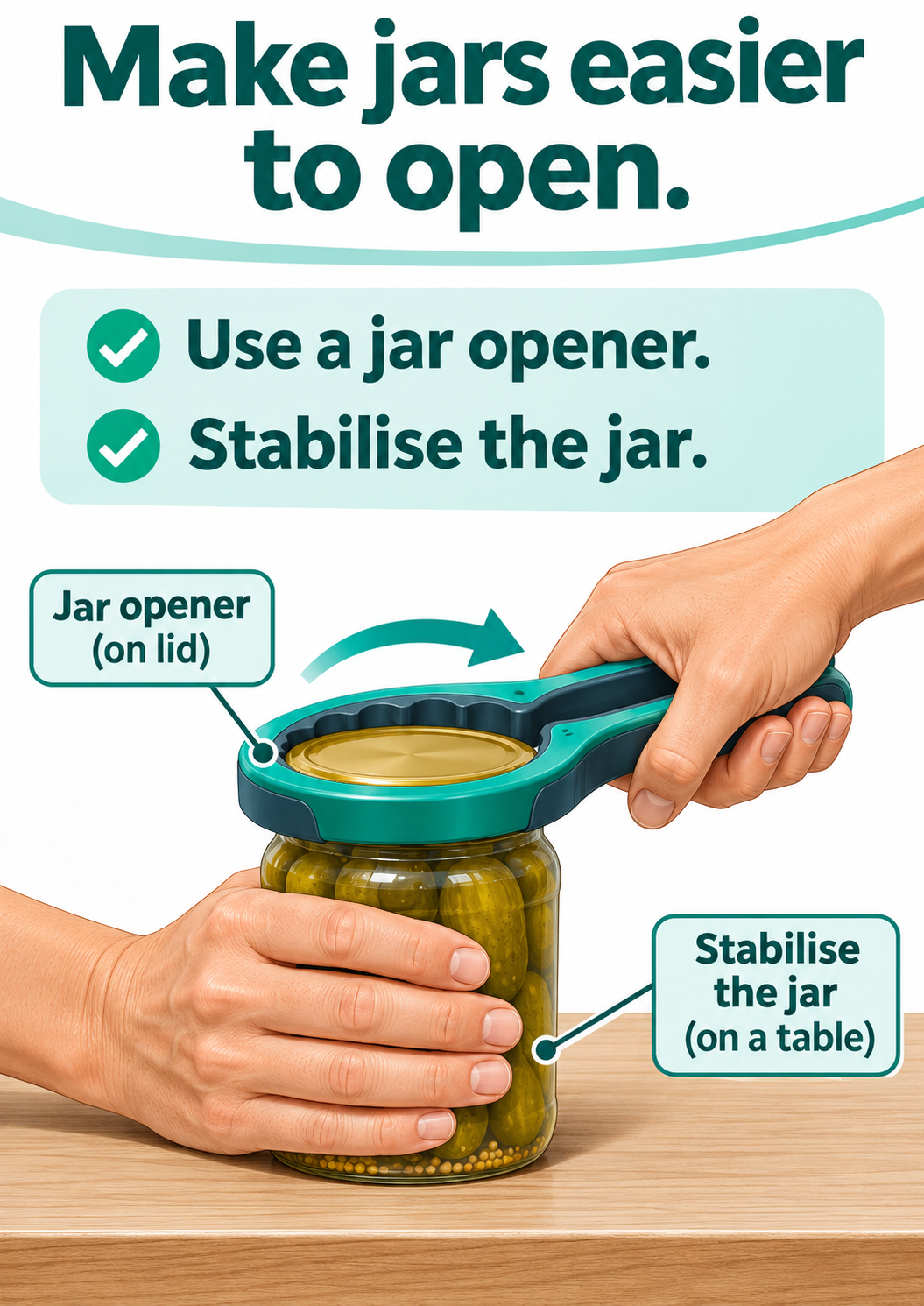
- Use a silicone grip pad or a dedicated jar opener to spread force across the whole hand.
- Hold the jar steady with your non-dominant hand and rotate the lid with the palm rather than the fingertips.
- Break up repetitive tasks into shorter sessions with breaks.
- Use larger-handled kitchen tools and pens to reduce pinch strain.
When to See a Doctor
Book an appointment if the throbbing thumb keeps returning, interferes with work or sleep, or is accompanied by swelling or weakness. A clinician can examine the joint and tendons, check grip and pinch strength, and decide whether imaging or blood tests are needed.
Blood tests for vitamin D, calcium, phosphate, and alkaline phosphatase are sometimes used when bone pain is widespread or when osteomalacia is suspected. These tests are ordered by a clinician based on your history, not as a routine step for a single sore thumb.
For general, reliable information on bone health and vitamin D, you can review the guidance from the NHS vitamin D guidance or the NIH vitamin D fact sheet. For musculoskeletal pain and joint conditions, the Versus Arthritis condition information is a useful starting point.
Comparing Possible Causes at a Glance
The table below summarizes how different causes usually present. It is a guide for discussion, not a diagnosis.
| Possible cause | Typical pattern | Other clues | Usual next step |
|---|---|---|---|
| Muscle or tendon strain | Throb after gripping, eases with rest | Soreness at the thumb base or wrist | Rest, cold pack, gradual return |
| De Quervain’s tenosynovitis | Pain with twisting and lifting | Tenderness on the thumb side of the wrist | Clinical assessment, splint, physiotherapy |
| Thumb base osteoarthritis | Ache and stiffness with pinching | Grinding, reduced pinch strength | Assessment, activity changes, hand therapy |
| Nerve irritation | Burning or throbbing with tingling | Numbness in thumb or index finger | Clinical examination |
| Osteomalacia | Diffuse bone aching and muscle weakness | Pain in hips, thighs, or back; fatigue | Medical review and blood tests |
What Osteomalacia Means for Your Hands
Osteomalacia is uncommon as a cause of isolated thumb pain, but it is worth understanding because it affects how bone responds to load. When bone mineral is insufficient, bone can ache with ordinary activity and muscles may feel weak.
Risk factors include limited sun exposure, diets low in calcium or vitamin D, certain gut or kidney conditions, and some medications that affect mineral absorption. If several of these apply to you and you have widespread bone pain, mention it to your doctor.
- Osteomalacia is diagnosed by a clinician using history, examination, and blood tests.
- Treatment usually involves correcting the underlying deficiency under medical supervision.
- Self-prescribing high-dose supplements without testing is not advisable.
- Hand symptoms alone rarely confirm or exclude the condition.
Exercises and Habits That Support Thumb Health
Gentle, pain-free movement helps maintain joint mobility and tendon tolerance. Stop any exercise that causes sharp pain or lingering throbbing.
- Open and close the hand slowly several times a day.
- Touch each fingertip to the thumb in turn, keeping the motion smooth.
- Gently bend and straighten the thumb tip without forcing the joint.
- Use a soft therapy putty only if a clinician or hand therapist has recommended it.
- Warm up hands with light movement before heavy kitchen or garden tasks.
Hand therapists can provide tailored programs for thumb osteoarthritis and tendon problems. Ask your doctor for a referral if symptoms persist.
Conclusion
A throbbing thumb after opening a jar is most often the result of mechanical strain on the thumb base joint, tendons, or muscles, and it usually settles with rest and sensible activity changes. Persistent, recurrent, or widespread bone pain deserves a clinical review, and osteomalacia is one possibility a doctor may consider alongside more common causes. Practical habits, gentle movement, and timely assessment keep the thumb working comfortably.
Frequently Asked Questions
Why does my thumb throb only after opening jars?
Jar opening combines a hard pinch grip with twisting, which loads the thumb base joint and tendons more than most daily tasks. The throb reflects that temporary strain and the return of blood flow after sustained pressure.
Is a throbbing thumb a sign of osteomalacia?
Rarely on its own. Osteomalacia usually causes widespread bone aching and muscle weakness rather than isolated thumb pain, so a single sore thumb is more likely mechanical unless other symptoms are present.
How long should thumb pain last after gripping?
Mild strain typically improves within a few days with rest. Pain that persists beyond two weeks, keeps returning, or worsens should be assessed by a clinician.
Should I use heat or ice on a throbbing thumb?
Cold packs are often used in the first day or two to calm acute soreness, while gentle warmth can help with stiffness later. Keep applications short and protect the skin with a cloth.
Can arthritis cause throbbing after opening jars?
Yes. Thumb base osteoarthritis commonly causes aching and stiffness with pinching and gripping tasks, and the pain can throb after sustained effort.
When should I see a doctor about thumb pain?
See a doctor if pain is severe, persistent, accompanied by swelling, numbness, weakness, or deformity, or if it interferes with sleep and daily activities.
Do I need blood tests for thumb pain?
Usually not for isolated thumb pain. Blood tests such as vitamin D, calcium, and phosphate are considered when there are signs of a systemic bone problem or other clinical reasons.
Can splints help a throbbing thumb?
A soft thumb splint can reduce load during demanding tasks and may ease symptoms, but it should be used alongside advice from a clinician or hand therapist rather than as a substitute for assessment.
Are there exercises that help thumb pain?
Gentle, pain-free range-of-motion exercises can help maintain mobility. Avoid any movement that causes sharp pain, and seek tailored guidance from a hand therapist if symptoms persist.
Can vitamin D deficiency affect the hands?
Prolonged vitamin D deficiency can contribute to bone and muscle symptoms throughout the body, including the hands, but diagnosis requires clinical assessment and testing rather than assumptions based on one symptom.