Shoulder bursitis can turn simple tasks into painful challenges. This guide explains shoulder bursitis symptoms, causes, treatment options, and recovery expectations in plain language, so you know what to do next. You will also find practical self-care steps, gentle exercise guidance, and answers to common shoulder bursitis questions.
What Is Shoulder Bursitis?
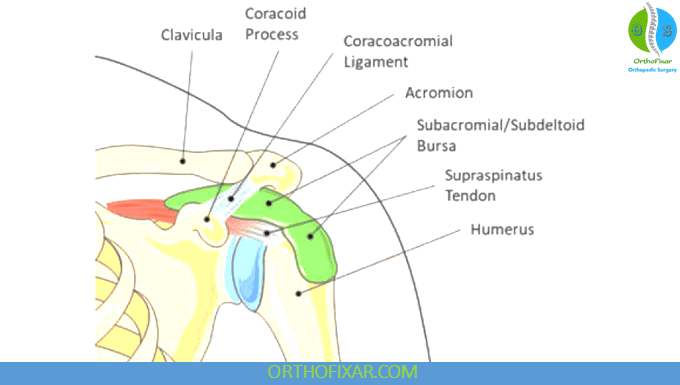
Your shoulder contains small fluid-filled sacs called bursae. These sacs reduce friction between bones, tendons, and muscles so that movement stays smooth and painless. When one of these sacs becomes inflamed, fluid builds up, and the space inside the joint becomes painful — that condition is shoulder bursitis.
The most commonly affected area is the subacromial bursa, which sits above the rotator cuff tendons. If this bursa swells, it cannot glide properly between the bones and tendons. The result is pain, stiffness, and restricted shoulder motion.
This problem is often mistaken for a muscle strain because the onset can be gradual. The earlier you identify the issue, the easier it is to treat without surgery or prolonged downtime.
Early Symptoms You Should Not Ignore
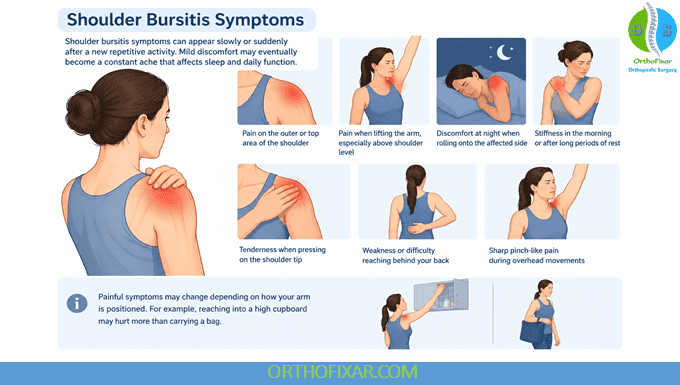
Shoulder bursitis symptoms can appear slowly or suddenly after a new repetitive activity. Mild discomfort may eventually become a constant ache that affects sleep and daily function.
- Pain on the outer or top area of the shoulder
- Pain when lifting the arm, especially above shoulder level
- Discomfort at night when rolling onto the affected side
- Stiffness in the morning or after long periods of rest
- Tenderness when pressing on the shoulder tip
- Weakness or difficulty reaching behind your back
- Sharp pinch-like pain during overhead movements
Painful symptoms may change depending on how your arm is positioned. For example, reaching into a high cupboard may hurt more than carrying a bag at your side. Pay attention to these patterns, as they help your doctor identify the irritated bursa.
Main Causes and Risk Factors
Bursitis happens when the bursa becomes overloaded or irritated. This can result from repeated use, a direct injury, or posture-related pressure on the joint.
- Repetitive overhead movements such as painting, swimming, or lifting
- Direct impact to the shoulder, including falls or sports injuries
- Prolonged resting on the elbow or leaning on hard surfaces
- Rotator cuff weakness or tears that change normal joint mechanics
- Medical conditions such as rheumatoid arthritis, gout, or diabetes
- Age-related tissue changes that make the bursa more vulnerable
- Poor shoulder blade control or rounded-forward posture
Many patients develop shoulder bursitis after a sudden increase in training or a home renovation project. The shoulder is not prepared for the new workload, and the bursa takes the brunt of the irritation.
“I thought it was just a pulled muscle, so I stretched it harder. That made the pain worse. Learning to rest the bursa at the beginning changed my entire recovery.” — common patient story in shoulder therapy
How Doctors Diagnose Shoulder Bursitis
A healthcare professional will start by asking how the pain began and which movements make it worse. This is followed by a physical exam that tests your range of motion, strength, and tender spots.
Your doctor may perform a series of movement tests to distinguish bursitis from rotator cuff tendinopathy or arthritis. Imaging is not always required, but it can provide more certainty when symptoms are unclear.
- Ultrasound shows fluid buildup and thickening in the bursa
- MRI can reveal soft tissue problems like tendon tears
- X-rays help rule out bone fractures or severe joint changes
In some situations, a doctor may inject a small amount of anesthetic into the bursa. If the pain quickly disappears, shoulder bursitis is strongly confirmed. This test also offers a head start on treatment.
Conservative Treatment Options That Work
The good news is that most people with shoulder bursitis recover without surgery. The plan usually involves rest, inflammation control, and a structured rehabilitation program.
- Rest the shoulder by avoiding painful activities such as overhead reaching
- Apply ice to the shoulder for 10 to 15 minutes several times daily
- Use over-the-counter anti-inflammatory medication if your doctor approves
- Consider a corticosteroid injection when pain limits everyday tasks
- Start physical therapy to restore healthy movement patterns
Simple home modifications can also reduce your symptom level. For example, use a step stool instead of stretching upward, and switch to a purse or backpack that does not hang from the painful shoulder.
Work and sleep ergonomics matter too. Keep your upper arm close to your body when typing, and use extra pillows to support the shoulder while sleeping.
Recovery Timeline Expectations
Recovery time depends on how severe the irritation is and how quickly treatment begins. Many people feel meaningful improvement within 2 to 4 weeks, while full recovery can take up to 3 months or longer in stubborn cases.
| Stage | Typical Timeframe | What to Expect |
|---|---|---|
| Acute inflammation | 1 to 2 weeks | Pain relief through rest, ice, and activity modification |
| Pain control and gentle movement | 2 to 4 weeks | Stretching and light strengthening without pushing into pain |
| Advanced strengthening | 4 to 8 weeks | Rotator cuff and shoulder blade exercises build stability |
| Return to full activity | 8 to 12 weeks | Gradual reintroduction of sports, heavy lifting, and overhead tasks |
These figures are only a guideline. Some patients with mild bursitis improve in a week, while those with chronic bursitis or a rotator cuff tear may need a longer rehabilitation plan.
“Treatment does not always mean surgery. Most shoulder bursitis cases improve with a few weeks of targeted rest, anti-inflammatory care, and progressive movement.”
Rehab Exercises and Stretches for Shoulder Bursitis
Exercise may seem counterintuitive when your shoulder hurts, but guided movement is an essential part of recovery. The goal is to protect the bursa while gradually restoring normal joint motion.
Start with gentle, pain-free movements before adding any resistance. If an exercise causes sharp pain, stop and modify the range or the load used.
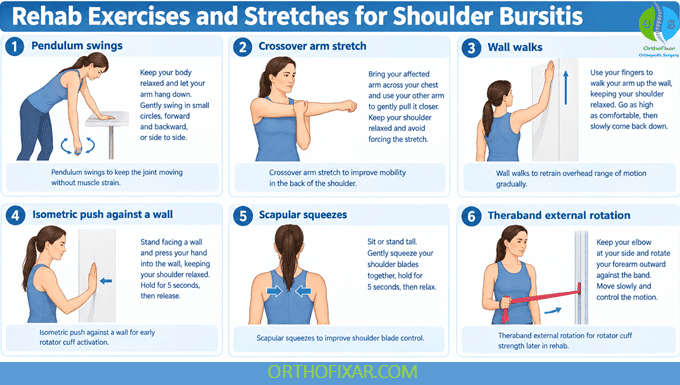
- Pendulum swings to keep the joint moving without muscle strain
- Crossover arm stretch to improve mobility in the back of the shoulder
- Wall walks to retrain overhead range of motion gradually
- Isometric push against a wall for early rotator cuff activation
- Scapular squeezes to improve shoulder blade control
- Theraband external rotation for rotator cuff strength later in rehab
Perform these exercises once or twice daily with small volumes at the beginning. For example, do three sets of 10 gentle pendulum circles and see how your shoulder responds the next day.
How to Prevent Shoulder Bursitis Flare-Ups
Once the pain settles, you want to prevent the problem from returning. Smart movement habits and consistent shoulder care are key for long-term protection.
- Warm up the shoulder properly before lifting or throwing
- Strength train your rotator cuff and shoulder blade muscles twice a week
- Avoid repetitive overhead work without regular breaks
- Maintain good posture, especially during desk work
- Progress sports and workout intensity gradually instead of suddenly overloading
- Keep your shoulder moving daily to prevent stiffness
Individuals who work overhead should also consider modifying their technique. A painter, for example, can use an extension pole or reposition the ladder to reduce shoulder strain. Small changes reduce bursa irritation over a workday significantly.
Conclusion
Shoulder bursitis is a painful but highly treatable condition. Early recognition, practical rest, and a structured rehabilitation approach usually bring relief within a few weeks. If your pain continues, consult a healthcare professional to explore injections, imaging, or further therapy. With consistent care and better movement habits, your shoulder can return to normal daily life and long-term comfort.
Frequently Asked Questions
How long does shoulder bursitis take to heal?
Mild cases may improve in 1 to 2 weeks, while more severe or chronic bursitis can take 4 to 12 weeks. Recovery speed depends on early treatment, consistent rest, and how well you follow a rehabilitation plan. Partial healing does not mean fully healed, so do not return to heavy lifting too quickly.
Can shoulder bursitis go away on its own?
Sometimes it can, especially if the cause was a short-term overload and you rest the shoulder. However, ignoring persistent bursitis can lead to chronic pain or compensatory strain in the neck and arm. It is safer to treat it early instead of waiting to see if it disappears.
Is it okay to sleep on the affected shoulder?
Sleeping directly on the painful shoulder can irritate the bursa and increase nighttime pain. Try sleeping on your back with a pillow under the elbow or on your non-painful side with a support pillow placed in front of your chest. If you roll over at night, keep a small pillow hugged close to your body to preserve a neutral shoulder position.
Does shoulder bursitis hurt more at night?
Yes, many people feel worse at night. When you lie still, inflammation tends to settle in the joint, and the compressed bursa becomes more irritated. Sleeping positions that place direct pressure on the affected side often make the pain more noticeable.
What is the fastest way to relieve shoulder bursitis pain?
The fastest relief usually comes from combining rest, ice, and anti-inflammatory medication as approved by a doctor. Removing the painful activity is essential — you cannot calm an inflamed bursa while continuing the motion that aggravates it. For severe pain, a corticosteroid injection can offer rapid symptom control.
Can I lift weights with shoulder bursitis?
Heavy lifting can worsen bursitis, especially overhead pressing or wide-grip lifting. Light, pain-free exercises without added resistance are generally safe after the initial inflammation settles. If you cannot lift without pain, reduce the weight, lower the range, or stop completely until you see a practitioner.
Is shoulder bursitis the same as frozen shoulder?
No, they are different conditions. Shoulder bursitis involves an inflamed bursa causing sharp pain during movement. Frozen shoulder involves thickening of the joint capsule, causing intense stiffness and an inability to move the shoulder actively or passively. They can coexist in some cases, so an accurate assessment is important.
Should I use a heating pad or ice pack?
Use ice during the acute painful phase to reduce inflammation and pain. Once the severe pain calms down, heat may help relax tight neck and shoulder muscles before stretching. If heat makes your shoulder feel more achy or reactive, return to ice.
What happens if shoulder bursitis is left untreated?
Untreated bursitis can become chronic, stubborn, and more difficult to resolve. You may compensate by using your neck, upper back, or hand differently, which can trigger additional muscle problems. In rare cases, a long-standing inflamed bursa may lead to weakness in the rotator cuff or reduced joint mobility.
When can I return to sports after shoulder bursitis?
You can return when pain has subsided and strength or mobility have returned to near-normal levels. This often takes between 4 and 8 weeks, depending on the sport and the severity of the bursitis. Athletes such as tennis players or swimmers should restart with skill-based drills before moving to full-power or overhead movements.