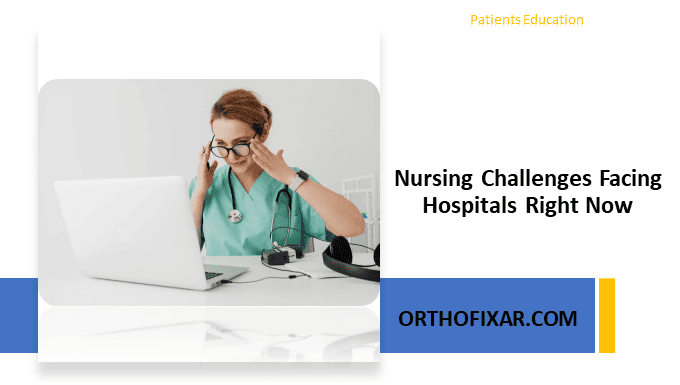
Hospitals rarely run into one problem at a time. A staffing gap on a night shift turns into slower response times, which turns into frustrated patients, which turns into lower scores on the surveys administrators watch closely. Nurses feel all of it first, because they are the people standing in the room when something goes wrong.
Health care keeps changing quickly, with new technology, new treatments, and more people seeking care than the system was built to handle, and the pressure of that change lands squarely on the nursing staff. Understanding what is straining hospitals today makes it easier to see where the fixes have to come from.
Why Small Problems Grow Fast in a Hospital
Anything left unaddressed inside a hospital tends to spread. An infection that starts with one patient can move through an entire floor. A workflow that wastes ten minutes per patient wastes hours by the end of a shift, and those hours come out of the staff. Problems that seem minor also have a way of turning into compliance concerns or accreditation trouble once they have been ignored long enough.
Preparing Nurses to Lead the Response
Hospitals do not improve on their own. Someone has to identify what is failing, weigh the evidence, and decide what changes. Nurses are the ones closest to that information, and the profession has increasingly leaned on nurses with graduate preparation to translate what happens on the floor into decisions that stick.
A Master of Science in Nursing is the master’s level qualification that prepares registered nurses for those expanded clinical and leadership roles, including nurse practitioner practice, nursing education, and administration. Anyone weighing that path should look into the benefits of MSN degree programs that prepare nurses to move into primary care, teaching, and management positions. Coursework in evidence-based practice gives nurses direct experience evaluating a problem before choosing a course of action.
The Provider Shortage and What It Does to Access
There are not enough primary care providers to meet demand, and the gap is widening. Patients in rural areas feel it most sharply, since many of them already travel long distances for routine appointments and lack reliable transportation to get there. When appointments are hard to book, people wait. Conditions that could have been managed early arrive at the hospital as emergencies instead.
The nurse practitioner role has become one of the more effective responses to this. Rural practices have brought nurse practitioners on in growing numbers, expanding the reach of primary care into communities that would otherwise have very little.
Empty Leadership Chairs
Filling clinical roles is only part of the challenge. Hospitals often need months to fill open leadership positions, and in the meantime they rely on temporary staff at considerable expense. Turnover among physicians has continued to climb, which leaves teams without stable direction at exactly the moment when direction matters most. A unit without a settled leader loses continuity. Policies get applied unevenly, new hires get less mentoring, and decisions get delayed until someone with authority is available to make them.
Nurses who combine clinical preparation with business training are well positioned for these roles. They already understand how care is delivered, and they add an understanding of budgets, operations, and organizational strategy on top of it. That combination is difficult to hire for and increasingly difficult to do without.
Not Enough Faculty to Teach the Next Generation
There is a quieter shortage running underneath the clinical one. Nursing schools turn away tens of thousands of qualified applicants each year, and the reasons are not academic. Faculty vacancies, limited clinical placements, budget ceilings, and classroom capacity all restrict how many students a program can accept. Meanwhile, experienced nurses continue to retire, and patients continue to live longer, which means demand keeps rising while the pipeline stays narrow.
Nurse educators teach current and future nurses how to deliver safe, competent care and how to keep improving after graduation. Demand for them is strong, and the work offers something unusual. It advances a nurse’s own career while simultaneously enlarging the profession itself.
Safety, Quality, and How Patients Rate Their Care
Care has to be safe, effective, and high quality, and hospitals are measured on all three. The system has shifted from a provider-centered model toward one that engages patients in managing their own health and changing their own behavior. Nurses have advocated for that approach for a long time, which puts them in a strong position now that it has become the standard.
Patient satisfaction is a real problem area. People generally like their individual providers, but their satisfaction with the overall health care experience keeps sliding, and fewer of them would recommend their hospital to someone else. Advanced practice nurses have consistently earned high satisfaction ratings, with strong results on follow-up, consultation time, assessment, and counseling.
Care Keeps Getting More Complicated
Patients arrive with more conditions at once, more medications to reconcile, and more documentation attached to their history than they did a generation ago. Technology helps with that, but only when nurses know how to use it well.
Information systems now sit at the center of clinical decision-making, and a nurse who understands how to pull the right data at the right moment makes better calls than one who is fighting the software. There are legal considerations too, since patient information carries strict handling requirements that staff need to understand rather than guess at.
Money Pressures and Regulatory Demands
Hospitals are working to cut operating costs while reimbursement models shift underneath them. The move away from paying for volume and toward paying for outcomes rewards facilities that deliver better results at lower cost, and it penalizes those that do not. Publicly reported quality measures now carry bonuses and penalties attached.
Satisfaction scores feed directly into reimbursement. How nurses and doctors communicate with patients, how continuous care is managed, and how the discharge process is handled all factor into what a hospital is paid. That makes the everyday work of nursing a financial matter as well as a clinical one, and it explains why hospitals are investing so heavily in the people doing it.