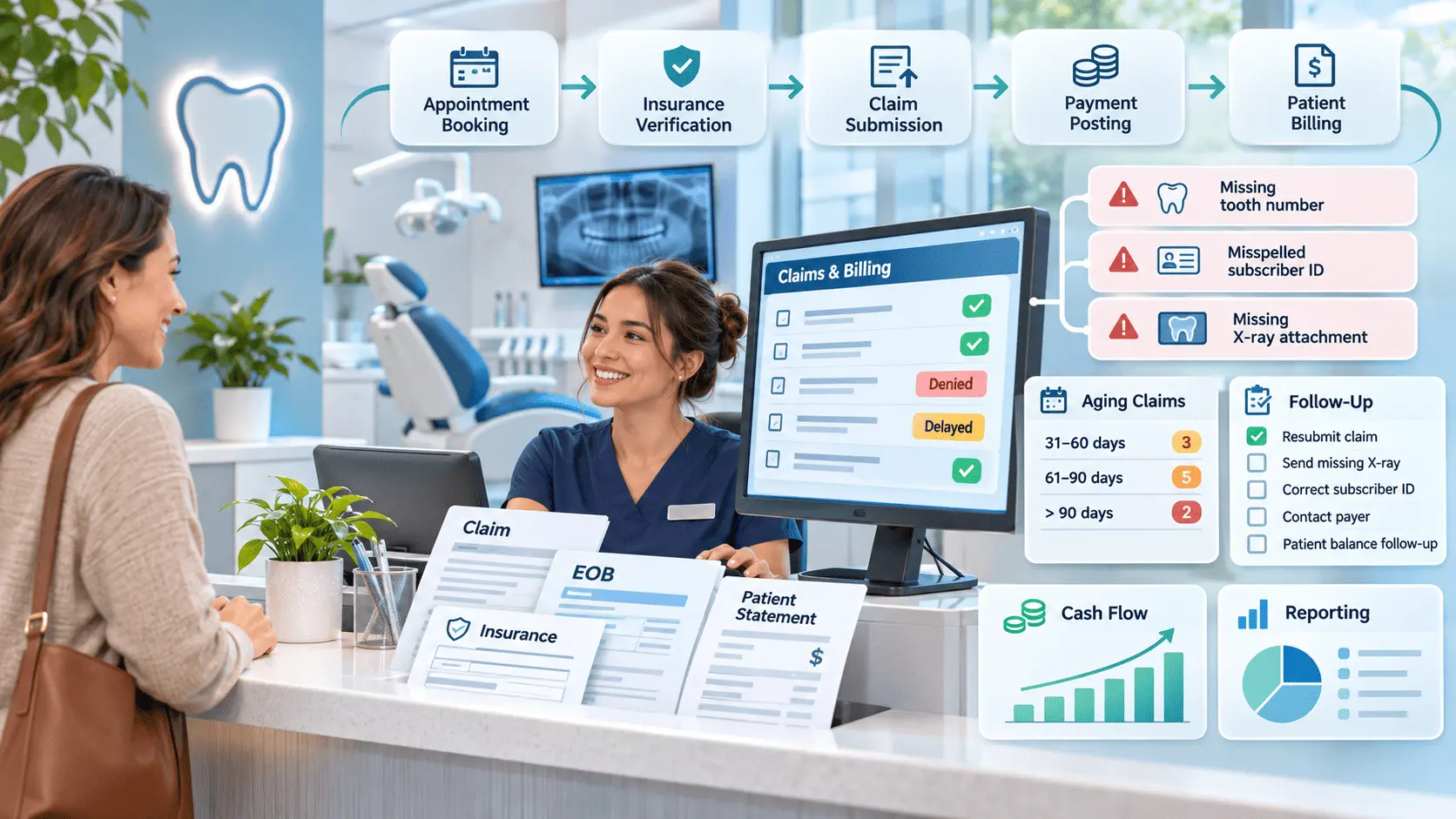
Dental billing may seem simple on the surface. The patient is cleaned, the office submits a claim, and the insurance company pays. Anyone who has worked at a dental front desk knows it rarely goes that way.
It Starts Before the Appointment
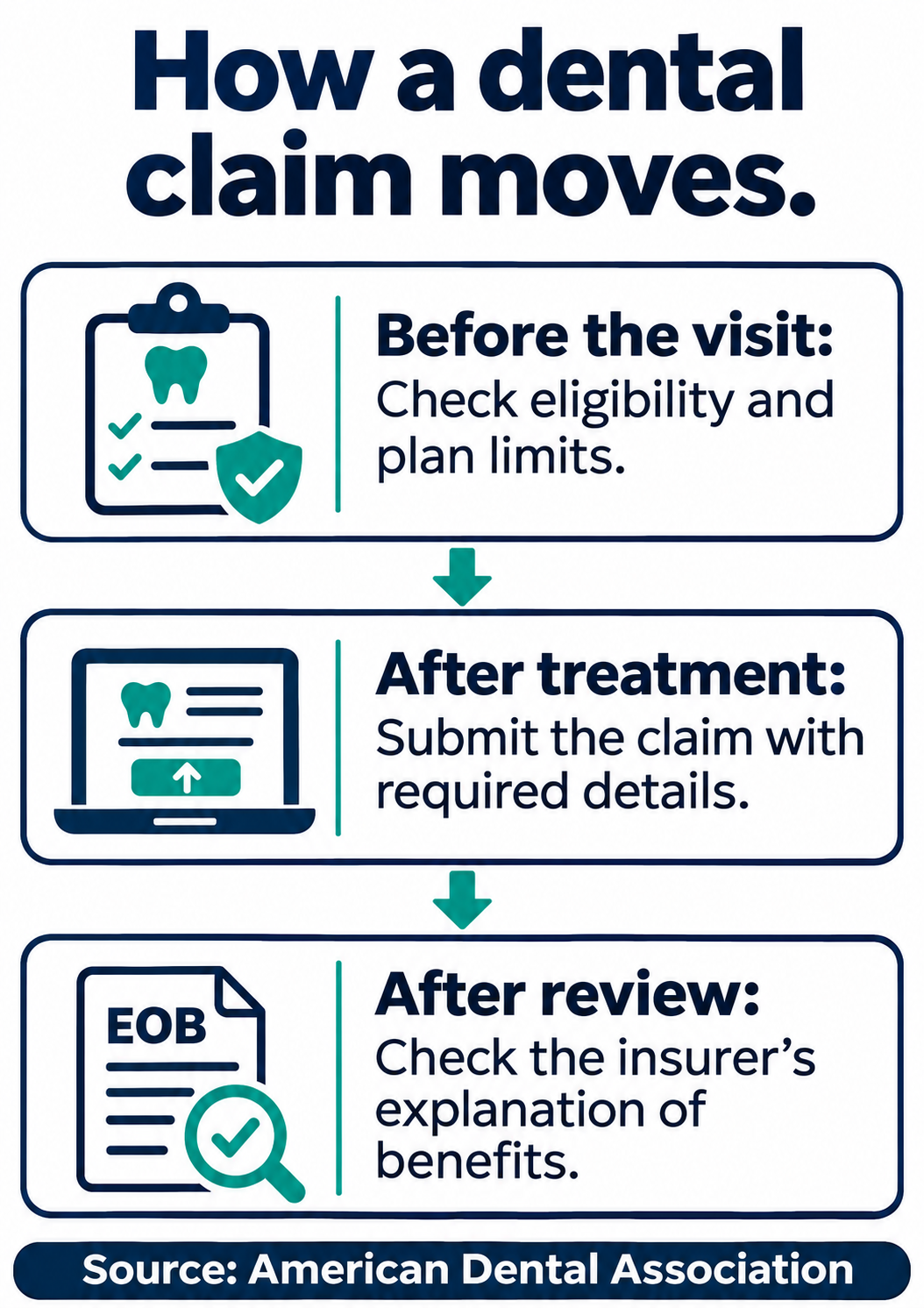
Good dental billing and collection starts when you book them. The patient’s coverage has to be verified: how much is still available under the yearly maximum, and whether the plan has a waiting period or a cap on how often the patient is covered for X-rays.
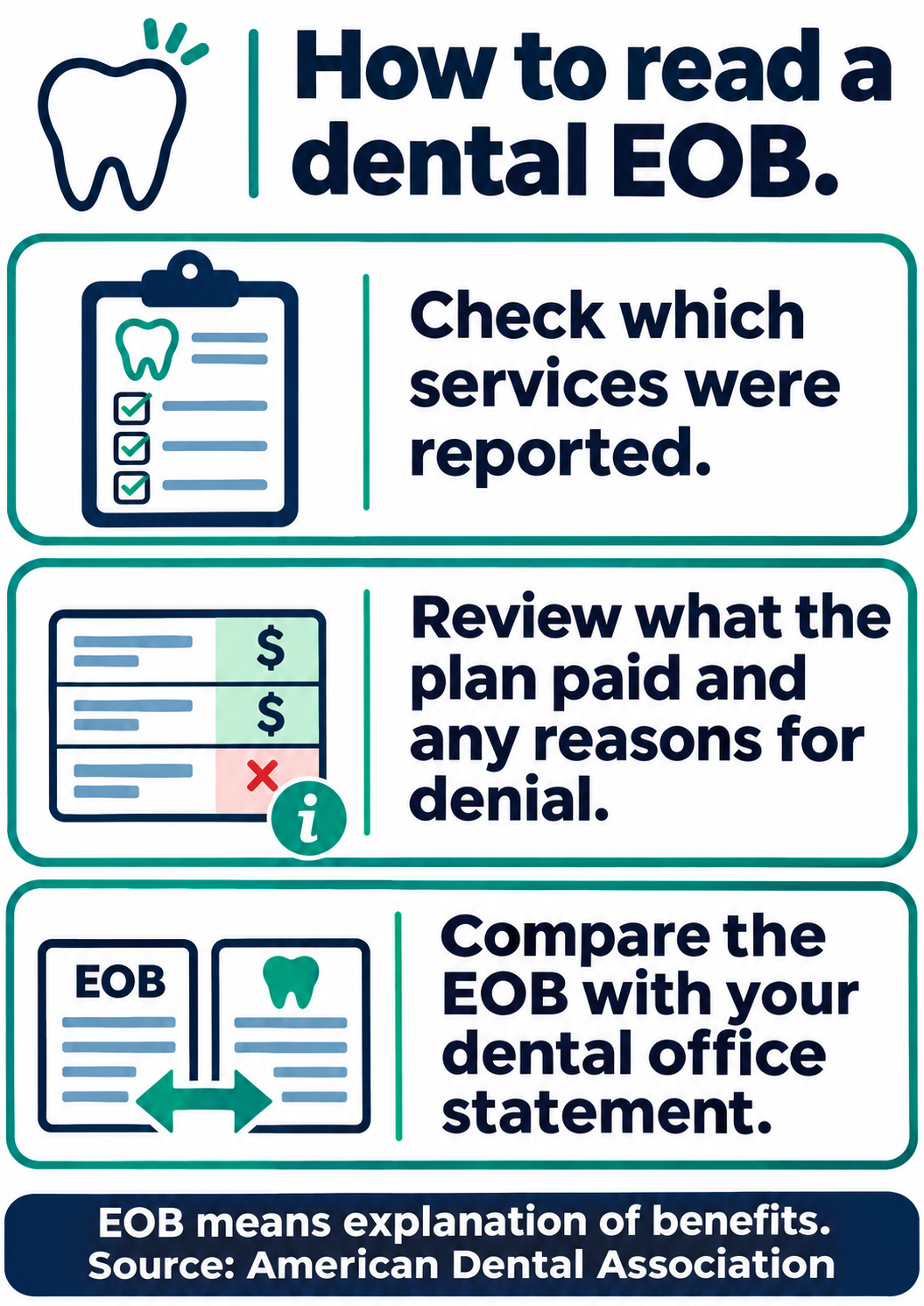
Skip that, and you will learn about the problem when it’s over, when the patient has returned home, and the office is calling for payment for the situation over which they had no control. The procedure is treated, X-rays may be included, a note may be sent from the dentist, and the claim moves out. Upon receipt of the payments, the office posts it, reads the explanation of benefits and bills the patient for what is not covered by the plan.
Where Things Go Wrong
Primarily in the little places, like a tooth number is missing or the subscriber ID is misspelled.
However, the X-ray is never attached to the crown claim, and the payer denies it because of “no documentation”. All of these can be remedied, but someone needs to notice, and somebody at a busy office is answering phones and taking reports of patients.
That’s how unpaid claims end up sitting for 60 or 90 days. Nobody decided to ignore them.
Keeping It In-House
A number of practices have the dental billing handled by them, typically by one person who is familiar with payers and providers. It can be effective, particularly in a smaller-sized business. The downfall of it all is that everything relies on that person. When they are away for a two-week period, or they simply drop out, the claims are added to the stack, and no one is able to see how things are going.
Outsourcing It
One alternative approach is to pass on claims, follow-up, and patient statements to a billing firm. You get people who do not do anything but billing, and they will notice patterns, such as a payer denying the same code as many times as an office would. The trade-off is that you lose some of the connection you have every day, so you wil want a company that communicates clearly and picks up the phone.
Looking at Your Options
Practices that decide to outsource usually talk to a few companies, such as Brightline Dental Billing, Pinnacle Practice Solutions, Cedar Ridge RCM, and Capline Dental Services. The range in size and in speciality and it is important to seek out the advice of each one about how they would deal with your payers. Capline Dental Services assists dental practices with claims, denial follow-up, and reporting, which will reveal the areas where payments are getting “stuck”.
One Last Thing
Don’t wait for a cash flow problem to look at this. An hour with your aging report and last quarter’s denials will show you a lot.