Waking up with elbows that feel locked, heavy, or difficult to bend is a common experience, and it usually has a straightforward explanation. Morning elbow stiffness typically comes from joint fluid settling overnight, mild inflammation, or a prolonged period of inactivity, and in most cases it eases once you start moving. Understanding why the joint stiffens, how to relieve it with practical steps at home, and when it may point to a condition such as osteoarthritis or osteomalacia can help you respond appropriately and protect your joint health over time.
Why Your Elbows Feel Stiff in the Morning
Elbows are hinge joints, and like all synovial joints they rely on synovial fluid to lubricate movement and cushion the cartilage. During sleep, that fluid becomes thicker and circulation slows, so the joint feels stiff until activity gets it moving again. This is a normal physiological response rather than a sign of disease on its own.
Several everyday factors can make morning stiffness worse:
- Sleeping with the elbow bent tightly or tucked under your body for hours.
- Resting the elbow on a hard surface during the day, which irritates the bursa (the fluid-filled sac that reduces friction around the joint).
- Repetitive gripping, lifting, or typing that leaves the tendons inflamed overnight.
- Cold bedroom temperatures, which make muscles and joints feel tighter.
- Long periods without movement, such as a full night’s sleep or a slow morning.
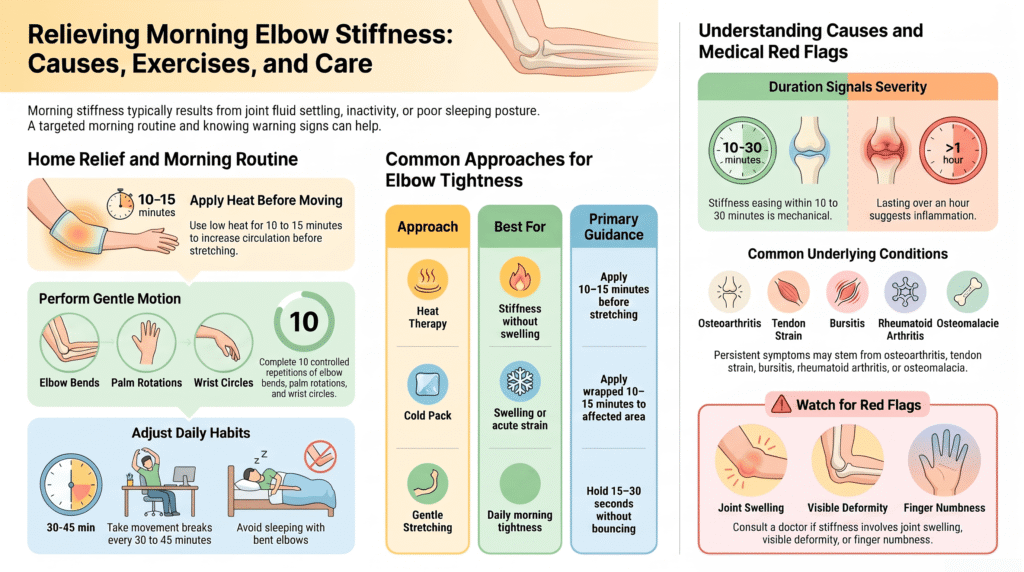
Stiffness that eases within 10 to 30 minutes of moving is usually mechanical and manageable with simple measures. Stiffness that lasts longer, comes with swelling, or keeps returning deserves a closer look from a clinician.
Quick Morning Routine to Loosen a Stiff Elbow
You do not need special equipment to get a stiff elbow moving. A short, gentle routine done before you get out of bed or right after waking can make a noticeable difference and set a good pattern for the day.
Warmth First, Movement Second
Warmth relaxes muscles and improves blood flow, so start there. A warm shower, a heating pad set on low for 10 to 15 minutes, or simply wrapping the elbow in a warm towel can soften the stiffness before you stretch.
- Apply heat for 10 to 15 minutes before any stretching.
- Keep the heating pad on a low setting and never fall asleep with it on.
- If the elbow is swollen or hot to the touch, skip heat and use a cold pack instead.
Gentle Range-of-Motion Exercises
Once the joint feels warmer, move it slowly through its full range. The goal is smooth motion, not force. Stop if you feel sharp pain.
- Bend and straighten: Slowly bend the elbow as far as comfortable, then straighten it fully. Repeat 10 times.
- Palm turns: With the elbow bent at 90 degrees, turn your palm up and then down. Repeat 10 times.
- Wrist circles: Rotate the wrist in slow circles in both directions, 10 times each way.
- Shoulder-assisted reach: Reach the affected arm across your body and gently hold for 10 seconds, then release. Repeat 5 times.
Doing these movements before you check your phone or start your day is easier than it sounds, because they take only a few minutes and can be done seated on the edge of the bed.
Stretches That Help Stiff Elbows
Stretching the muscles that cross the elbow reduces tension and improves flexibility. Hold each stretch for 15 to 30 seconds without bouncing, and breathe steadily throughout.
- Wrist flexor stretch: Extend the arm with the palm up, use the other hand to gently pull the fingers downward, and hold.
- Wrist extensor stretch: Extend the arm with the palm down, gently bend the wrist downward with the other hand, and hold.
- Biceps stretch: Place the palm against a wall behind you with the arm straight, then turn your body away until you feel a stretch in the front of the upper arm.
- Triceps stretch: Raise the arm overhead, bend the elbow so the hand reaches toward the upper back, and use the other hand to gently press the elbow back.
If any stretch causes pain that radiates into the hand or fingers, stop and mention it to a doctor or physiotherapist. Radiating pain can indicate nerve involvement rather than simple muscle tightness.
Everyday Habits That Reduce Morning Stiffness
What you do during the day affects how your elbows feel the next morning. Small, consistent changes to your routine often make a bigger difference than any single exercise.
- Take a short movement break every 30 to 45 minutes if you type or grip tools for long stretches.
- Adjust your chair and desk so your elbows rest near a 90-degree angle rather than hovering or pressing into the desk.
- Use a cushion or elbow pad if you lean on hard surfaces.
- Warm up before heavy lifting, gardening, or sports rather than jumping straight in.
- Keep your bedroom comfortably warm, especially in cooler months.
If you notice that stiffness is worse after a particular activity, such as tennis, painting, or carrying heavy bags, that activity is a clue worth acting on. Tracking symptoms in a simple diary can help you and your clinician identify patterns.
When Stiffness May Signal a Medical Condition
Most morning stiffness is harmless and temporary. However, persistent stiffness can be a sign of an underlying problem that benefits from proper diagnosis and targeted treatment.
Common Causes of Elbow Stiffness
- Osteoarthritis: Wear of the cartilage in the joint, which can cause stiffness, grinding, and pain with use.
- Tennis elbow or golfer’s elbow: Tendon inflammation from repetitive strain, often worse after rest.
- Olecranon bursitis: Swelling of the bursa at the tip of the elbow, sometimes from pressure or infection.
- Rheumatoid arthritis: An autoimmune condition that often causes stiffness in multiple joints, especially after rest.
- Osteomalacia: Softening of the bones caused by poor bone mineralization, usually linked to vitamin D or calcium deficiency, which can cause bone and joint discomfort.
Osteomalacia is less common than osteoarthritis, but it is worth knowing about because it can cause vague bone pain and stiffness that improves slowly. It is diagnosed through blood tests and, in some cases, imaging, and it is treated by correcting the underlying deficiency. If you have widespread bone pain, muscle weakness, or stiffness that does not respond to simple measures, ask your doctor whether bone health testing is appropriate.
Signs You Should See a Doctor
Some symptoms should not be managed at home. Seek medical advice if you notice any of the following:
- Stiffness that lasts more than an hour every morning.
- Swelling, redness, or warmth around the elbow.
- Pain that wakes you from sleep or does not improve with rest.
- Weakness in the hand or numbness in the fingers.
- A visible deformity or a history of injury to the elbow.
In these situations, a doctor can examine the joint, order imaging or blood tests if needed, and recommend treatment such as physiotherapy, medication, or further investigation. Early assessment is particularly useful for inflammatory conditions, where prompt treatment can limit joint damage.
Comparing Relief Options for Stiff Elbows
The table below summarizes common approaches and when each is most useful. It is general guidance, not a substitute for a medical assessment.
| Approach | Best For | How to Use It | Things to Watch |
|---|---|---|---|
| Heat | Stiffness without swelling | 10–15 minutes before stretching | Avoid on hot, swollen joints |
| Cold pack | Swelling or recent strain | 10–15 minutes, wrapped in a cloth | Do not apply directly to skin |
| Gentle stretching | Morning tightness | Hold 15–30 seconds, repeat daily | Stop at sharp pain |
| Activity breaks | Desk work and repetitive tasks | Move every 30–45 minutes | Consistency matters more than duration |
| Physiotherapy | Persistent stiffness or weakness | Guided exercise program | Follow the therapist’s plan |
| Medical review | Red flags or long-lasting symptoms | Book an appointment with a doctor | Bring a symptom diary |
Exercises and Equipment That Can Help
Simple tools can make daily movement easier and more consistent. A light resistance band, a soft grip ball, and a foam roller are inexpensive and useful for elbow and forearm mobility.
- Use a light band for wrist curls and extensions to build forearm strength gradually.
- Squeeze a soft ball for 10 to 15 seconds at a time to activate the muscles around the elbow.
- Massage the forearm muscles gently with your other hand or a foam roller to ease tension.
- Wear a supportive brace during activities that strain the elbow, but avoid wearing it all day so the muscles stay active.
For people with diagnosed conditions such as arthritis, a physiotherapist can tailor exercises to your specific needs. Reliable general information is available from the NHS osteoarthritis guidance and the Arthritis Foundation, which both explain joint care in plain language.
How Long Morning Stiffness Usually Lasts
For most people, stiffness from ordinary inactivity eases within a few minutes of moving. Stiffness that lingers for 30 minutes or more, especially if it happens every day, is a sign to pay attention.
The duration itself is a useful clue. Short-lived stiffness that improves with movement is often mechanical. Prolonged stiffness after rest is more typical of inflammatory conditions, and it is one of the reasons doctors ask how long your morning stiffness lasts. Describing the pattern accurately, including which joints are affected and whether the stiffness improves with activity or rest, helps a clinician reach the right diagnosis.
Keeping Your Joints Healthy Long Term
Bone and joint health depends on more than elbow exercises. Regular weight-bearing activity, adequate calcium and vitamin D, and not smoking all support the skeleton.
- Include weight-bearing exercise such as walking or light strength training most days.
- Get vitamin D from safe sun exposure and, where appropriate, from food or supplements after checking with a doctor.
- Eat calcium-rich foods such as dairy, leafy greens, and fortified alternatives.
- Avoid smoking and limit alcohol, both of which affect bone health.
If you are concerned about bone health, official guidance from the NHS vitamin D information explains recommended intake and who may need supplements. For bone conditions such as osteomalacia, diagnosis and treatment should always come from a qualified clinician.
Conclusion
Morning elbow stiffness is usually a temporary response to inactivity, positioning, or mild strain, and a short routine of warmth, gentle stretching, and regular movement can relieve it. Pay attention to how long stiffness lasts and whether it comes with swelling, weakness, or pain that does not settle. If symptoms persist or you have other warning signs, a medical review can rule out conditions such as osteoarthritis, tendon problems, or osteomalacia and point you toward the right treatment. Building joint-friendly habits into your daily routine supports long-term comfort and function.
Frequently Asked Questions
Why are my elbows stiff every morning?
Overnight inactivity thickens the joint fluid and slows circulation, so elbows feel stiff until you move. Sleeping with the elbow bent or resting on a hard surface can make it worse. If stiffness happens every day and lasts more than 30 minutes, it is worth discussing with a doctor.
How long should morning stiffness last before I worry?
Stiffness that eases within 10 to 30 minutes of moving is usually normal. Stiffness that regularly lasts an hour or more, or that comes with swelling and pain, is a reason to seek medical advice.
Can osteomalacia cause elbow stiffness?
Osteomalacia is a bone-softening condition usually linked to vitamin D or calcium deficiency. It can cause general bone and joint discomfort, including stiffness, but it is diagnosed through medical tests rather than symptoms alone. Speak to a doctor if you have widespread bone pain or muscle weakness.
Should I use heat or ice on a stiff elbow?
Use heat for stiffness without swelling to relax muscles before stretching. Use a cold pack if the elbow is swollen, hot, or recently injured. Never apply either directly to bare skin for long periods.
What stretches are best for stiff elbows?
Wrist flexor and extensor stretches, biceps and triceps stretches, and gentle bend-and-straighten movements are the most useful. Hold each stretch for 15 to 30 seconds and stop if you feel sharp pain.
Can sleeping position cause elbow stiffness?
Yes. Sleeping with the elbow tightly bent or tucked under the body for hours can leave the joint stiff in the morning. Try keeping the arm in a more relaxed, slightly extended position and use a pillow for support.
When should I see a doctor about elbow stiffness?
See a doctor if stiffness lasts more than an hour each morning, is accompanied by swelling, redness, weakness, or numbness, follows an injury, or does not improve with home care.
Are elbow braces useful for morning stiffness?
A brace can support the elbow during activities that strain it, but wearing one constantly may weaken the surrounding muscles. Use it selectively and follow advice from a physiotherapist or doctor.
Can exercise make elbow stiffness worse?
Gentle movement usually helps, but forceful or high-repetition exercise can aggravate an inflamed joint or tendon. Start slowly, increase gradually, and stop if pain increases.
Does diet affect joint and bone health?
Diet supports bone health through calcium and vitamin D, and a balanced intake of both is important for maintaining strong bones. Official guidance from the NHS explains vitamin D recommendations, and a doctor can advise on supplements if you are at risk of deficiency.