When an injury happens, the first question patients often ask is whether to reach for a heating pad or an ice pack. The choice between heat vs ice for injuries is not just a personal preference; it influences inflammation, blood flow, and how quickly your body recovers. Using the wrong therapy can increase swelling or worsen tissue damage. This guide explains when to use each treatment, how to apply them safely, and what the latest clinical thinking recommends for recovery.
The Basic Rule: Ice for Fresh Injuries, Heat for Stiffness
The simplest way to remember the difference is to think about the injury stage. Ice reduces blood flow and inflammation, while heat increases circulation and relaxes tight muscles. In most cases, ice belongs in the first phase after an injury, and heat belongs in the later phase or for chronic pain.
- Use ice within the first 48 hours after an acute injury such as a sprain, strain, or bruise.
- Use heat for ongoing muscle tightness, joint stiffness, or chronic pain conditions.
- Do not switch between heat and ice unless a health professional gives you specific instructions.
If you are still unsure, ask yourself one question: Is the area swollen, hot, or freshly injured? If yes, choose ice. Is the area stiff, tight, or achy without swelling? If yes, choose heat.
Ice Therapy: When and How to Use It
Ice works by narrowing blood vessels in the affected area. This reduces blood flow, which helps limit swelling and numbs nerve endings to dull pain. For any new injury with visible swelling, ice is typically the better option during the first two days.
When to Use Ice
- Immediately after an ankle sprain, wrist twist, or muscle tear
- After a bump, bruise, or superficial impact injury
- For acute flare-ups of joint conditions such as gout
- After high-intensity exercise if you notice new swelling
For example, if you roll your ankle during a morning run and it starts to swell, apply ice as soon as possible rather than heat. Heat would increase blood flow and make the swelling worse in that situation.
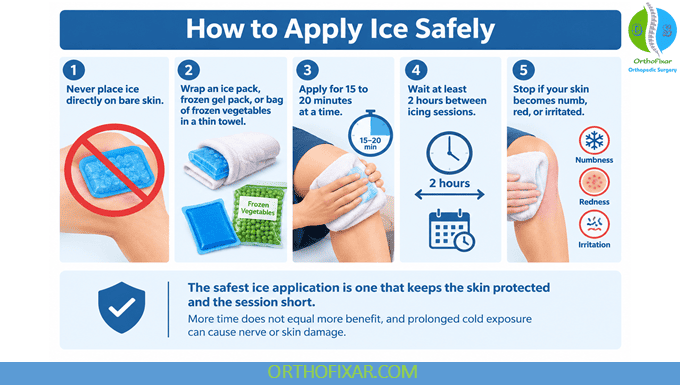
How to Apply Ice Safely
- Never place ice directly on bare skin.
- Wrap an ice pack, frozen gel pack, or bag of frozen vegetables in a thin towel.
- Apply for 15 to 20 minutes at a time.
- Wait at least 2 hours between icing sessions.
- Stop if your skin becomes numb, red, or irritated.
The safest ice application is one that keeps the skin protected and the session short. More time does not equal more benefit, and prolonged cold exposure can cause nerve or skin damage.
Heat Therapy: When and How to Use It
Heat works in the opposite way. It widens blood vessels and increases blood flow to the area, which brings oxygen and nutrients to stiff tissues. Heat is especially helpful for muscle tightness, chronic joint pain, and stiffness that limits movement.
When to Use Heat
- For low back pain that feels stiff, especially in the morning
- For neck tension and tight shoulder muscles
- Before stretching or physical therapy exercises
- For menstrual cramps and mild muscle spasms
- For joint stiffness associated with osteoarthritis
If you wake up with a stiff neck and cannot turn your head fully, a warm compress or warm shower can relax the muscles and improve your range of motion. Heat can make the area feel looser and more comfortable before you move.
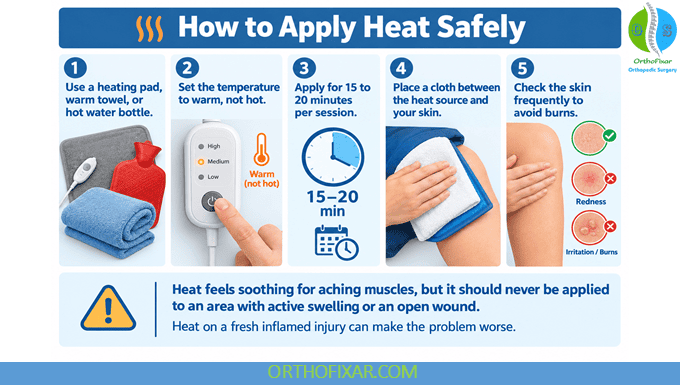
How to Apply Heat Safely
- Use a heating pad, warm towel, or hot water bottle.
- Set the temperature to warm, not hot.
- Apply for 15 to 20 minutes per session.
- Place a cloth between the heat source and your skin.
- Check the skin frequently to avoid burns.
Heat feels soothing for aching muscles, but it should never be applied to an area with active swelling or an open wound. Heat on a fresh inflamed injury can make the problem worse.
The Science Behind Heat vs Ice for Injuries
Understanding the physiology helps you make better choices. When tissue is damaged, the immune system sends fluid and white blood cells to the area, causing swelling. Ice constricts blood vessels and reduces this fluid movement, which limits secondary damage.
After the acute phase, usually after two days, your body shifts into a repair process that relies on blood flow. Heat encourages that blood flow and relaxes tight muscles around the injured site. This is why many clinicians recommend a simple staged approach: ice first, then heat later if stiffness persists.
Recent thinking emphasizes that ice should be used in moderation. Prolonged or excessive icing can theoretically delay inflammation-related healing, so shorter, intermittent sessions are preferred over hour-long applications.
What the Evidence Does and Does Not Support
- Ice is well supported for pain relief and swelling control in the first days after injury.
- Heat is well supported for chronic muscle pain and joint stiffness.
- Neither ice nor heat speeds up healing on its own; they support comfort and symptom management.
- Always follow an active recovery plan rather than relying only on temperature therapy.
Comparison Table: Ice vs Heat at a Glance
| Factor | Ice Therapy | Heat Therapy |
|---|---|---|
| Best time to use | First 48 hours after acute injury | Chronic stiffness or after swelling has decreased |
| Effect on blood flow | Decreases blood flow | Increases blood flow |
| Best for | Sprains, strains, bruises, swelling | Muscle tightness, joint stiffness, chronic pain |
| Application time | 15 to 20 minutes per session | 15 to 20 minutes per session |
| Main risk | Skin damage, frostbite | Burns or increased inflammation |
| Use on open wound | No | No |
This table offers a quick reference for daily decisions. When you are unsure, remember that swelling and heat in the tissue point to ice, while tightness and restricted movement point to heat.
Common Injuries and the Best Therapy Choice
Different injuries respond to temperature therapy in different ways. While the general rules above apply to many situations, it can help to see concrete examples for the injuries patients encounter most.
Sprained Ankle
An ankle sprain is one of the clearest cases for ice. The ligament tissue tears and bleeding under the skin often causes visible swelling. Ice for the first two days helps control that swelling.
Lower Back Pain
Back pain is more complicated. If the pain started after lifting something heavy and feels muscular, a short ice session in the first day can reduce inflammation. After that, heat often provides better relief for muscle spasm and tightness.
Tennis Elbow
Tennis elbow causes inflammation where the forearm tendons attach to the elbow. Ice on the painful spot can reduce local tenderness. If stiffness in the elbow joint is the main complaint, gentle heat may feel better before stretching.
Osteoarthritis Knee Pain
Patients with osteoarthritis often report stiff knees in the morning. Heat before activity reduces stiffness. Ice after longer walking or exercise can help if the knee becomes swollen or hot later in the day.
Muscle Soreness After Workout
Delayed muscle soreness that appears one to two days after exercise is not the same as an acute injury. Heat can be soothing for generalized soreness. Ice may help if specific joints feel inflamed.
Safety Tips and Mistakes to Avoid
Using heat or ice the wrong way can cause harm. Follow these practical safety tips to get the benefit without the risk.
- Never leave ice on for longer than 20 minutes at a time.
- Never use heat on an open wound, after a recent surgery, or over an area with reduced sensation.
- Avoid falling asleep with a heating pad, which can cause severe burns.
- Do not use ice if you have poor circulation, diabetes-related nerve damage, or Raynaud syndrome.
- Do not apply heat to the abdomen during pregnancy unless your doctor approves.
- Always check skin color before and after therapy; red or blotchy skin can mean the tissue is reacting poorly.
- If symptoms get worse after using heat or ice, stop and contact a health professional.
If you have heart conditions, vascular issues, or any wound, check with a doctor before starting temperature therapy.
When to Skip Heat and Ice Entirely
Some red flags require professional evaluation rather than self-treatment. Numbness, inability to bear weight, severe deformity, or worsening pain despite home care should not be managed with temperature therapy alone.
Conclusion
Both heat and ice are useful tools for managing discomfort after an injury, but they work best at different stages. The simple rule remains relevant: ice for fresh swelling in the first couple of days, and heat for ongoing stiffness and muscle tightness afterward. Understanding the difference between heat vs ice for injuries helps you treat yourself more confidently and avoid setbacks.
Listen to your body and adjust accordingly. If you are ever uncertain about the right approach, talk to a doctor or physical therapist who can help you choose the most appropriate treatment for your specific condition.
Frequently Asked Questions
Should I use heat or ice for a sprained ankle?
Use ice on a freshly sprained ankle, especially within the first 48 hours. Ice reduces swelling and numbs pain. After the swelling goes down and the area feels stable, gentle heat can help with lingering stiffness.
Can I use ice after heat therapy?
Yes, in some cases, alternating heat and ice is useful, particularly for chronic pain that also has mild inflammation. Start with heat to relax the tissue, then apply ice briefly if swelling appears. Some physical therapists call this contrast therapy, but it should only be done to specific protocol.
How long should I ice an injury?
Apply ice for 15 to 20 minutes per session and wait at least 2 hours between sessions. Longer exposure increases the risk of skin and nerve damage.
Is heat safe for a fresh injury?
No. Heat increases blood flow, which can worsen swelling and inflammation in a freshly injured area. Wait until the acute swelling phase has passed before using heat.
When is the best time to switch from ice to heat?
Generally after the first 48 hours, once swelling has decreased. You can also switch when pain no longer feels hot and is replaced by stiffness or muscle tightness.
Can heat make inflammation worse?
Yes, heat can worsen inflammation if you apply it to an area that is already swollen, red, or hot. Heat increases circulation and can draw more fluid into an inflamed site.
What should I do for chronic back pain: heat or ice?
For chronic back pain that feels stiff and achy, heat is usually the better choice. It relaxes muscle spasm and improves mobility. Ice can help if you experience a sudden flare-up with tenderness and swelling.
Can I sleep with a heating pad on?
No. Falling asleep with a heating pad can cause burns. Use heat for 15 to 20 minutes while awake, and remove it before you sleep.
How do I make a cold compress at home if I don’t have an ice pack?
Wrap a bag of frozen peas or corn in a clean, thin towel. You can also make a cold compress with ice cubes and water in a resealable plastic bag, wrapped in a cloth.
Does ice delay healing?
Current evidence suggests that excessive icing may reduce the inflammatory response that initiates tissue repair. In moderation, ice is safe and effective for pain and swelling. Avoid long sessions and repeated heavy use over many days to give the healing process a chance to do its work.