Bunions are more than just a bump on the side of your foot. They are a progressive bone deformity that changes the structure of your foot, leading to pain, swelling, and difficulty walking. This article covers the early symptoms, how to choose the right footwear, non-surgical treatments, and when surgery becomes the best option to restore your foot health.
What Is a Bunion?
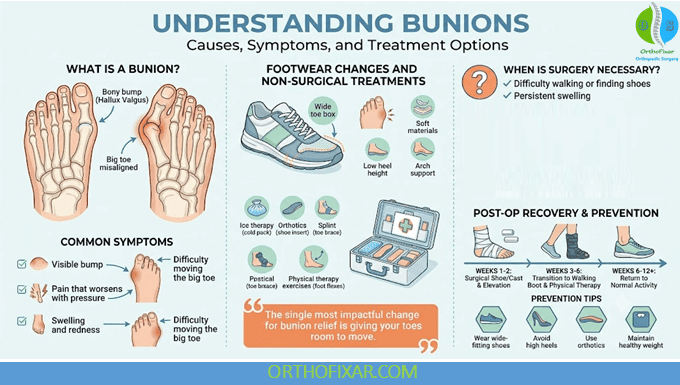
A bunion, medically known as hallux valgus, is a bony bump that forms at the joint connecting your big toe to your foot. Over time, the big toe begins to lean toward the second toe, forcing the joint to stick out. This misalignment causes the surrounding tissues to become inflamed and painful.
Bunions develop gradually, often due to a combination of genetic foot structure and external pressure from tight or narrow shoes. Women are more prone to bunions because of footwear choices, but men and younger individuals can also develop them.
Common Symptoms of a Bunion
Recognizing the symptoms early can help you take action before the condition worsens. Common signs include:
- A visible bump on the side of the big toe joint
- Persistent or intermittent pain that worsens with pressure
- Swelling, redness, or warmth around the joint
- Numbness or a burning sensation in the big toe
- Difficulty moving the big toe normally
- Corns or calluses where the toes rub together
- Changes in gait or balance due to discomfort
If you notice any of these symptoms, especially pain that limits your daily activities, it is wise to consult a podiatrist for a proper evaluation.
How Footwear Changes Help
One of the most effective non-surgical treatments for bunions is changing your shoes. The right shoes can relieve pressure, reduce pain, and slow the progression of the deformity.
Shoe Features That Reduce Bunion Pain
- Wide toe box: Allows your toes to spread naturally without squeezing
- Soft, flexible materials: Reduces friction over the bunion bump
- Low heel height: Keeps the foot in a more neutral position
- Good arch support: Improves overall foot alignment
- Removable insoles: Allows you to add custom orthotics if needed
For example, switching from pointed dress shoes to a wide-width walking shoe or a stretchable sneaker can dramatically reduce daily discomfort. Many people find relief by wearing bunion pads or toe spacers inside their shoes to keep the toes aligned.
“The single most impactful change for bunion relief is giving your toes room to move. A wide toe box is not a luxury—it is a necessity for joint health.”
Non-Surgical Treatment Options
Before considering surgery, most patients benefit from conservative treatments that manage symptoms and improve function.
Common Non-Surgical Treatments
- Ice therapy: Apply an ice pack wrapped in a cloth for 15 minutes to reduce swelling
- Pain relief: Over-the-counter anti-inflammatory medications like ibuprofen
- Padding and taping: Bunion pads or medical tape can realign the toe temporarily
- Physical therapy: Stretching and strengthening exercises for the foot and ankle
- Custom orthotics: Prescription shoe inserts that correct foot mechanics
- Night splints: Devices worn during sleep to hold the toe in a straight position
These treatments do not reverse the bunion, but they can keep you active and pain-free for many years. Consistency is key—wearing supportive shoes daily and performing foot exercises regularly yields the best outcomes.
When Is Bunion Surgery Necessary?
Surgery becomes a realistic option when conservative measures no longer control the pain or when the deformity interferes with daily life. You may be a candidate for surgery if:
- Pain is constant, even when resting or wearing appropriate shoes
- Walking, standing, or exercising is significantly limited
- Other toes become deformed or develop painful corns
- Swelling and inflammation persist despite treatment
- You have difficulty finding any shoes that fit comfortably
Surgery is not for cosmetic reasons. It is a functional procedure aimed at correcting the bone alignment, relieving pain, and restoring normal foot mechanics.
“Bunion surgery is about reclaiming your ability to move without pain. If your bunion stops you from doing the things you love, it is time to explore surgical options.”
Types of Bunion Surgery
There are several surgical techniques, and your surgeon will choose the one best suited to your bunion severity, age, and activity level.
Common Surgical Procedures
| Procedure Name | What It Does | Recovery Time |
|---|---|---|
| Osteotomy | Cutting and realigning the bone in the big toe | 6 to 8 weeks in a boot or cast |
| Lapidus procedure | Fusing the joint at the base of the first metatarsal | 8 to 12 weeks, limited weight-bearing |
| Exostectomy | Removing the bump without realigning the bone (less common) | 4 to 6 weeks |
| Minimally invasive surgery | Small incisions, special instruments to correct the deformity | 4 to 6 weeks, faster recovery |
Minimally invasive techniques have become more popular because they involve smaller incisions, less scarring, and a quicker return to normal activities. However, not every bunion is suitable for this approach.
What to Expect During Recovery
Recovery from bunion surgery varies by procedure, but there are common stages you can expect.
- First two weeks: You will wear a surgical shoe or cast. Keep your foot elevated to control swelling. You cannot drive or put full weight on the foot.
- Weeks three to six: You may transition to a walking boot. Physical therapy often begins to restore range of motion and strength.
- Weeks six to twelve: Most patients can return to regular shoes and light activities. Stiffness and some swelling may persist.
- Three to six months: Full recovery for most daily activities, though high-impact sports may take longer.
Following your surgeon’s post-operative instructions is critical. Ignoring weight-bearing restrictions or returning to activity too early can delay healing or cause complications.
Preventing Bunions from Worsening
Even after treatment, bunions can progress if you do not maintain good foot habits. Prevention strategies include:
- Wearing shoes that fit properly, with enough room for your toes
- Avoiding high heels or pointed toes for long periods
- Using orthotics or arch supports as recommended
- Performing toe stretches and strengthening exercises daily
- Maintaining a healthy weight to reduce pressure on your feet
Small daily habits make a big difference over time. Listening to your feet and adjusting your footwear early can stop a mild bunion from becoming a severe one.
Conclusion
Bunions are a manageable condition if you address them early. Start with footwear changes and conservative treatments to control symptoms. If pain persists and limits your life, modern surgical techniques offer reliable relief. Work closely with a foot specialist to create a plan that fits your foot structure, lifestyle, and goals. Your feet carry you every day—they deserve attention and care.
Frequently Asked Questions (FAQ)
1. What is the main cause of bunions?
Bunions are primarily caused by genetic foot structure combined with external pressure from narrow or tight shoes. Heredity plays a strong role—if your parents had bunions, you are more likely to develop them.
2. Can bunions go away on their own?
No, bunions do not disappear without treatment. The bone deformity is permanent unless corrected surgically. However, symptoms can be managed with proper footwear and conservative care.
3. Are bunions only caused by wearing high heels?
High heels and pointed shoes are a major contributor, but they are not the only cause. Genetics, foot mechanics, and certain medical conditions like arthritis also increase your risk.
4. How do I measure my foot width at home?
Trace your foot on a piece of paper while standing. Measure the widest part of the tracing. Compare this measurement to a shoe size width chart to find the correct width category.
5. What is the best shoe brand for bunions?
Brands that offer wide toe boxes and soft materials are ideal. Examples include New Balance, Hoka, Brooks, Birkenstock, and certain models from Asics and Skechers. Always try shoes on and walk in them before purchasing.
6. How long does bunion surgery take?
Most bunion surgeries take between 45 minutes and 90 minutes, depending on the complexity. Minimally invasive procedures may be slightly shorter.
7. Will I need a cast after bunion surgery?
Many surgeons use a surgical shoe or a walking boot instead of a full cast. The type of immobilization depends on the procedure and your surgeon’s preference.
8. Can bunions come back after surgery?
Recurrence is possible, especially if you return to wearing poorly fitting shoes or if the underlying foot mechanics are not addressed. Following post-surgery guidelines reduces the risk significantly.
9. Is bunion surgery very painful?
Pain levels vary. Most patients report moderate pain for the first few days, which is well-controlled with prescribed medication. After the first week, discomfort typically decreases rapidly.
10. When can I return to running after bunion surgery?
Most surgeons recommend waiting at least 8 to 12 weeks before running. Some patients need up to 16 weeks. Always get clearance from your surgeon before resuming high-impact activities.