Gentle daily movement can genuinely ease stiff, achy joints, but the type of movement matters more than the amount. For most older adults, a short routine of targeted, low-impact exercises done consistently is more effective than occasional intense workouts. This guide covers six practical daily moves for senior joint pain, explains how to perform them safely, and outlines what to watch for when pain does not behave like ordinary stiffness. It also addresses osteomalacia, a bone-softening condition that can cause aching pain and requires medical attention rather than exercise alone.
Why Daily Movement Helps Senior Joint Pain
Joints are designed to move. Cartilage, the smooth tissue that cushions the ends of bones, has no blood supply of its own and depends on the circulation of joint fluid for nourishment. Gentle, regular motion keeps that fluid moving and reduces the morning stiffness many older adults experience.
Muscles are equally important. Stronger muscles around a joint take load off the joint itself, which is why a hip or knee that feels fragile often feels steadier after several weeks of consistent strengthening. Movement also supports balance, and better balance means fewer falls, a major concern for anyone with painful joints.
The challenge is that the wrong movement, or too much too soon, can trigger a pain flare. The six moves below are selected for being low-impact, easy to scale, and safe for most people to attempt gently.
The Six Daily Moves, Explained
Perform these in a comfortable order, ideally when joints feel warmest, often mid-morning or after a warm shower. Begin with small ranges of motion and progress only when a move feels easy.
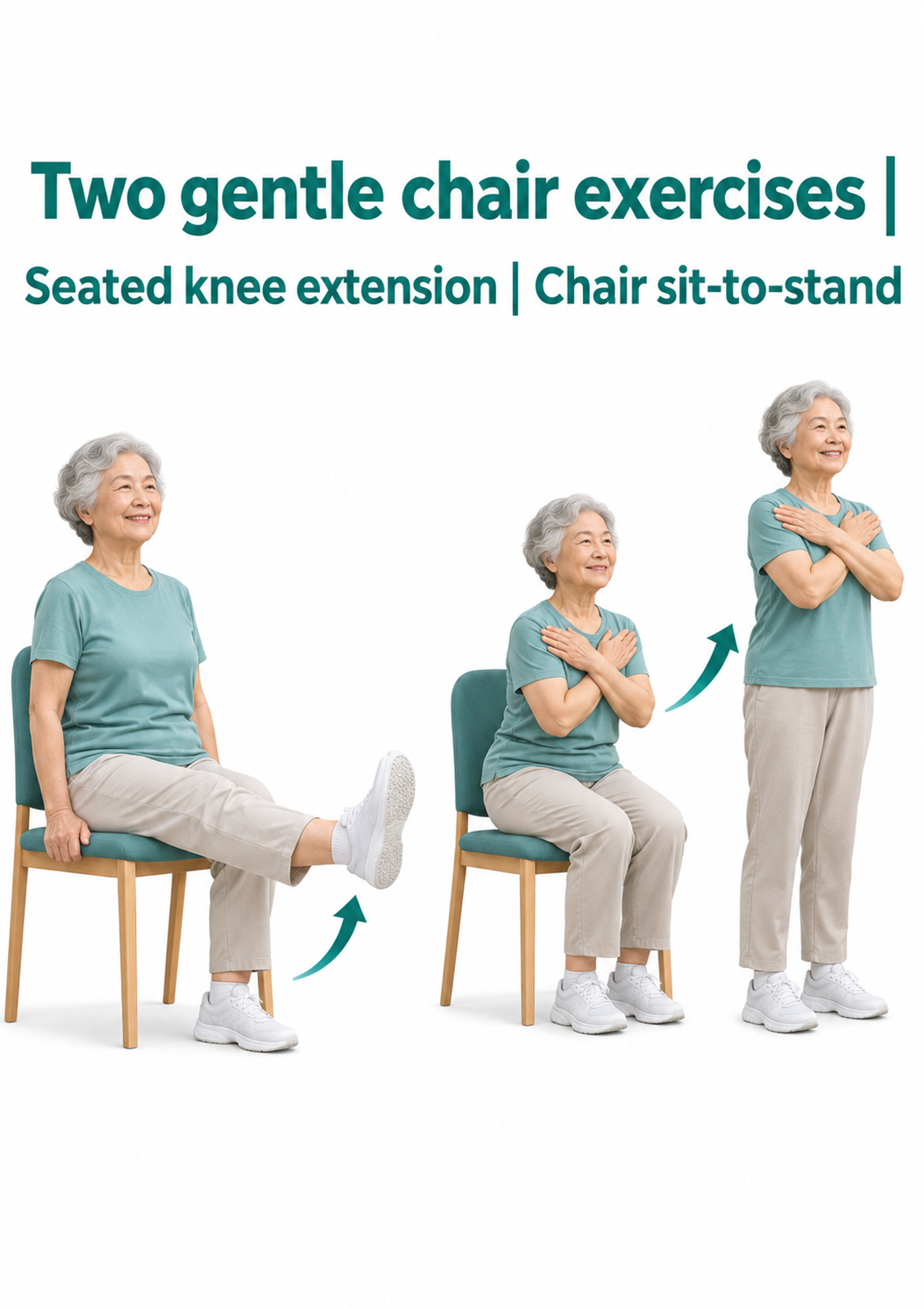
1. Seated Knee Extensions
Sit tall in a firm chair with feet flat on the floor. Slowly straighten one leg until it is as straight as comfortable, hold for a few seconds, then lower it slowly. Repeat several times per leg.
- Strengthens the quadriceps, the muscles at the front of the thigh that support the knee.
- Keeps the knee joint moving without bearing full body weight.
- Can be done while watching television or waiting for a kettle to boil.
- Stop short of full straightening if it causes sharp pain behind the knee.
2. Ankle Circles and Pumps
Lift one foot slightly off the floor and draw slow circles with the toes, several in each direction. Then switch to pumping the foot up and down. Repeat with the other foot.
- Improves circulation in the lower legs, which matters for anyone who sits for long periods.
- Helps reduce ankle and foot stiffness first thing in the morning.
- Useful before standing up after a long sit.
- Keep the circles small if the ankle feels tender.
3. Chair-Assisted Sit-to-Stand
Sit near the front of a sturdy chair with feet hip-width apart. Lean slightly forward and push through the feet to stand, using armrests or a table edge for support if needed. Sit back down slowly and with control.
- Trains the hip and knee muscles used in everyday activities such as getting out of a car.
- Builds confidence for standing up without help.
- Start with a few repetitions and add one or two each week.
- Use a chair that will not slide or tip.
4. Gentle Shoulder Rolls and Arm Circles
Roll the shoulders slowly backward several times, then forward. Follow with small arm circles, gradually widening them only if comfortable. Keep the neck relaxed throughout.
- Eases stiffness in the shoulders and upper back.
- Helps counter the rounded posture that develops from time at a desk or in an armchair.
- Keep circles small if the shoulder has a history of injury.
- Pause and rest if you feel pinching rather than a gentle stretch.
5. Supported Marching in Place
Stand beside a counter or sturdy chair and hold on lightly. Lift one knee a little, lower it, then the other, as if marching slowly. Keep the movement small and controlled.
- Warms up the hips and improves coordination.
- Supports balance practice while holding on.
- Works well as a warm-up before a short walk.
- Reduce the lift height if the hip or knee complains.
6. Standing Calf Raises
Holding a counter for support, rise slowly onto the balls of the feet, then lower with control. Repeat a handful of times, resting as needed.
- Strengthens the calves and ankles, which support walking and balance.
- Helps with the push-off phase of each step.
- Keep the movement slow rather than bouncy.
- Do fewer repetitions if the Achilles tendon feels tight or sore.
A Simple Daily Routine You Can Follow
Consistency beats intensity. A short routine done most days is more useful than a long session once a week. The plan below is a starting point, not a prescription; adjust it to what your body tolerates.
| Move | Suggested Starting Amount | Main Benefit | Watch For |
|---|---|---|---|
| Seated knee extensions | 5–8 per leg | Knee support and circulation | Sharp pain behind the knee |
| Ankle circles and pumps | 5–8 circles each direction per foot | Ankle and foot mobility | Tenderness at the ankle |
| Chair-assisted sit-to-stand | 3–5 repetitions | Hip and knee strength | Knee pain when standing |
| Shoulder rolls and arm circles | 5–8 each direction | Upper body stiffness relief | Pinching in the shoulder |
| Supported marching in place | 10–20 slow steps | Hip mobility and balance | Dizziness or unsteadiness |
| Standing calf raises | 5–10 repetitions | Calf and ankle strength | Achilles tightness |
Do the routine once daily at first. If it feels manageable after a week or two, add a second short session or a few more repetitions. Warmth helps: a warm shower or a few minutes of walking beforehand can make the moves feel easier.
How to Move Safely When Joints Hurt
Pain is information, not an enemy. The goal is to find the edge of comfortable movement and work there, rather than pushing through sharp pain or avoiding movement entirely.
- Warm up for a minute or two before starting; walking around the room is enough.
- Move slowly and breathe normally; holding your breath increases stiffness.
- Stop if pain is sharp, sudden, or clearly worse than your usual ache.
- Use a chair, counter, or wall for support whenever balance feels uncertain.
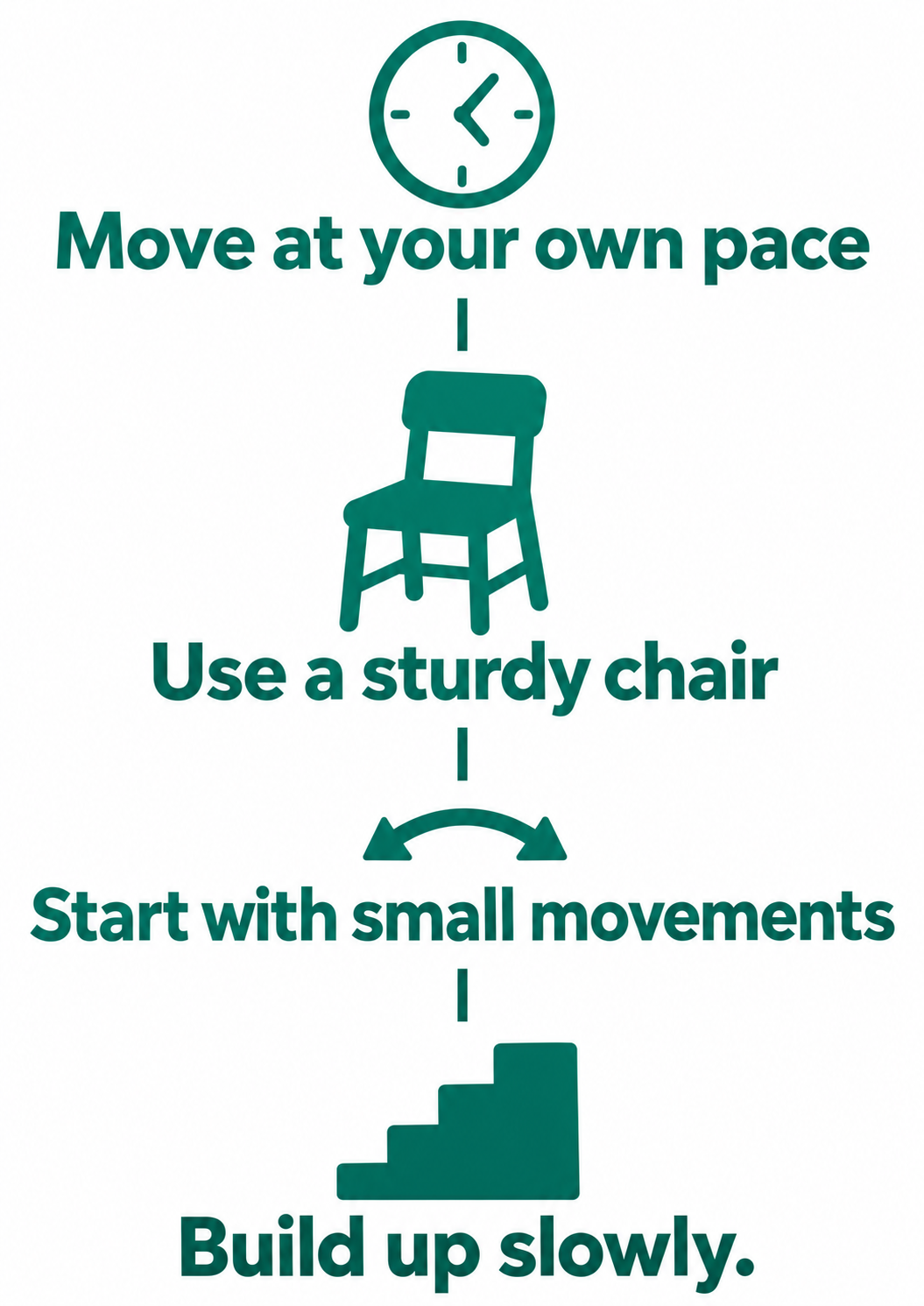
- Keep sessions short at first and build gradually over weeks, not days.
- Avoid bouncing or jerking movements, which stress joints more than slow ones.
- Rest a sore joint for a day or two if it swells, then resume gently.
- Wear supportive, non-slip footwear rather than loose slippers.
Some soreness after new movement is normal and usually settles within a day or two. Pain that worsens steadily, or that keeps you awake at night, is a reason to consult a clinician rather than to push harder.
When Joint Pain Is Not Just Wear and Tear
Most joint pain in older adults stems from osteoarthritis or general stiffness, but not all of it does. Aching bone pain, muscle weakness, and a general sense of heaviness can sometimes point to something else, including osteomalacia, a condition in which bones soften because of a lack of vitamin D or problems with how the body uses it.
Osteomalacia can cause dull, aching bone pain, muscle weakness, and difficulty walking or climbing stairs. Because these symptoms overlap with ordinary joint complaints, they are easy to dismiss. It is diagnosed by a clinician, usually with blood tests and sometimes imaging, and treatment typically involves correcting the underlying vitamin D or mineral deficiency under medical supervision.
Vitamin D is made in the skin in response to sunlight and is found in some foods, but many people do not get enough from either source. Official guidance on vitamin D and bone health is available from the NHS vitamin D information page, and general information on bone conditions is available from the National Institute of Arthritis and Musculoskeletal and Skin Diseases.
Exercise does not fix osteomalacia and should not be used as a substitute for medical assessment. If bone pain is widespread, worsening, or accompanied by muscle weakness, see a doctor before assuming it is arthritis.
Everyday Habits That Support Joint Comfort
Daily moves work best when the rest of the day supports them. Small adjustments to routine often make a noticeable difference within a few weeks.
- Break up long periods of sitting; stand and move for a minute every half hour or so.
- Keep a pair of supportive shoes by the door for short errands.
- Use heat before movement and cold packs after activity if a joint is swollen.
- Spread heavier household tasks across the week rather than doing them all at once.
- Keep frequently used items within easy reach to reduce bending and stretching.
- Stay hydrated, since dehydration can worsen muscle cramps and fatigue.
- Ask about a physiotherapy referral if pain limits daily activities.
Building a Routine That Lasts
Habits stick when they are attached to something you already do. Pair the six moves with a regular part of your day, such as after breakfast, before the evening news, or right after a morning walk.
- Keep a simple checklist or calendar and tick off each day you complete the routine.
- Start with three moves if six feels like too much, and add the rest later.
- Invite a friend or family member to do the routine with you for accountability.
- Expect good days and bad days; on a bad day, do fewer repetitions rather than none.
- Review progress every few weeks and adjust the amount as strength improves.
Conclusion
Six simple moves, seated knee extensions, ankle circles, chair-assisted sit-to-stand, shoulder rolls, supported marching, and calf raises, cover the main areas where older adults lose mobility. Done gently and consistently, they support strength, balance, and joint comfort without straining painful joints. Equally important is knowing when pain is not ordinary stiffness: persistent bone aching, muscle weakness, or pain that keeps getting worse deserves a medical review, since conditions such as osteomalacia need proper diagnosis and treatment. Start small, move within comfort, and consult a clinician when something feels wrong.
Frequently Asked Questions
How often should I do these joint moves?
Most people do best with a short session once a day, most days of the week. If the routine feels easy after a couple of weeks, you can add a second short session or increase repetitions slightly. Consistency matters more than duration.
Is it normal to feel sore after these exercises?
Mild muscle soreness for a day or two after starting something new is common and usually settles. Sharp pain during a movement, swelling in a joint, or soreness that gets worse each day is not normal and should prompt a check with a clinician.
Can I do these moves if I have osteoarthritis?
Gentle, low-impact movement is generally encouraged for people with osteoarthritis, but the right amount varies from person to person. A physiotherapist or doctor can advise on which moves suit your joints and how much to do.
Should I exercise if my joints are swollen?
Rest the swollen joint for a day or two and use cold packs if helpful, then resume gentle movement as the swelling settles. Swelling that persists, or that comes with warmth, redness, or fever, needs medical assessment rather than more exercise.
What is osteomalacia, and how is it different from arthritis?
Osteomalacia is a condition in which bones soften, usually because of a vitamin D or mineral deficiency. It causes aching bone pain and muscle weakness, while arthritis affects the joints themselves. The two can feel similar, so diagnosis by a clinician matters.
Can joint pain in older adults be caused by low vitamin D?
Low vitamin D can contribute to bone and muscle pain through conditions such as osteomalacia, but not all joint pain is caused by it. A blood test ordered by a doctor is the reliable way to find out whether vitamin D levels are low.
Do I need equipment for these exercises?
No special equipment is needed. A sturdy chair, a counter or wall for support, and supportive shoes are enough. A small cushion under the back or feet can add comfort if needed.
How long before I notice a difference?
Many people notice less morning stiffness within a few weeks of consistent practice, while strength gains typically take longer. Progress varies with the individual, so focus on steady, comfortable improvement rather than a fixed timeline.
When should I see a doctor about joint pain?
See a doctor if pain is severe, keeps getting worse, wakes you at night, comes with swelling or redness, or limits your ability to walk or care for yourself. Widespread bone pain with muscle weakness also warrants a prompt appointment.
Can I do these moves if I use a walking aid?
Many of the moves can be adapted for people who use a cane or walker, especially the seated and supported ones. Ask a physiotherapist to check your technique so the routine matches your balance and mobility.