Most falls among older adults happen at home, and many can be prevented with practical, low-cost changes. The connection to osteomalacia matters: when bones are soft or weak because of low vitamin D or other bone-health problems, a minor trip or slip can cause a fracture that changes a person’s life. This guide covers five home adjustments that reduce fall risk, explains how bone health affects the stakes, and shows how to make each change without turning the house upside down.
Why Home Adjustments Matter So Much for Older Adults
Falls are a leading cause of injury among older adults, and the home is where most of them occur. Bathrooms, stairs, bedrooms, and cluttered hallways account for a large share of incidents. A grab bar or a brighter bulb costs little, yet it can prevent a fall that leads to a hospital stay and a long recovery.
The stakes are higher for people with weak bones. Osteomalacia is a condition in which bones soften, usually because of vitamin D deficiency, low calcium or phosphate, or problems absorbing nutrients. Soft bones bend and break more easily than healthy ones, so a fall that might only bruise a stronger person can cause a fracture in someone with osteomalacia. The condition can also cause bone pain and muscle weakness, which may affect balance and mobility and make a fall more likely in the first place.
That is why home safety and bone health belong in the same conversation. Adjusting the environment reduces the chance of falling; treating the underlying bone condition reduces the damage if a fall happens anyway. The National Institute of Arthritis and Musculoskeletal and Skin Diseases overview of osteomalacia explains the causes and symptoms in plain language if you want to understand the condition better.
Adjustment 1: Make Bathrooms Safer
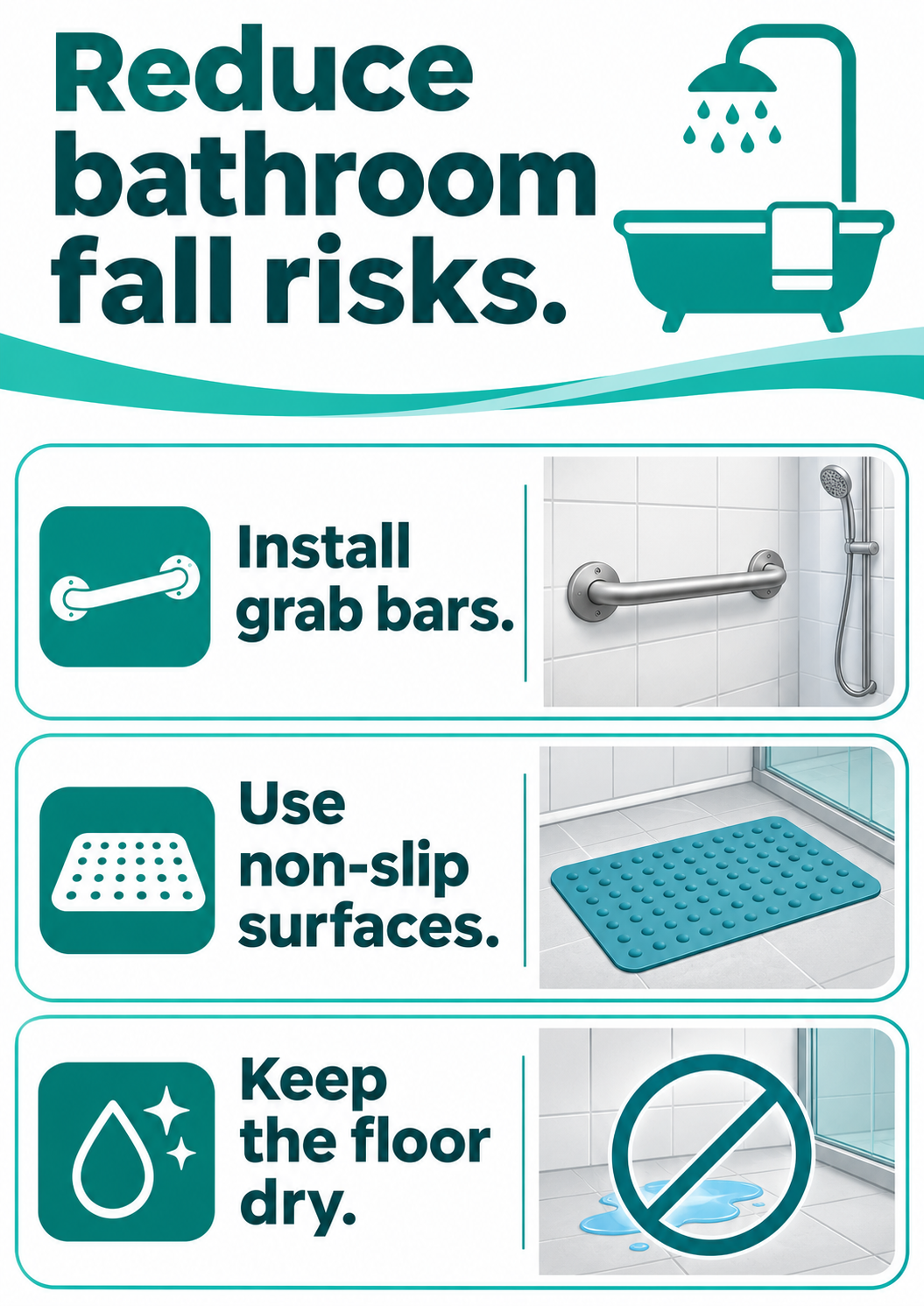
The bathroom combines everything that makes falls likely: hard surfaces, water, tight spaces, and movements such as stepping over a tub wall or standing up from a low toilet. It deserves attention first.
- Install grab bars beside the toilet and inside the shower or tub. Towel racks are not designed to hold body weight and should never be used as substitutes.
- Place a non-slip mat inside the tub and an absorbent, securely backed mat on the floor outside it.
- Add a shower chair or bench so washing can happen seated, which removes the risk of slipping while standing.
- Consider a handheld showerhead so the person does not need to turn or bend awkwardly.
- Raise the toilet seat with a properly fitted riser if standing up from a low seat is difficult.
Nighttime bathroom trips are especially risky because people are drowsy and the lights are often off. A plug-in night light in the hallway and bathroom is one of the simplest fixes available.
Adjustment 2: Improve Lighting and Switches
Poor lighting hides hazards, and aging eyes need more light to see the same details. Shadows on stairs can look like steps, and dim hallways conceal dropped objects or uneven flooring.
- Increase bulb brightness in hallways, stairwells, kitchens, and entrances, and choose bulbs with a warm but bright output.
- Put light switches at both the top and bottom of staircases so no one has to walk into a dark stairwell.
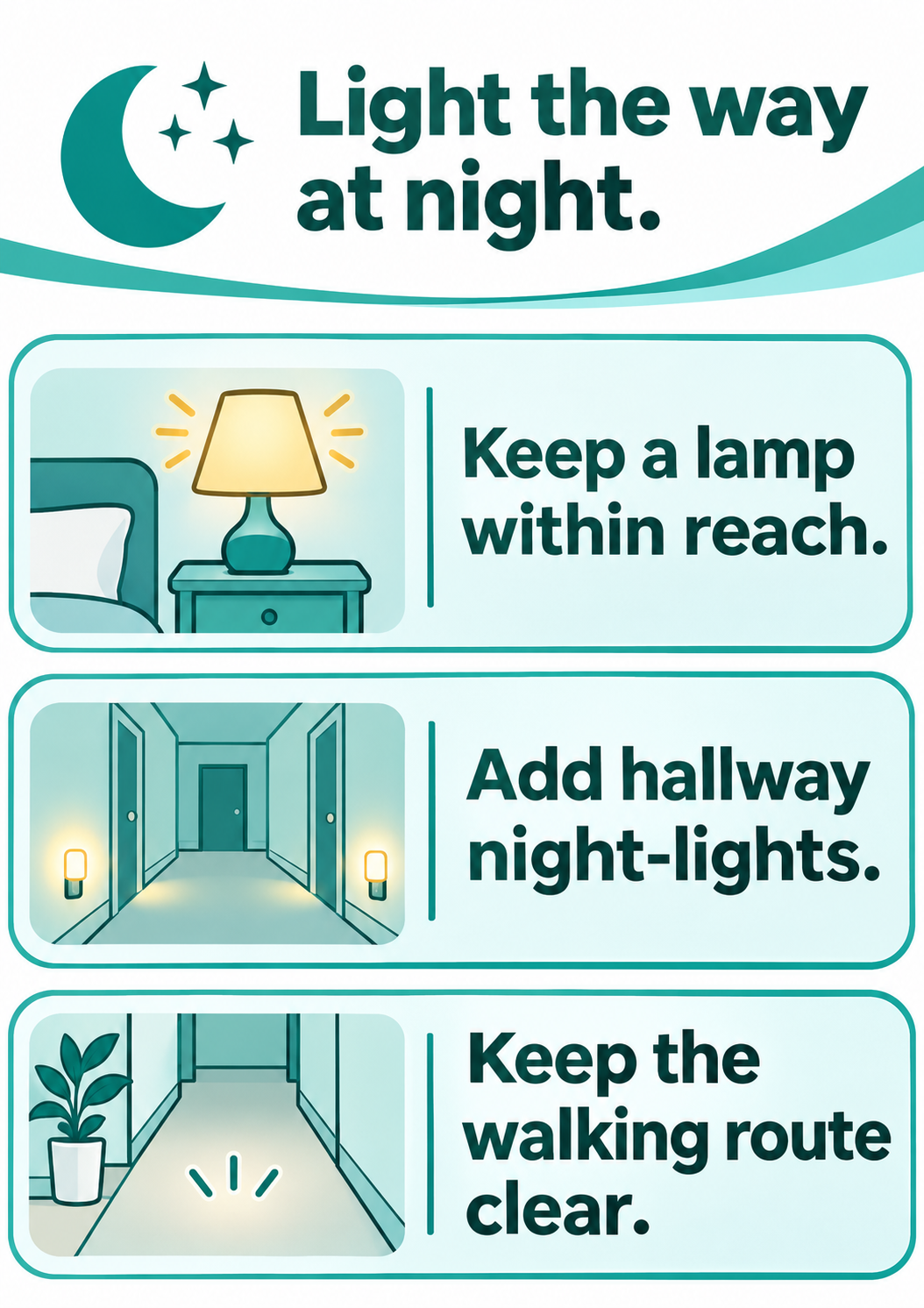
- Use motion-sensor or plug-in night lights along the route from bedroom to bathroom.
- Keep a lamp or touch light within reach of the bed so getting up at night does not mean walking in the dark.
- Open curtains during the day and check that glare from windows or shiny floors is not creating confusing reflections.
Lighting is also a quick way to check on the person’s vision. If they still struggle to see clearly in a well-lit room, an eye exam may be overdue, and updated glasses can make a real difference to steadiness.
Adjustment 3: Clear Tripping Hazards From Walkways
Most trip hazards are ordinary objects in the wrong place. Rugs, cords, shoes, and clutter cause more falls than dramatic accidents do.
- Remove or tape down loose rugs, especially at doorways and the top of stairs, or replace them with non-slip backing.
- Route electrical and phone cords along walls rather than across walking paths.
- Keep frequently used items, such as glasses, remote controls, and medication, within easy reach to reduce stretching and climbing.
- Clear hallways and stair landings of boxes, shoes, and furniture that narrows the path.
- Repair uneven floorboards, loose carpet edges, and lifted thresholds that catch a toe.
A useful test is to walk through the home the way the person actually moves, including at night and while carrying something. Anything that would catch a foot or require a sidestep is a candidate for removal.
Adjustment 4: Strengthen Stairs and Handrails
Stairs are the highest-risk area in most homes, and small improvements there pay off every day. A sturdy handrail on both sides gives the person something reliable to hold at any point on the staircase.
- Check that existing handrails are firmly attached and extend the full length of the stairs.
- Add a second handrail on the opposite wall if there is room and the person feels steadier with support on both sides.
- Apply non-slip strips or treads to wooden or tiled steps.
- Improve lighting over each step and mark the edge of the top and bottom steps with contrasting tape.
- Keep the stairs free of objects and avoid carrying loads that block the view of the steps.
If the person lives in a home with stairs and has already had a near-fall, it may be worth arranging the main living space on one floor where possible. Moving a bedroom or a favorite chair downstairs is a bigger change, but it can remove daily stair use entirely.
Adjustment 5: Reduce Bedroom and Furniture Risks
Getting in and out of bed and chairs is a common moment for losing balance. Furniture that is too low, too soft, or on wheels makes standing up harder than it needs to be.
- Choose chairs with armrests and a firm seat that allow the person to push up with their arms.
- Raise a low bed with a proper bed riser, or use a bed rail designed for support if getting up is difficult.
- Keep a sturdy nightstand or table beside the bed for glasses, water, and a phone.
- Remove wheeled chairs and unstable side tables from areas the person uses most.
- Place a firm chair in the bedroom and hallway so the person can pause and steady themselves when needed.
Footwear belongs in this section too. Slippers with loose backs and socks on smooth floors are common causes of slips. Well-fitting shoes with non-slip soles, worn indoors, are a simple upgrade.
How Osteomalacia Raises the Risk of Serious Injury
Osteomalacia softens bones because they do not mineralize properly, often due to insufficient vitamin D, calcium, or phosphate, or to conditions that interfere with absorption. The result is bone that is more prone to bending, pain, and fracture.
That means the same fall can have very different consequences for two people. Someone with healthy bones may get up and shake it off; someone with osteomalacia may end up with a broken hip or wrist. For that reason, home adjustments and medical care should work together rather than as separate efforts.
Diagnosis and treatment are medical matters, so encourage the person to discuss symptoms such as bone pain, muscle weakness, or a history of fractures with their clinician. The NHS page on osteomalacia describes symptoms and treatment options, and the NIH Office of Dietary Supplements vitamin D fact sheet covers dietary sources and supplementation guidance.
Quick Comparison: Which Adjustments to Prioritize
The table below helps you decide where to start when time or budget is limited. It ranks adjustments by the risk they remove and how easy they are to complete.
| Adjustment | Main Risk It Reduces | Effort and Cost | Priority |
|---|---|---|---|
| Bathroom grab bars and non-slip mats | Slips on wet surfaces; falls while standing up | Moderate; requires installation | High |
| Brighter lighting and night lights | Trips in dim hallways and stairs | Low; bulbs and plug-in lights | High |
| Clearing clutter and cords | Tripping in walkways | Very low; no cost | High |
| Stair handrails and non-slip treads | Falls on stairs | Moderate; some installation | High |
| Firm chairs and bed support | Loss of balance when standing | Low to moderate | Medium |
Working With Health Professionals on Fall Prevention
Home changes are more effective when paired with professional input. A doctor can review medications that cause dizziness, check vision and hearing, and assess bone health. A physical therapist can teach balance and strength exercises matched to the person’s abilities.
Occupational therapists often do home safety assessments and can point out hazards that are easy to overlook. In many countries, local health services or community organizations offer fall-prevention programs; ask the person’s primary care clinic what is available locally.
- Ask about a medication review, since some drugs affect balance or blood pressure.
- Request a vision check if the person has not had one recently.
- Ask whether a referral to physical therapy for balance training is appropriate.
- Inquire about vitamin D and calcium status, especially with a diagnosis of osteomalacia.
Simple Habits That Support Home Safety
Physical changes only go so far if daily habits work against them. A few consistent routines make the environment safer without any renovation.
- Wear supportive shoes indoors rather than loose slippers or socks.
- Turn on lights before entering a room, not after.
- Keep a phone or medical alert device within reach at all times.
- Ask for help with tasks that require climbing, reaching, or carrying heavy items.
- Rise slowly from bed or chairs to avoid dizziness.
It also helps to review the home every few months. New clutter, a new piece of furniture, or a change in mobility can create fresh hazards, so a quick walk-through keeps the setup current.
Conclusion
Five changes cover most of the risk: safer bathrooms, better lighting, clear walkways, stronger stairs, and supportive furniture. Start with the highest-risk areas and make improvements in stages. For anyone with osteomalacia, pair those changes with proper medical care, since softer bones make every fall more consequential. Small, consistent adjustments protect independence and reduce the chance of a serious injury.
Frequently Asked Questions
What is the single most important home change to prevent senior falls?
If only one change is possible, install grab bars in the bathroom and add non-slip mats. Wet floors and the movements involved in bathing and using the toilet make the bathroom the highest-risk room in most homes.
How does osteomalacia affect fall risk?
Osteomalacia softens bones, so a fall is more likely to cause a fracture. The condition can also cause bone pain and muscle weakness, which may affect balance and mobility. Treating the underlying cause is important alongside home safety changes.
Are rugs always a fall hazard?
Loose rugs are a common trip hazard, especially at doorways and on stairs. Secure them with non-slip backing or double-sided tape, or remove them from high-traffic paths. A well-anchored rug is much less risky than a loose one.
Can lighting really reduce falls?
Yes. Better lighting helps people see steps, obstacles, and uneven surfaces, and it reduces the confusion caused by shadows. Night lights along the route to the bathroom are particularly useful because nighttime trips are a common time for falls.
Should seniors use a cane or walker at home?
A mobility aid can improve steadiness, but it should be fitted properly by a health professional. A physical therapist can recommend the right type and teach correct use. An ill-fitting aid can create new risks.
How can I tell if a parent’s home is unsafe?
Walk through the home the way your parent moves, including at night. Look for loose rugs, poor lighting, missing grab bars, cluttered walkways, and furniture that is hard to stand up from. An occupational therapy home assessment gives a more thorough answer.
Does vitamin D help prevent falls?
Vitamin D supports bone and muscle health, and deficiency is a common cause of osteomalacia. Whether supplementation is appropriate depends on the individual, so discuss testing and dosing with a clinician rather than self-prescribing.
What should I do if a senior has already fallen at home?
Seek medical attention, even if the person seems fine, because fractures and head injuries are not always obvious. Afterward, review what caused the fall and make the relevant home adjustments so the same situation is less likely to repeat.
Are bathroom modifications expensive?
Costs vary widely by location and by whether professional installation is needed. Grab bars, non-slip mats, and a shower chair are relatively affordable items, and some local health or social services offer support for home safety modifications. Ask the person’s clinic or local authority what assistance exists.
How often should home safety be reviewed?
A review every few months is reasonable, and always after a change in health, mobility, or medication. New furniture, a new diagnosis, or a near-fall are all good reasons to walk through the home again.