Coxalgic gait is a common abnormal walking pattern encountered in patients with hip pathology, particularly degenerative conditions such as arthritis. This article provides a clear overview of coxalgic gait, including its definition, underlying mechanism, key clinical features, and how it differs from other hip-related gait abnormalities.
The term “coxalgic” is derived from coxa (hip) and algia (pain), emphasizing pain as the primary driver of the abnormal gait.
Pathophysiology and Mechanism
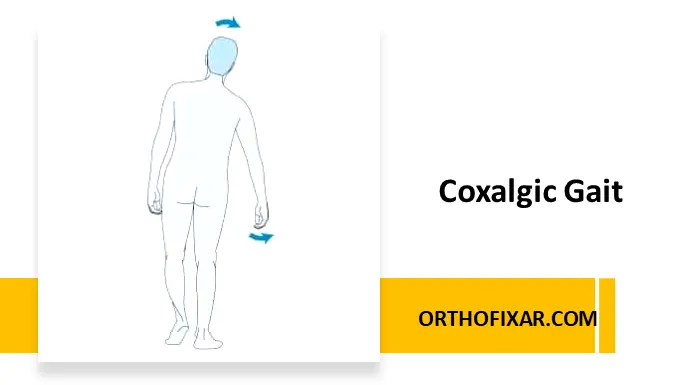
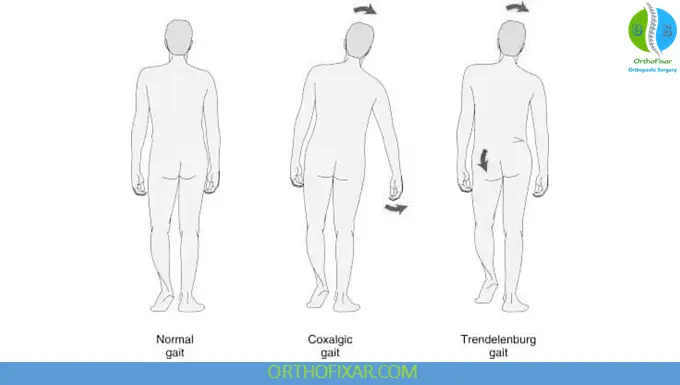
In coxalgic gait, pain originates from the affected hip joint, typically due to inflammatory or degenerative changes such as osteoarthritis. To minimize discomfort during walking, the individual instinctively alters their posture and movement.
During the stance phase on the affected leg:
- The individual lurches toward the affected side
- The pelvis remains level or may elevate on the contralateral side
- Hip abductor muscles remain functional and strong
This compensatory lateral trunk shift reduces the joint reaction force across the painful hip, thereby decreasing stress on the stance leg and alleviating pain.
See Also: Arthrogenic Gait
Key Clinical Features of Coxalgic Gait
Characteristic findings include:
- Lateral trunk lean toward the affected hip
- Shortened stance phase on the painful side
- Normal hip abductor strength
- Absence of Trendelenburg sign
- Pain that worsens with weight-bearing and improves with rest
Unlike Trendelenburg gait, the pelvic stability is preserved due to intact abductor muscles on the affected side.
Coxalgic Gait vs. Trendelenburg Gait
It is clinically important to distinguish coxalgic gait from Trendelenburg gait:
| Feature | Coxalgic Gait | Trendelenburg Gait |
|---|---|---|
| Primary cause | Pain (arthritis) | Abductor muscle weakness |
| Trunk movement | Lean toward affected side | Lean toward affected side |
| Pelvic position | Level or elevated contralaterally | Drops on contralateral side |
| Hip abductors | Normal strength | Weak |
| Pain | Prominent | May or may not be present |
Coxalgic Gait Common Causes
Coxalgic gait is most often associated with:
- Hip osteoarthritis
- Inflammatory arthritis (e.g., rheumatoid arthritis)
- Advanced degenerative joint disease
- Painful hip conditions affecting weight-bearing
Clinical Importance
Recognizing coxalgic gait during physical examination helps clinicians:
- Identify hip joint pain as the primary pathology
- Differentiate between pain-related and weakness-related gait disorders
- Guide appropriate imaging, pain management, and referral
- Monitor disease progression and response to treatment
Management Considerations
Management focuses on addressing the underlying cause of pain and may include:
- Analgesics and anti-inflammatory medications
- Physical therapy to maintain joint mobility
- Activity modification
- Assistive devices (e.g., cane on the contralateral side)
- Surgical intervention in advanced cases
Conclusion
Coxalgic gait is a classic example of a pain-adaptive walking pattern seen in patients with hip arthritis. The lateral trunk shift toward the affected side serves to reduce joint forces while preserving pelvic stability due to intact hip abductors. Accurate identification of this gait pattern is essential for effective diagnosis, treatment planning, and patient education in musculoskeletal care.
References & More
- Pirker W, Katzenschlager R. Gait disorders in adults and the elderly: a clinical guide. Wien Klin Wochenschr. 2017;129(3–4):81–95.
- Lim MR, Huang RC, Wu A, et al. Evaluation of the elderly patient with an abnormal gait. J Am Acad Orthop Surg. 2007;15(2):107–117. Pubmed
- Orthopedic Physical Assessment by David J. Magee, 7th Edition.