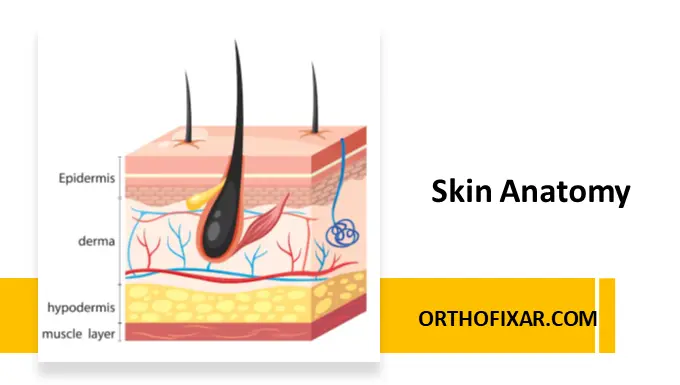
The skin is not merely a protective covering—it is a complex, multifunctional organ essential for survival, homeostasis, and clinical diagnosis. For medical students and healthcare professionals, a solid understanding of skin anatomy is critical, as many systemic diseases manifest first through cutaneous changes.
Overview of the Skin Layers
The skin is the largest and heaviest single organ of the human body, accounting for approximately 16% of total body weight. It covers an estimated surface area of 1.2 to 2.3 m², depending on body size and age.
Anatomically, the skin is composed of three distinct layers:
- Epidermis
- Dermis
- Subcutaneous tissue (Hypodermis)
Each skin layer has specialized structures and functions that contribute to protection, sensation, thermoregulation, and metabolism.

1. Epidermis
The epidermis is the most superficial layer of the skin. It is a thin, avascular, keratinized stratified squamous epithelium, meaning it contains no blood vessels and relies entirely on the underlying dermis for nutrition.
Structural Layers of the Epidermis
The epidermis consists of two main functional components:
▪ Stratum Corneum (Outer Layer)
- Composed of dead, flattened, keratinized cells
- Acts as a protective barrier against mechanical injury, pathogens, and water loss
▪ Malpighian Layer (Inner Cellular Layer)
This layer includes:
- Stratum basale
- Stratum spinosum
Key functions:
- Keratin production (by keratinocytes)
- Melanin synthesis (by melanocytes)
Cell migration from the basal layer to the stratum corneum takes approximately one month, a clinically relevant fact when considering wound healing, psoriasis, and drug effects on skin turnover.

2. Dermis
Beneath the epidermis lies the dermis, a thick, vascularized connective tissue layer that provides strength, elasticity, and nourishment to the epidermis.
Composition of the Dermis
The dermis is composed of:
- Dense collagen fibers (tensile strength)
- Elastic fibers (skin elasticity)
- Ground substance
Structures Found in the Dermis
- Sebaceous glands
- Sweat glands (eccrine and apocrine)
- Hair follicles
- Blood vessels
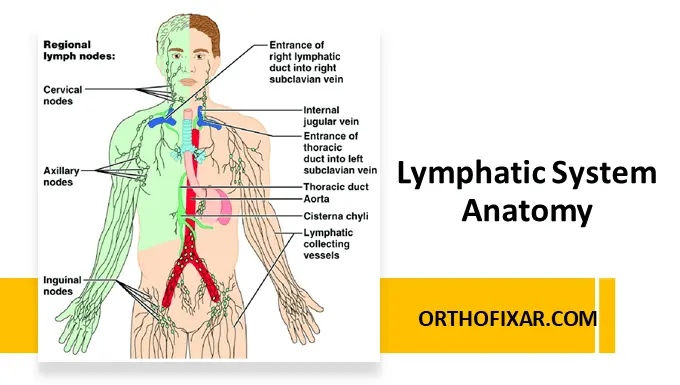
- Lymphatics
- Most cutaneous nerve endings
Because of its rich innervation, the dermis is responsible for pain, temperature, pressure, and touch sensation.
Dermal Structures and Their Functions
| Structure | Location in Dermis | Function | Clinical Significance |
|---|---|---|---|
| Sebaceous glands | Upper dermis | Sebum secretion | Acne vulgaris |
| Sweat glands (Eccrine) | Deep dermis | Thermoregulation | Heat intolerance disorders |
| Sweat glands (Apocrine) | Deep dermis | Scent secretion | Hidradenitis suppurativa |
| Hair follicles | Entire dermis | Hair production | Alopecia, folliculitis |
| Cutaneous nerves | Throughout dermis | Sensory perception | Neuropathic pain |

3. Subcutaneous Tissue (Hypodermis)
Inferior to the dermis is the subcutaneous tissue, primarily composed of adipose (fat) tissue.
Functions of the Subcutaneous Layer
- Thermal insulation
- Energy storage
- Shock absorption
- Anchoring the skin to underlying structures
This layer also serves as an important site for subcutaneous injections and plays a role in drug absorption.
| Skin Layers | Location | Main Components | Vascular Supply | Primary Functions | Clinical Relevance |
|---|---|---|---|---|---|
| Epidermis | Outermost layer | Keratinocytes, melanocytes, Langerhans cells | Avascular | Barrier protection, keratinization, pigmentation | Site of psoriasis, eczema, superficial burns |
| Dermis | Beneath epidermis | Collagen, elastic fibers, glands, hair follicles, nerves | Highly vascular | Strength, elasticity, sensation, thermoregulation | Involved in scarring, aging, inflammatory diseases |
| Subcutaneous Tissue (Hypodermis) | Deepest layer | Adipose tissue, connective tissue | Vascular | Insulation, energy storage, cushioning | Injection site, lipodystrophy, metabolic relevance |
Skin Color and Pigmentation
Normal skin color is not determined by a single factor. It results from the interaction of pigments, blood flow, and tissue optics.
Major Determinants of Skin Color
1. Melanin
- A brownish pigment produced by melanocytes
- Genetically determined
- Increased by ultraviolet (UV) exposure
- Primary determinant of racial and individual skin color differences
2. Hemoglobin
- Oxyhemoglobin: bright red, found in arteries and capillaries → causes skin redness
- Deoxyhemoglobin: darker, bluish, found in veins
- Light scattering through skin layers makes veins appear bluer than they actually are
3. Carotene
- Yellow pigment
- Stored in subcutaneous fat
- Prominent in palms and soles
- Excess can cause carotenemia (yellowish skin without scleral icterus)
4. Bilirubin
- Yellow-brown pigment
- Derived from heme breakdown
- Elevated levels cause jaundice, a critical clinical sign of liver or hematologic disease.
| Pigment | Color | Source | Primary Location | Clinical Relevance |
|---|---|---|---|---|
| Melanin | Brown to black | Melanocytes | Epidermis | Albinism, vitiligo, melanoma |
| Oxyhemoglobin | Bright red | Oxygenated blood | Capillaries | Erythema, inflammation |
| Deoxyhemoglobin | Bluish | Venous blood | Veins | Cyanosis |
| Carotene | Yellow | Diet-derived | Subcutaneous fat | Carotenemia |
| Bilirubin | Yellow-brown | Heme breakdown | Blood and tissues | Jaundice |
Clinical Relevance of Skin Anatomy
Understanding skin anatomy is essential for:
- Diagnosing dermatologic and systemic diseases
- Interpreting skin color changes (cyanosis, pallor, jaundice)
- Performing procedures (biopsies, injections, suturing)
- Understanding wound healing and scarring
- Assessing burns and pressure injuries
Ignoring anatomical depth and structure leads to poor clinical judgment—something no healthcare professional can afford.
Skin Layers and Burn Depth Correlation
| Burn Degree | Skin Layers Involved | Typical Features | Healing Pattern |
|---|---|---|---|
| First-degree | Epidermis only | Erythema, pain | Heals without scarring |
| Second-degree | Epidermis + dermis | Blisters, severe pain | Possible scarring |
| Third-degree | All skin layers | Painless, pale or charred | Requires grafting |

References & More
- Yousef H, Alhajj M, Fakoya AO, et al. Anatomy, Skin (Integument), Epidermis. [Updated 2024 Jun 8]. In: StatPearls [Internet]. Treasure Island (FL): StatPearls Publishing; 2025 Jan-. Available from: Pubmed
- Yousef H, Alhajj M, Fakoya AO, Sharma S. Anatomy, Skin (Integument), Epidermis. 2024 Jun 8. In: StatPearls [Internet]. Treasure Island (FL): StatPearls Publishing; 2025 Jan–. PMID: 29262154. Pubmed
- Bickley, L. S., Szilagyi, P. G., Hoffman, R. M., & Soriano, R. P. (2021). Bates’ guide to physical examination and history taking, 12e.