Back strain from washing dishes is a common but largely preventable problem. It usually develops when you stand still in one position for too long, lean forward over a low sink, or hunch your shoulders to reach the bottom of a deep basin. The discomfort is rarely caused by a single factor; instead, it builds from a combination of workspace design, posture, and the repetitive nature of the task. The encouraging news is that a few deliberate changes to your setup and movement habits can take meaningful pressure off your lower back. This guide explains why dishwashing strains the back, how to adjust your stance and work area, which tools help, and when persistent pain deserves a medical review, including a note on conditions such as osteomalacia that can make bone and muscle pain worse.
Why Washing Dishes Strains Your Back
Washing dishes appears gentle, yet it asks the body to hold a fixed position for many minutes at a time. Your back muscles work continuously to keep the spine stable while your arms move, and that sustained effort accumulates. Unlike walking or lifting, where the body naturally shifts and recovers, dishwashing locks you into a narrow range of motion that fatigues the same muscle groups repeatedly.
Several everyday factors make the strain worse:
- A low sink or countertop forces you to bend forward, which loads the lower back and compresses the spine.
- Standing without moving stiffens the muscles and joints in your spine and hips, reducing circulation to working tissues.
- Reaching into a deep basin rounds your upper back and pulls your shoulders forward, creating tension between the shoulder blades.
- Leaning on one hip shifts weight unevenly and can irritate one side of the lower back.
- Holding your breath or bracing hard while scrubbing increases muscle tension throughout the torso.
- Cold floors and thin mats reduce comfort and encourage awkward weight shifting.
- Twisting to reach the dish rack or nearby items adds rotational load to an already static spine.
None of these factors is dangerous on its own. Combined over a long session, however, they explain why your back feels tight, tired, or sore afterward. The cumulative effect matters more than any single habit, which is why the fixes below work best when you apply several of them together.
Set Up Your Sink Area to Protect Your Back
Most dishwashing back pain begins with the workspace rather than the body. A quick adjustment to height and reach often brings immediate relief, and these changes cost little or nothing.
Get the Sink Height Right
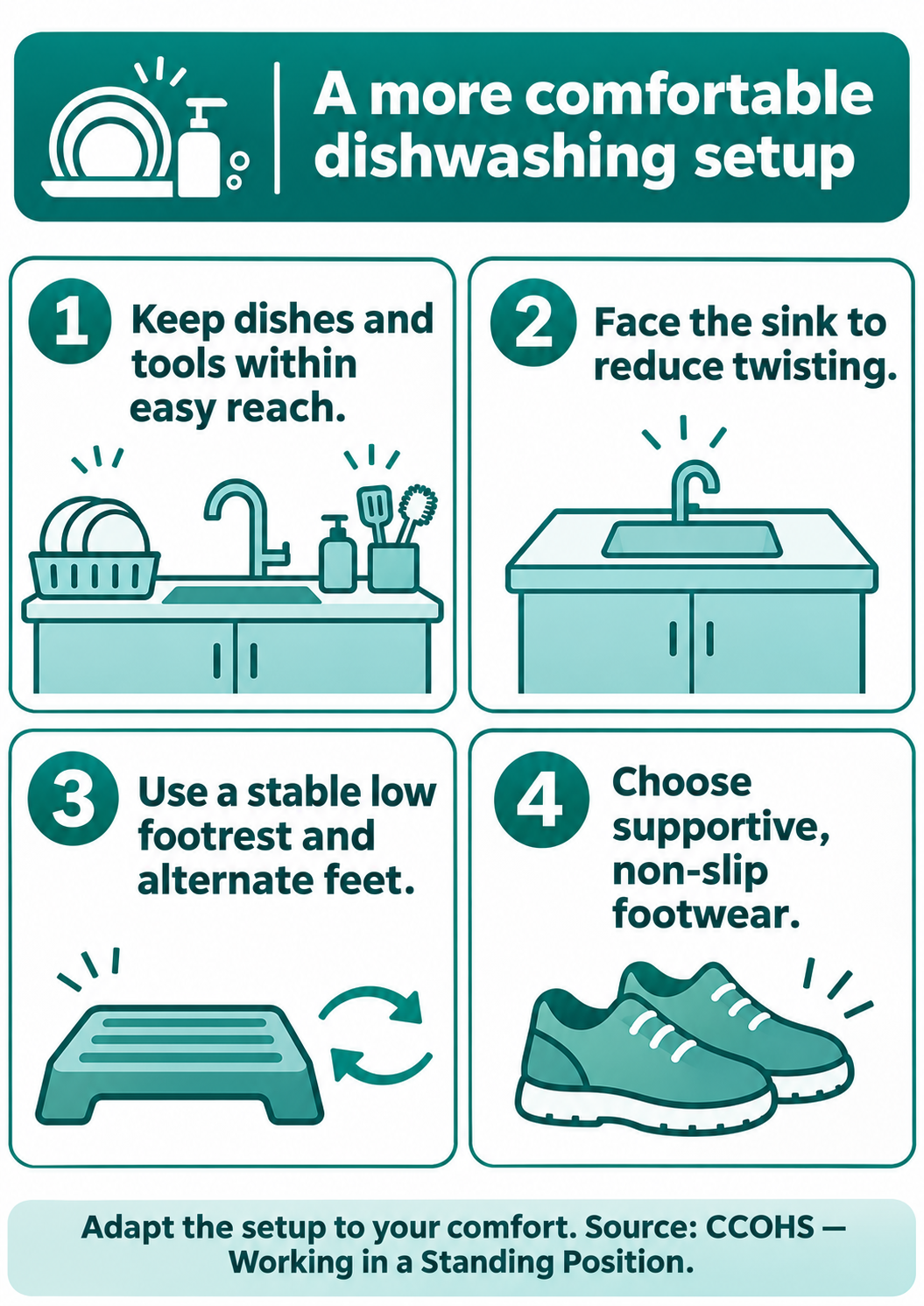
Ideally, the bottom of the sink should sit roughly at hip or waist height so you can work with your elbows slightly bent and your shoulders relaxed. If your sink is too low, a sturdy step stool or a thick anti-fatigue mat can raise you closer to a comfortable working position. If the counter is too high, a small footstool under one foot lets you shift weight and reduces the forward lean. Never stand on an unstable surface near water, and check that any step you use has a non-slip base.
Reduce Forward Bending
Bending forward is the single biggest contributor to lower back strain at the sink. Try these fixes:
- Fill the basin with enough water so you are not reaching down to scrub each item.
- Stack dirty dishes at counter height rather than on a low stool or the floor.
- Keep frequently used items within easy reach to avoid twisting and stretching.
- Use a dish rack at counter level so you are not lifting wet plates from below.
- Soak stubborn pans rather than scrubbing them at an awkward angle.
Use a Back-Friendly Standing Posture
Good posture at the sink is less about standing rigidly straight and more about staying balanced, relaxed, and mobile. Rigid posture can be just as tiring as slouching because it holds muscles under constant tension.
Follow these habits during every washing session:
- Stand with feet about hip-width apart for a stable base.
- Keep your knees soft rather than locked.
- Hold your chin level and avoid dropping your head toward the basin.
- Pull your shoulders back gently instead of letting them round forward.
- Keep your lower back in a neutral curve, neither arched nor flattened.
- Rest one foot on a low step and swap feet every few minutes to change the load.
- Keep your abdominals lightly engaged to support the spine without bracing hard.
If you notice yourself slumping, pause, stand tall, and reset before continuing. A brief posture check every few plates makes a real difference over the course of a session.
Break Up Long Dishwashing Sessions
Static posture is the enemy of a comfortable back. Even ideal form becomes tiring if you hold it without moving, because muscles that stay contracted lose circulation and stiffen.
Try these simple breaks:
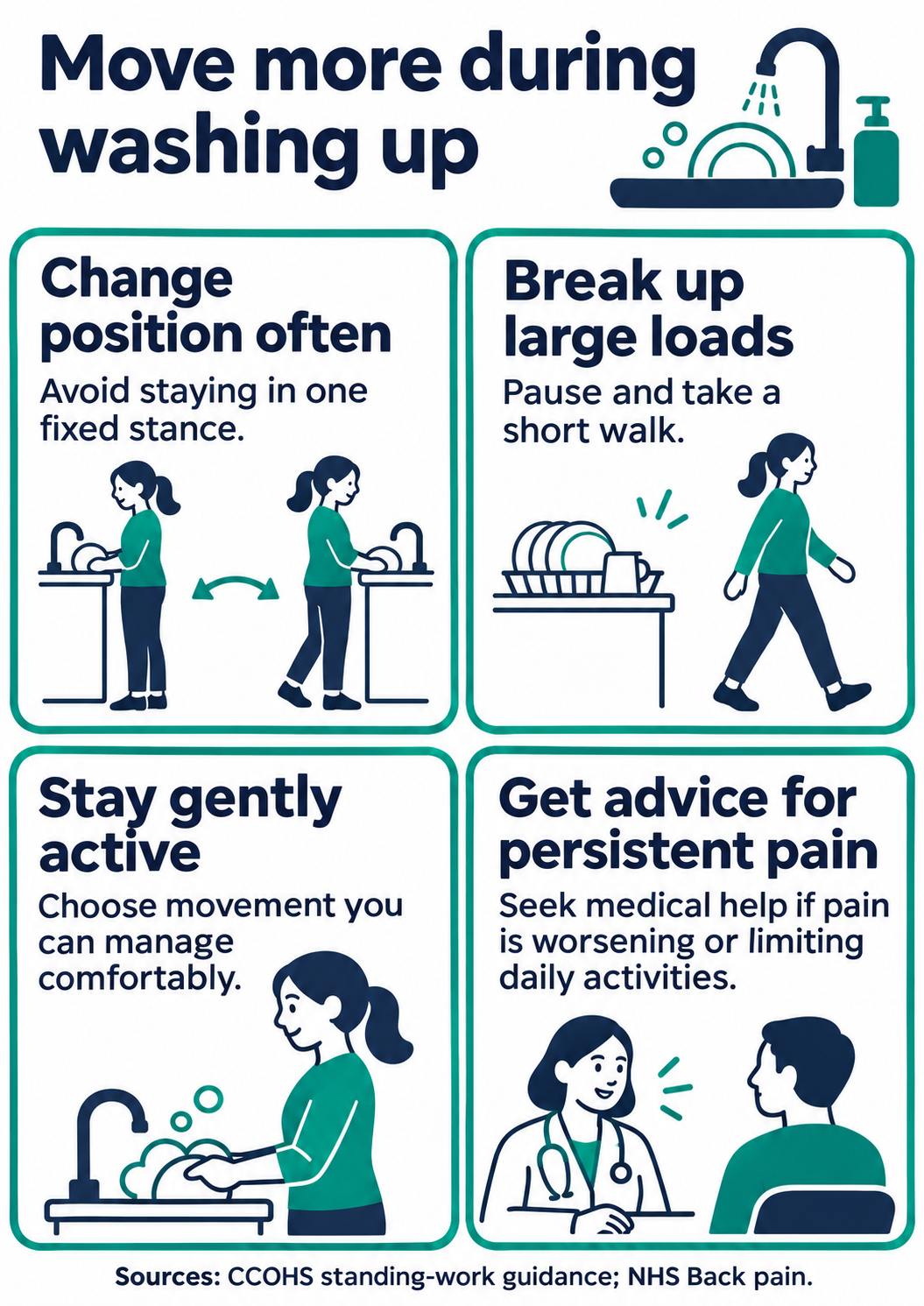
- Pause every five to ten minutes to straighten up and roll your shoulders.
- Take a few slow steps away from the sink between loads.
- Alternate tasks, washing a few items and then drying or putting away dishes, so your body changes position.
- Do a gentle standing back extension: place your hands on your hips and lean back slightly for a few seconds.
- Split large piles of dishes into two shorter sessions rather than one long one.
Movement keeps blood flowing to tired muscles and reduces the stiffness that builds during standing still. Short, frequent breaks are generally more effective than one long rest at the end.
Practical Tools That Reduce Back Load
You do not need special equipment, but a few inexpensive items make dishwashing gentler on the spine.
- An anti-fatigue mat cushions your feet and encourages small weight shifts.
- A small step stool lets you raise one foot and change your pelvic position.
- A long-handled brush reduces how far you must reach into the basin.
- A raised dish rack keeps heavy items closer to counter height.
- A lightweight drying cloth or rack avoids awkward lifting of wet, heavy stacks.
- Supportive, non-slip footwear reduces fatigue in the feet and legs, which in turn affects how you stand.
These tools support good posture; they do not replace it. Use them alongside the stance and setup adjustments described above.
Quick Reference: Common Problems and Fixes
The table below matches frequent dishwashing complaints to practical adjustments.
| Problem | Likely Cause | Practical Fix |
|---|---|---|
| Lower back aches after washing up | Prolonged forward bend | Raise the work surface or stand on a mat; fill the basin higher |
| Stiffness between the shoulder blades | Rounded upper back and reaching | Use a long-handled brush; reset shoulders every few minutes |
| One-sided back pain | Standing on one hip | Use a footstool and swap feet regularly |
| Pain that builds over long sessions | Static posture | Take short movement breaks and split large loads |
| Discomfort in feet and legs | Hard floor, thin mat | Add an anti-fatigue mat and supportive footwear |
| Neck and upper-back tension | Head dropped toward the basin | Keep chin level; raise the basin or use a brush |
Stretches and Exercises to Relieve Strain
Gentle movement after dishwashing helps release tight muscles. These are general suggestions, not a treatment plan; stop if anything increases pain.
Try these simple options:
- Standing back extension: hands on hips, lean back gently for five seconds, repeat a few times.
- Shoulder rolls: roll shoulders slowly backward and forward to ease upper-back tension.
- Hip flexor stretch: step one foot back, keep it straight, and lean forward slightly.
- Gentle walking: a few minutes of easy movement helps muscles relax.
- Cat-cow on a mat: if comfortable, alternate rounding and arching your back slowly.
Building strength in your core and back over time makes long standing tasks easier. A physiotherapist or your doctor can recommend exercises suited to your body and any existing conditions.
When Back Pain Needs Medical Attention
Most dishwashing strain settles with rest and better setup. Some back pain, however, points to something that needs a professional review.
Seek medical advice if you notice:
- Pain that lasts more than a few weeks or keeps getting worse
- Pain that spreads down a leg, or comes with numbness or weakness
- Back pain accompanied by fever, unexplained weight loss, or night pain
- Difficulty controlling your bladder or bowel
- Pain after a fall or injury
These signs do not mean something serious is certain, but they are reasons to get checked rather than wait. Early assessment can rule out conditions that are easier to manage when identified sooner.
Osteomalacia and Ongoing Bone or Muscle Pain
Osteomalacia is a condition in which bones soften, usually because of a lack of vitamin D or problems with how the body processes it. It can cause dull, aching bone pain and muscle weakness, often in the lower back, hips, and legs.
Because the pain is vague and widespread, it is sometimes mistaken for ordinary strain. If your back pain is diffuse, comes with muscle weakness, or does not improve with posture changes and rest, it is worth mentioning to your doctor. Diagnosis usually involves blood tests, and treatment depends on the underlying cause.
You can read reliable background information on the NHS page on osteomalacia and on the NIAMS overview of osteomalacia. These resources describe symptoms and diagnosis in plain terms; they do not replace a consultation with your own clinician.
Building Daily Habits That Protect Your Back
Small routines around the sink add up over weeks and months. The goal is to make good posture automatic rather than something you must remember consciously.
Consider these habits:
- Keep the sink area clear so you are not stretching awkwardly.
- Wear supportive, non-slip footwear while standing on hard floors.
- Warm up with a short walk before long household tasks.
- Alternate standing chores with seated ones when possible.
- Stay generally active, since regular movement supports back health better than any single fix.
- Notice early signs of stiffness and address them before they build into pain.
If you have an existing back condition, ask a physiotherapist or your doctor how to adapt these suggestions to your situation.
Conclusion
Back strain from washing dishes is mostly a posture and setup problem, and it responds well to small, consistent changes. Raise your work surface if it is too low, keep your feet balanced, break up long sessions, and use simple tools such as a mat and a long-handled brush. If pain is persistent, widespread, or comes with weakness or other warning signs, get it checked, and keep conditions like osteomalacia in mind if bone or muscle aching does not settle.
Frequently Asked Questions
Why does my back hurt after washing dishes?
Most dishwashing back pain comes from standing still and leaning forward over a low sink for a long time. The lower back muscles work continuously to keep you stable, and the forward bend adds extra load. Changing your setup and taking short movement breaks usually helps.
Should I sit while washing dishes if my back hurts?
Sitting can help some people, especially if standing is painful, but it depends on the height of your sink and your chair. A properly adjusted stool that lets you reach the basin without bending sharply may reduce strain. Try it for short sessions and see how your back responds.
What is the best posture for washing dishes?
Stand with feet hip-width apart, knees soft, and a neutral lower back. Keep your chin level and shoulders relaxed rather than rounded. Rest one foot on a low step and swap feet regularly to change the load on your spine.
Can a low sink cause back pain?
Yes. A sink that sits well below hip height forces you to bend forward, which increases pressure on the lower back. Raising yourself with a sturdy step or mat, or filling the basin higher, can reduce the bend.
How often should I take breaks while washing dishes?
There is no fixed rule, but pausing every five to ten minutes to straighten up and move is a reasonable guide. For large loads, splitting the task into two shorter sessions is often kinder to your back than one long stint.
Are anti-fatigue mats useful for back strain?
They can help. A cushioned mat reduces the hardness under your feet and encourages small weight shifts, which makes long standing more comfortable. It supports good posture but does not replace it.
When should I see a doctor about back pain?
See a doctor if pain lasts more than a few weeks, keeps worsening, spreads down a leg, or comes with numbness, weakness, fever, or problems controlling your bladder or bowel. Pain after an injury also deserves a check.
Could my back pain be related to osteomalacia?
It is possible. Osteomalacia can cause dull bone pain and muscle weakness, often in the lower back and legs. If your pain is widespread or does not improve with posture changes, ask your doctor about further assessment.
Do stretches help dishwashing back strain?
Gentle stretches after washing up can ease tight muscles. Standing back extensions, shoulder rolls, and a short walk are simple options. Avoid forceful stretching, and stop if a movement increases pain.
Can I prevent back strain from household chores?
You can reduce it significantly. Adjust work surfaces, use supportive footwear and mats, alternate tasks, and stay generally active. If you have a known back condition, ask a physiotherapist for advice tailored to you.