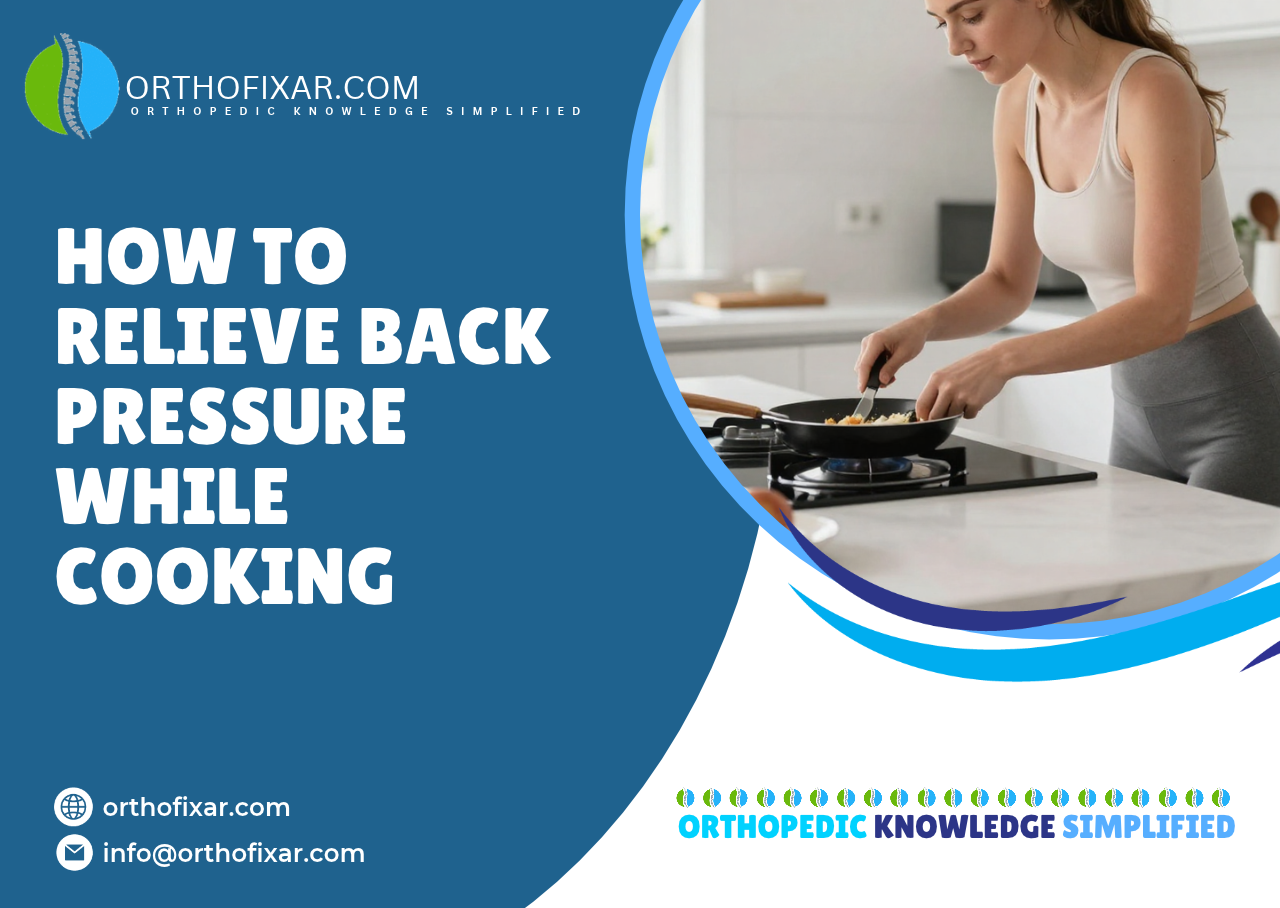
Cooking places steady physical demands on the spine, and when bones are softened by osteomalacia, those demands can feel sharper and last longer. Osteomalacia is a softening of the bones caused by defective mineralisation, most often linked to vitamin D deficiency and sometimes to low phosphate levels. The condition can make standing at a counter, lifting a pot, or holding a forward-leaning posture genuinely uncomfortable. The encouraging news is that thoughtful changes to how you set up your kitchen, stand, and move can significantly reduce the load on your spine. This guide explains why cooking stresses a vulnerable back, walks through practical adjustments you can apply straight away, and sets out when to seek medical advice.
Why Cooking Tends to Load Your Back
Most kitchen work happens in a narrow zone: leaning slightly forward, reaching, and holding a position for several minutes at a time. That posture compresses the lower spine and tires the muscles that support it. When bones are softened by osteomalacia, they tolerate that load less well than healthy bone.
Osteomalacia also weakens the muscles around the spine and hips, which makes it harder to hold good posture for long. The result is that ordinary tasks such as chopping vegetables or stirring a heavy pot can cause aching, stiffness, or a sense of pressure deep in the back.
Understanding this matters because it reframes the problem. Finding cooking hard is not a failure of willpower; the task genuinely is demanding on a vulnerable spine. The effective response is to change how the task is done rather than to push through discomfort.
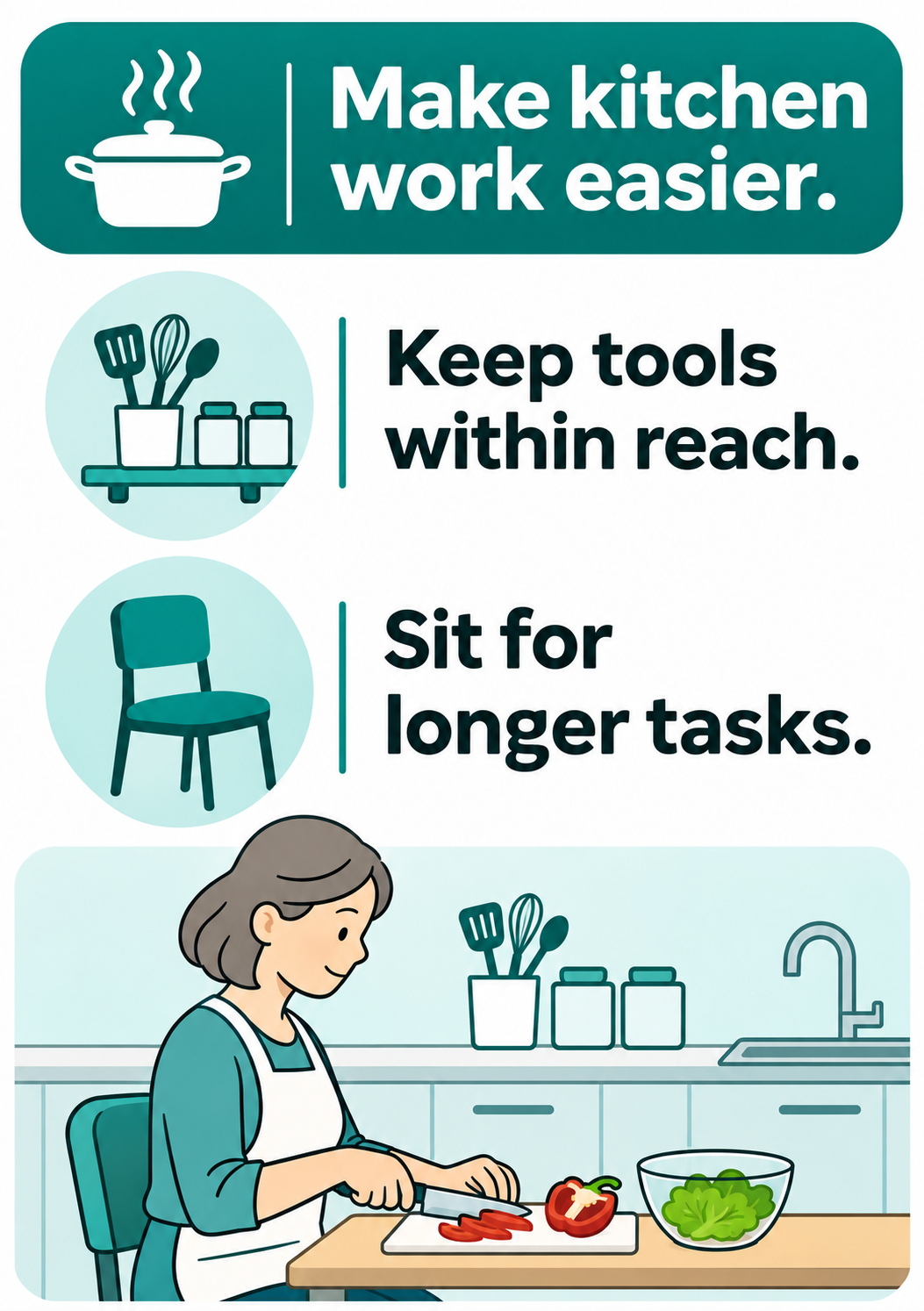
Set Up Your Kitchen to Reduce Back Pressure
Your workspace can do a lot of the work for you. A few adjustments before you start cooking reduce how much your back has to compensate.
- Raise your chopping board so your forearms rest at roughly right angles, which stops you leaning forward.
- Store the items you use most at waist or chest height rather than in low cupboards or on high shelves.
- Keep a sturdy stool or perching chair nearby so you can sit for longer tasks.
- Move heavy appliances such as a stand mixer or air fryer to counter level so you never have to lift them from below.
- Use a non-slip mat under the board to prevent it sliding and to avoid twisting when you reach.
A simple test: stand at your counter and let your arms hang. If you have to bend forward to reach the surface, it is too low for comfortable work.
Standing and Posture That Protect Your Spine
Good posture spreads load through your whole body instead of concentrating it in the lower back. It also keeps your breathing and balance steady while you work.
- Stand with feet about hip-width apart and weight evenly balanced.
- Keep your knees soft rather than locked straight.
- Bend at the hips and knees when reaching low, not at the waist.
- Keep your work close to your body so you are not stretching forward.
- Shift your weight from foot to foot every few minutes to avoid stiffness.
If standing still is the hardest part, alternate between standing and sitting. A perching stool lets you stay at counter height while taking weight off your legs and lower back.
Use a Stool or Chair for Longer Tasks
Some cooking jobs take twenty minutes or more, and that is when back pressure builds. Sitting for part of the work is not a sign of weakness; it is a sensible way to protect softened bones.
- Use a height-adjustable stool so you can sit at the counter without hunching.
- Keep your feet flat on the floor or on a footrest to support your lower back.
- Choose a seat with a backrest you can lean against during pauses.
- Slide your board closer when seated so you do not reach forward.
For tasks such as peeling, chopping, or stirring, sitting can cut the time your spine spends under load. Stand up between steps to keep your muscles from stiffening.
Break Cooking Into Shorter Sessions
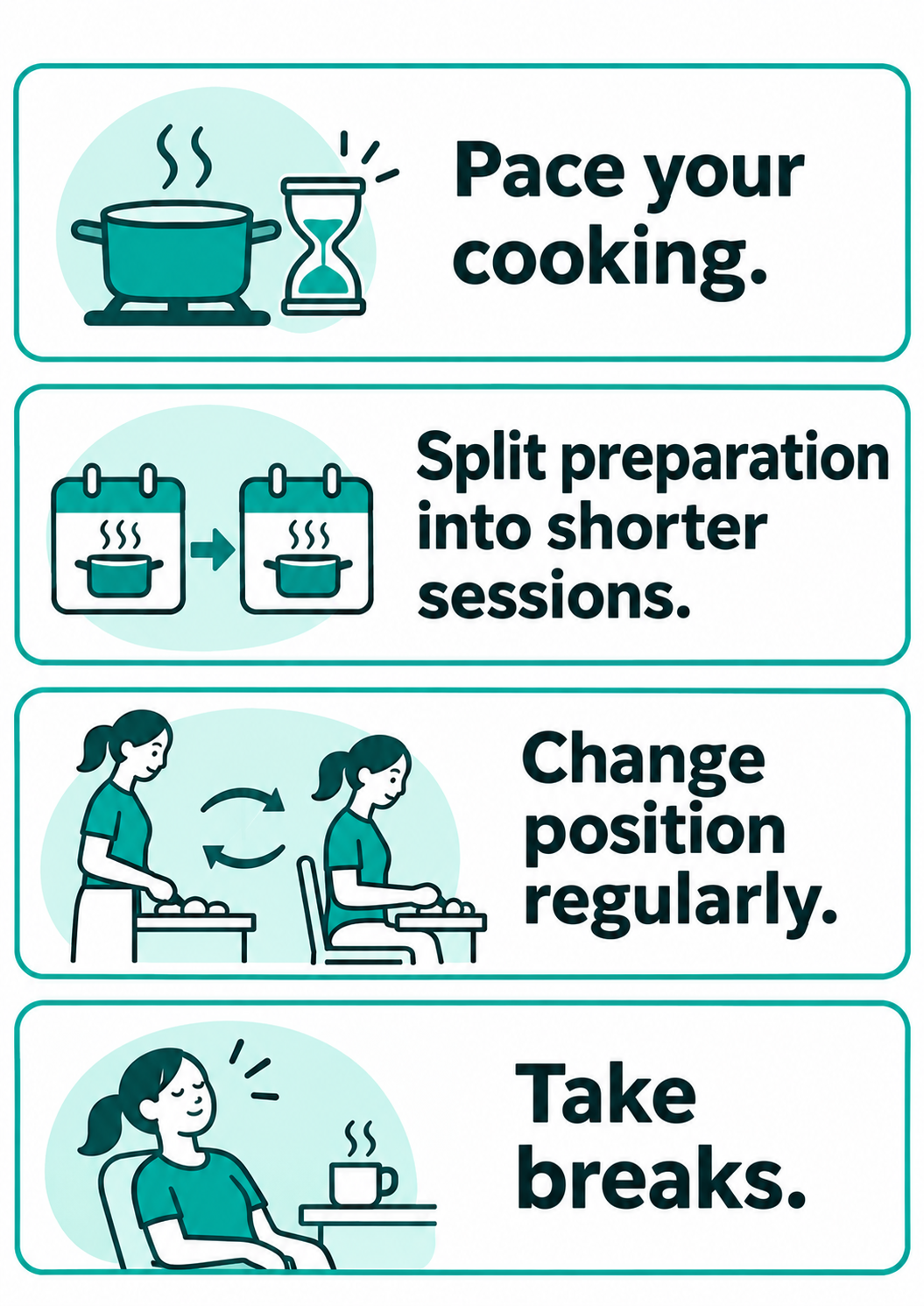
Long stretches of standing are harder on a vulnerable back than the same work split into smaller pieces. Planning cooking in stages reduces the total time your spine is under pressure.
- Prepare ingredients earlier in the day and store them until cooking time.
- Do the chopping while seated, then stand only for stovetop work.
- Cook larger batches so you have lighter days between sessions.
- Take a short break every ten to fifteen minutes to stretch and reset your posture.
Breaking up the work also gives your muscles time to recover, which matters when osteomalacia has weakened them.
Lifting, Reaching, and Carrying Safely
Heavy pots, full kettles, and bags of groceries are common triggers for sudden back pain. Learning safer movement patterns protects you during the moments when pressure spikes.
- Bend your knees and keep the load close to your body when lifting.
- Avoid twisting while holding something heavy; turn your whole body instead.
- Slide heavy items along the counter rather than lifting them.
- Use both hands for pots and kettles, and keep them as light as possible.
- Ask someone to help with very heavy items rather than straining your back.
If you feel sharp pain while lifting, stop and rest. Repeated strain on softened bones is not something to push through.
Quick Reference: Kitchen Adjustments and Their Benefits
The table below summarises common changes and what each one does for your back.
| Adjustment | Main Benefit | Best For |
|---|---|---|
| Raised chopping board | Reduces forward leaning | Chopping and prep work |
| Perching stool | Takes weight off legs and spine | Long tasks such as peeling |
| Waist-height storage | Avoids bending and reaching | Everyday ingredients |
| Breaking work into stages | Limits total standing time | Batch cooking |
| Knee-bend lifting | Protects the lower back | Pots and grocery bags |
| Sliding heavy items | Reduces sudden strain | Full pots and pans |
Supporting Your Bones While You Recover
Kitchen adjustments ease the pressure, but the underlying cause of osteomalacia needs medical attention. Treatment usually involves correcting the vitamin D or phosphate deficiency behind the bone softening, and that is a conversation for your doctor.
You can support your recovery with sensible habits. The NHS guidance on vitamin D explains why this nutrient matters for bone strength and how deficiency is addressed. The NHS overview of osteomalacia covers symptoms and treatment in plain terms.
- Take any prescribed supplements exactly as directed rather than guessing doses.
- Ask your clinician about safe levels of activity for your situation.
- Keep up gentle movement, which helps muscles support the spine.
- Report new or worsening pain promptly rather than waiting.
For a broader clinical reference, the NHS information on rickets and osteomalacia explains how these related conditions are managed.
When to Get Medical Advice
Some back discomfort during cooking is manageable with the changes above. Other signs need a professional opinion.
- Pain that is severe, constant, or worsening over days.
- New weakness, numbness, or tingling in your legs.
- Difficulty controlling your bladder or bowels.
- Pain after a fall or a minor injury.
- Bone pain that wakes you at night.
These symptoms can have several causes, and only a clinician can assess them properly. Do not assume they are simply part of osteomalacia.
Making Cooking Comfortable Again
Relieving back pressure while cooking comes down to three principles: reducing load, spreading it, and giving your spine rest. Raise your work surface, sit for longer tasks, lift with your legs, and break cooking into stages. Pair those changes with proper treatment for osteomalacia, and kitchen work becomes far more manageable. Start with one or two adjustments and build from there as you learn what suits your body.
Frequently Asked Questions
Can osteomalacia cause back pain while cooking?
Yes. Osteomalacia softens the bones and weakens the muscles around the spine, so standing and leaning at a counter can cause aching or pressure. If your pain is new or severe, speak to your doctor rather than assuming it is only posture-related.
Is it better to sit or stand while cooking with a weak back?
Both have a place. Sitting on a perching stool reduces load during longer tasks such as chopping, while standing suits quick stovetop work. Alternating between the two is usually the most comfortable approach.
What is the ideal counter height for someone with back pressure?
The surface should let your forearms rest at roughly right angles without leaning forward. If you must bend to reach the counter, raise your board or work surface. A height-adjustable stool can help you match the counter comfortably.
Should I avoid lifting heavy pots altogether?
Not necessarily, but you should lift them safely. Keep loads close to your body, bend your knees, and avoid twisting. For very heavy items, ask for help or split the contents into smaller containers.
How often should I take breaks while cooking?
A short break every ten to fifteen minutes helps prevent stiffness and lets your muscles recover. Use the pause to stretch gently or change position. Adjust the timing to what feels comfortable for you.
Can exercise help reduce back pressure during cooking?
Gentle movement can strengthen the muscles that support your spine, but the right type and amount depend on your condition. Ask your clinician or a physiotherapist what is safe for you before starting a new routine.
Does vitamin D treatment stop back pressure quickly?
Recovery time varies from person to person and depends on the cause and severity of the deficiency. Follow your prescribed treatment and discuss expectations with your doctor rather than relying on a fixed timeline.
Are kitchen aids such as perching stools worth using?
For many people, yes. A perching stool lets you stay at counter height while taking weight off your legs and lower back. Simple aids such as raised boards and non-slip mats can also reduce strain.
When should back pressure during cooking worry me?
Seek medical advice if pain is severe, constant, or worsening, or if you notice weakness, numbness, or changes in bladder or bowel control. These signs need proper assessment and should not be ignored.
Can I still cook for my family with osteomalacia?
Most people can continue cooking with adjustments. Plan shorter sessions, use seating and raised surfaces, and ask for help with heavy lifting. If pain limits you, discuss your situation with your doctor for tailored advice.