Some everyday habits can genuinely make sciatica pain worse, and many people don’t realize they’re doing them. Sciatica is nerve pain that travels from the lower back down the leg, usually because the sciatic nerve is compressed or irritated. The most common offenders are prolonged sitting, poor lifting and bending mechanics, and resting in positions that compress or stretch the nerve. This article explains those three habits, why they aggravate the nerve, and what to do instead, with practical swaps you can apply today.
What Sciatica Is and Why Daily Habits Matter
The sciatic nerve is the largest nerve in the body. It forms in the lower back from several nerve roots, travels through the buttock, and runs down the back of the leg. When a disc bulge, bone spur, or tight muscle compresses or irritates it, you feel the classic pattern: pain, burning, tingling, or numbness that follows the leg.
Because the nerve is sensitive to pressure and stretch, small daily choices add up. A habit that compresses the nerve for hours, or stretches it repeatedly, can keep symptoms simmering even when you’re doing “everything right” in the gym.
According to the National Institute of Neurological Disorders and Stroke overview of sciatica, most people improve with conservative care, but the details of that care matter. Habits are a big part of those details.
Habit 1: Sitting for Long Stretches in Poor Posture
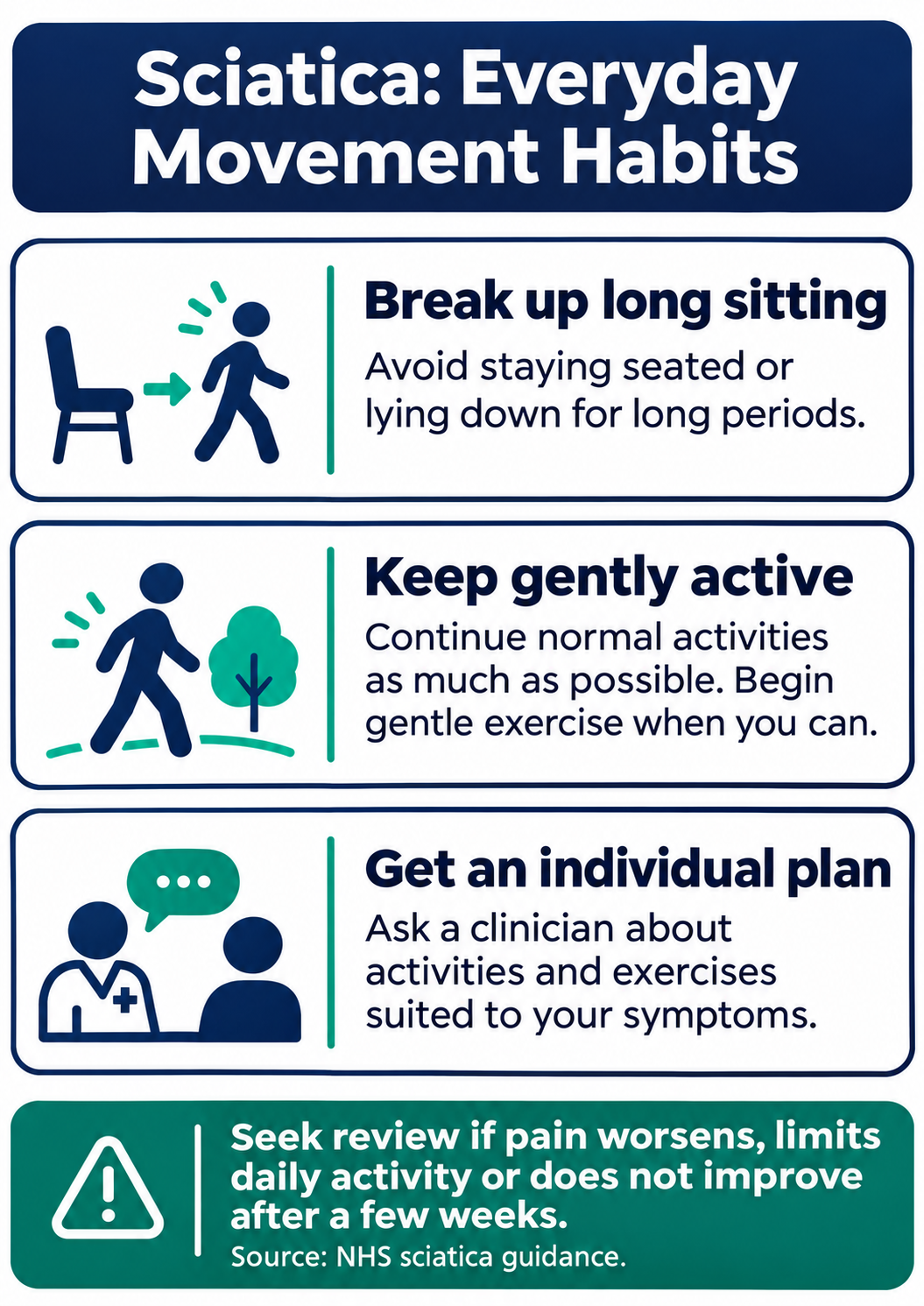
Prolonged sitting is one of the most common aggravators. When you sit, especially slumped forward, the discs in your lower back are loaded and the nerve roots can be compressed. The longer you stay in one position, the more the nerve is irritated.
A classic example: a desk worker who sits for three hours straight, then feels the familiar shooting pain down the back of the thigh when they finally stand. The pain isn’t random. It’s the result of sustained compression.
Why slouching and “perching” both cause problems
Slouching rounds the lower back and pushes the disc contents backward, which is exactly where the nerve roots exit. Perching on the edge of the chair with a rounded back does the same thing. Both positions reduce the space available for the nerve.
Even “good” posture becomes a problem if you never move. Static posture, no matter how perfect, loads the same tissues for too long.
Practical fixes for desk and driving time
- Stand up and walk for one to two minutes every 30 to 45 minutes.
- Use a chair with lumbar support, or place a small rolled towel in the curve of your lower back.
- Keep your feet flat and your knees roughly level with your hips.
- Adjust your screen so you’re not craning your neck forward.
- On long drives, plan stops to get out and move.
Habit 2: Lifting and Bending With a Rounded Back
Bending forward with a rounded spine while lifting is a common trigger for sciatica flare-ups. It’s not just heavy lifting. Even picking up a pencil from the floor with a fast, rounded bend can set off symptoms.
The reason is mechanical. Rounding the lower back increases pressure on the front of the discs and pushes load toward the back, where the nerve roots sit. Add a load in your hands and the effect multiplies.
How to lift and bend more safely
- Hinge at the hips rather than rounding the lower back.
- Keep the load close to your body.
- Bend your knees and let your legs do the work.
- Avoid twisting while lifting; turn your whole body instead.
- Split heavy loads into smaller ones or ask for help.
- For low objects, consider kneeling or squatting rather than bending over.
If your work involves frequent lifting, the OSHA ergonomics guidance offers practical principles for reducing strain in manual handling tasks.
Habit 3: Resting in Positions That Compress or Stretch the Nerve
Rest is important when sciatica is flaring, but how you rest matters. Certain sitting and lying positions put direct pressure on the nerve or hold it in a stretched position for long periods.
A common example is sitting with a wallet in the back pocket. It sounds trivial, but the wallet presses into the buttock and can irritate the nerve. Many people notice their leg pain improves simply by moving their wallet to a front pocket.
Positions that often aggravate symptoms
- Sitting on a hard seat with a wallet or phone in the back pocket.
- Slumping on a soft couch with the hips lower than the knees.
- Lying on the affected side without support between the knees.
- Sleeping on your stomach with the lower back arched.
- Crossing the affected leg over the other for long periods.
Positions that often ease symptoms
- Lying on your back with a pillow under the knees.
- Lying on your side with a pillow between the knees.
- Sitting with hips slightly higher than the knees and feet supported.
- Short walks on flat ground, which often feel better than standing still.
Quick Comparison: Aggravating Habits vs. Better Alternatives
The table below summarizes the three habits and practical swaps. Use it as a quick reference when symptoms flare.
| Habit | Why It Aggravates Sciatica | Better Alternative |
|---|---|---|
| Sitting for long stretches | Sustained disc loading and nerve root compression | Break sitting every 30 to 45 minutes with brief movement |
| Bending and lifting with a rounded back | Increases disc pressure and loads the nerve roots | Hinge at the hips, keep loads close, bend the knees |
| Resting in nerve-compressing positions | Direct pressure or prolonged stretch on the nerve | Use supported lying and sitting positions; remove pocket items |
Signs You Should See a Clinician
Most sciatica improves with time and sensible habits, but some symptoms need prompt assessment. Seek urgent medical care if you notice any of the following.
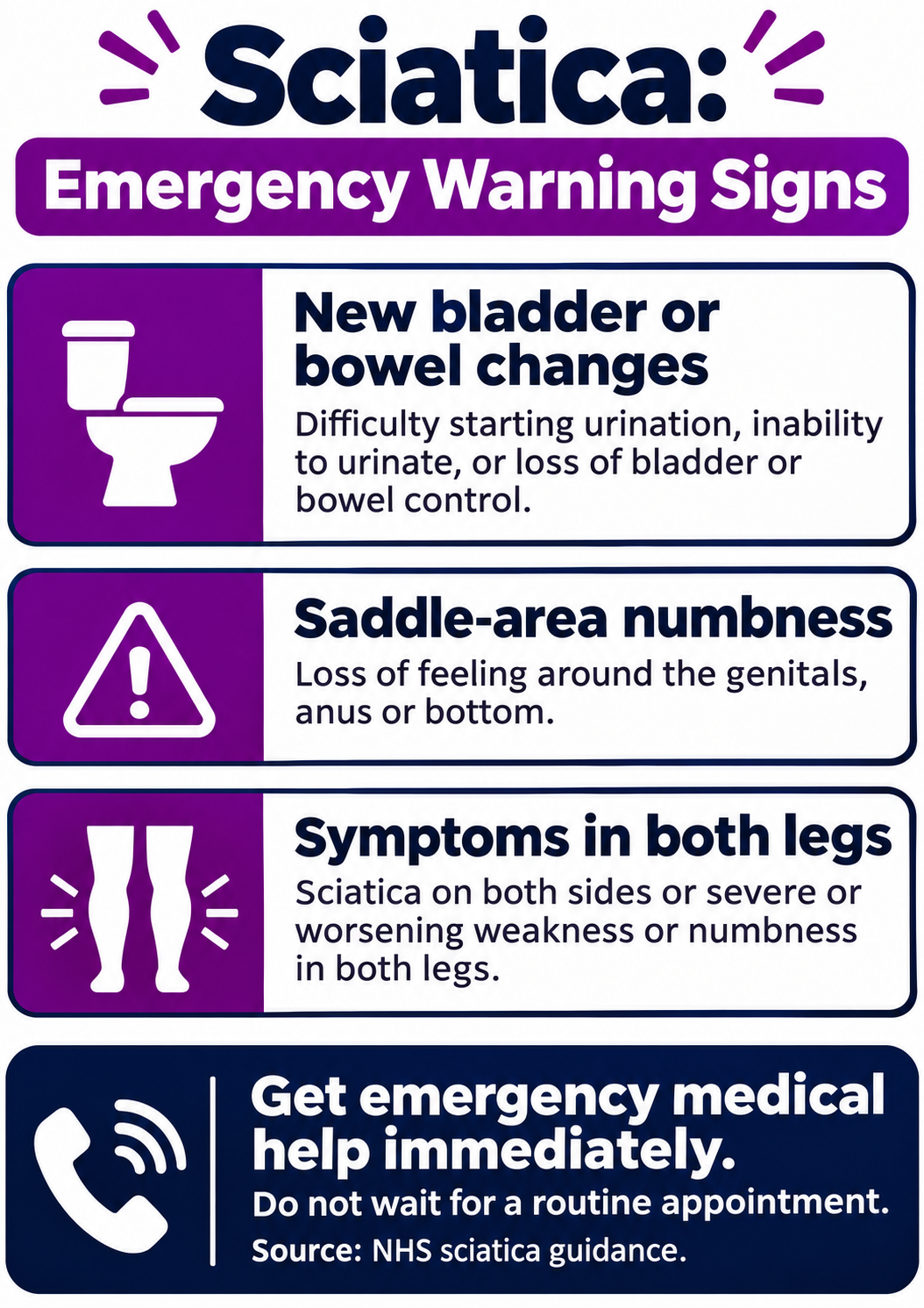
- Loss of bladder or bowel control.
- Numbness in the groin or saddle area.
- Rapidly worsening weakness in the leg or foot.
- Severe pain after a fall or accident.
- Fever with back pain.
These can indicate a serious condition such as cauda equina syndrome, which is a medical emergency. For general information on nerve-related pain, the National Institute of Neurological Disorders and Stroke provides reliable resources.
How Physical Therapy Addresses These Habits
A physical therapist doesn’t just treat the pain. They assess how you move, sit, lift, and rest, then build a plan around your daily routine. That’s where lasting change happens.
Treatment often includes education on posture and body mechanics, graded movement and strengthening, and a gradual return to activity. The goal is to reduce nerve irritation while building tolerance so symptoms don’t return with the next long meeting or heavy box.
- Assessment of sitting, standing, and lifting habits.
- Targeted exercises for the lower back, hips, and core.
- Nerve gliding exercises when appropriate, prescribed by a clinician.
- Graded return to work and daily tasks.
- Education on flare-up management.
Building Habits That Protect Your Back
Changing habits takes repetition, not perfection. Start with one habit at a time, such as a standing break every 45 minutes, and build from there.
- Set a timer or use a standing desk reminder.
- Keep a small stool near low shelves to avoid deep bends.
- Clear your back pockets before sitting.
- Choose supportive seating over soft couches for long periods.
- Walk briefly after meals to break up sitting time.
For guidance on staying active with back pain, the NHS sciatica information page offers practical advice on movement and self-care.
Conclusion
The three habits that most often make sciatica worse are prolonged sitting, rounded-back lifting, and resting in positions that compress or stretch the nerve. Small, consistent changes to these daily routines can reduce irritation and support recovery. If symptoms are severe, worsening, or include red flags, get assessed promptly. For most people, combining better habits with a structured physical therapy plan is the most reliable path forward.
Frequently Asked Questions
Does sitting make sciatica worse?
Yes, prolonged sitting is one of the most common aggravators. It loads the lower back and compresses nerve roots, especially when you slump. Taking short movement breaks every 30 to 45 minutes helps reduce that effect.
Is it bad to bend over when I have sciatica?
Bending with a rounded back while lifting is a common trigger. Bending itself isn’t forbidden, but how you do it matters. Hinging at the hips and keeping loads close to the body reduces pressure on the nerve roots.
Should I rest in bed when sciatica flares up?
Brief rest in a comfortable, supported position can help during a severe flare. Prolonged bed rest is generally not recommended because it can stiffen the back and delay recovery. Gentle movement is usually better once the worst pain settles.
Can a wallet in my back pocket cause sciatica symptoms?
It can contribute. A wallet presses into the buttock and can irritate the sciatic nerve. Many people notice improvement in leg pain after moving their wallet to a front pocket.
What sleeping position is best for sciatica?
Lying on your back with a pillow under the knees or on your side with a pillow between the knees often eases symptoms. Sleeping on your stomach with an arched lower back tends to aggravate the nerve.
Does walking help or hurt sciatica?
Short walks on flat ground often help by promoting movement and reducing stiffness. Long walks or walking on uneven ground can aggravate symptoms for some people. Adjust distance and pace based on how you respond.
How often should I take breaks from sitting?
A practical guideline is to stand and move for one to two minutes every 30 to 45 minutes. The exact interval varies by person, but the key is avoiding long static periods.
Can poor posture alone cause sciatica?
Posture is rarely the only cause, but it can contribute by increasing load on the lower back and nerve roots. A disc bulge or other structural issue is often involved. Posture habits influence how much those structures are irritated.
When should I see a physical therapist for sciatica?
Consider seeing a physical therapist if symptoms last more than a few weeks, keep returning, or limit your daily activities. A therapist can assess your movement habits and build a plan tailored to your situation.
Are there exercises I should avoid with sciatica?
Exercises that involve heavy loading with a rounded back, deep repetitive bending, or prolonged stretching of the nerve can aggravate symptoms. A clinician can help you identify which movements are safe and which to modify.