
Choosing the right walker type can change how safe and independent you feel at home or outdoors. With so many walker types on the market, from simple pickup frames to four-wheel rollators, it helps to understand what each one does. This guide breaks down the main walker types, explains who benefits most, and shows you how to match a walker to your mobility needs.
Why Choosing the Right Walker Matters
A walker is more than a metal frame; it is a mobility tool that supports your balance, reduces pain, and helps you stay active. The wrong walker can increase your risk of falls, strain your shoulders, or slow you down. The right one, however, lets you move with confidence and less fatigue.
When you start looking for a walker, you will notice that each walker type has a different purpose. Some are designed for indoor use only, while others handle uneven pavement well. Some encourage a natural walking posture, and others offer a place to rest when you are tired.
Keep these factors in mind before you choose:
- Your balance and weight-bearing ability
- Whether you need to sit down and rest during walks
- The surfaces you walk on at home, at the store, or outside
- How often you use the walker throughout the day
- Storage space in your home and car
Standard Pickup Walkers
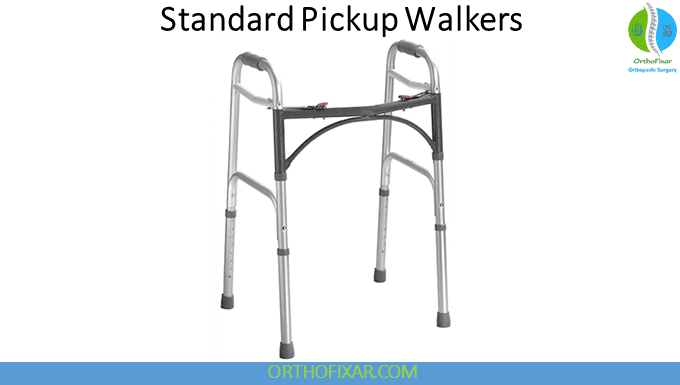
Standard pickup walkers are the most basic type. They have four legs with rubber tips and no wheels. To move, you lift the walker, place it a small step ahead, and then step forward into the frame.
This design gives you maximum stability because the walker does not roll away while you shift weight. It also forces you to engage your core and arms, which can be helpful during early recovery. However, lifting the walker with every step can become tiring for some people.
Standard walkers work best if you need a steady base and you do not have a condition that makes lifting difficult.
Good candidates for a standard pickup walker include:
- People recovering from hip or knee replacement surgery
- Patients who need to bear only partial weight on one leg
- Older adults with good upper body strength
- People who walk mostly on flat indoor floors
If you are unsure, ask a physical therapist to watch you walk with each style. A short trial at a medical supply store can reveal which walker type feels stable for your stride.
Two-Wheel Walkers
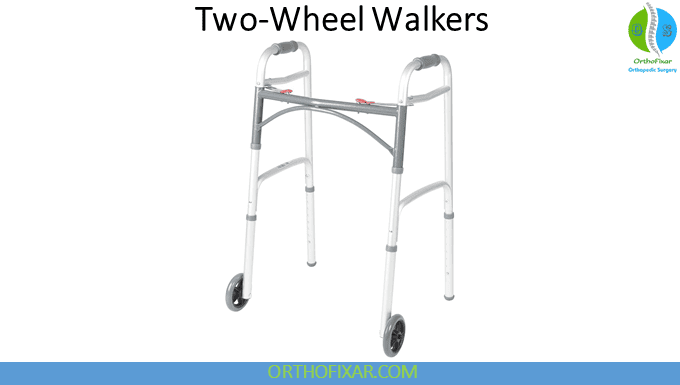
A two-wheel walker, also called a front-wheel walker, has two wheels on the front legs and rubber tips on the back legs. You do not lift the whole walker with every step. Instead, you roll it forward and let the rear legs glide or rest on the floor.
This type reduces the effort needed to move the walker, especially when you are walking at a normal pace. The front wheels handle rough surfaces slightly better than rubber tips, while the back legs provide a braking effect when you put weight down.
Two-wheel walkers are often recommended for people who have some balance but find a standard walker too heavy to lift repeatedly.
Consider a two-wheel walker if you need:
- Less arm strain during at-home walking
- A smooth roll on carpet or tile without full wheels
- A walker that folds easily for transport
- A compromise between stability and mobility
Three-Wheel Walkers
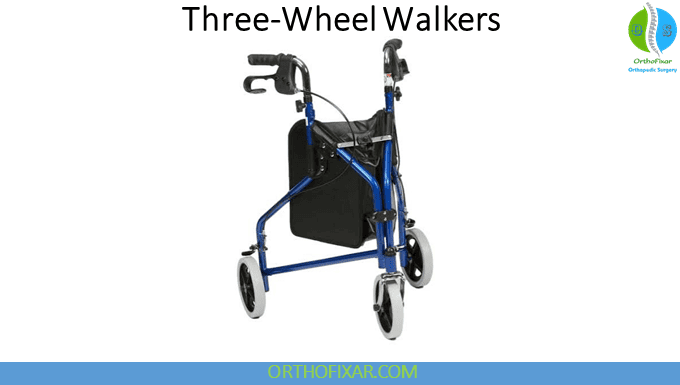
Three-wheel walkers are less common but still useful for certain situations. They have two wheels in the front and one in the back, or sometimes one front wheel and two back wheels. Their narrow shape makes them easier to turn in tight spaces.
Because they have fewer points of contact, three-wheel walkers are lighter and more maneuverable than four-wheel rollators. They can fit through narrow doorways and around furniture with less hassle. The tradeoff is reduced stability, so they are not the best choice if you lean heavily on your walker for support.
Three-wheel walkers work well for people who:
- Move through busy or confined indoor areas
- Need a lighter walker to lift or transfer
- Have good balance but need occasional support
- Prefer a walker that feels less bulky
Rollators (Four-Wheel Walkers)
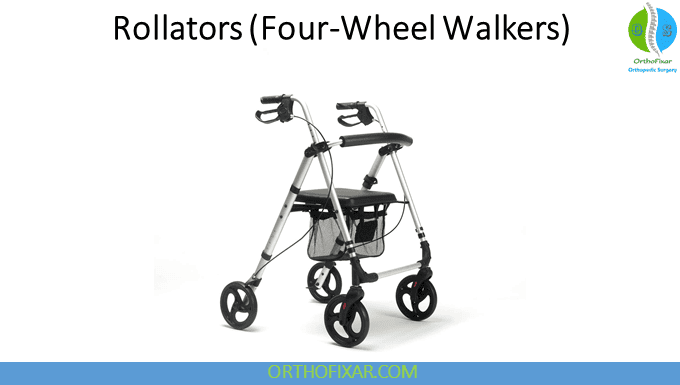
Rollators are the most feature-rich walker type. They have four wheels, hand brakes, and often a padded seat. Some models include a storage basket, making them ideal for shopping or longer walks.
With a rollator, you do not lift the walker at all. You simply push it forward and use the brakes to control speed. The built-in seat lets you stop and rest whenever you feel tired, which is a major advantage for people with endurance problems.
Because rollators roll easily, they require more upper body control to keep steady. They are best for people who can walk continuously with moderate support and do not need to put heavy weight on the frame.
A rollator is a good choice if you want:
- A place to sit during walks or outings
- Hand brakes for downhill or uneven terrain
- Storage for personal items or groceries
- An easier way to cover longer distances
Never buy a walker based on looks alone. Measure doorways, bathroom access, and the height of the seat if it includes one.
Knee Walkers (Knee Scooters)
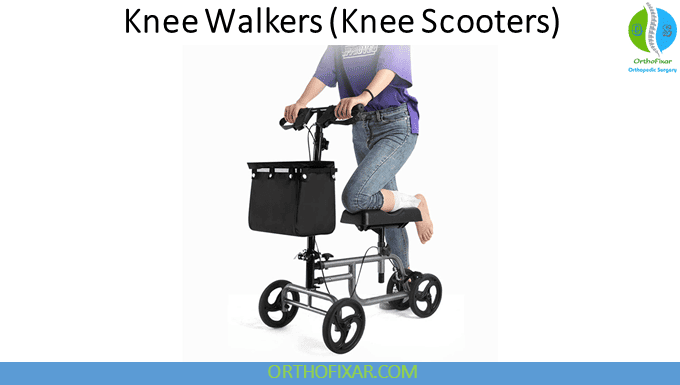
A knee walker, also called a knee scooter, is not a traditional walker. It has a padded platform for your injured leg, plus four wheels and handlebars. You push yourself along with your good leg while the injured knee or foot rests on the platform.
This walker type is popular after foot surgery, ankle fractures, or Achilles tendon repairs. It allows you to keep weight off the injured leg while moving more quickly than crutches. You can use it indoors and on smooth outdoor paths.
Knee walkers are not suitable for everyone, especially people with balance issues or those who cannot control the scooter on slopes.
Knee walkers can be helpful for:
- Post-operative foot or ankle recovery
- Lower leg fractures that require non-weight-bearing
- People who struggle with crutches or a standard walker
- Patients who need to move around the house for several weeks
How to Choose the Right Walker Type for You
To find your ideal walker type, start by thinking about your daily routine. Do you need to navigate stairs? Do you prefer to sit while cooking or waiting in line? Do you spend more time indoors or outdoors? Answering these questions will point you toward the right style.
You should also measure the walker’s height. When you stand with your arms relaxed, the hand grips should line up with the crease in your wrist. Your elbows should bend slightly when you hold the grips.
The table below summarizes the main differences between walker types.
| Walker Type | Key Feature | Best For | Considerations |
|---|---|---|---|
| Standard Pickup | No wheels, lift to move | Maximum stability; short indoor distances | Requires upper body strength |
| Two-Wheel | Front wheels, rear glides | Mixed indoor surfaces; easy forward motion | Less stable than four-point on stairs |
| Three-Wheel | Narrow frame, lightweight | Tight spaces and easy turning | Reduced stability compared to rollators |
| Rollator | Four wheels, brakes, seat | Longer walks, rest breaks, outdoor use | Heavier and needs brake maintenance |
| Knee Walker | Knee platform, four wheels | Lower leg injuries, non-weight-bearing | Not for balance issues; bulky |
Here is a simple process to narrow down your options:
- Check with your doctor or physical therapist about weight-bearing limits.
- Test each walker type for a few minutes in the store.
- Compare the folded size with your car trunk and hallway width.
- Look at the weight capacity to make sure the frame supports you safely.
- Consider accessories like baskets, trays, or cup holders if you need them.
Safety Tips for Walker Users
Once you bring your walker home, practice using it in a clear, open space. Learn how to engage the brakes if you have them, and always check that the rubber tips or