Knee pain from arthritis can turn routine activities into a constant struggle. If you have tried medications, physical therapy, and injections without lasting relief, surgery may be the next step. The most common question patients ask is whether a partial or total knee replacement fits their situation. Understanding the difference between partial vs total knee replacement helps you prepare for a more informed conversation with your orthopedic surgeon.
What Is Partial Knee Replacement?
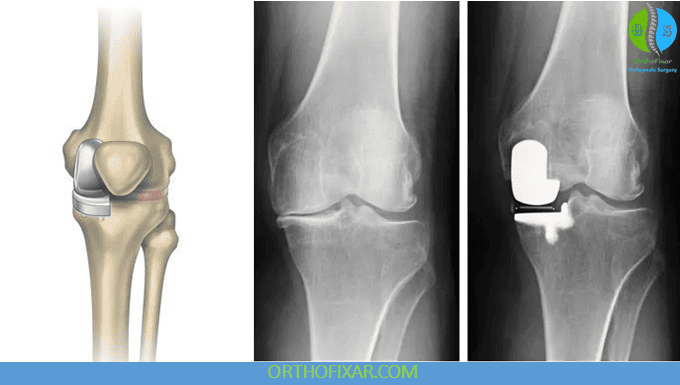
A partial knee replacement, also called unicompartmental knee arthroplasty, resurfacing only the damaged compartment of the knee. The surgeon preserves the healthy cartilage, ligaments, and bone in the other areas of the joint.
- Only one of the three knee compartments is addressed
- Smaller incision compared to total knee replacement
- Less blood loss during the procedure
- Often performed as an outpatient surgery or with a shorter hospital stay
- Designed for arthritis confined to a single area
This procedure works best when your knee problems are limited to one specific section. If the rest of your knee remains healthy, a partial replacement allows you to keep your natural anatomy and knee function.
What Is Total Knee Replacement?
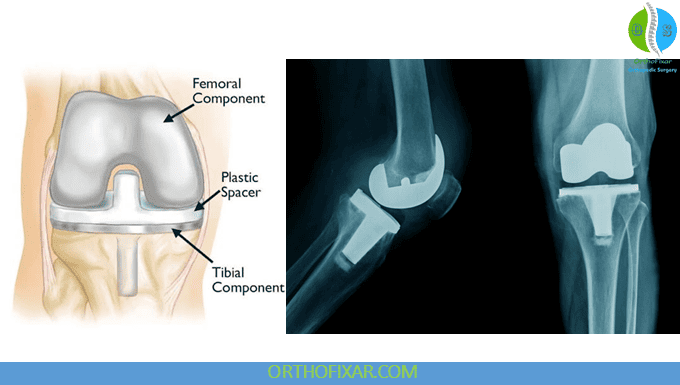
A total knee replacement, or total knee arthroplasty, resurfaces all three compartments of the knee. The surgeon replaces the damaged bone and cartilage with metal and plastic components that recreate the joint surface.
- All three knee compartments are addressed
- Longer incision and more extensive procedure
- More predictable outcomes for widespread arthritis
- Usually requires a hospital stay of one to two days
- Standard solution for advanced arthritis affecting the whole joint
Total knee replacement remains the gold standard for end-stage arthritis. It offers reliable pain relief and functional improvement even when the disease has damaged multiple areas of the knee.
Key Differences: Partial vs Total Knee Replacement
The main difference between partial and total knee replacement comes down to how much of the knee is treated. A partial replacement preserves more of your natural knee, while a total replacement rebuilds the entire joint surface.
| Feature | Partial Knee Replacement | Total Knee Replacement |
|---|---|---|
| Compartments treated | One | All three |
| Incision size | Smaller | Larger |
| Hospital stay | Often same-day or one night | Typically one to two nights |
| Recovery speed | Generally faster | Longer initial recovery |
| Range of motion | Often more natural feeling | Good but may feel different |
| Durability | Excellent for the right patient | Durable and well-studied long term |
| Revision risk | Slightly higher over time | Lower in selected patients |
| Best candidate | Isolated arthritis, stable ligaments | Widespread arthritis, deformity |
The choice is not about which procedure is better overall. It is about which procedure matches your specific knee condition, age, activity level, and expectations.
Who Is a Good Candidate for Partial Knee Replacement?
Not everyone with knee arthritis qualifies for a partial replacement. Your surgeon will evaluate several factors before recommending this option.
- Arthritis is limited to one knee compartment, usually the inner side
- Your ACL is intact and stable
- The rest of your knee cartilage is healthy
- You have no significant knee deformity or instability
- Your body weight is within a reasonable range for the procedure
If you have pain only on the inner side of your knee and your knee feels stable, a partial replacement may be a strong option. For example, a patient in their sixties with medial compartment arthritis and an intact ACL often does very well with this approach.
Who Needs Total Knee Replacement?
When arthritis affects multiple parts of the knee, a total replacement becomes the more appropriate choice.
- Cartilage damage is present in two or more compartments
- The ACL is damaged or absent
- The knee is significantly bow-legged or knock-kneed
- Chronic inflammation affects the entire joint
- Previous knee surgery makes partial replacement less predictable
Patients with rheumatoid arthritis, advanced osteoarthritis, or post-traumatic arthritis usually need a total replacement. In these cases, leaving a damaged compartment untreated would cause ongoing pain and eventual failure of a partial repair.
Recovery and Rehabilitation: What to Expect
Recovery differs between the two procedures, but every patient must commit to physical therapy and consistent home exercise.
- Partial knee replacement patients often walk with less assistance sooner
- Total knee replacement requires more patience during early healing
- Both procedures benefit from early movement to prevent stiffness
- Pain management strategies are similar for both
- Most patients return to driving within two to six weeks, depending on the side operated on
Patients who walk the day after surgery and stay consistent with their exercises, regardless of whether they had a partial or total replacement, tend to have the smoothest recoveries.
Returning to work depends on your job and the procedure. Desk workers often return within three to six weeks, while physical jobs may require three months or more. Your physical therapist will guide your milestones based on your specific surgery.
Risks and Complications of Both Procedures
No surgery is without risks, and knee replacement carries certain possibilities you should understand.
- Infection is rare but possible in both procedures
- Blood clots can form in the leg, so blood thinners and compression devices are routine
- Stiffness may require manipulation under anesthesia
- Nerve or blood vessel injury is uncommon but possible
- Revision surgery may be needed later, especially after partial replacement
The best way to reduce complications is to choose a surgeon who performs a high volume of knee replacement procedures and to follow every pre- and post-operative instruction carefully.
One important point is that a partial knee replacement can be revised to a total knee replacement later if arthritis spreads. This is a deliberate design feature of the partial approach, not necessarily a failure.
How to Decide: Questions to Ask Your Surgeon
Your decision should be based on imaging findings, physical examination, and your own goals. Bring a list of questions to your consultation so you leave with clarity.
- Which compartment of my knee is damaged, and how many are affected?
- Is my ACL intact enough for a partial replacement?
- What are the expected outcomes for my age and activity level?
- How many partial and total knee replacements do you perform each year?
- What is your revision rate for partial replacements?
- How long will I need pain medication after each option?
- What activity level can I expect one year after surgery?
A patient who loves long walks and gardening may prefer the faster recovery of a partial replacement. A patient with arthritis in multiple compartments, however, needs the definitive correction that only a total replacement provides. Your surgeon cannot make this choice alone, but imaging scans and a careful physical exam will strongly guide the recommendation.
Long-Term Outlook and Durability
Both partial and total knee replacements have strong track records when performed in the right patients.
- Total knee implants typically last twenty years or more in most patients
- Partial knee implants also last long, but the remaining cartilage can wear out over time
- Activity level matters more than age in determining implant lifespan
- High-impact sports are discouraged after both procedures
- Regular low-impact exercise strengthens the muscles around the joint and protects the implant
If you are young and active with isolated arthritis, a partial replacement may delay a total replacement for many years. If you are older with wear throughout the knee, a total replacement avoids a second surgery down the road.
Your Decision Should Feel Collaborative
No single answer works for every patient. The phrase partial vs total knee replacement describes two different strategies, each with clear advantages and trade-offs. A partial replacement preserves tissue and speeds up recovery, but it demands careful patient selection. A total replacement offers a comprehensive solution for widespread arthritis at the cost of a longer initial recovery.
Trust the process and ask questions until you feel confident. Bring a family member to your consultation, take notes, and ask for imaging examples that show what the surgeon sees.
Frequently Asked Questions
How long does a partial knee replacement last?
A partial knee replacement can last fifteen to twenty years in well-selected patients. The remaining healthy cartilage must be able to handle the ongoing load, which is why careful patient selection is so important.
Is a total knee replacement more painful than a partial one?
Both procedures cause significant pain in the first few days after surgery. Total knee replacement involves a larger incision and more tissue disruption, so pain may last longer. Modern pain protocols help both groups stay comfortable.
Can a partial knee replacement be converted to a total later?
Yes, an existing partial knee replacement can be revised to a total knee replacement. The procedure is often described as a straightforward conversion though it carries slightly different risks compared with a first-time total replacement.
Who is not a candidate for partial knee replacement?
Patients with significant knee deformity, an injured ACL, or arthritis in multiple compartments are not ideal candidates. If your surgeon sees inflammation throughout the joint, a total replacement is usually safer and more predictable.
How soon can I walk after each procedure?
Most patients stand and walk with assistance on the same day as surgery. Partial knee replacement patients often feel more natural walking sooner, but both groups are encouraged to move early to prevent stiffness and blood clots.
Which procedure offers better range of motion?
Partial knee replacement generally preserves more natural knee mechanics because it retains the ACL and healthy cartilage. However, total knee replacement can achieve excellent range of motion with consistent therapy and a well-executed technique.
How long is the hospital stay for each option?
Partial knee replacement is often performed as an outpatient procedure or with one overnight stay. Total knee replacement usually requires one to two nights in the hospital.
What activities should I avoid after knee replacement?
High-impact activities such as running, jumping, and contact sports are discouraged after both procedures. Swimming, cycling, walking, and golf are safe and encouraged once your surgeon approves.
Does age affect which surgery I should choose?
Age is not the only factor, but it matters. Younger patients with isolated arthritis may benefit from a partial replacement to delay a total one. Older patients with widespread arthritis often do better with a total replacement to avoid a second surgery.
How do I know which option is right for me?
Your surgeon will order weight-bearing X-rays and sometimes an MRI to see the extent of arthritis. A physical exam checks ligament stability and alignment. The final decision combines these findings with your symptoms and personal goals.